Showing posts with label . #stephendrus. Show all posts

Saturday, August 18, 2018

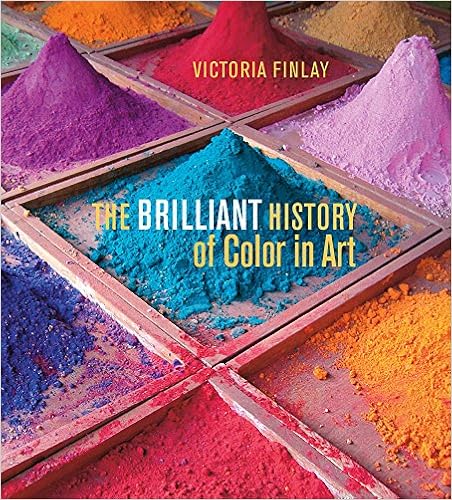
The Brilliant History of Color in Art Hardcover – November 1, 2014 by Victoria Finlay( J. Paul Getty Museum)


Who knew that colors have such fascinating stories to tell? Finlay does a wonderful job of describing, in clear, accessible, witty language, how artists around the world, from prehistoric times to the present, have used natural materials, including charcoal, soot, plants, insects, shells, and gems and minerals, to produce magnificent paint and ink colors that continue to dazzle. Today, though, synthetic paints and even computers produce an astonishing range of hues. Browsers and cover-to-cover readers will find some tantalizing information here. For example, Vincent van Gogh once ate his toxic chromium yellow paint; Santa Claus wasn't always clothed in red; thanks to Isaac Newton, there are seven colors in the rainbow; human and animal body wastes were once essential ingredients in color production; and some commonplace colors were created by sheer accident. The handsomely designed book includes 166 excellent reproductions of artworks, many from the collections of Los Angeles's J. Paul Getty Museum. It is filled with illuminating captions and sidebars; reproductions have been perfectly chosen and placed to illustrate the author's narratives; and a "brilliant history of color" is a compelling, readable account of humankind's yearning to express itself beautifully since the beginning of time. An illustration list and lengthy index are included. Recommended for large public library collections and for school libraries; useful in art classes, particularly in units on art history/appreciation, drawing, and painting

The history of art is inseparable from the history of color. And what a fascinating story they tell together: one that brims with an all-star cast of characters, eye-opening details, and unexpected detours through the annals of human civilization and scientific discovery.

Enter critically acclaimed writer and popular journalist Victoria Finlay, who here takes readers across the globe and over the centuries on an unforgettable tour through the brilliant history of color in art. Written for newcomers to the subject and aspiring young artists alike, Finlay’s quest to uncover the origins and science of color will beguile readers of all ages with its warm and conversational style. Her rich narrative is illustrated in full color throughout with 166 major works of art―most from the collections of the J. Paul Getty Museum.

Readers of this book will revel in a treasure trove of fun-filled facts and anecdotes. Were it not for Cleopatra, for instance, purple might not have become the royal color of the Western world. Without Napoleon, the black graphite pencil might never have found its way into the hands of Cézanne. Without mango-eating cows, the sunsets of Turner might have lost their shimmering glow. And were it not for the pigment cobalt blue, the halls of museums worldwide might still be filled with forged Vermeers.


Red ocher, green earth, Indian yellow, lead white―no pigment from the artist’s broad and diverse palette escapes Finlay’s shrewd eye in this breathtaking exploration.

Thursday, August 16, 2018

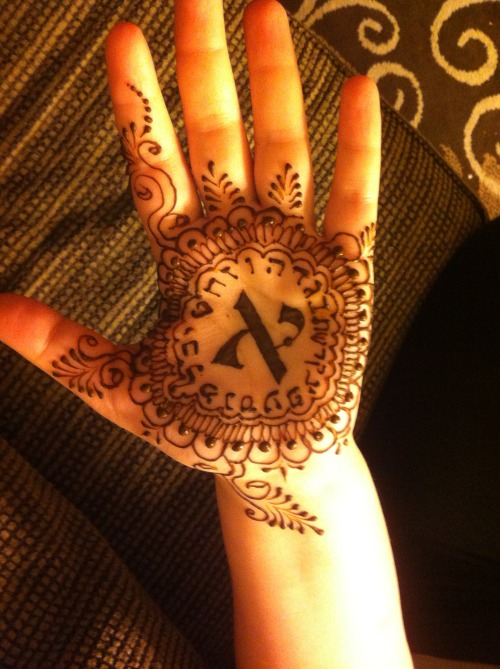
Jewish Henna Ceremony in Israel

Image result for Jewish Henna Ceremony

Henna appears in the Bible, as well as in other Semitic texts of the ancient Near East, and we know that henna was grown and used in the Land of Israel during the Hellenistic period. The earliest explicit records of Jewish henna ceremonies appear in the medieval Mediterranean. Henna use, both for everyday adornment and for ritual purposes, quickly spread throughout the Diaspora and was an established custom among the Jews of Morocco and other North Africancommunities, the Levant and Mediterranean basin, the Arabian Peninsula, and Western, Central and Southern Asia. Henna was used by some Jewish communities as part of everyday female adornment, dyeing hands, feet, nails, and hair. Some communities also used henna as part of ritual celebrations and holidays. The most significant use of henna in Jewish communities, however, is as part of a pre-wedding ceremony. These communities include Jewish communities sometimes called Sephardi ['Spaniards', i.e. descended from Spanish Jews expelled in the 15th century], or Mizrahi ['Orientals'], as well as others.

In these communities, henna was a crucial aspect of the preparations for a Jewish wedding, and often defined the structure of the wedding festivities, from the beginning (marked by the sending of henna from the groom to the bride) through the climax (the main henna ceremony itself) to the end (when the last remnants of henna wore off the skin). Furthermore, henna was used to mark the actors in a variety of other lifecycle events and passage rituals, such as birth, weaning, entering the school system, puberty, and coming out of mourning. It was also used at holiday celebrations and other happy occasions. The symbolism of henna in these Jewish communities was highly polysemous, but it is clear that it had three overarching functions: first, the henna’s staining of skin was seen as beautifying, both as daily adornment and for weddings; second, the materiality of henna was thought as protective, especially of actors at the center of a passage ritual; third, henna was seen as an aid in transforming and guiding the actors into the structure of their new social roles.

Henna in Israel

After the establishment of the State of Israel in 1948, the Jewish communities of North Africa, the Levant and Mediterranean basin, and Western, Central and Southern Asia underwent a massive and sudden displacement beginning almost immediately. Within 10 years, the vast majority of these communities had left their homes and been relocated, either to Israel or to Europe and the Americas. 


In Israel, the majority of the rituals and traditions surrounding the henna ceremony were initially abandoned upon arrival for a variety of reasons: socioeconomic circumstances made it uncomfortable to celebrate loudly and publicly for extended periods of time; the disorientation and confusion of integration into Israeli society had broken up communities and disrupted the traditional ritual sequence of events; and the negative stigma attached to markers of Diaspora identity, and Arabness in particular, discouraged immigrants from engaging in what had previously been activities and symbols with high social prestige and value.

It was not until the late 70s, when young non-Ashkenazi Israelis had become increasingly dissatisfied with their marginalization in the public sphere, and they began to vocally demand recognition as legitimate members of Israeli society, that previously-neglected cultural celebrations began to experience a revival: the Moroccan mimuna or the Kurdish saharane holidays, the new emergent style of modern ‘Mizrahi music’, and of course, the henna ceremony.

Today, the revived henna ceremony is very different than its historical predecessors. One of the main changes to the henna ceremony has been in its length and timing. While in the Diaspora, the pre-wedding festivities often lasted a week or more, in Israel they were severely compressed due to constraints of money and time. The application of henna to the bride, whether done over a period of three days, as in Yemen, or whether done multiple times over a two-week period, as in Morocco, was reduced to a single evening. The timing of the henna ceremony was moved from the night before the wedding, or a few days before the wedding, to the week before the wedding or even earlier. Furthermore, where formerly the groom may have been hennaed in a separate ceremony in a separate location, in Israel the two ceremonies were joined, so that the groom sits next to the bride and is hennaed witsth her. Another change was the rapid disappearance of the artistic patterns with which the henna was applied. It appears that the henna patterns practiced by Jewish communities in the Diaspora were almost immediately abandoned upon arrival in Israel. Today, even the memories of these patterns are rapidly disappearing.

Henna ceremonies in Israel today serve to reinforce a pan-ethnic unity, and often an even broader ‘pan-Mizrahi’ unity. The henna ceremonies of the Moroccan Jews and Yemenite Jews became the dominant models, while the henna ceremonies of other non-Ashkenazi communities were either abandoned or subsumed into one of the dominant models (usually Moroccan). Regional differences in the performance of the ceremony were abandoned, and one generic “Moroccan” or “Yemenite” ceremony was formed (it was usually a modification of the customs of the capital, or largest city, that prevailed). For example, one of the most significant and visible manifestations of this is in the clothing worn at the henna ceremony: among Yemenite Jews today, the henna ceremony features the Sana’i headdress, the tishbuk lulu, while similarly among Moroccan Jews the contemporary ceremony generally uses the urban grand dress, the keswa lkbira.

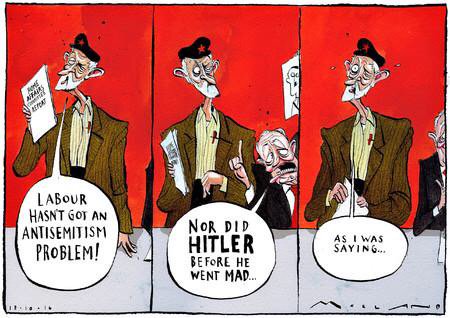
Corbyn’s Disturbing Actions Against Israel and the Jews ( do share), #stephendarori, #BardOfBatYam,#PoetLaureateOfZion

Image result for Corbyn anti semitism anti israel prohamas n


BESA Center Perspectives Paper No. 923, August 16, 2018 by Dr. Manfred Gerstenfeld  Republished  ( Do read it and share) 

EXECUTIVE SUMMARY: British Labour leader Jeremy Corbyn has defined himself as a “friend” and “brother” of genocidal terrorists, and he supports and mixes with Holocaust distorters. Corbyn is an extreme anti-Israel inciter and anti-Semite who has used Iranian media for that purpose.

There is now so much information about the misdemeanors of British Labour leader Jeremy Corbyn against Jews and Israel that his wrongdoings can be classified into sub-categories.

The first category is his support for genocidal terrorists. Corbyn welcomed representatives of Hezbollah and Hamas at the British parliament in 2009 and called them his “friends.” It took him until 2016, when he was challenged in the House of Commons by Conservative Prime Minister David Cameron, to renounce his words.

In 2012, on Iranian Press TV, Corbyn praised Israel’s release of 1,000 Hamas prisoners – terrorists who had killed 600 people between them – and referred to the terrorists as “brothers.” In November 2012, he hosted a meeting in Parliament with Musa Abu Maria, a member of the banned terrorist group, Palestinian Islamic Jihad. He has also shared a platform with the Black September terrorist and hijacker Leila Khaled.

Image result for Corbyn with arab terrorism

In August 2018, the Daily Mail disclosed that four years earlier, in Tunisia, Corbyn had stood with a wreath in his hand next to a memorial plaque commemorating the graves of members of the Palestinian Black September movement. This is the terrorist organization that perpetrated the murder of 11 Israeli athletes at the 1972 Munich Olympics.

The Telegraph has reported that one of the three main donors to Corbyn’s leadership campaign was Ibrahim Hamami, who supports stabbing Jews in Israel. He is a general practitioner living in London and founder of the pro-Hamas group, the Palestinian Affairs Center. Hamami has also been a columnist at an official Hamas newspaper.

Hamami helped organize the visit to Britain of Raed Saleh, who has described Jews as “bacteria” and “monkeys.” Saleh has also promoted the blood libel, claiming that Jews use the blood of gentile children to bake their bread. Corbyn has shared public platforms with Hamami, who acted as Saleh’s spokesman during the visit.

When Saleh was jailed in Britain, Corbyn called him “a very honored citizen who represents his people extremely well” and said he “looked forward to giving [him] tea on the [House of Commons] terrace.” Soon after his election as Labour leader in 2005, Corbyn hired journalist Seamus Milne, who had praised Hamas for its spirit of resistance, as his communications director.

Image result for Corbyn antisemitism cartoons

A second category of misdemeanor is Corbyn’s relationship with Holocaust distorters. He has participated annually in gatherings of a charity led by Holocaust denier Paul Eisen and has given it a donation. More recently, it became known that in 2010, on Holocaust Memorial Day, Corbyn held a meeting in Parliament at which the Netherlands’ best known Jewish anti-Semite, Hajo Meyer, compared Israel to the Nazis. (Meyer has done this frequently, including in Germany.) A Holocaust survivor claims that Corbyn told a policeman which protesters he wanted removed from that meeting. Only now, eight years later, has Corbyn apologized for attending.

Both Corbyn and Labour Shadow Chancellor of the Exchequer John McDonnell signed a parliamentary motion proposing that Holocaust Memorial Day be renamed Genocide Memorial Day. In 2012, McDonnell accused Israel of attempting to commit genocide against the Palestinians.

A third category of Corbyn’s wrongdoings concerns extreme anti-Israel incitement. Substantial information about this is scattered throughout Dave Rich’s 2016 book, The Left’s Jewish Problem. For example, Corbyn chaired a conference that included talks on apartheid in Israel, Western imperialism, and anti-Arab racism. Rich also writes that throughout the 1980s, Corbyn sponsored and supported the Labour Movement Campaign for Palestine (LMCP). This group wanted to “eradicate Zionism while it supported a democratic secular state in place of Israel.”

In 2011, Corbyn presented his opinion on the BBC on a state-funded Iranian TV program. He said about the British broadcaster that “there is a bias toward saying that Israel is a democracy in the Middle East, Israel has a right to exist, Israel has its security concerns.”

In 2012 Corbyn promoted a conspiracy theory about Israel on an Iranian channel,  suggesting that it was in “Israel’s interest to kill Egyptians in an attack by Islamic Jihadists.” He also said, “I suspect the hand of Israel in this whole process of destabilization.”

In 2018, Corbyn attended a Passover seder with members of the small Jewdas Group, a radical anti-Zionist Jewish organization that has called Israel a “steaming pile of sewage which needs to be properly disposed of.” In August 2018, information about a video was disclosed that shows Corbyn making a speech in 2013 for the Palestinian Return Center in which he draws comparisons between the actions of the Israeli government and Nazism.

This year, Jonathan Arkush, the outgoing president of the British Jewish umbrella organization the Board of Deputies, noted that Corbyn had been chairman of Stop the War, an organization that is “responsible for some of the worst anti-Israel discourse.” Arkush added that Corbyn has anti-Semitic views and was making Jews question their place in Britain.

A fourth category of Corbyn’s wrongdoing concerns anti-Semitism. In 2012, he endorsed an anti-Semitic mural on Facebook. He did not apologize for this until six years later. He was also a member of various Facebook groups where anti-Semitic material was posted.

Corbyn is not the only member of his family who is highly problematic as far as anti-Semitism is concerned. His brother Piers tweeted that the “Jewish conspiracy will force Trump into war just like they did to Hitler.” The Daily Mail discovered a Nazi cartoon on his youngest son Tommy’s Facebook page. He, too, was a member of several anti-Semitic Facebook groups.

If only previous Labour leaders and their staffs had been more alert, Corbyn would have been expelled from the party years ago. Corbyn’s predecessor as Labour leader, Ed Miliband, is the main culprit behind this failure. A mainstream party should not have self-defined “friends” and “brothers” of terrorists in its ranks. The same is true for those who support Holocaust distorters. Corbyn belongs in both categories.

Tuesday, July 24, 2018

How Do You Say Apartheid in Hebrew by Paul Mirbach ( republished )


In late autumn of 1985, I made the long journey on Egged buses from my kibbutz near Karmiel to Jerusalem, in order to interview Gidi Shimoni. Shimoni, for me, was a cultural hero, a shining beacon of success for a South African who made Aliya to Israel. Not only was he a member of Habonim, our Zionist-socialist youth movement like myself, but he was an example of one who had made it “big time”; he was a senior Doctor of History at the University of Jerusalem, a leading intellectual and a respected force in academia. The subject of my interview, was Jewish fascism. This was the time when Meir Kahane was elected to the Knesset, riding the wave of racial hate and Jewish superiority to get elected. It was for an article I was writing, for a Habonim publication, which I had volunteered to edit. Shimoni did not disappoint; the impression he had on me has lasted to this day. This quote has stuck with me, never forgotten: “Chauvinism is when you take one value, however honorable it may be, and raise it above all other values. Fascism is when you make that value an absolute, and subjugate all other values to it”. It was like a light came on in my brain, like I had an epiphany, a clarification of the epithet from the definition.


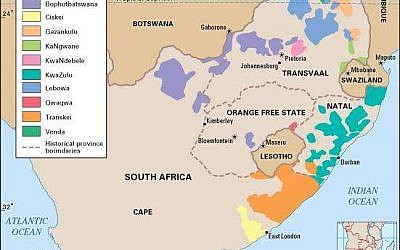
So, when Professor Emeritus Gidi Shimoni published an opinion piece in the Jerusalem Post in February 2011, explaining why Israel was not an Apartheid state, I not only agreed with him, but I used his article in my arguments with people who did call Israel an Apartheid state. Two nights ago, the Knesset passed the Nation State bill, writing into law that which we have known and has been recognized by the vast majority of nations throughout the world – and I found myself wondering what he would say now, in light of his article in 2011? Let me say that I have the utmost respect for Professor Gidi Shimoni; my intention is not to show that he was wrong, but that our reality has changed. (Map of Bantustan states in Apartheid South Africa)


In 2011, his first premise in differentiating Israel from Apartheid South Africa, was in the essence of the nature of the conflict; he wrote, “The essence of Israel’s conflict situation has always been a clash of nationalisms; ultimately over the question of who should have primacy in gaining national self-determination in a contested territory. By contrast, the South African conflict evolved out of a centuries-long, near absolute domination exercised by a self-defined racial minority (the whites) over an externally-defined racial majority of the population, which was denied equal civic rights, above all the primary democratic right, enjoyed exclusively by the whites.”

The Nation State Bill (“the Bill”) states:
– “The State of Israel is the national home of the Jewish people, in which it fulfills its natural, cultural, religious and historical right to self-determination.
– The right to exercise national self-determination in the State of Israel is unique to the Jewish people.”

In other words, for the two million Arabs and other minorities born and living in Israel, Israel is not their national home, and they have no right to self-determination, which is unique to Jews. So, as an Arab, you could trace your roots back to generations living in Israel, and your citizenship is not an indigenous inalienable right, but granted you begrudgingly, whereas a Jew who got off the plane yesterday, has greater claim to be here than you.

Further, in 2011, Shimoni wrote, “The Afrikaans term “apartheid” originated during the 1940s to describe an ideological conception and political program that justified, systematized, reinforced and expanded this pre-existent system of racial discrimination and separation.” – In other words, the Apartheid laws passed in 1960, which enshrined in South Africa’s law books the privilege and preexisting preference for White people in South Africa, had existed for decades, even centuries before the law was passed.

The Nation State Bill states “The state views the development of Jewish settlement as a national value and will act to encourage and promote its establishment and consolidation.”

This establishes legal privilege and priority for Jews and Jewish settlements, making it a legal precept in our laws. Like in South Africa, it formalizes in our law books the preference for Jews and Jewish settlements, something that has existed in so many facets of our life, for decades. Furthermore, it both contradicts and overrides our Declaration of independence, which has been the guiding light and our “presumptive Constitution”. “The state of Israel will promote the development of the country for the benefit of all its inhabitants” and then it goes on to say that it will “uphold the full social and political equality of all its citizens without distinction of race, creed or sex; and will guarantee full freedom of conscience, worship, education and culture.” – How can Israel now do that, when the Bill specifically states that it prioritizes one specific ethnic group? You cannot guarantee “full social and political equality for all your citizens”, when you place a higher value on the aspirations of one ethnic group.

Gidi Shimoni then goes on to assert that “world condemnation (of Apartheid) targeted two indefensible wrongs: firstly, the legalized racist basis of apartheid’s enforced inequalities; secondly the adamant refusal of the apartheid regime to cease its unilateral dictates and accept the option of negotiation.”

When you have a clause which says, “The state views the development of Jewish settlement as a national value and will act to encourage and promote its establishment and consolidation”, you have a legalized basis for inequalities.

How, you may ask? Here’s how. Up until now, the basis for allocation of funds to municipalities has been upon the basis of “X” shekels per capita per city/town. (Of course there has also always been a priorities map – which in itself is built in inequality – but by and large the budget for municipal funding was done according to this key). But now, with the law encouraging, promoting and establishing the consolidation of “Jewish settlements”, the road is clear to allocate “X” shekels per capita for Jewish settlements and councils and “Y” shekels (a lesser amount) per capita for others.

As for the second part, about accepting the option of negotiation: when the Bill writes into law that the right to exercise national self-determination is unique ∂to the Jewish people, and that “Jerusalem, complete and united, is the capital of Israel”, and that “The LAND of Israel is the historical homeland of the Jewish people, in which the State of Israel was established” (thereby describing not only Israel “proper”, but also the West Bank), what basis is there left for negotiation with the Palestinians? – So, in my opinion, the criterion which Shimoni emphasized was lacking in order to meet the condition of being Apartheid, now exists.

Add to that the demotion of Arabic as an official language of the state. Two million people have just been told that the language they speak as mother tongue is no longer recognized as an official language. What will this mean in the future, in terms of teaching at schools and state exams? Will all Arab students soon have to write their Bagrut exams in Hebrew, giving them an institutional disadvantage in their scholarly achievements, and which could have far-reaching effects on their qualification for university studies, professions and prospects? What will it mean in terms of sign-posting of streets and official offices? What will it mean in terms of budgeting for radio stations and culture?

Not related specifically to the Bill, but when an MK from the coalition (Smotrich), says he does not want his wife to share a ward in the hospital with an Arab woman, how long will it take before hospital rooms will be segregated? Or, when an organization like “Lehava”, which intimidates and targets Jewish-Arab couples finds sympathy among members of the legislature who sit in government, how long will it take before mixed marriage will be prohibited?

So far, we have talked about Israel “proper”. With regard to the West Bank, Gidi Shimoni did draw parallels with Apartheid and Israel’s activities in the West Bank. This is what he wrote of Israel’s policy in the West Bank, “It fosters Jewish settlement while subjecting the Palestinian majority to a wide range of administrative and legal discrimination and hardship … and limitations on freedom of movement and housing development”. Further, he explained how Afrikaner intelligentsia spoke of “separate development”, a phenomenon clearly evident in the West Bank.

What if Israel were to annex the West Bank? It is no longer far-fetched. The above-stated clauses of this Bill certainly gives that possibility a push forward, when it speaks of viewing Jewish settlements as a national value. It also does this, when it states in its first clause that “The land of Israel is the historical homeland of the Jewish people, in which the State of Israel was established”, thereby dismissing the differentiation between the State of Israel and the Land of Israel. When you add to that the pending law proposal to impose Israeli law on Jewish settlements in the West Bank, you have further evidence of us moving in that direction. If Israel annexes the West Bank, what will Israel do with the 2.5 million Arabs living there? Will it make them citizens and grant them franchise? I seriously doubt it. I think they will be disenfranchised, one way or another. That’s another nail, locking in Apartheid. But more worrying, how can it then justify allowing Israeli Arabs living inside Israel “proper” the right to vote, but not Arabs from the West Bank, if the West Bank will become an integral part of Israel? What does that mean about the traditional franchise of Israeli Arabs?

Or, Israel could adopt Naftali Bennett’s solution, which is to impose Israeli law on areas “B” and “C” as outlined by Oslo, while giving area “A” “autonomy”. Residents of area “A” would vote for their own leadership and administration. If you look at the map, you will see that area “A” basically is the area with dense Arab population – Ramalla, Nablus, Jericho etc – and there is no contiguous territorial connection between them (the connecting line is designated as “B”, which would be annexed). This is his way to circumvent the problem of giving 2.5 million Arabs voting rights. Basically, he is manipulating “democracy” for his nationalist purposes. In Shimoni’s 2011 article about South Africa, he says, “The most notable measure of this “reformed apartheid” praxis was the ruthless enforcement of the homelands (“Bantustans”) policy. Only in their own homelands were voting rights to be granted to the blacks, including those domiciled in white areas.” Sound familiar?

Shimoni describes Israel’s activities today in the West Bank as “a policy and vision that replicates the theory and praxis of the reformed phase of South Africa’s apartheid policy, which was adopted as a survivaliststrategy… Characteristically, they too cast about for spurious arrangements calculated to ensure Jewish control and privilege (like the Whites did in South Africa) – , devoid of Israeli political rights, or relegation of citizenship and electoral rights to the adjacent Kingdom of Jordan… It is in this respect alone that use of the South African analogy to critique Israel is justified, and importantly so.”

The similarity of Bennett’s plan to the Batustan policy is striking!

I wonder how Gidi Shimoni would view Israel today, as compared to his excellent, defining article seven years ago.

In 1982 I made Aliya and along with the excitement of fulfilling my Zionist dream, was relief that I was leaving Apartheid behind me. Now, I feel like history is repeating itself, and once again Apartheid is casting its shadow on my life. The reason why history repeats itself, even when we don’t forget it, is because we expect for it to be a carbon copy of the previous event, with the exact same policies and the exact same process and events – and that prevents us from identifying its repetition. However, it mutates. It becomes cloaked in euphemistic language. It is obfuscated. To prevent history from repeating itself, we need to see the process for what it is and not go into denial, wistfully thinking “we’re not there yet”. Apartheid is here. It is knocking on our door and the knocking is getting more insistent. Will we open it, or barricade it shut?


ABOUT THE AUTHOR
Paul Mirbach made aliya from South Africa to kibbutz Tuval in 1982 with a garin of Habonim members. Together they built a new kibbutz transforming rocks and mud to a green oasis in the Gallilee. He served in infantry during his army service, serving in both Lebanon and the West Bank, including on reserve duty during the first intifada. Paul still lives on Tuval with his wife and two sons.

Sunday, February 18, 2018

Palestinian Refugees Statistics : Facts, Figures and Significance :


The Palestinian refugee issue has been seen for some seventy years as a principal obstacle to a resolution of the conflict between Israel and the Palestinians. However, the expanding numbers of refugees from the Middle East and Africa today challenge the uniqueness of the Palestinian situation. In fact, the issue of Palestinian refugees is perceived more as the reflection of an ongoing lapse by Arab countries, Israel, and the international community, which have been unable to separate the solution to this problem from the greater political arrangement between Israel and the Palestinians. Despite the ongoing distress of the refugees, the subject is still seen as the Palestinians’ main bargaining chip in peace negotiations with Israel. However, the value of this historical card appears to be ebbing with the growing numbers of refugees worldwide and the absence of a solution to the Israeli-Palestinian conflict. After seven decades and many changes in the Middle East, perhaps this complex issue should be disconnected from the greater political settlement.

The decision by US President Donald Trump to freeze a third of the United States' contribution to UNRWA, the United Nations Relief and Works Agency, has brought renewed attention to an organization whose very existence and activity arouses harsh criticism in Israel. UNRWA was established in 1949 after the War of Independence to deal solely with Palestinian refugees. As with the question of Jerusalem, the Palestinian refugee issue has been seen for some seventy years as a principal obstacle to a resolution of the conflict between Israel and the Palestinians. For the Palestinians who have been raised on the Nakba heritage, any compromise on this issue is an attack on Palestinian national identity.

The number of individuals forced to leave their homes during the War of Independence is estimated at 720,000. Most of them settled in refugee camps in the West Bank, the Gaza Strip, Jordan, Lebanon, and Syria. According to UNRWA, all the descendants of Palestinian refugees are considered refugees, and therefore today they number over five and a half million. Citizenship of another country, for example, Jordan, does not cancel their refugee status. In other words, only the return of the refugees and their descendants to their homes can cancel this status.

For Israeli governments, the Palestinian demand for the "right of return" of refugees was and remains a red line. This position is supported by an absolute majority of Israeli citizens from all parts of the political spectrum, because the return of such large numbers of Palestinian refugees to the State of Israel would have far reaching consequences for the character of the state. However, all the attempts by the State of Israel over the years to change UNRWA’s definition of refugees have failed. Israel’s efforts to change UNRWA’s status as an independent entity and subject it to the UNHCR, which handles all other refugees worldwide, has failed as well. This is largely because the Arab countries believe that such a change would make it impossible to pass on refugee status to the descendants of Palestinian refugees and thus weaken the Palestinian position in negotiations.

The social and political shockwaves in the Middle East since 2011 make it imperative to reexamine the refugee issue. First, the expanding numbers of refugees from the Middle East and Africa challenge the uniqueness of the Palestinian situation. Today there are some 60 million displaced people, including 17 million refugees, half of them under the age of 18. These refugees are the responsibility of the UNHCR (High Commissioner for Refugees), and some make their way to Europe. Their movement has enormous economic, security, political, and national consequences for most of the countries of the continent.

This is the reason why the issue of Palestinian refugees is perceived more as the reflection of an ongoing lapse by Arab countries, Israel, and the international community, which have been unable to separate the solution to this problem from the greater political arrangement between Israel and the Palestinians. Despite the ongoing distress of the refugees, the subject is still seen as the Palestinians’ main bargaining chip in peace negotiations with Israel. However, the value of this historical card appears to be ebbing with the growing numbers of refugees worldwide and the absence of a solution to the Israeli-Palestinian conflict.

In contrast to figures on UNRWA’s official site, which cite 526,700 registered refugees in Lebanon, newly published figures based on a Lebanese census conducted in cooperation with the Palestinian Central Bureau of Statistics estimate their number at 175,000. This figure is interesting in itself, because of the familiar tendency of Palestinian elements to be reluctant to reduce the number of refugees. More specifically, the situation of the refugees in Lebanon has always been considered worse than in other countries, due to the strong restrictions there against them. Therefore, it is generally accepted that they be dealt with first in any settlement. Even when ideas were proposed for a symbolic return of refugees to Israel in the framework of family reunification, refugees from Lebanon were spoken of first. The gap in the figures strengthens the assumption that the numbers on the UNRWA site do not reflect reality – not only in Lebanon, but also in other countries. This assumption undermines the reliability of this organization, which has always been seen in Israel as a hostile entity at the forefront of the struggle to perpetuate the refugee issue and the demand for the "right of return."

Moreover, due to the ongoing war in Syria, refugees from Lebanon and Syria have migrated to other countries. The demographic changes in Lebanon, particularly the dramatic decline in the proportion of Palestinian refugees, mean a reduced threat to a breach of the delicate balance between different population groups. This could enable the Lebanese government to introduce a more lenient policy regarding refugee rights, which could perhaps reduce the pressure to promote a special arrangement for refugees there. Although there are no new independent figures about the number of Palestinian refugees in Syria, their numbers have likely dropped significantly, and the problem of Palestinian refugees in Syria is no longer the focus of the refugee agenda in that country.

With the refugee issue ongoing for so long, changes have occurred in their integration into their "host" countries. Contrary to widespread opinion, only 45 percent of the refugees in Lebanon live in camps. Fifty-seven percent of the refugees in the Shatila camp are from Syria, and only about 30 percent are Palestinians. Similarly, in Jordan, which granted citizenship to most of the Palestinian refugees, many live in "regular" residential areas rather than camps.

It is hard to preserve refugee status forever, and in view of social, political, and economic processes, the integration of Palestinian refugees into the economy and society of host countries is inevitable. This does not mean that the subject of refugees should not be settled. However, after seven decades and many changes in the Middle East, perhaps this complex issue should be disconnected from the greater political settlement. The problem of the refugees is a national Palestinian problem, but also a personal problem for hundreds of thousands of Palestinians, and failure to resolve the subject does not make them more moderate.


Sunday, September 17, 2017

Celebrate or not .....Rosh HaShana is not a Biblical Holiday.....

Image result for ROSH HASHANAH IS NOT A BIBLICAL HOLIDAY


Have you ever wondered why Rosh Hashanah and Yom Kippur are not highlighted in the Torah as pilgrimage holidays, as Passover, Shavuot, and Sukkot are? This is because neither Rosh Hashanah nor Yom Kippur are biblical holidays. Both replaced biblical holidays, and are notably different from the holidays they replaced.[1] The biblical holiday Yom Teruah, which was replaced by Rosh Hashanah, had a totally different purpose than Rosh Hashanah whch focuses on the onset of a new year, repentance, and commitment to live the next year properly. Yom Teruah concentrated on months and the number seven.

The Bible

The only mention of rosh hashanah, new year, in the Bible is in the writing of the sixth century BCE prophet Ezekiel.[2] However, Ezekiel was speaking about the first day of the first month later called Nisan.[3] He was not talking about the first day of the seventh month, later called Tishrei, the date of the current holiday of Rosh Hashanah.[4]

According to the Torah[5] and as recognized by the prophet, the beginning of the year is the month later called Nisan. This is the month in which the Israelites who were freed from Egyptian slavery became a nation. The new year is celebrated by Passover and Hag Hamatzot,[6] and the year begins, as does nature, in the spring. It was only during the Babylonian exile of 586 BCE that the Judeans accepted the Babylonian concept that the year begins in the fall, and the first day of the seventh month begins the new year.

While there is no need to connect the new year with the date of creation, the Judeans began to believe that the world was created on the first day of Tishrei. The Bible does not state the date when the world was created. In fact, if the six day events of creation are taken as six periods of time, we can understand the Bible saying that creation was a long process with distinct events happening at different times, so there is no single day of creation.[7] The Talmudic sages knew that we cannot pinpoint a day of creation; they even argued homiletically about whether the world was created in Nisan or Tishrei.[8]

Yom Teruah


The parent holy day that gave birth to Rosh Hashanah was Yom Teruah, also called Yom Zichron Teruah, the day of blowing a horn and the day of memorial proclaimed with the blowing of a horn.[9] On the first day of the seventh month Ezra the Scribe[10] gathered the people together and read the Torah, or some of it, to them. Then he said to them:[11] “Go your way, eat rich viands, drink the sweet beverages, and send portions to him who has none prepared: for this day is holy to our Lord; do not be sad; for joy in the Lord is your refuge.” Ezra’s joyous description of how the Judeans should celebrate the first day of Tishrei is in no way similar to the way Rosh Hashanah is celebrated today, nor is it similar to the biblical Yom Teruah.

Leviticus 23:25 describes the elements of Yom Teruah. It “shall be a solemn rest to you, a memorial proclaimed with the blowing of horns, a holy convocation. You must do no kind of servile work; and you must bring an offering made by fire to the Lord.” Numbers 29:1–6 supplements this requirement by describing the sacrifices.

Apparently, this day was chosen as a holiday which should be proclaimed to the people by blowing horns because of the number seven. Seven was an important, even magical number, among the pagans. They saw the number everywhere – such as the body parts, two legs, two arms, two parts of the torso, and the head; and they saw seven heavenly bodies among the stars. The Jews also considered seven important because it reminded them of the existence of God, who created the world in six days, rested on the seventh and gave them laws. Among more than a hundred appearances of seven in Judaism are: celebrating the Sabbath on the seventh day and Chag Hamatzot and Sukkot for seven days, counting seven weeks between Chag Hamatzot and Shavuot and celebrating seven years with a Shemitah Year and seven Shemitahs with the Jubilee year. The celebration of the first day of the seventh month as another reminder of the significance of seven.

The invention of Rosh Hashanah and all of its practices, including the idea that this was a day when Jews should repent was instituted after the period of Ezra the Scribe.

Repentance

None of the practices associated today with Rosh Hashanah are biblical. The ten days from Rosh Hashanah to Yom Kippur, New Year and the Day of Atonement, were instituted by rabbis as ten days during which Jews should recall and examine their past deeds and thoughts, think why mistakes were made, decide not to repeat errors, and consider ways to improve. People should, of course, think about their mistakes at all times and remedy them immediately. However, many cultures, like that of the Jews, recognize that most of us fail to do so and therefore remind people to check their behavior at the onset of a new year and resolve to improve. It is well known that many people go on diets and promise themselves to study more during new year holidays. The Jewish practice, stimulated and enhanced by many ceremonies and prayers, is a strong inspiration to “return” to the teachings of Judaism.

The fact that Rosh hashanah is not biblical should not prompt Jews not to observe it.


[1] Yom Kippur replaced Yom Hakippurim, a day when the high priest offered certain sacrifices.

[2] In 40:1.

[3] The names currently assigned to the Jewish months were assigned in the sixth century BCE during the Babylonian exile.

[4] See Olam Hatanach, Divrei Hayamim, Yechezkeil, page 203.

[5] Exodus 12:2.

[6] Two different holidays,

[7] Babylonian Talmud, Ketubot 57b, yamim (days) can mean years.

[8] Babylonian Talmud, Chagigah 12a, Rosh Hashana 8a, 10b-11a, 27a, Avodah Zarah 8a.

[9] Leviticus 23:23-25; Numbers 29:1-6.

[10] We do not know the dates of Ezra’s life. He came to Judea some years after some Judeans returned to Judea after the Babylonian exile. He may have come in the fifth century BCE.

[11] Nehemiah 8:10.

Saturday, June 3, 2017

#OYVeyDonaldTrump elevated the Theory of Arseholes to new levels . In a another made of Fox TV performance he issues more Trumpetism (ridiculous claims and assertions) and Screws Planet Earth. #AmericaHangsItsHeadInShame again #RIPPaxAmericana again.


ANGELA MERKEL AND THE INSULT OF TRUMP’S PARIS CLIMATE-ACCORD WITHDRAWAL
Related image
During the past few days, Merkel seemed to have had it with Trump, in some significant measure because of his flashy contempt for the climate deal and for his fellow world leaders.PHOTOGRAPH BY BRENDAN SMIALOWSKI / AFP / GETTY

On Wednesday, at around the time that news outlets were reporting that President Donald Trump had decided to pull America out of the Paris climate accord, the German Chancellor, Angela Merkel, was at the Berlin airport, greeting Premier Li Keqiang, of China. As their national anthems played, Li and Merkel stood on a red carpet that had been cut to look like a giant arrow. It seemed to point definitively away from Trump. There was a connection between the two moments that was more than symbolic. China has made it clear that, with America’s abdication, it sees Paris as a vehicle for its efforts to assert itself as a leader of the international community. (Whether this means that it would also make sure that carbon emissions fell is another matter.) And Merkel, during the past few days, seemed to have had it with Trump, in some significant measure because of his flashy contempt for the climate deal and for his fellow world leaders.

That contempt was well on display on Thursday afternoon, when Trump confirmed America’s withdrawal from the Paris Agreement. In his remarks, delivered in the Rose Garden, Trump attacked not only the terms of the deal but also the goodwill of those who argued for it. He spoke like a man unravelling a conspiracy or a con job. The climate accord had been pushed by America’s economic rivals, whose real reason for wanting us to stay in was “so that we continue to suffer this self-inflicted major economic wound,” and by “global activists that have long sought to gain wealth at our country’s expense.” Paris was just a “scheme to redistribute wealth outside of the United States.” Only Trump really cared about the environment, and he would get a much better deal for it.


The only question now is how far away from America Merkel’s frustration leads the Chancellor, her country, and her continent. It’s not that she hasn’t tried; she even invited Ivanka Trump to Berlin, flattering her all the way. Last week, as Merkel endured Trump’s company at nato and G7 meetings in Belgium and Italy—along with his boasts about the “unbelievable chemistry” that the two of them supposedly shared—she and the other leaders present made time to talk to him about the importance of protecting what had been gained for the planet in Paris. She said, later, at a press conference in Taormina, Italy, at the close of the G7, that, of all the points raised at the conferences, one that was “very difficult, not to say very dissatisfying, was the entire conversation on the subject of climate change.” That is, one person, representing one country, had dissatisfied her: “Here you have a situation in which six—if you count the European Union, seven—stand as one. And no one has any idea whether the United States is even going to stay in the Paris accords.” Indeed, one of the many ways in which Trump seems to have thoroughly annoyed his European counterparts is with his manufactured drama around the announcement of the Paris decision. After all, there wasn’t much mystery, given that Trump had put an end to American efforts to comply with Paris, back in March, when he issued an executive order discarding, among other things, President Barack Obama’s Clean Power Plan. The other world leaders just wanted to know if Trump would at least pretend to respect the pact and, perhaps, the idea that international pacts have value. They had all travelled to Belgium and Italy precisely so that important matters could be shared. Couldn’t he just tell them? But, perhaps, that would have given them a chance to tell Trump to his face that it was not, as he claimed again in his remarks on Thursday, “a very, very successful trip. Believe me.”

One explanation for Trump’s mishandling of the Europeans is that he is unwilling to accept that there are powerful people in the world who do not think that climate change is a joke, or a hoax, or something to just prattle about to naïve voters. Merkel, at her press conference, said, “This Paris climate accord is not just some accord or the other. It is a central accord in defining the contours of globalization.” She added, “I believe that the issue of Paris is so important that one simply can’t compromise on it.” But Merkel’s concerns may only matter to Trump if he sees it as an opportunity for bullying, or as ammunition in the trade war he seems ready to Twitter-start—or maybe just as a chance to get back at her for what she had said the day after arriving back in Germany from the G7, under a tent at a campaign beer rally in Bavaria.

The rally was in support of candidates for the Christian Social Union (the Bavarian sister party of Merkel’s Christian Democratic Union) ahead of the parliamentary elections in September, so Merkel spent a good deal of time on ordinary political concerns: the rent in Munich, taxes on medium-sized businesses, shout-outs to various allies (“our friends in Schleswig-Holstein!”). But she also talked about how her recent travels had reminded her “what a treasure Europe is,” and how a strong Germany relied, for example, on a strong France. As the crowd applauded, Merkel paused to adjust the two microphones in front of her and then moved to the toughest part of her remarks—the words that, it seemed, she had really come there to say.

“The time in which we could fully rely on others is a bit in the past,” Merkel said. “I have experienced that in the past several days. And, because of that, I can say now that we Europeans truly have to take our fate into our own hands—naturally, in friendship with the United States of America, in friendship with Great Britain, as good neighbors wherever that may work, with Russia and other countries.” It was striking that America was just another name on the list. Merkel continued, “But we must understand that we must fight for our future, as Europeans, for our own fate—and that I will gladly do with you.” The “you” there was the Germans in the tent.

Earlier in the speech, Merkel had emphasized that “we’re working for the people in Germany.” That included upholding values such as freedom of expression and religious tolerance, and being ready to help refugees—although she said that, since the refugee crisis of 2015, “we’ve tightened things up.” But it also meant focussing specifically on German dreams. On this, she was speaking to the German mainstream. Her opponent in the September elections, Martin Schulz, the leader of the more left-of-center Social Democratic Party, gave a speech at a Party gathering in a far less measured tone, in which he directly called Trump’s treatment of “our Chancellor” unacceptable, indeed unbearable. He later called Trump “a destroyer of all Western values such as we have never before experienced in this form.”

For many Europeans, and for people on many continents, addressing climate change speaks to the most fundamental of values. Trump spent so much time congratulating himself on his “historic” trip that he may have been surprised by the reaction of Merkel and others. He may not have thought that it was very nice. After Merkel’s beer-tent speech, he tweeted, “We have a MASSIVE trade deficit with Germany, plus they pay FAR LESS than they should on NATO & military. Very bad for U.S. This will change.” Something will change. After Trump’s sour, shrill withdrawal from Paris, though, Merkel isn’t likely to be the one who is alone. The day before Li came to visit her in Berlin, Merkel had welcomed the Indian Prime Minister, Narendra Modi. Merkel is a busy woman.

Saturday, May 27, 2017

Donald the Menace with Apologies to Dennis Oy Vey Oy Vey Oy Vey . #OyVeyDonaldTrump's disregard of facts, figures and reality are becoming a menace .


'Bad Germans' And Other Trump Blunders
Trump's Brussels trip displayed a now familiar disregard for the facts.


Made in the U.S.A. Photogaper: Ariana Lindquist/Bloomberg


During his first foreign trip since he was elected, President Donald Trump didn't look too out of place in Saudi Arabia or even in the Vatican. In Brussels, however, he was a befuddled elephant in a china shop, doing his best to convince European leaders that the U.S. was clueless on key cooperation issues.

It was bad enough that he shoved aside Montenegro Prime Minister Dusko Markovic to be in the front row during a North Atlantic Treaty Organization photo opportunity; Markovic, whose country has just been welcomed into NATO, graciously said that the U.S. president belonged out front. It was awful enough that he used a memorial opening ceremony to make a politically contentious speech in which he railed against NATO members' low defense spending and, unlike any of his predecessors, avoided explicitly affirming NATO's pledge of mutual defense -- the very Article 5 of the treaty that the memorial was supposed to commemorate.

One would expect a novice political leader in his first six months since being elected to climb a steep learning curve; instead Trump appeared to demonstrate a persistent unwillingness to learn. Despite having been told repeatedly that NATO member states had pledged to spend 2 percent of economic output on defense individually, not to pay that amount into some common pool, Trump repeated the canard that under-spenders "owe massive amounts of money from past years and not paying in those past years." There appears to be no way to explain to him that no NATO member is in arrears to the military bloc's budget.

"I never once asked what the new NATO headquarters cost," Trump said. "I refuse to do that." The number is published on NATO's website: 1.12 billion euros ($1.26 billion), an amount comparable with NATO's common budget for 2017 (1.5 billion euros) but contributed separately by the member states in proportion to the size of their economies. Besides, each country paid for the offices to be occupied by its mission.

At the meeting with top EU officials, Trump tore into Germany's trade surplus, showing a similar disregard for facts. "The Germans are bad, very bad," he said, according to Der Spiegel. "Look at the millions of cars they sell in the U.S. Horrible. We're going to stop that."

German carmakers don't sell millions of cars in the U.S. Last year, the total unit sales of Volkswagen, BMW and Daimler reached 1.3 million (not counting Lamborghinis). At the same time, the German companies produce about a million vehicles in the U.S. For example, BMW made 32,659 sports utility vehicles in Spartanburg, South Carolina, in April 2017; it churns out 1,400 a day, most of them for export. The relatively few BMW X5s on German roads are made in Spartanburg, too: It makes sense for BMW to make the large cars closer to their main market.

Daimler made a total of 300,000 Mercedes cars in Tuscaloosa, Alabama, in 2016. The plant is the state's biggest exporter. VW's Chattanooga, Tennessee, operation has a 150,000-vehicle production capacity and also is export-oriented.

The U.S. does have an auto trade deficit with Germany. According to the U.S. Census Bureau, it exported $2 billion worth of cars, trucks, buses and parts to Germany (including those BMW X5s) in the first three months of 2017, and imported $7 billion worth. But it's with Mexico and Japan that the U.S. has the biggest vehicle trade shortfalls.

If Trump is intent on making sure Americans buy more U.S.-made cars, he should be the biggest lobbyist for German car manufacturers. They bring jobs to the U.S. and work to reduce the country's trade deficit. The stocks of all three major carmakers fell following Trump's remark -- but the drops weren't dramatic. Investors may be betting that someone will give Trump better information and he'll change his tune. As his NATO "debts" comments show, that is unlikely.

Trump refuses to understand things that go against his deep convictions. He wants to tailor reality to them, which may mean he'll actually try to impose punitive taxes on German-made vehicles. That may bring the price of a Mini, not made in the U.S., close to that of an SUV made by BMW, playing havoc with the firm's North American sales structure -- but the German Big Three will, of course, adapt to it, just as VW has absorbed the enormous costs of the U.S.-generated diesel scandal.

European NATO members, too, need to adapt. That will mean grim patience for the next few years, but also stepped-up at European military cooperation outside NATO.


Europe reluctantly rolled out the red carpet for Trump for his Brussels visit. He would have acquitted himself better had he roller-bladed down it in his birthday suit. Europeans will be watching keenly for what comes next, fearing that the Trump presidency is becoming a menace to European trade and security interests. Maybe that threat will produce the cooperation from each other that is sorely lacking from Washington.

This column does not necessarily reflect the opinion of the editorial board or Bloomberg LP and its owners.

Friday, May 12, 2017

US Embassy unlikely to move to Jerusalem #OyVeyDonaldTrump backtracks once again on clear electoral promises Liar Liar Liar your pants is on fire.


#OyVeyDonaldTrump backtracks once again but with an estimated costs of $1.65 billion over 5 years it  reasonable that even the US Embassy overlooking the Tel Aviv will continue to check out Israeli scantily dressed chicks rather than the Black Garb Penguins with dangling peiot in Jerusalem


The US Embassy in Tel Aviv. Photo: Krokodyl via Wikimedia Commons.

Israeli Prime Minister Benjamin Netanyahu’s office denied a report on Wednesday that it had received a notification from the White House that the US had decided against moving its embassy in the Jewish state from Tel Aviv to Jerusalem — a pledge made by President Donald Trump during the 2016 election campaign.

According to the Hebrew news site nrg, Trump will follow the example of his three immediate predecessors by vetoing a relocation of the embassy.

Under the terms of the Jerusalem Embassy Act, passed by Congress in 1995, the embassy should have been moved to the Israeli capital no later than May 1999. But all three presidents since the legislation went through — Bill Clinton, George W. Bush, and Barack Obama — have signed twice-yearly waivers delaying its implementation, on “national security” grounds.


President Trump has approved a plan to arm Syrian Kurds so they can participate in the battle to retake Raqqa...

President Obama signed the last waiver on October 16, 2016. Trump is due to make a decision on whether to sign on May 31.

The nrg report said Trump had originally planned to announce the move on his first day in office on January 20, but then changed his mind “for reasons unknown.” The report went on to say a message had now been relayed from Washington to Jerusalem clarifying that Trump would sign the waiver after all, “in contradiction to Israel’s explicit requests.”

The uncertainty over whether Trump will keep a promise made at the 2016 AIPAC conference — where, as a candidate in the Republican primaries, he stated his determination to move the embassy to “the eternal capital of the Jewish people” — comes one week after he hosted a meeting with Palestinian Authority President Mahmoud Abbas at the White House.

A report published earlier this week by the pro-Abbas Ramallah newspaper Al-Ayyam said Palestinian officials were pleasantly surprised by the warm reception they received in Washington, DC. Abbas is said to have told Trump that “We are left with the solution of two states: a Palestinian state in the 1967 borders, and Israel. We want a state in those borders, with East Jerusalem as its capital.”

Saturday, April 15, 2017

Count Rikkki de Riiik and Lady Merrry de la Grey ... The Naming of Cats


Image may contain: people sitting, table, cat and indoor


The Naming Of Cats by T. S. Eliot

The Naming of Cats is a difficult matter,
It isn't just one of your holiday games;
You may think at first I'm as mad as a hatter
When I tell you, a cat must have THREE DIFFERENT NAMES.
First of all, there's the name that the family use daily,
Such as Peter, Augustus, Alonzo or James,
Such as Victor or Jonathan, George or Bill Bailey--
All of them sensible everyday names.
There are fancier names if you think they sound sweeter,
Some for the gentlemen, some for the dames:
Such as Plato, Admetus, Electra, Demeter--
But all of them sensible everyday names.
But I tell you, a cat needs a name that's particular,
A name that's peculiar, and more dignified,
Else how can he keep up his tail perpendicular,
Or spread out his whiskers, or cherish his pride?
Of names of this kind, I can give you a quorum,
Such as Munkustrap, Quaxo, or Coricopat,
Such as Bombalurina, or else Jellylorum-
Names that never belong to more than one cat.
But above and beyond there's still one name left over,
And that is the name that you never will guess;
The name that no human research can discover--
But THE CAT HIMSELF KNOWS, and will never confess.
When you notice a cat in profound meditation,
The reason, I tell you, is always the same:
His mind is engaged in a rapt contemplation
Of the thought, of the thought, of the thought of his name:
His ineffable effable
Effanineffable
Deep and inscrutable singular Name.