Showing posts with label . #CameosFromZion. Show all posts

Thursday, September 6, 2018

The New York Times Anonymous Editorial Op-Ed 5th September 2018 #OyVeyDonaldTrump

Image result for Cartoon / Graphic Images Chaos in the Donald Trump White House


I Am Part of the Resistance Inside the Trump Administration

I work for the president but like-minded colleagues and I have vowed to thwart parts of his agenda and his worst inclinations.
Sept. 5, 2018


The Times today is taking the rare step of publishing an anonymous Op-Ed essay. We have done so at the request of the author, a senior official in the Trump administration whose identity is known to us and whose job would be jeopardized by its disclosure. We believe publishing this essay anonymously is the only way to deliver an important perspective to our readers. We invite you to submit a question about the essay or our vetting process here.

President Trump is facing a test to his presidency unlike any faced by a modern American leader.

It’s not just that the special counsel looms large. Or that the country is bitterly divided over Mr. Trump’s leadership. Or even that his party might well lose the House to an opposition hellbent on his downfall.

The dilemma — which he does not fully grasp — is that many of the senior officials in his own administration are working diligently from within to frustrate parts of his agenda and his worst inclinations.

I would know. I am one of them.

To be clear, ours is not the popular “resistance” of the left. We want the administration to succeed and think that many of its policies have already made America safer and more prosperous.

But we believe our first duty is to this country, and the president continues to act in a manner that is detrimental to the health of our republic.

Image result for Cartoon / Graphic Images Chaos in the Donald Trump White House
That is why many Trump appointees have vowed to do what we can to preserve our democratic institutions while thwarting Mr. Trump’s more misguided impulses until he is out of office.

The root of the problem is the president’s amorality. Anyone who works with him knows he is not moored to any discernible first principles that guide his decision making.

Although he was elected as a Republican, the president shows little affinity for ideals long espoused by conservatives: free minds, free markets and free people. At best, he has invoked these ideals in scripted settings. At worst, he has attacked them outright.

In addition to his mass-marketing of the notion that the press is the “enemy of the people,” President Trump’s impulses are generally anti-trade and anti-democratic.

Don’t get me wrong. There are bright spots that the near-ceaseless negative coverage of the administration fails to capture: effective deregulation, historic tax reform, a more robust military and more.

But these successes have come despite — not because of — the president’s leadership style, which is impetuous, adversarial, petty and ineffective.

From the White House to executive branch departments and agencies, senior officials will privately admit their daily disbelief at the commander in chief’s comments and actions. Most are working to insulate their operations from his whims.

Meetings with him veer off topic and off the rails, he engages in repetitive rants, and his impulsiveness results in half-baked, ill-informed and occasionally reckless decisions that have to be walked back.

“There is literally no telling whether he might change his mind from one minute to the next,” a top official complained to me recently, exasperated by an Oval Office meeting at which the president flip-flopped on a major policy decision he’d made only a week earlier.

The erratic behavior would be more concerning if it weren’t for unsung heroes in and around the White House. Some of his aides have been cast as villains by the media. But in private, they have gone to great lengths to keep bad decisions contained to the West Wing, though they are clearly not always successful.

It may be cold comfort in this chaotic era, but Americans should know that there are adults in the room. We fully recognize what is happening. And we are trying to do what’s right even when Donald Trump won’t.

The result is a two-track presidency.

Take foreign policy: In public and in private, President Trump shows a preference for autocrats and dictators, such as President Vladimir Putin of Russia and North Korea’s leader, Kim Jong-un, and displays little genuine appreciation for the ties that bind us to allied, like-minded nations.

Astute observers have noted, though, that the rest of the administration is operating on another track, one where countries like Russia are called out for meddling and punished accordingly, and where allies around the world are engaged as peers rather than ridiculed as rivals.

On Russia, for instance, the president was reluctant to expel so many of Mr. Putin’s spies as punishment for the poisoning of a former Russian spy in Britain. He complained for weeks about senior staff members letting him get boxed into further confrontation with Russia, and he expressed frustration that the United States continued to impose sanctions on the country for its malign behavior. But his national security team knew better — such actions had to be taken, to hold Moscow accountable.

This isn’t the work of the so-called deep state. It’s the work of the steady state.

Given the instability many witnessed, there were early whispers within the cabinet of invoking the 25th Amendment, which would start a complex process for removing the president. But no one wanted to precipitate a constitutional crisis. So we will do what we can to steer the administration in the right direction until — one way or another — it’s over.

The bigger concern is not what Mr. Trump has done to the presidency but rather what we as a nation have allowed him to do to us. We have sunk low with him and allowed our discourse to be stripped of civility.

Senator John McCain put it best in his farewell letter. All Americans should heed his words and break free of the tribalism trap, with the high aim of uniting through our shared values and love of this great nation.

We may no longer have Senator McCain. But we will always have his example — a lodestar for restoring honor to public life and our national dialogue. Mr. Trump may fear such honorable men, but we should revere them.

There is a quiet resistance within the administration of people choosing to put country first. But the real difference will be made by everyday citizens rising above politics, reaching across the aisle and resolving to shed the labels in favor of a single one: Americans.

The writer is a senior official in the Trump administration.

Tuesday, July 24, 2018

How Do You Say Apartheid in Hebrew by Paul Mirbach ( republished )


In late autumn of 1985, I made the long journey on Egged buses from my kibbutz near Karmiel to Jerusalem, in order to interview Gidi Shimoni. Shimoni, for me, was a cultural hero, a shining beacon of success for a South African who made Aliya to Israel. Not only was he a member of Habonim, our Zionist-socialist youth movement like myself, but he was an example of one who had made it “big time”; he was a senior Doctor of History at the University of Jerusalem, a leading intellectual and a respected force in academia. The subject of my interview, was Jewish fascism. This was the time when Meir Kahane was elected to the Knesset, riding the wave of racial hate and Jewish superiority to get elected. It was for an article I was writing, for a Habonim publication, which I had volunteered to edit. Shimoni did not disappoint; the impression he had on me has lasted to this day. This quote has stuck with me, never forgotten: “Chauvinism is when you take one value, however honorable it may be, and raise it above all other values. Fascism is when you make that value an absolute, and subjugate all other values to it”. It was like a light came on in my brain, like I had an epiphany, a clarification of the epithet from the definition.


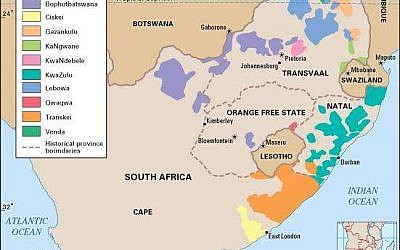
So, when Professor Emeritus Gidi Shimoni published an opinion piece in the Jerusalem Post in February 2011, explaining why Israel was not an Apartheid state, I not only agreed with him, but I used his article in my arguments with people who did call Israel an Apartheid state. Two nights ago, the Knesset passed the Nation State bill, writing into law that which we have known and has been recognized by the vast majority of nations throughout the world – and I found myself wondering what he would say now, in light of his article in 2011? Let me say that I have the utmost respect for Professor Gidi Shimoni; my intention is not to show that he was wrong, but that our reality has changed. (Map of Bantustan states in Apartheid South Africa)


In 2011, his first premise in differentiating Israel from Apartheid South Africa, was in the essence of the nature of the conflict; he wrote, “The essence of Israel’s conflict situation has always been a clash of nationalisms; ultimately over the question of who should have primacy in gaining national self-determination in a contested territory. By contrast, the South African conflict evolved out of a centuries-long, near absolute domination exercised by a self-defined racial minority (the whites) over an externally-defined racial majority of the population, which was denied equal civic rights, above all the primary democratic right, enjoyed exclusively by the whites.”

The Nation State Bill (“the Bill”) states:
– “The State of Israel is the national home of the Jewish people, in which it fulfills its natural, cultural, religious and historical right to self-determination.
– The right to exercise national self-determination in the State of Israel is unique to the Jewish people.”

In other words, for the two million Arabs and other minorities born and living in Israel, Israel is not their national home, and they have no right to self-determination, which is unique to Jews. So, as an Arab, you could trace your roots back to generations living in Israel, and your citizenship is not an indigenous inalienable right, but granted you begrudgingly, whereas a Jew who got off the plane yesterday, has greater claim to be here than you.

Further, in 2011, Shimoni wrote, “The Afrikaans term “apartheid” originated during the 1940s to describe an ideological conception and political program that justified, systematized, reinforced and expanded this pre-existent system of racial discrimination and separation.” – In other words, the Apartheid laws passed in 1960, which enshrined in South Africa’s law books the privilege and preexisting preference for White people in South Africa, had existed for decades, even centuries before the law was passed.

The Nation State Bill states “The state views the development of Jewish settlement as a national value and will act to encourage and promote its establishment and consolidation.”

This establishes legal privilege and priority for Jews and Jewish settlements, making it a legal precept in our laws. Like in South Africa, it formalizes in our law books the preference for Jews and Jewish settlements, something that has existed in so many facets of our life, for decades. Furthermore, it both contradicts and overrides our Declaration of independence, which has been the guiding light and our “presumptive Constitution”. “The state of Israel will promote the development of the country for the benefit of all its inhabitants” and then it goes on to say that it will “uphold the full social and political equality of all its citizens without distinction of race, creed or sex; and will guarantee full freedom of conscience, worship, education and culture.” – How can Israel now do that, when the Bill specifically states that it prioritizes one specific ethnic group? You cannot guarantee “full social and political equality for all your citizens”, when you place a higher value on the aspirations of one ethnic group.

Gidi Shimoni then goes on to assert that “world condemnation (of Apartheid) targeted two indefensible wrongs: firstly, the legalized racist basis of apartheid’s enforced inequalities; secondly the adamant refusal of the apartheid regime to cease its unilateral dictates and accept the option of negotiation.”

When you have a clause which says, “The state views the development of Jewish settlement as a national value and will act to encourage and promote its establishment and consolidation”, you have a legalized basis for inequalities.

How, you may ask? Here’s how. Up until now, the basis for allocation of funds to municipalities has been upon the basis of “X” shekels per capita per city/town. (Of course there has also always been a priorities map – which in itself is built in inequality – but by and large the budget for municipal funding was done according to this key). But now, with the law encouraging, promoting and establishing the consolidation of “Jewish settlements”, the road is clear to allocate “X” shekels per capita for Jewish settlements and councils and “Y” shekels (a lesser amount) per capita for others.

As for the second part, about accepting the option of negotiation: when the Bill writes into law that the right to exercise national self-determination is unique ∂to the Jewish people, and that “Jerusalem, complete and united, is the capital of Israel”, and that “The LAND of Israel is the historical homeland of the Jewish people, in which the State of Israel was established” (thereby describing not only Israel “proper”, but also the West Bank), what basis is there left for negotiation with the Palestinians? – So, in my opinion, the criterion which Shimoni emphasized was lacking in order to meet the condition of being Apartheid, now exists.

Add to that the demotion of Arabic as an official language of the state. Two million people have just been told that the language they speak as mother tongue is no longer recognized as an official language. What will this mean in the future, in terms of teaching at schools and state exams? Will all Arab students soon have to write their Bagrut exams in Hebrew, giving them an institutional disadvantage in their scholarly achievements, and which could have far-reaching effects on their qualification for university studies, professions and prospects? What will it mean in terms of sign-posting of streets and official offices? What will it mean in terms of budgeting for radio stations and culture?

Not related specifically to the Bill, but when an MK from the coalition (Smotrich), says he does not want his wife to share a ward in the hospital with an Arab woman, how long will it take before hospital rooms will be segregated? Or, when an organization like “Lehava”, which intimidates and targets Jewish-Arab couples finds sympathy among members of the legislature who sit in government, how long will it take before mixed marriage will be prohibited?

So far, we have talked about Israel “proper”. With regard to the West Bank, Gidi Shimoni did draw parallels with Apartheid and Israel’s activities in the West Bank. This is what he wrote of Israel’s policy in the West Bank, “It fosters Jewish settlement while subjecting the Palestinian majority to a wide range of administrative and legal discrimination and hardship … and limitations on freedom of movement and housing development”. Further, he explained how Afrikaner intelligentsia spoke of “separate development”, a phenomenon clearly evident in the West Bank.

What if Israel were to annex the West Bank? It is no longer far-fetched. The above-stated clauses of this Bill certainly gives that possibility a push forward, when it speaks of viewing Jewish settlements as a national value. It also does this, when it states in its first clause that “The land of Israel is the historical homeland of the Jewish people, in which the State of Israel was established”, thereby dismissing the differentiation between the State of Israel and the Land of Israel. When you add to that the pending law proposal to impose Israeli law on Jewish settlements in the West Bank, you have further evidence of us moving in that direction. If Israel annexes the West Bank, what will Israel do with the 2.5 million Arabs living there? Will it make them citizens and grant them franchise? I seriously doubt it. I think they will be disenfranchised, one way or another. That’s another nail, locking in Apartheid. But more worrying, how can it then justify allowing Israeli Arabs living inside Israel “proper” the right to vote, but not Arabs from the West Bank, if the West Bank will become an integral part of Israel? What does that mean about the traditional franchise of Israeli Arabs?

Or, Israel could adopt Naftali Bennett’s solution, which is to impose Israeli law on areas “B” and “C” as outlined by Oslo, while giving area “A” “autonomy”. Residents of area “A” would vote for their own leadership and administration. If you look at the map, you will see that area “A” basically is the area with dense Arab population – Ramalla, Nablus, Jericho etc – and there is no contiguous territorial connection between them (the connecting line is designated as “B”, which would be annexed). This is his way to circumvent the problem of giving 2.5 million Arabs voting rights. Basically, he is manipulating “democracy” for his nationalist purposes. In Shimoni’s 2011 article about South Africa, he says, “The most notable measure of this “reformed apartheid” praxis was the ruthless enforcement of the homelands (“Bantustans”) policy. Only in their own homelands were voting rights to be granted to the blacks, including those domiciled in white areas.” Sound familiar?

Shimoni describes Israel’s activities today in the West Bank as “a policy and vision that replicates the theory and praxis of the reformed phase of South Africa’s apartheid policy, which was adopted as a survivaliststrategy… Characteristically, they too cast about for spurious arrangements calculated to ensure Jewish control and privilege (like the Whites did in South Africa) – , devoid of Israeli political rights, or relegation of citizenship and electoral rights to the adjacent Kingdom of Jordan… It is in this respect alone that use of the South African analogy to critique Israel is justified, and importantly so.”

The similarity of Bennett’s plan to the Batustan policy is striking!

I wonder how Gidi Shimoni would view Israel today, as compared to his excellent, defining article seven years ago.

In 1982 I made Aliya and along with the excitement of fulfilling my Zionist dream, was relief that I was leaving Apartheid behind me. Now, I feel like history is repeating itself, and once again Apartheid is casting its shadow on my life. The reason why history repeats itself, even when we don’t forget it, is because we expect for it to be a carbon copy of the previous event, with the exact same policies and the exact same process and events – and that prevents us from identifying its repetition. However, it mutates. It becomes cloaked in euphemistic language. It is obfuscated. To prevent history from repeating itself, we need to see the process for what it is and not go into denial, wistfully thinking “we’re not there yet”. Apartheid is here. It is knocking on our door and the knocking is getting more insistent. Will we open it, or barricade it shut?


ABOUT THE AUTHOR
Paul Mirbach made aliya from South Africa to kibbutz Tuval in 1982 with a garin of Habonim members. Together they built a new kibbutz transforming rocks and mud to a green oasis in the Gallilee. He served in infantry during his army service, serving in both Lebanon and the West Bank, including on reserve duty during the first intifada. Paul still lives on Tuval with his wife and two sons.

Wednesday, June 13, 2018

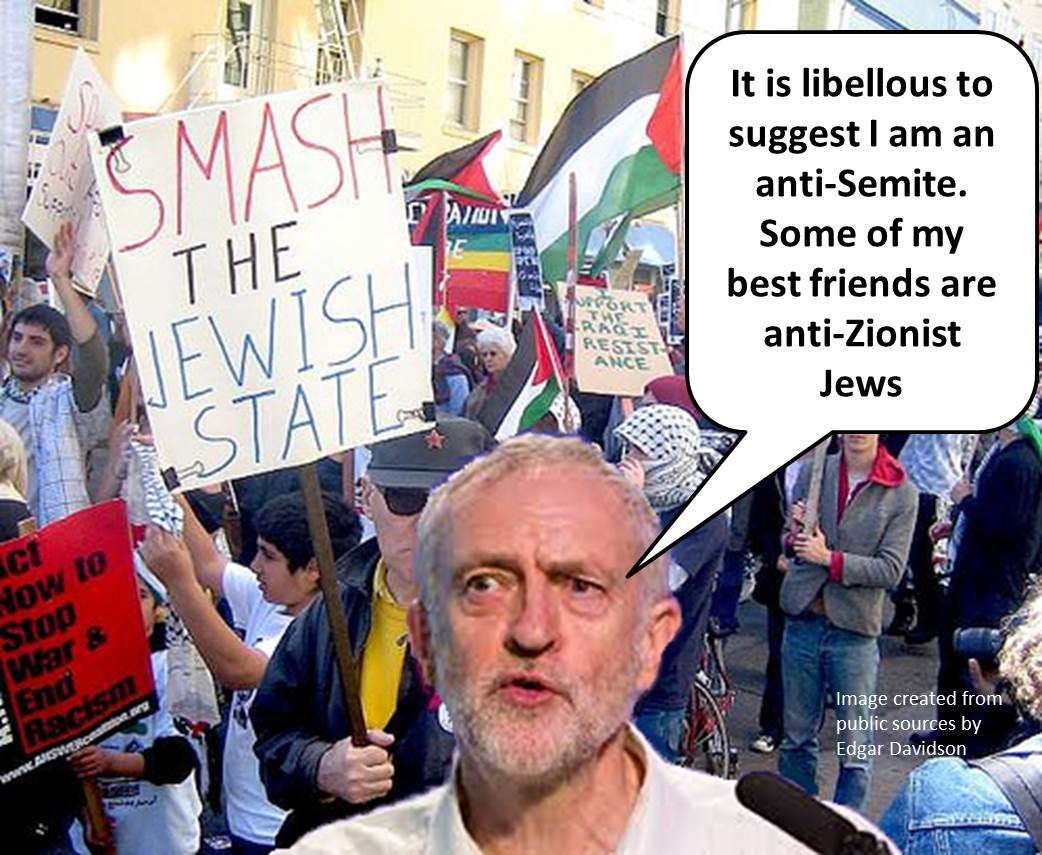
Bird's Eye View of Jeremy Corbyn and Uk Labour Party antiSemitism

Image result for Jeremy Corbyn anti israel and antisemitism

An analysis of the British Labour party under the chairmanship of Jeremy Corbyn provides a panoramic view of many aspects of socialist anti-Jewish hate-mongering. The most extreme comments come disproportionately from Muslims, a subject that is taboo for the British media. The incitement is accompanied by a whitewashing of the party’s anti-Semitism problem, a whitewashing that is supported by a great majority of its members. The ongoing hate-mongering in the party has led to some unprecedented reactions by the British Jewish leadership.

In the past decades, Western European social democrat politicians and parties have been among the most extreme inciters against Israel. In several cases, there have also been expressions of anti-Semitism. Leading socialist politicians, including the late Swedish Socialist Prime Minister Olof Palme and the late Greek Socialist Prime Minister Andreas Papandreou, have accused Israel of Nazi practices.

Only in the past two years, however, has a European socialist party – the British Labour Party – been exposed for widespread and extreme anti-Jewish incitement. Classic anti-Semitic as well as anti-Israel remarks by elected representatives have been published on a more or less ongoing basis. An analysis of the British Labour party provides a panoramic view of many aspects of socialist anti-Jewish hate-mongering.

In September 2015, extreme leftist Jeremy Corbyn became the party leader. A few months later, the first accusations about anti-Semitism concerning the Oxford University Labour Club became widely known. The party’s National Executive Committee chose to reveal only a limited summary of the findings exposed by Labour peer Lady Royall. Several months later the entire report was leaked to the press.

As the “anti-Semitism in Labour” issue started to interest the British media, it slowly became clear that extreme anti-Semitic expressions had been present in the party prior to Corbyn’s appointment. In 2014, for example, under previous Labour leader Ed Miliband, Naz Shah proposed – before she was elected MP in Bradford – that Israel should be relocated to the US. At that time, apparently no one was interested in publicizing this statement.

Among the expressions of anti-Semitic hate uttered by elected representatives, a disproportionate number has come from Muslims. This was the case during Miliband’s leadership and continues under Corbyn. Despite hundreds of articles on anti-Semitism in Labour, the specifically Muslim aspects remain taboo in the British media.

Miliband steered the party towards a proposal of recognition of a Palestinian state. This was possibly done to gain the support of Muslims during the May 2015 elections, as an estimated 4.5% of the British population are Muslim.

Image result for Jeremy Corbyn anti israel and antisemitism

Corbyn mixes with anti-Semites. He has donated money to, and attended gatherings of, a charity headed by Holocaust denier Paul Eisen. He has referred to the genocide-promoting Hamas and Hezbollah terrorist organizations as his friends. When he came to power he promoted anti-Semites, including Ken Livingstone, to senior positions. Livingstone, the former mayor of London, was later suspended after his repeated claims that Hitler had supported Zionism in the 1930s. Livingstone resigned from the party in 2018.

It is not easy to identify which of Corbyn’s acts fall squarely within the International Holocaust Remembrance Association’s definition of anti-Semitism, which was adopted by the UK government. In May 2018, Jonathan Arkush, outgoing President of the Board of Deputies, the umbrella organization of British Jewry, claimed that Corbyn held anti-Semitic views. He noted that the Labour leader had been chairman of the Stop the War organization, which is known for some of the worst anti-Israel discourse.

When media pressure concerning anti-Semitism in Labour became an issue, Corbyn appointed human rights activist Shami Chakrabarti in April 2016 to investigate the accusations. Her report was poorly written and unprofessional. Shortly afterwards, Corbyn proposed Chakrabarti for a peerage, which resulted in her becoming a baroness. Corbyn also appointed her the party’s Shadow Attorney General for England and Wales. Little has been heard from this supposed expert about ongoing Labour anti-Semitism.

It is by now abundantly clear that Corbyn has little desire to confront anti-Semitism in his party other than through general statements. As a result, the whitewashing of anti-Semitism in Labour has become a significant problem. In March 2018, a poll of paying Labour members found that 47% said anti-Semitism is a problem, but the extent of the problem is being exaggerated “to damage Labour and Jeremy Corbyn or to stifle criticism of Israel.” A further 30% said anti-Semitism is not a serious issue. Sixty-one percent thought Corbyn is handling the anti-Semitism claims well. Only 33% thought he is handling them badly.

The confrontation with anti-Semitism in one of the country’s two major parties has had an important impact on members of the Jewish community. Many of them no longer vote for Labour, and some have stopped donating. An unprecedented demonstration of the Jewish community against anti-Semitism in Labour took place in London outside a Parliamentary Labour Party (PLP) meeting. In a letter to the chair of the PLP, the Board of Deputies wrote: “Again and again, Jeremy Corbyn has sided with anti-Semites rather than Jews.”

In Parliament, several Jewish and pro-Jewish Labour MPs have reported that they have been subjected to tremendous harassment. Labour’s attempt to conquer the London constituency of Barnet – the most Jewish borough in the UK – failed in the May 2018 local elections.

The modest increase in Labour seats nationwide during those elections disappointed the party’s expectations and was seen as partly due to the anti-Semitism debate. Arkush went farthest, stating that Corbyn’s views could drive Jews to leave Britain if he were to become prime minister. He was one of the Jewish leaders who met Corbyn in April 2018, a meeting those leaders found disappointing.

Small groups on the Jewish left are enthusiastic supporters of Corbyn. He continues to provoke, and attended a Passover seder at Jewdas – a radical anti-Zionist Jewish organization that has called Israel a “steaming pile of sewage which needs to be properly disposed of.”

In March 2018, Corbyn said that since he became party chairman, there have been 300 complaints about anti-Semitism. He said that of those accused, 150 people have either been expelled or resigned, and added that the backlog of complaints is 60 cases. However, the Daily Mail reported a backlog of 74 cases and said MP John Mann claims to be aware of another 130 complaints. One source in Labour told the paper: “Many of these cases include the most shocking and blatant anti-Semitism that would make even a committed Nazi blush.”

The disappointing local election results may have been the impetus for Labour’s announcement that it will speed up dealing with the complaints with the intention of clearing the backlog by the end of July. In view of the party’s checkered past under Corbyn, we will have to wait and see whether this promise will be fulfilled.

Thursday, June 7, 2018

Stability in Gaza is not directly proportionate to Economic Benefits


Economic Benefits Will Not Bring Stability to Gaza


Image result for hamas rally


The easing of economic conditions – a strategy that benefited Palestinian areas in the West Bank – is increasingly touted as the way to achieve political stability in Gaza, which is ruled by Hamas. But this strategy only works after the enemy is defeated.

Many experts claim that an easing of economic conditions in Gaza, particularly the granting of permission to Gazans to work in Israel, is the way to achieve political stability in a Gaza Strip ruled by Hamas.

This is a fallacious argument.

To understand why this is so, one must revisit the Marshall Plan for Europe, the most successful example in history of how economic largesse can facilitate the transformation of a destructive foe into a staunch and healthy ally. West Germany became a lynchpin in the security architecture of the Western alliance against the Warsaw Pact countries under the Soviet orbit.

No one can deny the success of the Marshall Plan, especially in contrast to the fallout from the destructive vindictiveness of western allies against Germany after World War I. Indeed, that vindictiveness contributed to the rise of Nazi Germany, forming the historical justification for the Marshall Plan.

By the same token, one can hardly deny the even greater importance of two geostrategic factors at the time that made such economic largesse towards a former enemy worthwhile.

First, the total defeat of Nazi Germany, and its subsequent occupation and division by the winning coalition, meant that the US and its allies could mold West Germany to their liking through denazification and democratic rule, just as the Soviet Union created an East Germany in its own totalitarian image.

Second, West Germany was, like the rest of free Europe, beholden to the US for its security in the face of a menacing Soviet Union and its satellite states.

In the face of these two basic facts, the Marshall Plan can be seen as having facilitated and reinforced a process.

Benjamin Netanyahu’s liberal economic policy towards the residents of Mahmoud Abbas’s Palestinian Authority (PA), primarily the allowing of over 100,000 workers with or without permits to work in Israel, succeeded in part because it satisfied the two basic conditions that made the Marshall Plan successful.

At the height of the second intifada in 2002, Israel reconquered major towns in the PA that had become sanctuary areas for Fatah, PA-linked, Hamas, and Islamic Jihad terrorism. It has prevented the reemergence of sanctuary areas ever since through preventive arrests throughout the West Bank that run into the thousands annually.

Like Germany, the PA was essentially defeated. And as was the case with West Germany and the US, Israel and the PA became allied against joint enemies – Hamas and Islamic Jihad.

If the PA ever had any doubts about who was more threatening to Abbas’s rule, Israel or Hamas, those doubts were put to rest after the Hamas takeover of Gaza in 2007.

It was only after these two conditions were met that economic prosperity could play its facilitating role.

And even then, the economic effects were limited compared to hard and fast political and military factors.

After all, even after workers from the West Bank were granted permission to commute to work in Israel, where they earn almost twice the wages of workers in the PA (after debiting commuting costs), over 250 Palestinians were motivated to commit murders in the wave of terrorism at the end of 2015-16.

The relative difference in the lethality of this terrorist wave – in which only 45 were killed compared to 800 in the second intifada by the same number of terrorists – was due not to a decrease in motivation but to the fact that they no longer had sanctuaries from which to organize elaborate suicide bombings or store large quantities of firearms.

In fact, by the time of the wave, the professional terrorist infrastructures of Hamas and Islamic Jihad had been thoroughly smashed.

In Gaza, neither of these conditions prevails. Gaza under Hamas rule remains a sanctuary area where Hamas can freely build up its military capabilities and launch a sophisticated campaign like the March of Return with little interference.

There is no common enemy that would render Hamas conciliatory, as was the case between the US and West Germany or between Israel and the PA.

Only a policy of toughness towards Hamas can induce it to assure stability and quiet in Gaza.

The three large-scale bouts of conflict between Israel and Hamas in 2008-9, 2012, and 2014 led the inhabitants of Gaza to demand that Hamas bring an end to the launching of missiles that had led to those clashes. Hamas acknowledged that pressure and acted upon it.

Further popular pressure after the failure of the March of Return campaign is likely to induce Hamas to stop campaigns of violence altogether.

Economic largesse at this point would only augment Hamas’s resources, as it taxes incoming goods and aid. That money will be funneled back to its hard core through campaigns such as the March of Return.

Gaza’s inhabitants voted in Hamas in 2006. They have lived to regret it. It is now incumbent upon them to defang their government by making sure it deals in butter, not guns.

Only when Hamas envisions its territory as a future Singapore rather than a murderous labyrinth of fundamentalist terrorism should economic benefits accrue to Gaza.

Friday, May 25, 2018

Time for a Independent ( relatively) Gaza Strip Entity ?


Time to Reach a Settlement with a Functional and Restrained Entity in the Gaza Strip

The idea of the “March of Return,” which was initiated by civil organizations in the Gaza Strip seeking once more to direct the attention of the international community to the suffering of the local population by means of mass demonstrations along the border, was hijacked by Hamas. Hamas pushed aside the organizers of the project and in effect took over the production and direction of the events. For its part, Israel is capable of accommodating a hostile entity living beside it, as long as this entity is restrained, deterred, and functional. This aim can only be achieved after Israel recognizes the need to develop separate strategies vis-à-vis the Gaza Strip and the West Bank, exhaust every possibility of taking advantage of Hamas’s current weakness, and leverage Hamas’s willingness for a long term hudna. The proposed strategy is also based on the understanding that the Palestinian Authority will not resume its rule in the Gaza Strip in the foreseeable future, and that effort must be invested to consolidate the PA’s governance in the West Bank and improve the living conditions, freedom of movement, and economy in that area, while also securing the conditions for the future achievement of two nation states.
Since late March 2018, a campaign along the border of the Gaza Strip has been underway, based on a rationale shaped by Hamas, which took control of a civilian initiative that provided the organization with an escape route from its current strategic hardship. The idea of the “March of Return,” which was initiated by civil organizations in the Gaza Strip seeking to refocus the attention of the international community on the suffering of the local population by means of mass demonstrations along the border, was hijacked by Hamas. Hamas pushed aside the organizers of the project and in effect took over the production and direction of the events.

Hamas’s difficulties stem from four main reasons:

a. The failed reconciliation process with Fatah, which resumed after Hamas announced its failure to administer the civil realm in the Gaza Strip and expressed its willingness to transfer relevant powers to the Palestinian Authority;

b. The severe humanitarian plight in the Gaza Strip and the mounting frustration of the local population;

c. The significant erosion of the value of its strategic military assets, given the defensive and neutralizing elements that have been developed by the IDF;

d. Hamas’s essential lack of desire and readiness to enter into another large scale military clash with the IDF.

Thus, the campaign along the border fence serves a number of Hamas’s strategic goals, most importantly by diverting the mounting frustration among the local population toward Israel and demonstrating the organization’s commitment to the struggle against Israel, which necessarily comes at the expense of the status of the Palestinian Authority. At the same time, it serves to refocus international attention on the Gaza Strip, strengthen the narrative of Palestinian victimhood, exhaust the IDF forces along the border over a long period of time, and delegitimize Israel.

The failure of the reconciliation process between Fatah and Hamas underscores that only an extremely slim chance exists that the Palestinian Authority will regain control of civil administration in the Gaza Strip. In reality, there are two separate Palestinian entities, each of which is hostile to the other and both of which struggle against Israel: Hamas, which leads the armed struggle and, in the current campaign, the local popular struggle as well; and the Palestinian Authority, which leads the popular struggle and the political struggle in the international arena. However, security and economic coordination and cooperation exists between Israel and the Palestinian entity in the West Bank, and some local civilians are even permitted to work in Israel and in the industrial areas of the Israeli settlements in the West Bank. The inhabitants of this region enjoy a significantly higher standard of living than the residents of the Gaza Strip, as well as more extensive freedom of movement.

The current campaign along the border with the Gaza Strip reminds us that under the present circumstances – most prominently the split in the Palestinian arena and the severe humanitarian and infrastructure conditions in the region – the Gaza Strip will continue to constitute a strategic challenge for Israel even when the current phase within it comes to a close. However, Israel’s position and policy regarding Hamas and the Gaza Strip perpetuate this situation and therefore also fuel the underlying conditions for security escalation.

Based on the assumption that Hamas will remain the sovereign power in the Gaza Strip and that Israel does not intend to take action to remove it from power and replace it with other leadership or govern the Gaza Strip on its own, Israel needs to examine the possibility of coming to terms with this hostile entity on its border and formulating a strategy to regulate its relations with it, including by means of security understandings and even a limited degree of security coordination. This presumably would create a chance for ongoing quiet along and around the border.

Israel, with the assistance of Egypt and the involvement of the international community, can develop mechanisms of regulation and interaction vis-à-vis Hamas, even without mutual recognition and without direct contact. These mechanisms could serve to facilitate a more effective response, in comparison to what exists today, to the humanitarian hardships that currently prevail inside the Strip; to restrain Hamas from attempts to strike at Israel; and to improve its civil governance in the Gaza Strip. After all, there is not necessarily a contradiction between the Gaza Strip being a hostile entity and the ability to develop mechanisms of regulation and interaction.

Such a course of action would be conditional upon undermining the equation that was established between Israel and Hamas since its security closure of the Gaza Strip in June 2007, whereby the Palestinian Authority is the only official party with which Israel will engage in dialogue. Israel must come to terms with the existence of both distinct Palestinian entities and strive to establish a reality based on an arrangement that will be less than a final status settlement, with conceptual and operative separation between the policy toward the Palestinian Authority in the West Bank and the separate policy to be developed and sharpened vis-à-vis the Gaza Strip. The proposed strategy, then, calls for striving to reach an arrangement with Hamas, which will necessarily strengthen it and could serve to weaken the status of the Palestinian Authority. This arrangement would promote a long term hudna with Hamas.

In recent months, Hamas spokespeople have conveyed messages indicating a willingness on their part to reach a long term hudna with Israel. This was not the first time that such sentiments have been voiced. However, the idea never took shape due to conditions advanced by Hamas for its implementation, as well as Israel’s unwillingness to consider a possibility in this direction, which would necessarily mean recognition and legitimization (albeit indirect) of Hamas and its control over the Gaza Strip. This time, as well, a process leading to an agreement over a hudna between Israel and Hamas, whether declared or implied, will be complicated. However, in light of Hamas’s hardships and the hopelessness of the Gaza population (which in itself constitutes a threat to Hamas’s rule and the danger of a chaotic reality as a result of its undermining or fall), its fundamental willingness for a hudna (which is also encountering opposition within Hamas’s ranks and leadership) can be viewed as a basis for a greater feasibility of actualizing the idea.

To advance the idea, Israel will need to qualify the reservations of the international community in general, and the European Union in particular, regarding its intentions regarding Hamas and regarding the Palestinian Authority. However, the Palestinian Authority now is neither present nor governing in the Gaza Strip in any event, and there is currently no concrete chance of a change in this situation. Therefore, adhering to the condition that all contributions to the Gaza Strip be made through the Palestinian Authority and that the PA be returned to power in the Strip actually helps perpetuate the problematic reality in the Strip and, at the same time – in part because the political process is currently at a dead end – does not serve to strengthen the Palestinian Authority.

The first stage of a process of regulating interactions with Hamas in the Gaza Strip will require the work of a mechanism led by representatives of the involved parties and Hamas that is charged with supervising the use, and preventing the abuse, of donated funds. The possibility of using this mechanism to transfer a relative portion of the tax revenues collected by Israel for goods and services into the Gaza Strip should be considered. Next, and subject to Hamas’s fulfillment of the terms of the agreement, the possibility of expanding its powers regarding the management of the donated funds should also be considered. Israel will also need to recruit Egypt as a major partner in the process vis-à-vis Hamas. Egypt’s contribution will need to take the form of the regular operation of the Rafah border crossing, securing Hamas’s commitment to the process, and restraining the organization. At the same time, it will be necessary to create the conditions for channeling the relief funds to the rebuilding of essential infrastructure and economic incentives, including through the establishment of industrial areas on the border of the Strip. Such areas will provide a location for advancing and implementing joint industrial initiatives that will provide employment. Israel will be able to help create conditions for the normalization of the local population if it considers adopting an approach that is more flexible regarding the import and export of goods to and from the Strip and increasing the number of entry permits for commercial traders, workers, and those in need of medical treatment.

Israel already has experience building mechanisms aimed at regulating relations with Hamas (the principles of the security perimeter that were formulated through Egyptian mediation following Operation Pillar of Defense), and doing so would therefore not be setting a precedent. Nonetheless, this time, Israel could begin reshaping its policy regarding the Gaza Strip with the aim of leveraging Hamas’s current weakness and the willingness for a hudna that is taking shape among influential elements within Hamas’s leadership, led by the organization’s leader in the Gaza Strip, Yahya Sinwar. Although Hamas is not expected to dismantle its military wing even within the framework of a hudna, there is reason to believe that it will be possible to reach agreements regarding the cessation of its military buildup and its efforts to develop offensive means against Israel in the underground, maritime, and air realms.

In parallel, and in order to reduce the effect of the new policy toward Hamas on the status of the Palestinian Authority, Israel will need to present a policy for conduct vis-à-vis the Palestinian Authority itself. In this realm, Israeli policy will need to be based on three primary foundations: a) preservation of Israel’s ability to engage in security activity in the West Bank; b) striving to improve the economic and infrastructure reality in the West Bank, including the creation of transportation contiguity and authorization for the construction of Palestinian infrastructure in the parts of Area C that are adjacent to Area A; and c) a commitment to refrain from expanding settlements outside the settlement blocs.

Israel is capable of accommodating a hostile entity living beside it, as long as this entity is restrained, deterred, and functional. This aim can only be achieved after Israel recognizes the need to develop separate strategies vis-à-vis the Gaza Strip and the West Bank, exhaust every possibility of taking advantage of Hamas’s current weakness, and leverage Hamas’s willingness for a long term hudna. The proposed strategy is also based on the understanding that the Palestinian Authority will not resume its rule in the Gaza Strip in the foreseeable future, and that effort must be invested to consolidate the PA’s governance and rule in the West Bank and improve the living conditions, freedom of movement, and economy there, while also securing the conditions for the future achievement of two nation states.

Thursday, May 24, 2018

Liberal Zionism and the increasing wedge between US and Israeli Jews


 A troubling side effect of the Zionist enterprise is that 70 years after the State of Israel came into being, a wedge has grown between Israelis and the Diaspora, driven by guilt and presumptions of moral superiority. The root of the problem is that too many American Jews are uncomfortable with power.

In Mandatory Palestine, Jews began to accumulate power – economic, political, and military – which caused other Jews to immediately question the enterprise itself. Old anti-Semitic tropes came to the fore, like the notion that a Jewish state would be based on “exploitation” or even Zionist “world domination”. The prospect of a Jewish state generated non-Jewish hostility and, among a Jewish minority, feelings of guilt. Decades before the state was founded, Judah Magnes anxiously said: “It is not only the end which for Israel must be desirable, but what is of equal importance, the means must be conceived and brought forth in cleanliness.”
But no state has or could achieve that desired level of purity, particularly one surrounded by implacable enemies. Powerlessness was the preferred – even the ideal – situation, and the rootlessness that accompanied it.
A century after Balfour, the strength of his declaration is grounded in the political understanding that Jews are indeed a nation. Zionism is thus Jewish nationalism in its purest form.
Yet today, the word Zionism is unique. No other term for a national movement evokes such a visceral reaction. No other word has been infamously defined in the UN as “a form of racism and racial discrimination” by a coalition of racists led by the Soviet Union, as occurred in 1975.
No other national movement has a global boycott movement aimed against it that positions itself on a moral pedestal and strives to rewrite history and control the definition of Zionism itself.
Among the most pernicious consequences of the BDS movement is the wedge that has been driven between Israel and liberal Americans, including liberal American Jews. The relentless misappropriation of human rights and anti-racist discourse, the slanderous talk of Israeli “ethnic cleansing” and “genocide,” and the bitter ad hominem attacks on Israelis, their international supporters, and the peace process itself have taken a severe toll on American civil discourse.
Jews and Israelis are now called upon to demonstrate their “moral fiber” by using their own Jewish identity as a vehicle to question Israel and its legitimacy. More perverse are the use of Jewishness to passionately make pleas for the Palestinian cause and the assertion that Jewishness is somehow based on pro-Palestinian beliefs as a “progressive” value.  For Jews on the far Left, as for Arab Palestinians, the events of 1948 are the original sin.
Seen through a colonialist prism, Western powers implanted a Jewish state in the Middle East to control the region. Jews, the true indigenous population, are cast as doubly illegitimate. Jewish apathy, religious ignorance, and the deliberate substitution of “social justice” for traditional Jewish liturgy account for the decline – and show the danger of placing antipathy towards the Jewish state of Israel at the center of religious belief.
Related image
Historically, from before 1948 all the way through the aftermath of the 1967 Six Day War, there was an appreciation of Israel – not only as the fulfillment of the ancient longing for return, but also as a haven. In the aftermath of the Holocaust the threat of annihilation was understood to be real. Moreover, Zionism was viewed as part and parcel of American Jewish identity, especially in the years leading up to 1967. There was no contradiction between being a liberal American and a Jew.
Justice Louis Brandeis expressed this well:
Let no American imagine that Zionism is inconsistent with patriotism…There is no inconsistency between loyalty to America and loyalty to Jewry. The Jewish spirit, the product of our religion and experiences, is essentially modern and essentially American…Indeed, loyalty to America demands rather that each American Jew become a Zionist. For only through the ennobling effect of its striving can we develop the best that is in us and give to this country the full benefit of our great inheritance.
Albert Einstein had a similar appreciation for Zionism and the Jewish State:
Zionism springs from an even deeper motive than Jewish suffering. It is rooted in Jewish spiritual tradition, whose maintenance and development was for Jews the raison d’être of their continued existence as a community. In the re-establishment of the Jewish nation in the ancient home of the race, where Jewish spiritual values could again be developed in a Jewish atmosphere, the most enlightened representatives of Jewish individuality see the essential preliminary to the regeneration of the race and the setting free of its spiritual creativeness.
Both Brandeis and Einstein clearly understood the need to maintain and incorporate Zionism within their Jewish identity even if they did not agree with certain policies of the State of Israel and its leadership.
The Zionism of 1948-1967 is not the Zionism of 2018; each generation needs to find its own form of Zionism. But eliminating Zionism in the name of Judaism negates Jewish history instead of embracing and remembering it. As Yigal Allon correctly stated, “Zionism is, in sum, the constant and unrelenting effort to realize the national and universal vision of the prophets of Israel.”
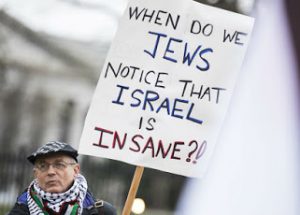
Many of the problems faced by Israel at 70 are manifested within the Jewish community, above all a false distinction between anti-Semitism and anti-Zionism. At the end of the day it will have to be understood that hatred of Israel can no longer be separated from loathing of Jews, even by Jews 

Wednesday, May 23, 2018

Iran’s Dilemma: Respond to Israeli Actions in Syria in direct attacks o Israel or with Terror Attacks Abroad?


In view of the public promise by senior Iranian spokespersons that Israel would soon weep over its soldiers just as Iran mourned its soldiers, it remains to be seen if and how Iran will retaliate against Israel’s recent broad counter-attack against Iranian targets in Syria: with what intensity, with what method, and in what location. However, notwithstanding declarations from Iranian leaders that ongoing Israeli actions against its forces and proxies will lead to the destruction of Haifa and Tel Aviv, it appears that Iran is not genuinely interested in war, particularly not on Syrian or Lebanese territory, fearing the consequences for both the survival of the Assad regime and for Hezbollah's status. (Israel too is not interested in an all-out war.) Therefore the mutual verbal onslaughts between Israel and Iran oblige both sides to ensure that their actions should be painful, but at the same time measured, in order to avoid escalation. For Iran, a possible arena for a response to what is perceived as intolerable Israel provocation is the international arena. Israel, aware from past experience how Iran can use its capabilities and proxies to carry out serious attacks on Israeli and Jewish targets overseas, is preparing for the possibility that Iran may choose this method again. The main candidates for executing such an attack are the Revolutionary Guards, alone or in cooperation with contracted Hezbollah operatives skilled in overseas attack arrangements, and perhaps even with the assistance of local elements in the various countries.

Iran’s launch of some twenty missiles from Syria toward Israeli territory on the night of May 9-10, 2018 marked the end of the Israeli debate on the question of whether, how, and from where Iran would seek to avenge the deaths of its Revolutionary Guards operatives in Israel's attacks on Syrian territory. After the first Iranian response to the attacks, in which Israel suffered no losses, Israel responded to the missiles with a widespread attack on Iranian military infrastructures in Syrian territory, causing severe damage. In view of the public pledge by senior Iranian spokespersons that Israel would soon weep over its soldiers just as Iran mourned its soldiers, it remains to be seen if and how Iran will retaliate for Israel’s broad counter-attack: with what intensity, with what method, and in what location.

The Iranian rhetoric suggests the response will be directed against military targets in Israel. However, the scope and continuation of Israeli damage to Iranian targets in Syria; the influence attributed to Israel over President Trump's decision to withdraw from the nuclear agreement; Iran's embarrassment over the public exposure of its nuclear archive; and public threats by senior Israeli figures to block Iran's intention to consolidate its military infrastructure in Syria – all these add to the Iranian sense of humiliation and could broaden the range of its possible responses. Apart from the Revolutionary Guards, Iran can draw from a pool of proxies and organizations comprising Lebanese, Iraqi, Syrian, Palestinian, Afghan, and Pakistani militants. Some might be willing to participate in action against Israel. And notwithstanding declarations from Iranian leaders that ongoing Israeli actions against its forces and proxies will lead to the destruction of Haifa and Tel Aviv, it appears that Iran is not genuinely interested in war, particularly not on Syrian or Lebanese territory, fearing the consequences for both the survival of the Assad regime and for Hezbollah's status. (Israel too is not interested in an all-out war.) Therefore the mutual verbal onslaughts between Israel and Iran oblige both sides to ensure that their actions should be painful, but at the same time measured, in order to avoid escalation.

For Iran, a possible arena for a response to what is perceived as intolerable Israel provocation is the international arena, although that too is not free of risks and constraints. Israel, aware from past experience how Iran can use its capabilities and proxies to carry out serious attacks on Israeli and Jewish targets overseas, is preparing for the possibility that Iran may choose this method again. The main candidates for executing such an attack are the Revolutionary Guards, alone or in cooperation with contracted Hezbollah operatives skilled in overseas attack arrangements, and perhaps even with the assistance of local elements in the various countries.

For Iran, there are pros and cons regarding overseas terror attacks on Israeli or Jewish targets. The decisions will depend on the answers to the following questions:

a.Would one or more terror attacks on Israeli/Jewish targets overseas be a suitable response to the severe damage suffered by Iran in Syria, and fulfill the declared Iranian promise to make Israel pay?

b.To what extent would such an action deter Israel from continuing its attacks against Iranian moves towards consolidation in Syria?

c. What are the chances of executing an attack without the perpetrators or their support staff being caught or leaving traces that lead back to Iran?

d. Is it possible to realize this intention within a reasonable timeframe, so that the connection between the Israeli activity and the response is clear? An effective attack overseas requires a local logistical and human infrastructure linked to external activists. Even if the basic infrastructure already exists, it will take time to train it properly while avoiding any incriminating links to Iran. Precise information must be collected about targets, which is particularly challenging given the strict Israeli security arrangements for their overseas representatives and institutions. Moreover, the planners must take into account that Israeli security elements are particularly alert at this time and also enjoy cooperation with local security elements.

e. How is it possible to avoid further damage to Iran's image and preclude further isolation, especially when the United States is leading an international campaign to tarnish its name as a country that uses fraud and deception in the nuclear field, and a leading player in the spread of international terror? For example an exposure of Iran's involvement in a terror attack in the European arena, an attack that it initiated and carried out itself or through a proxy, would support the American demand to impose sanctions on Iran for terror, perhaps within an international coalition. There would likewise be negative ramifications in the nuclear context, since Iran has no interest in hampering the efforts of Western countries to prevent the collapse of the nuclear agreement following the withdrawal of the United States.

f. The arena: Iran's need to limit the risk of exposure and consequential severe diplomatic damage could direct the attention of the planners to places where these risks are relatively small. Accordingly, countries in Africa, Southeast Asia, or Central and South America are more suitable than the United States or leading European countries.

g.The nature of attacks and an estimated number of casualties, as much as possible: when selecting the type of action, there is tension between the wish to impose a painful and heavy price on Israel and the fear of a direct Israeli response, and particularly of a strong international response. Such responses will be directly influenced by the number of victims, direct and indirect, resulting from the attack. For example, an attack on a passenger aircraft could potentially cause massive deaths and lead Israel to an extremely severe response, with significant escalation of its activity against Iran, and also arouse intense international anger. On the other hand, damage that is limited to Israeli representatives or organizations will keep the tension within the bilateral sphere, if there are few local casualties.

Iran could opt for a terror attack on Jewish targets identified with Israel, or on Israeli residents and tourists, who are less protected. The many young Israelis who travel in Latin America and the Far East after their army service could be an attractive target for an attack or even kidnapping, since Iran and Hezbollah can present them as Israeli soldiers.

Overseas terror appears to be a means of warfare available to Iran in cases where it wishes to respond, take revenge on Israel, and send messages of deterrence, while retaining the ability to deny any involvement. In recent years, the Israeli public has tended to downplay the potential danger from terror attacks by Iran and Hezbollah, due to the relatively weak Iranian response to assassinations of its nuclear scientists that are attributed to Israel, and because of Hezbollah's failed response to the death of Imad Mugniyeh in 2008: Nasrallah assured Israel of a very severe response and failed. Iran and Hezbollah together planned at least 15 attacks overseas, including attacks on Israeli targets in India and Bulgaria. Thus, Iran and its proxy have not been deterred from attempts to harm Israel outside its borders, and this fact should always be borne in mind. The sometimes unprofessional execution and Israel's success - in cooperation with foreign security elements - in foiling most of the planned attacks are no guarantee that Iran and Hezbollah will not improve their future performance.

To date, Israel has not succeeded in deterring Iran and Hezbollah from use of the overseas arena to launch revenge actions and to intimidate Israel. Iran's relative inaction in this arena is mainly due to self restraint, in view of the potential for international complications, or preference for other, more available, arenas. Hezbollah's "open account" with Israel for Mugniyeh's death, declared by Nasrallah, has not been closed. Moreover, it has been joined by other "open accounts" for the killings of other senior Hezbollah personnel, as well as the Iranian Revolutionary Guards killed by Israel in Syria. All these could lead Iran and Hezbollah back to consider the overseas arena, but this time Iran will probably be more meticulous about professional execution, and choose relatively convenient sites for action, where the chances of being foiled or exposed are more limited. Nor is it yet clear if Iran would stop at this stage, or be satisfied with efforts to attack Israel from the battlefield in Syria, or whether it will decide to operate in other areas on the Israeli borders and even beyond. In any event, it seems that the current head-on hostilities with Israel will stimulate Iran to refresh its ability to carry out terror attacks overseas. If it indeed decides to take this route, the infrastructure and capabilities at its disposal will be better than those demonstrated by Iran and Hezbollah in recent years.