Showing posts with label Apartheid. Show all posts

Tuesday, July 24, 2018

How Do You Say Apartheid in Hebrew by Paul Mirbach ( republished )


In late autumn of 1985, I made the long journey on Egged buses from my kibbutz near Karmiel to Jerusalem, in order to interview Gidi Shimoni. Shimoni, for me, was a cultural hero, a shining beacon of success for a South African who made Aliya to Israel. Not only was he a member of Habonim, our Zionist-socialist youth movement like myself, but he was an example of one who had made it “big time”; he was a senior Doctor of History at the University of Jerusalem, a leading intellectual and a respected force in academia. The subject of my interview, was Jewish fascism. This was the time when Meir Kahane was elected to the Knesset, riding the wave of racial hate and Jewish superiority to get elected. It was for an article I was writing, for a Habonim publication, which I had volunteered to edit. Shimoni did not disappoint; the impression he had on me has lasted to this day. This quote has stuck with me, never forgotten: “Chauvinism is when you take one value, however honorable it may be, and raise it above all other values. Fascism is when you make that value an absolute, and subjugate all other values to it”. It was like a light came on in my brain, like I had an epiphany, a clarification of the epithet from the definition.


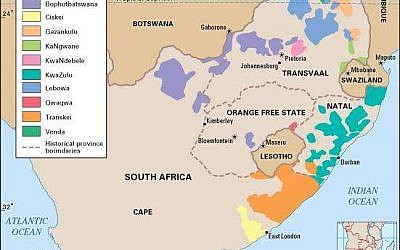
So, when Professor Emeritus Gidi Shimoni published an opinion piece in the Jerusalem Post in February 2011, explaining why Israel was not an Apartheid state, I not only agreed with him, but I used his article in my arguments with people who did call Israel an Apartheid state. Two nights ago, the Knesset passed the Nation State bill, writing into law that which we have known and has been recognized by the vast majority of nations throughout the world – and I found myself wondering what he would say now, in light of his article in 2011? Let me say that I have the utmost respect for Professor Gidi Shimoni; my intention is not to show that he was wrong, but that our reality has changed. (Map of Bantustan states in Apartheid South Africa)


In 2011, his first premise in differentiating Israel from Apartheid South Africa, was in the essence of the nature of the conflict; he wrote, “The essence of Israel’s conflict situation has always been a clash of nationalisms; ultimately over the question of who should have primacy in gaining national self-determination in a contested territory. By contrast, the South African conflict evolved out of a centuries-long, near absolute domination exercised by a self-defined racial minority (the whites) over an externally-defined racial majority of the population, which was denied equal civic rights, above all the primary democratic right, enjoyed exclusively by the whites.”

The Nation State Bill (“the Bill”) states:
– “The State of Israel is the national home of the Jewish people, in which it fulfills its natural, cultural, religious and historical right to self-determination.
– The right to exercise national self-determination in the State of Israel is unique to the Jewish people.”

In other words, for the two million Arabs and other minorities born and living in Israel, Israel is not their national home, and they have no right to self-determination, which is unique to Jews. So, as an Arab, you could trace your roots back to generations living in Israel, and your citizenship is not an indigenous inalienable right, but granted you begrudgingly, whereas a Jew who got off the plane yesterday, has greater claim to be here than you.

Further, in 2011, Shimoni wrote, “The Afrikaans term “apartheid” originated during the 1940s to describe an ideological conception and political program that justified, systematized, reinforced and expanded this pre-existent system of racial discrimination and separation.” – In other words, the Apartheid laws passed in 1960, which enshrined in South Africa’s law books the privilege and preexisting preference for White people in South Africa, had existed for decades, even centuries before the law was passed.

The Nation State Bill states “The state views the development of Jewish settlement as a national value and will act to encourage and promote its establishment and consolidation.”

This establishes legal privilege and priority for Jews and Jewish settlements, making it a legal precept in our laws. Like in South Africa, it formalizes in our law books the preference for Jews and Jewish settlements, something that has existed in so many facets of our life, for decades. Furthermore, it both contradicts and overrides our Declaration of independence, which has been the guiding light and our “presumptive Constitution”. “The state of Israel will promote the development of the country for the benefit of all its inhabitants” and then it goes on to say that it will “uphold the full social and political equality of all its citizens without distinction of race, creed or sex; and will guarantee full freedom of conscience, worship, education and culture.” – How can Israel now do that, when the Bill specifically states that it prioritizes one specific ethnic group? You cannot guarantee “full social and political equality for all your citizens”, when you place a higher value on the aspirations of one ethnic group.

Gidi Shimoni then goes on to assert that “world condemnation (of Apartheid) targeted two indefensible wrongs: firstly, the legalized racist basis of apartheid’s enforced inequalities; secondly the adamant refusal of the apartheid regime to cease its unilateral dictates and accept the option of negotiation.”

When you have a clause which says, “The state views the development of Jewish settlement as a national value and will act to encourage and promote its establishment and consolidation”, you have a legalized basis for inequalities.

How, you may ask? Here’s how. Up until now, the basis for allocation of funds to municipalities has been upon the basis of “X” shekels per capita per city/town. (Of course there has also always been a priorities map – which in itself is built in inequality – but by and large the budget for municipal funding was done according to this key). But now, with the law encouraging, promoting and establishing the consolidation of “Jewish settlements”, the road is clear to allocate “X” shekels per capita for Jewish settlements and councils and “Y” shekels (a lesser amount) per capita for others.

As for the second part, about accepting the option of negotiation: when the Bill writes into law that the right to exercise national self-determination is unique ∂to the Jewish people, and that “Jerusalem, complete and united, is the capital of Israel”, and that “The LAND of Israel is the historical homeland of the Jewish people, in which the State of Israel was established” (thereby describing not only Israel “proper”, but also the West Bank), what basis is there left for negotiation with the Palestinians? – So, in my opinion, the criterion which Shimoni emphasized was lacking in order to meet the condition of being Apartheid, now exists.

Add to that the demotion of Arabic as an official language of the state. Two million people have just been told that the language they speak as mother tongue is no longer recognized as an official language. What will this mean in the future, in terms of teaching at schools and state exams? Will all Arab students soon have to write their Bagrut exams in Hebrew, giving them an institutional disadvantage in their scholarly achievements, and which could have far-reaching effects on their qualification for university studies, professions and prospects? What will it mean in terms of sign-posting of streets and official offices? What will it mean in terms of budgeting for radio stations and culture?

Not related specifically to the Bill, but when an MK from the coalition (Smotrich), says he does not want his wife to share a ward in the hospital with an Arab woman, how long will it take before hospital rooms will be segregated? Or, when an organization like “Lehava”, which intimidates and targets Jewish-Arab couples finds sympathy among members of the legislature who sit in government, how long will it take before mixed marriage will be prohibited?

So far, we have talked about Israel “proper”. With regard to the West Bank, Gidi Shimoni did draw parallels with Apartheid and Israel’s activities in the West Bank. This is what he wrote of Israel’s policy in the West Bank, “It fosters Jewish settlement while subjecting the Palestinian majority to a wide range of administrative and legal discrimination and hardship … and limitations on freedom of movement and housing development”. Further, he explained how Afrikaner intelligentsia spoke of “separate development”, a phenomenon clearly evident in the West Bank.

What if Israel were to annex the West Bank? It is no longer far-fetched. The above-stated clauses of this Bill certainly gives that possibility a push forward, when it speaks of viewing Jewish settlements as a national value. It also does this, when it states in its first clause that “The land of Israel is the historical homeland of the Jewish people, in which the State of Israel was established”, thereby dismissing the differentiation between the State of Israel and the Land of Israel. When you add to that the pending law proposal to impose Israeli law on Jewish settlements in the West Bank, you have further evidence of us moving in that direction. If Israel annexes the West Bank, what will Israel do with the 2.5 million Arabs living there? Will it make them citizens and grant them franchise? I seriously doubt it. I think they will be disenfranchised, one way or another. That’s another nail, locking in Apartheid. But more worrying, how can it then justify allowing Israeli Arabs living inside Israel “proper” the right to vote, but not Arabs from the West Bank, if the West Bank will become an integral part of Israel? What does that mean about the traditional franchise of Israeli Arabs?

Or, Israel could adopt Naftali Bennett’s solution, which is to impose Israeli law on areas “B” and “C” as outlined by Oslo, while giving area “A” “autonomy”. Residents of area “A” would vote for their own leadership and administration. If you look at the map, you will see that area “A” basically is the area with dense Arab population – Ramalla, Nablus, Jericho etc – and there is no contiguous territorial connection between them (the connecting line is designated as “B”, which would be annexed). This is his way to circumvent the problem of giving 2.5 million Arabs voting rights. Basically, he is manipulating “democracy” for his nationalist purposes. In Shimoni’s 2011 article about South Africa, he says, “The most notable measure of this “reformed apartheid” praxis was the ruthless enforcement of the homelands (“Bantustans”) policy. Only in their own homelands were voting rights to be granted to the blacks, including those domiciled in white areas.” Sound familiar?

Shimoni describes Israel’s activities today in the West Bank as “a policy and vision that replicates the theory and praxis of the reformed phase of South Africa’s apartheid policy, which was adopted as a survivaliststrategy… Characteristically, they too cast about for spurious arrangements calculated to ensure Jewish control and privilege (like the Whites did in South Africa) – , devoid of Israeli political rights, or relegation of citizenship and electoral rights to the adjacent Kingdom of Jordan… It is in this respect alone that use of the South African analogy to critique Israel is justified, and importantly so.”

The similarity of Bennett’s plan to the Batustan policy is striking!

I wonder how Gidi Shimoni would view Israel today, as compared to his excellent, defining article seven years ago.

In 1982 I made Aliya and along with the excitement of fulfilling my Zionist dream, was relief that I was leaving Apartheid behind me. Now, I feel like history is repeating itself, and once again Apartheid is casting its shadow on my life. The reason why history repeats itself, even when we don’t forget it, is because we expect for it to be a carbon copy of the previous event, with the exact same policies and the exact same process and events – and that prevents us from identifying its repetition. However, it mutates. It becomes cloaked in euphemistic language. It is obfuscated. To prevent history from repeating itself, we need to see the process for what it is and not go into denial, wistfully thinking “we’re not there yet”. Apartheid is here. It is knocking on our door and the knocking is getting more insistent. Will we open it, or barricade it shut?


ABOUT THE AUTHOR
Paul Mirbach made aliya from South Africa to kibbutz Tuval in 1982 with a garin of Habonim members. Together they built a new kibbutz transforming rocks and mud to a green oasis in the Gallilee. He served in infantry during his army service, serving in both Lebanon and the West Bank, including on reserve duty during the first intifada. Paul still lives on Tuval with his wife and two sons.

Thursday, June 16, 2016

June 16th ( hey that's today) Soweto Explodes & the Start of the End of Apartheid begins in my African Zion


Soweto, 16 June 1976: June 16th  Soweto Explodes  &  the Start of the End of Apartheid begins in my African Zion‘Freedom Is Coming, Tomorrow’
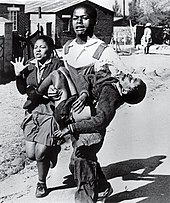
June 16, 1976: A student carries Hector Pieterson, with Pieterson's sister at his side.Iconic photograph shows boy killed by police in Soweto


On June 16 1976 Soweto students protested use of Afrikaans as the teaching medium in the Apartheid Education System

Police opened fire, killing 23 students and sparking off days of unrest.

It's the iconic image that grabbed the world's attention and helped change the course of South African history.

Fourty years ago , on June 16, 1976, thousands of black school children in Soweto, South Africa, took to the streets to protest the apartheid education system that obliged them to be taught in Afrikaans.

It was supposed to be a peaceful protest, but the students were met with police gunfire and at least 23 of them were killed.

One of the first youths to be killed was 12-year-old Hector Pieterson.

His death was captured in a photograph that came to define South Africa's liberation struggle.In the image a fellow student carries Hector, with his 17-year-old sister Antoinette Sithole at his side. For Sithole, the events of that day are still fresh in her memory.

The first thing that she spotted was my brother's shoes, so I quickly ran to the scene and joined them in running."The demonstration was meant for high school and secondary schools only, not the younger ones," Sithole said."But on the day, as we're protesting with pride, holding placards, singing and chanting, at some point we find younger ones.All of a sudden there was a shot. Everybody ran amok in confusion, running for cover, dashing into other people's homes. During that hide-and-seek I saw my younger brother on the opposite side of the pavement.There was another shot, so we had to go back into hiding and unfortunately we went two separate ways. When I came back to the pavement he was nowhere to be seen."

Then, Sithole saw a crowd of students gathered around a man who was carrying a child.

"The first thing that I spotted was my brother's shoes, so I quickly ran to the scene and joined them in running," she said."So we're running and I'm trying to explain myself: 'This is my brother, who are you? Where are you taking him?' The man never said anything."Then I saw blood coming from the side of the mouth and I panicked. My voice was harder -- 'who are you, can't you see my brother's head?' He never said anything, just keep running."

The shooting sparked off days of protests known as the Soweto uprisings, which many regard as the beginning of the end of the apartheid regime.

June 16 is now a National Holiday in South Africa, known as Youth Day. The Day Afrikaans stopped been used as the language of instruction. Today no school in Soweto offers Afrikaans as a subject. The subject of Afrikaans is not taught in any Indian or Black School and very, very few Coloured School and non in the Western Cape. 

Now a guide at the Hector Pieterson memorial in Soweto, Sithole hopes to teach visitors about the sacrifices made there.

"Most people know our history, but don't fully know it," she said. "So they're coming here and we sort of embrace with them what really happened because they'll be seeing people like me, other people sharing the same story.

"It makes us proud and brave to talk about our history. And the very same history brought the World Cup today."

For Sithole, talking about the past isn't a burden, but rather a responsibility she feels compelled to take on."I sometimes feel like what happened to me was fate. Maybe I was left to keep on telling what happened on that day.At first, I just felt like it was a death like any other death -- why should people comment so much?I never really understood -- it took me years -- but now I'm proud standing here. Maybe it's like I'm a channel of the ancestors. I was left behind to tell the story."

The June 16 student uprising was such a turning point in South Africa’s history, few other days can now compare with it. In a way, it became the opening salvo in a sustained push to end decades of apartheid and political oppression. But it came at a great price.

Back in the early 1960s, after the Rivonia Triallists had been arrested, tried and then sentenced to long prison sentences, the ANC’s internal political structures had been ground down to virtually nothing, save for the increasingly fading memories of the defiance campaigns and spirited marches of the 1950s and early ‘60s. And the successes of the ANC’s military wing, MK, had had boiled down to modest pin pricks, largely along the Rhodesian border, as South Africa itself was still protected by acordon sanitaire of white or colonial rule that extended from Angola to Mozambique, clear across the region. To most, the National Party government’s rule over South Africa seemed almost unstoppable – and unlimited. (Such a seeming victory did, in the end, generate a fatal degree of hubris, of course.)

In April 1976, the government finally decided to enforce existing regulations that would ensure half the education of Africans – notably in tougher, specialised subjects like mathematics and the sciences – would henceforth take place in South Africa’s other official language, Afrikaans, rather than English. Most Soweto headmasters and teachers pledged not to carry out such an arbitrary diktat, even apart from the facts on the ground that there were virtually no such scientific or mathematic, bilingual African teachers available to do this.

Moreover, students generally had so little command of Afrikaans they would be doomed to educational failure, should such a decision become the reality of education in Soweto’s high schools. The imposition of this rule seemed precisely designed to destroy what little education was available under the harsh regimen of “Bantu Education” – thereby dashing any students’ hopes that they could achieve the education needed for success in the modern economy, rather than being condemned to the stoop-back, pick and shovel work apartheid’s masters obviously wanted for them.

Students began to organise their own opposition to this new regimen and scheduled a march to protest against this, heading out of Morris Isaacson and Orlando West High schools. But this peaceful (albeit boisterous) students’ march was met with real police muscle and well over a hundred, perhaps as many as two hundred, students were killed on that day, and many more were wounded.

Instead of the older Charterist ideals of the ANC, students at schools like Morris Isaacson High School had been increasingly affected by a new influence. Black Consciousness had exploded out of the segregated tertiary institutions like the University of the North and the University of Zululand. A growing number of Soweto’s younger, better-educated teachers were sympathetic to that intellectual movement or had been part of or strongly influenced by the concrete political expression of that ideology, the Black People’s Convention movement. They, in turn, inspired their high school charges with the idea that they must take charge of their own destinies and throw off the shackles of the racialised oppression now imposed on them.

As a young diplomat, this writer came into contact with this growing sense of frustration and idealism, right when he first arrived in South Africa in January 1975. Making friends with some of those teachers and school principals, he regularly visited their schools, met their students, and heard the arguments and complaints of teachers and students alike about their circumstances. One of his key tasks was to become attuned and knowledgeable about what was happening in reality in South Africa, rather than just imbibe that Panglossian fantasy put about by government hacks and apparatchiks.

And so, on one day, he had an appointment, set for June 16, to meet a teacher – a science master at one of the high schools – who had recently been on a sponsored, month-long visit to the US. The plan for the meeting was to review the trip to find out how things had gone. Did the visit meet the teacher’s expectations? Where there any difficulties administratively, or in terms of the people he had met, or the places he had wished to visit? This was routine stuff.

But, curiously, a few days before that scheduled meeting, the teacher had called to reschedule the appointment to a day or so earlier. The teacher apologised, but he explained that something else was now likely to come up on that day and he wouldn’t be free to talk over coffee or tea to review his trip. The appointment happened as planned.

Instead of sitting in the staff common room of that Soweto high school, on the evening of 16 June – just as initial censored reports were coming in on the radio and a bit more expansively in late editions of newspapers for sale on street corners (television was barely a presence yet) that Soweto had been the scene of a great march by students. There had been deadly force by police. As a result, the writer found himself at a kitchen table with a young surgeon from Soweto’s Baragwanath Hospital (well before the name Chris Hani had been appended to its entry sign).

As the surgeon slowly sipped a cup of coffee and spoke softly about his day, this doctor demonstrated what could only be described as that “thousand yard stare” – the one where someone is beyond tears from what has been witnessed. It is the face seen on soldiers who have experienced so much combat in such a concentrated time period they can no longer process their memories.

Instead of his usual routines of thoracic surgery and consultations with patients, the doctor had spent his afternoon in what had amounted to a field hospital, as the wounded were wheeled in with their grievous wounds from the police action against the students. Coping with the effects of police gun fire at the backs of the dozens of wounded who were wheeled into his operating theatre – they had been fired upon while fleeing the police line – had not been what he had signed up for in his life. He explained that he couldn’t be sure of the exact number – he had lost count – but there had been hundreds brought into the hospital that day. And he had dealt with so many of them.


Forty years later, it is clear that the Soweto Uprising marked an inflection point in South Africa’s history. By the time the police had restored a semblance of control, it gradually became clear nothing would be “as it was” again. Hundreds of students fled the country and their black consciousness ideology was gradually superseded by the impact of the ANC in exile around Africa and beyond. Others remained inside the country, but increasingly they would become members of the various elements of the UDF: they would call for “liberation before education”, and they would become the foot soldiers and leaders of many other groups dedicated to regime change of apartheid South Africa.

All of this came rushing back the other night when the writer attended a special commemoration of the 16th June uprising at the Market Theatre. This theatre itself had come into being at almost exactly the same date and it quickly became the home of what came to be termed, “struggle theatre”. Its first three productions were foreign classics: Chekhov’s The Seagull, Miller’s The Crucible and Weiss’s Marat/Sade. All three were designed to sharply challenge the existing order – the first to speak of the confusions of Russians in their nation’s ancien regime; the second to speak knowingly about racial prejudice and mob hysteria in early New England, and the third to speak of an insane asylum in France where the inmates take over the hospital as the actual staff is reduced to impotent observers when the patients re-stage the death of Marat, a prominent figure of the French Revolution.

In the same 40 years that eventually brought down the apartheid regime, the Market Theatre demonstrated the power of culture in prepping audiences to think anew. And in this special event on the theatre’s calendar, artistic director, James Ngcobo, together with writer Sandile Ngidi, choreographer Luyanda Sidiya and music director Tshepo Mngoma, brought to life ordinary people affected by the student uprising – ranging from the students who fought the police to the parents whose children had died at the hands of the police.

The full house brought together a deputation of today’s students from Morris Isaacson HS, hundreds of others who had actually lived through the events, along with yet others who had only heard about it from family tales or their school history books and whose primary visual referent may only be Sam Nzima’s iconic photograph of Hector Pieterson’s lifeless body being carried by Mbuyisa Makhubu. For that, of course, is what the Soweto Uprising has become for many of South Africa’s youthful population – an historical event increasingly subsumed within a shopping and parties holiday called Youth Day, rather than anything speaking of students who took the direct action others may have shied away from back then.

Now, of course, the legacy of the Soweto Uprising has grown complicated. While the nation’s political system has, certainly, fundamentally changed, popular dissatisfaction with the circumstances of the present has generated a growing litany of “service delivery” protests, a new, angrier political party, the EFF, and a sense among many that the ANC has now lost its way by virtue of its corruption and hyper-patronage politics. Is there another profound upheaval in the wind?

A decade after the original Soweto Students Uprising, composer-dramatist Mbongeni Ngema had crafted a musical, Sarafina, on the events leading up to June 16. Naturally, it had premiered at the Market Theatre – and then it travelled abroad, becoming a long running hit in New York City, among many other stops. As the students come together for their march into history, they sing:

And If I don’t live to see the day,
You better believe it,
I’ll be there.
This is my home and I’m here to stay

Freedom is coming tomorrow,
Get ready, mama, prepare,
Freedom is coming tomorrow,
Get ready, mama, prepare….

Perhaps South Africans will march yet again in order to claim their full measure of freedom. And a full and proper contemplation of the meaning and sacrifice of June 16 might help remind that freedom is not simply the right to put a mark on one’s ballot, every five years.


The Soweto Uprising was a series of protests led by high school students in South Africa that began on the morning of 16 June 1976.

Students from numerous Sowetan schools began to protest in the streets of Soweto in response to the introduction of Afrikaans as the medium of instruction in local schools. It is estimated that 200,000 students took part in the protests. They were met with fierce police brutality. The number of protesters killed by police is usually given as 176, but estimates of up to 700 have been made. In remembrance of these events, the 16th of June is now a public holiday in South Africa, named Youth Day.


Causes of the protests

Black South African high school students in Soweto protested against the Afrikaans Medium Decree of 1974, which forced all black schools to use Afrikaans and English in a 50–50 mix as languages of instruction The Regional Director of Bantu Education (Northern Transvaal Region), J.G. Erasmus, told Circuit Inspectors and Principals of Schools that from 1 January 1975, Afrikaans had to be used for mathematics, arithmetic, and social studies from standard five (7th grade), according to the Afrikaans Medium Decree; English would be the medium of instruction for general science and practical subjects (homecraft, needlework, woodwork, metalwork, art, agricultural science). Indigenous languages would only be used for religious instruction, music, and physical culture.

The association of Afrikaans with Apartheid prompted black South Africans to prefer English. Even the Bantustan regimes chose English and an indigenous African language as official languages. In addition, English was gaining prominence as the language most often used in commerce and industry. The 1974 decree was intended to forcibly reverse the decline of Afrikaans among black Africans. The Afrikaner-dominated government used the clause of the 1909 Union of South Africa Act that recognised only English and Dutch (the latter being replaced by Afrikaans in 1925) as official languages as the pretext to do so.[9] While all schools had to provide instruction in both Afrikaans and English as languages, white South African students learned other subjects in their home language.

Punt Janson, the Deputy Minister of Bantu Education at the time, was quoted as saying: "A Black man may be trained to work on a farm or in a factory. He may work for an employer who is either English-speaking or Afrikaans-speaking and the man who has to give him instructions may be either English-speaking or Afrikaans-speaking. Why should we now start quarrelling about the medium of instruction among the Black people as well? ... No, I have not consulted them and I am not going to consult them. I have consulted the Constitution of the Republic of South Africa …"

The decree was resented deeply by blacks, because Afrikaans was widely viewed—in the words of Desmond Tutu, bishop of Lesotho and later Dean of Johannesburg—as "the language of the oppressor". Teacher organisations, such as the African Teachers Association of South Africa, objected to the decree. A change in language of instruction forced the students to focus on understanding the language instead of the subject material. This made critical analysis of the content difficult and discouraged critical thinking.

The resentment grew until 30 April 1976, when children at Orlando West Junior School in Soweto went on strike, refusing to go to school. Their rebellion then spread to many other schools in Soweto. Black South African students protested because they believed that they deserved to be treated and taught equally to white South Africans. A student from Morris Isaacson High School, Teboho "Tsietsi" Mashinini, proposed a meeting on 13 June 1976 to discuss what should be done. Students formed an Action Committee (later known as the Soweto Students' Representative Council), which organised a mass rally for 16 June, to make themselves heard.

Uprising

Hector Pieterson being carried by Mbuyisa Makhuboafter being shot by South African police. His sister, Antoinette Sithole, runs beside them. Pieterson was rushed to a local clinic and declared dead on arrival. This photo by Sam Nzimabecame an icon of the Soweto uprising.


On the morning of 16 June 1976, between 10,000 and 20,000[14] black students walked from their schools to Orlando Stadium for a rally to protest against having to learn through Afrikaans in school. Many students who later participated in the protest arrived at school that morning without prior knowledge of the protest, yet agreed to become involved. The protest was planned by the Soweto Students' Representative Council's (SSRC) Action Committee, with support from the wider Black Consciousness Movement. Teachers in Soweto also supported the march after the Action Committee emphasised good discipline and peaceful action.

Tsietsi Mashinini led students from Morris Isaacson High School to join up with others who walked from Naledi High School.[16] The students began the march only to find out that police had barricaded the road along their intended route. The leader of the action committee asked the crowd not to provoke the police and the march continued on another route, eventually ending up near Orlando High School. The crowd of between 3,000 and 10,000 students made their way towards the area of the school. Students sang and waved placards with slogans such as, "Down with Afrikaans", "Viva Azania" and "If we must do Afrikaans, Vorster must do Zulu".

The police set their dog on the protesters, who responded by killing it. The police then began to shoot directly at the children.

One of the first students to be shot dead was 12-year-old Hector Pieterson. He was shot at Orlando West High School and became the symbol of the Soweto uprising. The police attacks on the demonstrators continued and 23 people died on the first day in Soweto. Among them was Dr Melville Edelstein, who had devoted his life to social welfare among blacks.He was stoned to death by the mob and left with a sign around his neck proclaiming "Beware Afrikaners".

The violence escalated, as bottle stores and beer halls—seen as outposts of the apartheid government—were targeted, as were the official outposts of the state. The violence abated by nightfall. Police vans and armoured vehicles patrolled the streets throughout the night.

Emergency clinics were swamped with injured and bloody children. The police requested that the hospital provide a list of all victims with bullet wounds. The hospital administrator passed this request to the doctors, but the doctors refused to create the list. Doctors recorded bullet wounds as abscesses.

The 1,500 heavily armed police officers deployed to Soweto on 17 June carried weapons including automatic rifles, stun guns, and carbines.They drove around in armoured vehicles with helicopters monitoring the area from the sky. The South African Army was also ordered on standby as a tactical measure to show military force. Crowd control methods used by South African police at the time included mainly dispersement techniques.
Casualties

The number of people who died is usually given as 176 with estimates up to 2,980 would by gun firer The original government figure claimed only 23 students were killed the number of wounded was estimated to be close to three thousand people.Aftermath

The aftermath of the uprising established the leading role of the ANC in the anti-apartheid struggle, as it was the body best able to channel and organise students seeking the end of apartheid. So, although the BCM's ideas had been important in creating the climate that gave the students the confidence to strike out, it was the ANC's non-racialism which came to dominate the discourse of the anti-apartheid movement amongst blacks. The perspectives set out in Joe Slovo's essay No Middle Road – written at just this time and predicting the apartheid government had only the choice between more repression and overthrow by the revolutionaries – were highly influential.

The clashes also occurred at a time when the South African Government was being forced to "transform" apartheid in international eyes towards a more "benign" form. In October 1976, Transkei, the first Bantustan, was proclaimed "independent" by the South African Government. This attempt to showcase supposed South African "commitment" to self-determination backfired, however, when Transkei was internationally derided as a puppet state.

For the state the uprising marked the most fundamental challenge yet to apartheid and the economic (see below) and political instability it caused was heightened by the strengthening international boycott. It was a further 14 years before Nelson Mandela was released, but at no point was the state able to restore the relative peace and social stability of the early 1970s as black resistance grew.

Many white South African citizens were outraged at the government's actions in Soweto, and about 300 white students from the University of the Witwatersrand marched through Johannesburg's city centre in protest of the killing of children. Black workers went on strike as well and joined them as the campaign progressed. Riots also broke out in the black townships of other cities in South Africa.

Student organisations directed the energy and anger of the youth toward political resistance. Students in Thembisa organised a successful and non-violent solidarity march, but a similar protest held in Kagiso led to police stopping a group of participants and forcing them to retreat, before killing at least five people while waiting for reinforcements. The violence only died down on 18 June. The University of Zululand's records and administration buildings were set ablaze, and 33 people died in incidents in Port Elizabeth in August. In Cape Town 92 people died between August and September.

Most of the bloodshed had abated by the close of 1976, but by that time the death toll stood at more than 600.

The continued clashes in Soweto caused economic instability. The South African rand devalued fast and the government was plunged into a crisis.

The African National Congress printed and distributed leaflets with the slogan "Free Mandela, Hang Vorster", immediately linking the language issue to its revolutionary heritage and programme and helping establish its leading role (see Baruch Hirson's "Year of Fire, Year of Ash" for a discussion of the ANC's ability to channel and direct the popular anger).

International reaction

The United Nations Security Council passed Resolution 392 which strongly condemned the incident and the apartheid government.

A week after the uprising began, Henry Kissinger, the United States Secretary of State, met the South African State President, B. J. Vorster in West Germany to discuss the situation in Rhodesia, but the Soweto uprising did not feature in their discussions. Kissinger and Vorster met again in Pretoria in September 1976, with students in Soweto and elsewhere protesting his visit, and being fired on by police.

African National Congress (ANC) exiles called for international action and more economic sanctions against South Africa.

In the media

Images of the riots spread all over the world, shocking millions. The photograph of Hector Pieterson's dead body, as captured by photojournalistSam Nzima, caused outrage and brought down international condemnation on the Apartheid government.

The Soweto riots are depicted in the 1987 film by director Richard Attenborough, Cry Freedom, and in the 1992 musical film Sarafina!. The riots also inspired the novel A Dry White Season by Andre Brink, and a 1989 movie of the same title. The Soweto uprising also featured in the 2003 filmStander about notorious bank robber and former police captain, Andre Stander. The lyrics of the song "Soweto Blues" by Hugh Masekela and Miriam Makeba describe the Soweto Uprising and the children's part in it.

Radio

20 years after the uprising, in June 1996, the Ulwazi Educational Radio Project of Johannesburg compiled an hour-long radio documentary portraying the events of 16 June entirely from the perspective of people living in Soweto at the time. Many of the students who planned or joined the uprising took part, as did other witnesses, including photographer Peter Magubane, reporter Sophie Tema, and Tim Wilson, the white doctor who pronounced Hector Pieterson dead in Baragwanath hospital. The programme was broadcast on SABC and on a number of local radio stations throughout South Africa. The following year, BBC Radio 4 and BBC World Service broadcast a revised version containing fresh interviews and entitled The Day Apartheid Died.[30] The programme was runner-up at the 1998 European Community Humanitarian Office (ECHO) TV & Radio Awards and also at the 1998 Media Awards of the One World International Broadcasting Trust, and was highly commended at the 1998 Prix Italia radio awards. In May 1999, it was re-broadcast by BBC Radio 4 as The Death of Apartheid with a fresh introduction, providing added historical context for a British audience, by Anthony Sampson, former editor of Drum magazine and author of the authorised biography (1999) of Nelson Mandela. Sampson linked extracts from the BBC Sound Archive that charted the long struggle against apartheid from the Sharpeville massacre of 1960, through the riots of 1976 and the murder of Steve Biko, and right up to Mandela's release from prison in 1990 and the future president's speech in which he acknowledged the debt owed by all black South Africans to the students who gave their lives in Soweto on 16 June 1976