Some reflections from an unapologetic Rip Roaring Zionist, an Urban Scavenger for the unexpected. Stephen Darori (#stephendarori,@stephendarori) is a Finance and Marketing Whiz,Social Media Publicist, Strategist ,Investor. Journalist,Author, Editor & Prolific Blogger.
Showing posts with label #JustARipRoaringZionist. Show all posts
Showing posts with label #JustARipRoaringZionist. Show all posts
Economic Benefits Will Not Bring Stability to Gaza
The easing of economic conditions – a strategy that benefited Palestinian areas in the West Bank – is increasingly touted as the way to achieve political stability in Gaza, which is ruled by Hamas. But this strategy only works after the enemy is defeated.
Many experts claim that an easing of economic conditions in Gaza, particularly the granting of permission to Gazans to work in Israel, is the way to achieve political stability in a Gaza Strip ruled by Hamas.
This is a fallacious argument.
To understand why this is so, one must revisit the Marshall Plan for Europe, the most successful example in history of how economic largesse can facilitate the transformation of a destructive foe into a staunch and healthy ally. West Germany became a lynchpin in the security architecture of the Western alliance against the Warsaw Pact countries under the Soviet orbit.
No one can deny the success of the Marshall Plan, especially in contrast to the fallout from the destructive vindictiveness of western allies against Germany after World War I. Indeed, that vindictiveness contributed to the rise of Nazi Germany, forming the historical justification for the Marshall Plan.
By the same token, one can hardly deny the even greater importance of two geostrategic factors at the time that made such economic largesse towards a former enemy worthwhile.
First, the total defeat of Nazi Germany, and its subsequent occupation and division by the winning coalition, meant that the US and its allies could mold West Germany to their liking through denazification and democratic rule, just as the Soviet Union created an East Germany in its own totalitarian image.
Second, West Germany was, like the rest of free Europe, beholden to the US for its security in the face of a menacing Soviet Union and its satellite states.
In the face of these two basic facts, the Marshall Plan can be seen as having facilitated and reinforced a process.
Benjamin Netanyahu’s liberal economic policy towards the residents of Mahmoud Abbas’s Palestinian Authority (PA), primarily the allowing of over 100,000 workers with or without permits to work in Israel, succeeded in part because it satisfied the two basic conditions that made the Marshall Plan successful.
At the height of the second intifada in 2002, Israel reconquered major towns in the PA that had become sanctuary areas for Fatah, PA-linked, Hamas, and Islamic Jihad terrorism. It has prevented the reemergence of sanctuary areas ever since through preventive arrests throughout the West Bank that run into the thousands annually.
Like Germany, the PA was essentially defeated. And as was the case with West Germany and the US, Israel and the PA became allied against joint enemies – Hamas and Islamic Jihad.
If the PA ever had any doubts about who was more threatening to Abbas’s rule, Israel or Hamas, those doubts were put to rest after the Hamas takeover of Gaza in 2007.
It was only after these two conditions were met that economic prosperity could play its facilitating role.
And even then, the economic effects were limited compared to hard and fast political and military factors.
After all, even after workers from the West Bank were granted permission to commute to work in Israel, where they earn almost twice the wages of workers in the PA (after debiting commuting costs), over 250 Palestinians were motivated to commit murders in the wave of terrorism at the end of 2015-16.
The relative difference in the lethality of this terrorist wave – in which only 45 were killed compared to 800 in the second intifada by the same number of terrorists – was due not to a decrease in motivation but to the fact that they no longer had sanctuaries from which to organize elaborate suicide bombings or store large quantities of firearms.
In fact, by the time of the wave, the professional terrorist infrastructures of Hamas and Islamic Jihad had been thoroughly smashed.
In Gaza, neither of these conditions prevails. Gaza under Hamas rule remains a sanctuary area where Hamas can freely build up its military capabilities and launch a sophisticated campaign like the March of Return with little interference.
There is no common enemy that would render Hamas conciliatory, as was the case between the US and West Germany or between Israel and the PA.
Only a policy of toughness towards Hamas can induce it to assure stability and quiet in Gaza.
The three large-scale bouts of conflict between Israel and Hamas in 2008-9, 2012, and 2014 led the inhabitants of Gaza to demand that Hamas bring an end to the launching of missiles that had led to those clashes. Hamas acknowledged that pressure and acted upon it.
Further popular pressure after the failure of the March of Return campaign is likely to induce Hamas to stop campaigns of violence altogether.
Economic largesse at this point would only augment Hamas’s resources, as it taxes incoming goods and aid. That money will be funneled back to its hard core through campaigns such as the March of Return.
Gaza’s inhabitants voted in Hamas in 2006. They have lived to regret it. It is now incumbent upon them to defang their government by making sure it deals in butter, not guns.
Only when Hamas envisions its territory as a future Singapore rather than a murderous labyrinth of fundamentalist terrorism should economic benefits accrue to Gaza.
Time to Reach a Settlement with a Functional and Restrained Entity in the Gaza Strip
The idea of the “March of Return,” which was initiated by civil organizations in the Gaza Strip seeking once more to direct the attention of the international community to the suffering of the local population by means of mass demonstrations along the border, was hijacked by Hamas. Hamas pushed aside the organizers of the project and in effect took over the production and direction of the events. For its part, Israel is capable of accommodating a hostile entity living beside it, as long as this entity is restrained, deterred, and functional. This aim can only be achieved after Israel recognizes the need to develop separate strategies vis-à-vis the Gaza Strip and the West Bank, exhaust every possibility of taking advantage of Hamas’s current weakness, and leverage Hamas’s willingness for a long term hudna. The proposed strategy is also based on the understanding that the Palestinian Authority will not resume its rule in the Gaza Strip in the foreseeable future, and that effort must be invested to consolidate the PA’s governance in the West Bank and improve the living conditions, freedom of movement, and economy in that area, while also securing the conditions for the future achievement of two nation states.
Since late March 2018, a campaign along the border of the Gaza Strip has been underway, based on a rationale shaped by Hamas, which took control of a civilian initiative that provided the organization with an escape route from its current strategic hardship. The idea of the “March of Return,” which was initiated by civil organizations in the Gaza Strip seeking to refocus the attention of the international community on the suffering of the local population by means of mass demonstrations along the border, was hijacked by Hamas. Hamas pushed aside the organizers of the project and in effect took over the production and direction of the events.
Hamas’s difficulties stem from four main reasons:
a. The failed reconciliation process with Fatah, which resumed after Hamas announced its failure to administer the civil realm in the Gaza Strip and expressed its willingness to transfer relevant powers to the Palestinian Authority;
b. The severe humanitarian plight in the Gaza Strip and the mounting frustration of the local population;
c. The significant erosion of the value of its strategic military assets, given the defensive and neutralizing elements that have been developed by the IDF;
d. Hamas’s essential lack of desire and readiness to enter into another large scale military clash with the IDF.
Thus, the campaign along the border fence serves a number of Hamas’s strategic goals, most importantly by diverting the mounting frustration among the local population toward Israel and demonstrating the organization’s commitment to the struggle against Israel, which necessarily comes at the expense of the status of the Palestinian Authority. At the same time, it serves to refocus international attention on the Gaza Strip, strengthen the narrative of Palestinian victimhood, exhaust the IDF forces along the border over a long period of time, and delegitimize Israel.
The failure of the reconciliation process between Fatah and Hamas underscores that only an extremely slim chance exists that the Palestinian Authority will regain control of civil administration in the Gaza Strip. In reality, there are two separate Palestinian entities, each of which is hostile to the other and both of which struggle against Israel: Hamas, which leads the armed struggle and, in the current campaign, the local popular struggle as well; and the Palestinian Authority, which leads the popular struggle and the political struggle in the international arena. However, security and economic coordination and cooperation exists between Israel and the Palestinian entity in the West Bank, and some local civilians are even permitted to work in Israel and in the industrial areas of the Israeli settlements in the West Bank. The inhabitants of this region enjoy a significantly higher standard of living than the residents of the Gaza Strip, as well as more extensive freedom of movement.
The current campaign along the border with the Gaza Strip reminds us that under the present circumstances – most prominently the split in the Palestinian arena and the severe humanitarian and infrastructure conditions in the region – the Gaza Strip will continue to constitute a strategic challenge for Israel even when the current phase within it comes to a close. However, Israel’s position and policy regarding Hamas and the Gaza Strip perpetuate this situation and therefore also fuel the underlying conditions for security escalation.
Based on the assumption that Hamas will remain the sovereign power in the Gaza Strip and that Israel does not intend to take action to remove it from power and replace it with other leadership or govern the Gaza Strip on its own, Israel needs to examine the possibility of coming to terms with this hostile entity on its border and formulating a strategy to regulate its relations with it, including by means of security understandings and even a limited degree of security coordination. This presumably would create a chance for ongoing quiet along and around the border.
Israel, with the assistance of Egypt and the involvement of the international community, can develop mechanisms of regulation and interaction vis-à-vis Hamas, even without mutual recognition and without direct contact. These mechanisms could serve to facilitate a more effective response, in comparison to what exists today, to the humanitarian hardships that currently prevail inside the Strip; to restrain Hamas from attempts to strike at Israel; and to improve its civil governance in the Gaza Strip. After all, there is not necessarily a contradiction between the Gaza Strip being a hostile entity and the ability to develop mechanisms of regulation and interaction.
Such a course of action would be conditional upon undermining the equation that was established between Israel and Hamas since its security closure of the Gaza Strip in June 2007, whereby the Palestinian Authority is the only official party with which Israel will engage in dialogue. Israel must come to terms with the existence of both distinct Palestinian entities and strive to establish a reality based on an arrangement that will be less than a final status settlement, with conceptual and operative separation between the policy toward the Palestinian Authority in the West Bank and the separate policy to be developed and sharpened vis-à-vis the Gaza Strip. The proposed strategy, then, calls for striving to reach an arrangement with Hamas, which will necessarily strengthen it and could serve to weaken the status of the Palestinian Authority. This arrangement would promote a long term hudna with Hamas.
In recent months, Hamas spokespeople have conveyed messages indicating a willingness on their part to reach a long term hudna with Israel. This was not the first time that such sentiments have been voiced. However, the idea never took shape due to conditions advanced by Hamas for its implementation, as well as Israel’s unwillingness to consider a possibility in this direction, which would necessarily mean recognition and legitimization (albeit indirect) of Hamas and its control over the Gaza Strip. This time, as well, a process leading to an agreement over a hudna between Israel and Hamas, whether declared or implied, will be complicated. However, in light of Hamas’s hardships and the hopelessness of the Gaza population (which in itself constitutes a threat to Hamas’s rule and the danger of a chaotic reality as a result of its undermining or fall), its fundamental willingness for a hudna (which is also encountering opposition within Hamas’s ranks and leadership) can be viewed as a basis for a greater feasibility of actualizing the idea.
To advance the idea, Israel will need to qualify the reservations of the international community in general, and the European Union in particular, regarding its intentions regarding Hamas and regarding the Palestinian Authority. However, the Palestinian Authority now is neither present nor governing in the Gaza Strip in any event, and there is currently no concrete chance of a change in this situation. Therefore, adhering to the condition that all contributions to the Gaza Strip be made through the Palestinian Authority and that the PA be returned to power in the Strip actually helps perpetuate the problematic reality in the Strip and, at the same time – in part because the political process is currently at a dead end – does not serve to strengthen the Palestinian Authority.
The first stage of a process of regulating interactions with Hamas in the Gaza Strip will require the work of a mechanism led by representatives of the involved parties and Hamas that is charged with supervising the use, and preventing the abuse, of donated funds. The possibility of using this mechanism to transfer a relative portion of the tax revenues collected by Israel for goods and services into the Gaza Strip should be considered. Next, and subject to Hamas’s fulfillment of the terms of the agreement, the possibility of expanding its powers regarding the management of the donated funds should also be considered. Israel will also need to recruit Egypt as a major partner in the process vis-à-vis Hamas. Egypt’s contribution will need to take the form of the regular operation of the Rafah border crossing, securing Hamas’s commitment to the process, and restraining the organization. At the same time, it will be necessary to create the conditions for channeling the relief funds to the rebuilding of essential infrastructure and economic incentives, including through the establishment of industrial areas on the border of the Strip. Such areas will provide a location for advancing and implementing joint industrial initiatives that will provide employment. Israel will be able to help create conditions for the normalization of the local population if it considers adopting an approach that is more flexible regarding the import and export of goods to and from the Strip and increasing the number of entry permits for commercial traders, workers, and those in need of medical treatment.
Israel already has experience building mechanisms aimed at regulating relations with Hamas (the principles of the security perimeter that were formulated through Egyptian mediation following Operation Pillar of Defense), and doing so would therefore not be setting a precedent. Nonetheless, this time, Israel could begin reshaping its policy regarding the Gaza Strip with the aim of leveraging Hamas’s current weakness and the willingness for a hudna that is taking shape among influential elements within Hamas’s leadership, led by the organization’s leader in the Gaza Strip, Yahya Sinwar. Although Hamas is not expected to dismantle its military wing even within the framework of a hudna, there is reason to believe that it will be possible to reach agreements regarding the cessation of its military buildup and its efforts to develop offensive means against Israel in the underground, maritime, and air realms.
In parallel, and in order to reduce the effect of the new policy toward Hamas on the status of the Palestinian Authority, Israel will need to present a policy for conduct vis-à-vis the Palestinian Authority itself. In this realm, Israeli policy will need to be based on three primary foundations: a) preservation of Israel’s ability to engage in security activity in the West Bank; b) striving to improve the economic and infrastructure reality in the West Bank, including the creation of transportation contiguity and authorization for the construction of Palestinian infrastructure in the parts of Area C that are adjacent to Area A; and c) a commitment to refrain from expanding settlements outside the settlement blocs.
Israel is capable of accommodating a hostile entity living beside it, as long as this entity is restrained, deterred, and functional. This aim can only be achieved after Israel recognizes the need to develop separate strategies vis-à-vis the Gaza Strip and the West Bank, exhaust every possibility of taking advantage of Hamas’s current weakness, and leverage Hamas’s willingness for a long term hudna. The proposed strategy is also based on the understanding that the Palestinian Authority will not resume its rule in the Gaza Strip in the foreseeable future, and that effort must be invested to consolidate the PA’s governance and rule in the West Bank and improve the living conditions, freedom of movement, and economy there, while also securing the conditions for the future achievement of two nation states.
Welcome to our Passover Seder! The history of the Jewish people reaches back nearly 4,000 years. We began as slaves in the land of Egypt but today we are free. As we recline in the luxury of freedom in our new Kalorama mansion, let us not forget our white Christian brothers and sisters yearning for release from bondage. We remember the baker forced to bake for every wedding and the ovum oppressed by its mother’s womb. May this Seder inspire us to light the torch of liberty and burn anyone who stands in our way. Thus we begin with the lighting of the candles.
KIDDUSH BLESSING OVER THE WINE
Next, we recite the blessing over the wine, given to us from Eric Trump Winery, the largest winery on the East Coast. This wine symbolizes the sweetness of a wealthy father and the joy we feel when we are all together, with the exception of Melania who prefers to stay in New York. Amen.
PARSLEY
The parsley on our Seder plate reminds us of spring and the earth’s natural bounty, which does not need cumbersome government regulations. We dip the parsley into salt water representing the bitterness of liberal tears. Then eat.
MATZAH
This is the bread of affliction. It is the simple bread our ancestors ate in the land of Egypt, Brooklyn, and New Jersey before reaching the Promised Land of Washington D.C. Our ancestors overcame great suffering in their journey to freedom without any government assistance. To those who are hungry and in need, we offer our prayers and hope, which is enough — Dayenu!
THE FOUR QUESTIONS
We’re not answering any questions today. No questions.
THE FOUR CHILDREN
The Torah instructs us to teach our children the story of Passover. The sages tell us there are four types of children: The Wise Child — He understands what’s going on but is unable to convince others. The Wicked Child — He understands what’s going on but goes along with it because it enriches him. The Simple Child — He hasn’t a clue what’s going on but stupidly trusts Steve Bannon will figure it out. The Child Unable to Ask — This kid is so shell-shocked by what’s happening that he turns mute like in the movie Tommy.
MIRIAM’S CUP
A cup of water is placed on the table to honor the prophet Miriam. Legend says God sustained the Jews as they wandered the desert with a steady stream of water coming out of Miriam’s wherever. We embrace this new Passover tradition as passionate advocates for the empowerment of women as symbolized by our “Make Women Great Again” luxury candle, available for sale at ivankatrump.com. This candle combines notes of peony, sandalwood, and conflicts of interest.
THE PASSOVER STORY
Now it is time to retell the story of Passover: A Pharaoh came to power in Egypt who feared the Jews because they wore strange head coverings. He didn’t believe the Jews were loyal to Egypt and loyalty was extremely important to Pharaoh, more than spelling, honesty, or the Constitution.
Pharaoh enslaved the Jews and forced them to make bricks for his tacky buildings with his name written on them in giant hieroglyphs. Then he issued a “Pharaoh-Order” mandating every Jewish male newborn was a security risk and must be drowned in the Nile, Pharaoh’s way of keeping “bad dudes” out of Egypt.
One Jewish mother resisted. She placed her baby in a tiny boat made of ancient Planned Parenthood signs, remnants of a bygone era, and set him afloat in the Nile, hoping he’d be saved. An undercover CIA operative posing as Pharaoh’s daughter found the baby, named him Moses, and raised him as her own. Eventually, Moses learned of his true family’s identity and tried to help the Jews. (Family must always remain loyal—through felony convictions, product boycotts or impeachment.) Moses started @RoguePALACEfamily to spread hope, but failed to get Pharaoh to pivot on the Jewish labor issue. That’s when God had to step in and visited ten terrible plagues upon
Egypt. They were:
Gender Neutral Bathrooms
Tuition-Free Public College
Paid Family Leave
Sensible Gun Control
$15.00 Federal Minimum Wage
Internet Privacy
Carbon Tax
Dodd-Frank
Campaign Finance Reform
Universal Health Care
Egyptians suffered greatly during these plagues. Everyone was getting the same opportunities. Pharaoh couldn’t handle it. After each plague, Pharaoh agreed to let the Jews go. But once the plague disappeared he’d tweet:
“FAKE NEWS got it wrong again — Jews know they r better off w/me than Moses. LOSER!!”
Curiously the tweets always happened on Shabbat. But amid great sorrow over the final plague of universal health care, Pharaoh relented. The Jews fled quickly into the desert without allowing their dough to rise and were stuck with a dry, tasteless, constipation-invoking bread substitute instead — the first matzah.
EXPLANATION OF PASSOVER SYMBOLS SHANK BONE The shank bone represents the sacrificial lamb Jews slaughtered the night they left Egypt. This Passover we engrave the shank bone with “Elizabeth Warren 2020.”
BITTER HERBS
These herbs remind us of the unfathomable bitterness of white working class America who threw a Hail Mary into our system of government in a last-ditch effort to bring back jobs in coal, steel, and VCR repair.
CHAROSET
A yummy salad of apple, nuts and cinnamon which shows off Ivanka’s cooking skills and her relatable desire to be a sweet and caring mother to her children. #familytime
ROASTED EGG
This egg is a symbol of rebirth and new opportunities for revenge on those who have betrayed us.
WELCOMING ELIJAH
We set aside a special cup of wine for the prophet Elijah. Legend says Elijah will return to earth to lead the way for peace. Unfortunately, we are unable to open our door to welcome Elijah as tradition dictates due to the protesting crowds outside.
CONCLUSION
As we conclude our Seder we give thanks to the Lord, our God, and ask for his greatest blessing of peace but take nothing off the table.
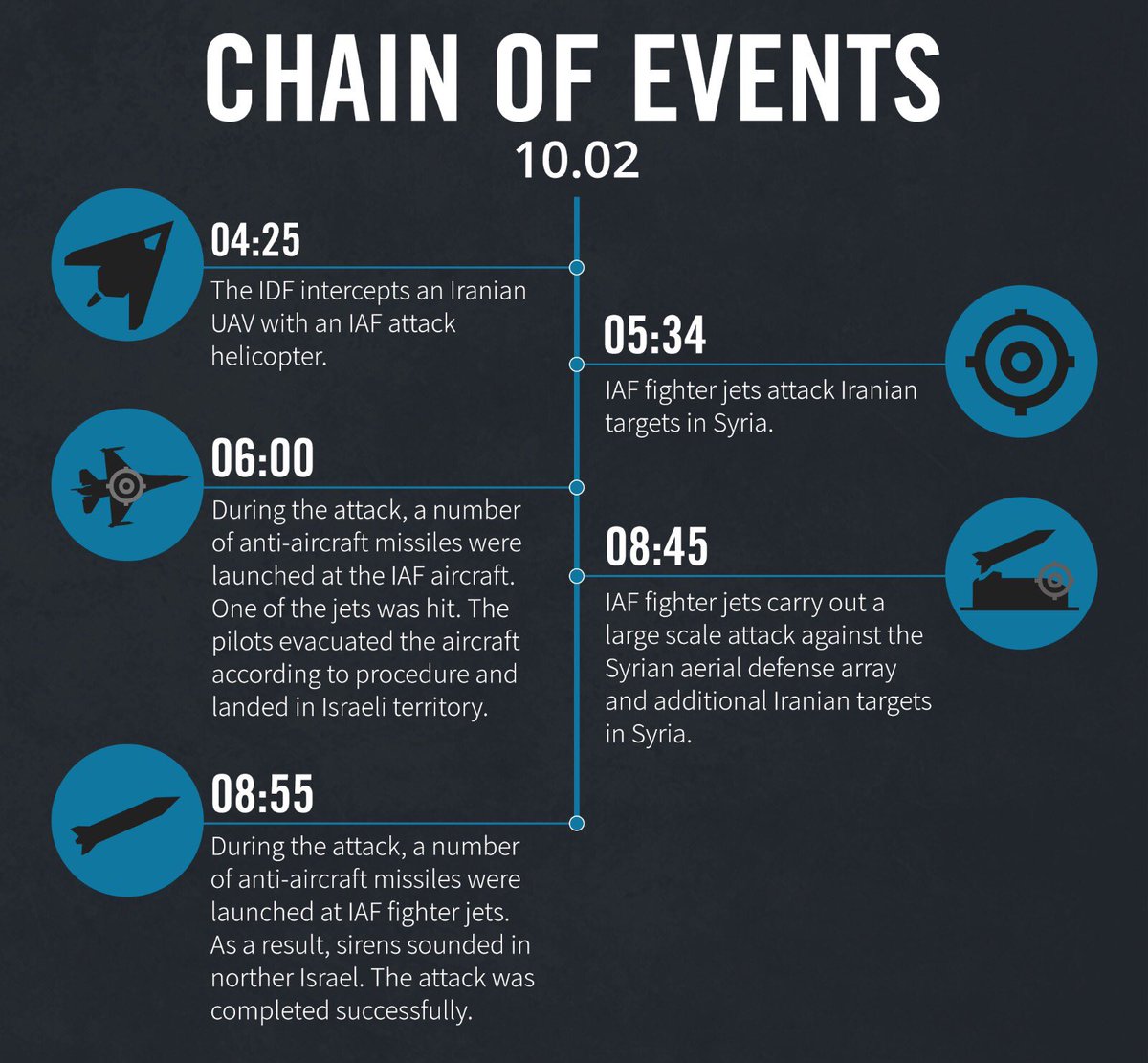
On February 11, 2018, Israel conducted multiple airstrikes on Syrian-Iranian targets in Syria in response to the downing of an Israeli F-16 in Israeli territory following infiltration by an Iranian drone. Moscow’s mild reaction to these events reflects its desire to maintain cooperation with both Tehran and Jerusalem.
Russian politicians have been surprisingly mute on the Israeli airstrikes in Syria that took place on February 11. Nothing notable has been said beyond an official statement from the Russian Foreign Ministry urging all sides to show restraint and avoid actions that could lead to further complications.
The quiet reflects the Kremlin’s tough position. Moscow has been cooperating closely with both Israel and Iran of late, hence is in no position to unequivocally take sides. As Irina Zvyagelskaya, member of the Institute of Oriental Studies of the Russian Academy of Sciences, put it, “The situation for Russia is difficult as our country has good relations with Iran and Israel, which share deep differences.”
Other political commentators say that nothing new has in fact occurred, as Israel has always vowed to destroy military buildups near its borders. The action was entirely foreseeable, they argue, in view of Israeli PM Netanyahu’s comments during his visit to Moscow in late January.
At the same time, many Russians are wondering to what extent the Kremlin will allow Israel to continue to carry out preventive strikes on Syrian soil. The incident suggested that an Israeli-Syrian military engagement could evolve into a serious situation that could spin out of Russian control. This is worrisome to the Russians, as they are keen to keep the balance in Syria.
On a broader level, the latest incident shows how ineffective Russian efforts have become to maintain a dominant position on the Syrian battlefield. The Turkish operation in Afrin, in the north of the country, made clear that Moscow is unable to forestall the growth of Ankara’s influence. Iranian proxy forces are now close to the Israeli border, and Russia failed to accomplish anything significant in this respect at the Sochi Conference in late January.
Comments in the Russian media hint that, strategically speaking, Russia does not want Israel – a powerful player – to enter the already overcrowded Syrian battlefield. This is particularly true as Moscow is working right now on solidifying its positions following important military victories. Deep Israeli involvement could unravel Russia’s dominant role in Syria.
At the same time, suggestions in the Russian media over the past few days point to an interesting scenario in which the Israeli involvement in Syria forces Russia to more openly declare a pro-Iranian strategy. Up to this point, Moscow has consistently tried – at least officially – to cooperate with both countries.
Alternatively, some Russian pundits surmise that because Moscow has been concerned that its major ally, Iran, might try to seize the strategic opportunity through its proxies and increase its clout in Syria, the Kremlin might welcome – if not Israel’s total engagement in Syria – at least some actions that limit Tehran’s power.
At a January 30 meeting with Russian President Putin in Moscow, just days before the incident, Netanyahu said, “[t]he most important thing I think is to make sure that we understand each other and that we don’t shoot down each other’s planes.” Indeed, over the past two days, some Russian analysts have raised the idea that the Israeli involvement in the Syrian conflict will be confined solely to maintaining its own security along the borders. Overall, the tone of the Russian media towards Israel’s actions has been neutral, while remaining studiously noncommittal about those of Iran.
Considering Israel’s security imperatives, it is arguable that the Israeli intervention was expected. Tehran is gaining the most from the Syrian chaos. It is likely that Israel will have to respond again, even if the Golan Heights are not directly threatened. As there are no other official statements from Russian officials, nor direct government leaks in leading Russian dailies such as Kommersant, Izvestia and others, Moscow’s position will be important to watch. Like most players in Syria, the Russians would not welcome additional actors in the country. However, the Kremlin will not be able to forestall further possible Israeli involvement in Syria.
This is a repost of an article I wrote last May 2014 and ask Why is Israel Separated for Security?.
Very recently I wrote an update on this entitled ‘The Great Wall of Saudi Arabia’ and now have added the Hungary/Serbia border barrier and Hungary/Croatia.
The Saudis are adding to an existing wall some 965 klms with not a peep from anyone??.
I bet there will not be a peep once again from the likes of the ‘enemy within’, the rabid Palestinian supporters of the media.
Funny isn’t it how Israel is the only country singled out in her efforts to protect her citizens for being murdered?
—————————–
I have been trying to write this for years and to be honest with you, I have enough material to write a book. If only I had the time, it’s taken long enough to get this far.
I started researching a few years back with the view to showing how the ‘Separation Barrier’ built by Israel is just that, and not an “Apartheid Wall”, or one of the many names given to it. The more I researched the more information kept coming.
Walls are built to provide some sort of protection and have been built almost since the dawn of Man, be it walled cities, walled compounds or walls to protect an entire country.
We build walls or fences around our homes to keep undesirables out, to keep our children and animals in and out of harms way.
However now reading back through what I have written, I see walls, barriers, fences call them what you will, some of which are thousands of kilometres long and which are designed to keep criminals, illegal entrants, terrorists and would be conquerors out, a good idea.
So why in G-d’s name is Israel singled out for being the bad one when all she is trying to do is to protect Her citizens?
You have to see it as nothing else except antisemitism. Everywhere I looked there was an oversupply of information on Israel’s barrier which is in place for protection, whilst precious little elsewhere on other walls.
===============================
A defensive wall (or a “Rampart”) is a fortification used to protect a city or settlement from potential aggressors. In ancient to modern times, they were used to enclose settlements.
Let’s try to fathom out why Israel is the only country whose barrier is called an “Apartheid wall” and why, when there are so many in existence, is Israel’s the only one to cause such a furor?
Security fences have been built around the world for thousands of years, often in disputed territories, with the purpose of protection, disrupting the movement of terrorists, smugglers, and illegal immigrants.
While security fences/barriers are common throughout the world, Israel’s decision in 2003 to construct one was met with protests by the international community and a hearing at the International Court of Justice. No other security barrier has ever been met with such resistance.
I started collecting information about modern barriers but then my mind wandered back into the past.
The walled city of Jericho is amongst the oldest and famed walls built for protection that we are aware of.
Jericho in Judaea and Samaria, had a wall surrounding it as early as the 8th century BCE. Jericho is described in the Torah, as the “City of Palm Trees” and is famed as the place of the decisive Battle of Jericho. The story goes that the walls of Jericho fell after Joshua’s army marched around the city blowing their trumpets.
“Shout! For the Lord has already given you the town… So they shouted as loud as they could. Suddenly, the walls of Jericho collapsed.” -Joshua 6:16,20
Uruk in ancient Sumer (Mesopotamia) is one of the world’s oldest known walled cities. Another well-known ones are in Babylon, built by King Nebuchadnezzar, also Cartagena.
During the Ming and Qing Dynasties, the shore of Hong Kong’s Guangdong province suffered from pirate attacks. Its winding shores, hilly lands, islands and being far from administrative centres made Hong Kong an excellent hideout for pirates. So the villages built walls to protect themselves against them.
In medieval Britain, walled villages were built. The entire population of the village lived within the walls, complete with their animals, they were completely self-contained with heavy doors which closed at night for protection.
A famous walled city in England is the beautiful and picturesque city of York, the beauty unfortunately is marred by its bad history regarding its Jewish population.
In 1190 York’s Jews had a holocaust of their own. A wave of antisemitic riots culminated in the massacre of an estimated 150 Jews – the entire Jewish community of York.
A plaque commemorates that event today. You hear things like that and then realise why we do need to protect ourselves.
credit:Heritage Explorer
No doubt the wall best known to all is the Great Wall of China, built over a period of many years to keep out invaders. The Romans built Hadrian’s Wall in the north of England, on the border with Scotland, to keep out the barbaric Scots.
So clearly walls for protection and/or to prevent ‘comings and goings’ are not a new phenomenon.
One of the most well-known ‘modern’ walls of the world no doubt was the Berlin wall. After the defeat of Germany in WW2, the country was divided amongst the allies, Britain, the US and the USSR as occupation forces. A militarised barrier some 160 kilometres (100 miles) long that entirely separated the enclave of West Berlin from the rest of the city and from East Germany as a whole, the Wall was built in 1961 and torn down in 1989.
Rio de Janeiro:
In 2009, Rio de Janeiro started building walls around some of its ‘favelas’, the shanty towns that crowd the hills around the city.
In total, 13 favelas will eventually be surrounded by concrete with a total length of 14km (8.6 miles) and a height varying between 80cm (32 inches) and 3m.
The aim is to prevent the precariously-constructed communities spilling over into the forest and destroying the surrounding vegetation of the Tijuca Park, one of the largest urban nature reservations in the world.
Some critics think Rio’s walls are an attempt to separate the poor areas from the richer ones situated between the favelas and the sea.
Others say they are intended to limit drug trafficking, as part of a planned regional government clamp down.
Western Sahara:
The wall was was built to defend Western Sahara from the Polisario Front – a political and military movement which seeks independence from Morocco and autonomy for the Sahrawi people.
The wall, was completed in 1987 is in reality a collection of six different defence walls.
Its total span is more than 2,700km (1,677 miles), and is made up of a mixture of sand and stone, barbed wire, ditches and mine fields.
Human rights organisations refer to it as the “wall of shame” and condemn the use of anti-personnel landmines along its length.
North/South Korea:
This is the most heavily militarised border in the world and was constructed between North and South Korea in 1953. Bristling with razor wire, sensors, landmines and heavy weapons, the Demilitarized Zone stretches for 250 kilometres (155 miles) along the full length of the border.’
China/North Korea:
China is now reinforcing fences along its border with North Korea as fears mount of a catastrophic famine in the secretive state.
Fences more than 13ft high, topped with barbed wire, where previously there was a 10ft high fence in place, are now being erected along an eight-mile stretch of the Yalu river around the Chinese city of Dandong.
Malaysia-Thailand
United States/Mexico:
The border between Mexico and the United States is 3,200km (1,988 miles) long.
The US government has built a metal wall along a third of it, at an estimated cost so far of $2.5bn (£1.5bn), to prevent the arrival of illegal immigrants from Mexico and Central America.
The first barriers actually began to appear in 1991, but in 1994 the US officially decided to step up their surveillance and expanded the wall under Operation Guardian.
According to the Mexican National Commission of Human Rights, more than 5,600 illegal immigrants have died trying to cross the border in the subsequent years.
The majority died as a consequence of the high temperatures in the desert.
As well as the wall itself, there are also three metal fences in some places along the border, preventing any kind of contact at all. Its average height is 4-5m (13-16ft).
Construction of a “virtual wall” has also recently begun.
This comprises a series of technological devices such as infrared sensors, cameras, radar, watch towers and ground sensors.
13ft high hi-tech fence.
Thailand/Malaysia:
In 2001, the two countries jointly agreed to construct a fence along their 400 mile border to reduce smuggling and stop the infiltration of Malaysian Muslim extremist groups that led to the South Thailand Insurgency, a separatist campaign in Thailand’s three southernmost provinces.
It has just been approved to upgrade 141km of it to an electronic fence.
Brunei/Malaysia:
In 2005, Brunei built a security fence along its 20-kilometer border with Limbang, Malaysia in order to control illegal immigration and smuggling.
Greece/Turkey:
After having made an agreement with Frontexon the guard of the maritime borders of Greece with Turkey the Greek government decided a 124-mile (200 kilometre) wall should be built at the land border with Turkey, the Evros River.
These actions have been made as a reaction to the illegal immigration to Greece through the Greco-Turkish borders. These immigrants are originated from Muslim Asian and African states. From January to the beginning of November 2010, 32,500 illegal migrants were intercepted in a single 12.5-kilometer stretch of the Turkish-Greek border along the Evros river.
Actually this site is the main entrance of illegal immigrants to the EU from the Asian continent. Illegal immigration is a current subject between the two countries.
Cyprus:
A 300-kilometre (187-mile) UN-patrolled buffer zone has divided Greek and Turkish Cypriots since 1974. A wall built along part of the line in the centre of the capital Nicosia was dismantled in 2007. However, Nicosia remains the world’s only divided capital
Israel/Gaza Strip barrier:
In the Gaza–Jericho Agreementthe Palestinian Authority agreed to allow Israel to build a “security fence” around Gaza. The Palestinians largely tore down the barrier between Gaza and Israel at the beginning of the Second Intifada in September 2000. Israel rebuilt it between December 2000 and June 2001 and added a one kilometre buffer zone
Egypt/Gaza
In 1979, after the signing of the Egyptian–Israeli Peace Treaty, the two States created a 14 kilometre long, 100 metre wide strip of land, the Philadelphia Route, as a buffer zone between Israeli occupied Gaza and Egypt. It includes the Rafah Border Crossing between Egyptian and Palestinian controlled Rafah.
Israel built a stronger corrugated sheet metal and barbed-wire barrier as part of a larger 2 to 300 metre buffer in the Philadelphia corridor during the Palestinian uprisings of the early 2000s.
One purpose of the Philadelphia Route was to prevent the movement of illegal materials (including weapons and ammunition) and people between Egypt and the Gaza Strip. Now Palestinians, in cooperation with some Egyptians, have built smuggling tunnels under the Philadelphia Route to move these into the Gaza Strip.
Gaza/Egypt separation barrier.
Since this time Egypt has constructed a steel wall underground in order to prevent tunnel building and smuggling, but this hasn’t deterred the tunnel builders who dug deeper.
India/Pakistan:
The border between India and Pakistan is one of the most volatile on the planet.
Walls, barbed wire fences and barricades stretch almost half the 2,900km (1,800 mile) boundary line.
At the end of the 1980s, India began erecting barriers in the states of Punjab and Rajastan, saying they needed to combat terrorism.
An additional cause of tension is the use of barbed wire fences combined with mines and other high-tech devices along almost all of the so-called “Line of Control”, the de facto border between Indian- and Pakistani-administered Kashmir.
The fence is designed to keep terrorists from crossing the border from Pakistan to launch attacks in India. Made up of barbed wire, concertina wire, and giant 25-foot-tall floodlights, it swallows up acres of fertile farmland in Jammu.
“India will send a team to Israel to learn from its experiences in erecting the security barrier along the West Bank and Gaza Strip to assess technologies that New Delhi could implement at its fence with Pakistan and Bangladesh.
Home minister P Chidambaram, who had launched the fencing project in 1986, told a group of MPs this week that the government was exploring use of modern technology in border management and would send a team to Israel to assess technologies used there.”
India/Bangladesh ,India/Burma, India/Kashmir:
The India/Bangladeshi fence is 4,000-kilometres long and the India/Burma one 1,624-kilometres.
Both are being built to check smuggling, illegal immigration and possible infiltration by Islamist terrorists. The refugee crisis could also ensue should a climate catastrophe ravage South Asia.
In addition, India completed the construction of the Indian Kashmir barrierwhich runs along the Line of Control in Kashmir. The purpose of this barrier is to prevent infiltration by armed militants. Many Kashmiris both in Jammu and Kashmir are against the border barrier since Kashmir is a disputed territory.
Credit: in.reuters.com
Malaysia-ThailandPakistan/Afghanistan:
The barrier is in place to curb the movement of pro-Taliban militants and members of Al Qaeda into Afghanistan along the 1,500-mile border.
Afghan President Hamid Karzai said that Pakistan was trying to “enslave the Afghans” with the fence. Opposition groups within Pakistan have said the fence would be “detrimental to the social and economic interests of the ethnic Pashtun tribes.”
Iran-Pakistan:
The border fence is constructed of large earth and stone embankments, ditches, guard fortresses (3 feet thick, 10 feet high) this is to stop smuggling of drugs to Iran and fuel to Pakistan and to stop terror attacks The length is 435 miles.
Kyrgyzstan/Uzbekistan:
A land dispute led to the unilateral construction of a barbed wire fence by Uzbekistan to secure their border with Kyrgyzstan in 1999. The fence was constructed after Islamic terrorists from Kyrgyzstan were blamed for bomb attacks in the Uzbek capital of Tashkent.
Botswana/Zimbabwe:
The government of Botswana claims to have started building a ten-foot-high electric fence along its border with Zimbabwe to control the spread of foot-and-mouth disease. However, most Zimbabweans believe that the fence — 300-mile (480 km) long — really aims to stanch the immigration flow from troubled Zimbabwe into calmer Botswana.
Melilla and Ceuta:
Ceruta/Morroco and Melilla/Morocco : Border fences built by Spain with EU funding between Morocco and the Spanish city’s of Ceruta and Melilla on the north Moroccan coast to stop illegal immigration and smuggling.
The fences are 6 miles of 3 parallel 10 feet fences with barbed wire. Ninety miles of underground cable connect spotlights, noise and movement sensors, and video cameras to a central control booth. They aim to stop the flow of illegal immigrants from Morocco.
United Arab Emirates/Oman: Oman & Yemen
All countries have 12 to 13ft wire electrified fences in an attempt to curb the flow of illegal migrants, illicit drugs and terrorists into the countries.
Iraq/Kuwait:
The Kuwait–Iraq barrier is a 120-mile (190 km) border fence extending six miles (10 km) into Iraq, 3 miles (5 km) into Kuwait, and across the full length of their mutual border from Saudi Arabia to the Persian Gulf.
It was constructed by authorization of the United Nations Security Council, its stated purpose being to stop a re-invasion of Kuwait by Iraq.
The border barrier, made of electrified fencing and concertina wire, is braced by a 15-foot (4.6 m)-wide and 15-foot (4.6 m)-deep trench, complete with a 10-foot (3.0 m)-high dirt berm and guarded by hundreds of soldiers, several patrol boats, and helicopters. Construction of the barrier began in 1991.
In January 2004, Kuwait decided to install a new 217 km iron border barrier along the existing border. The stated needs were protecting the northern border, and preventing cars coming from Iraq from approaching the electricity bars.
The barrier cost an estimated 28 million dollars and extends from Umm Qasr until the joint border triangle where Saudi Arabia, Iraq, and Kuwait meet.
Saudi Arabia/Yemen:
This barrier was constructed by Saudi Arabia along part of its 1,800 kilometre border with Yemen. It is a structure made of pipeline three metres (10 ft) high, filled with concrete and supported on posts and fitted with electronic detection equipment.
The border fence cuts through mountains, deserts and sea borders will provide visibility and operational awareness to Saudi Border Guard by the use of cutting-edge technology which includes installation of sophisticated radar systems along the extensive border.
Designed to stop Al Qaeda attacks
Saudi Arabia/Iraq:
Saudi Arabia has 550-mile ( 885 kilometres)high-tech fence to seal off its troubled northern neighbour.
It is a barrier equipped with ultraviolet night-vision cameras, buried sensor cables and thousands of miles of barbed wire, will snake across the vast and remote desert frontier between the countries.
This combined with the Yemen barrier is the longest in the world.
Saudi Arabia/UAE:
There is not too much to be found about this border fence except that the border is disputed and it seems that Saudi Arabia has staked its claim!
Hungary/Serbia
In July 2105, Hungarian government began building of border fence between the two countries is 175 kilometres (109 mi) long and 4 metres (13 ft) high began .
credit: Bőr Benedek
The fence, which features concertina wire, is being built by contractors and a deployment of 900 soldiers at a cost of 30 billion forints ($106 million) for the 4-metre (13-foot) fence and the construction of two camps to house asylum applicants.
The fence is to block the entry to Hungary of migrants unwilling to apply for refugee status in Hungary, thus deflecting the flow of illegal refugees. Then Croatia led the migrants to its border with Hungary, Hungary then started the construction of a second fence along its border with Croatia on 18 September 2015.
The outer fence is made up of three rows of razor wire. Inside that, there is a sturdier barrier 3.5 metres (11.5 feet) tall and complete by 14 September.
Hungary/Croatia
On October 16th 2015 the border between Hungary and Croatia was closed when the country completed the construction of a razor-wire barrier along the 220-mile border with Croatia in an attempt to prevent illegal migrants entering the country.
credit: World Bulletin
Hungarian Foreign Minister said people would only be able to cross into the country through official border stations and submit asylum requests at two locations.
When Hungary its border with Serbia with a similar fence it left thousands of migrants stranded. They went through Croatia instead, where the government ferried them on buses and trains to the Hungarian border with Austria.
Now with the Croatia border sealed, it seems that migrants will be forced to look for alternate routes, perhaps through Romania, which has so far not been a major transit country for them.
Who knows? Maybe another wall which the leftists, the media and Israel haters will ignore.?
Israel
Don’t think this is the first time a protection barrier has been in place in Israel.
Tegart’s Wall was a barbed wire fence erected in May-June 1938 by the British authorities on the northern border to keep militants from Syria and Lebanon from infiltrating to join the 1936–1939 Arab revolt in Palestine. It was described as an
“ingenious solution for handling terrorism in Palestine.”
Pillbox built along the route of Tegart’s Wall, still standing today near Goren industrial zone, Northern Israel
The separation barrier, was built on the orders of Charles Tegart, the adviser to the government on the suppression of terrorism.
The barrier was strung along the entire Palestine frontier. It included a nine-foot barbed wire fence between Palestine and French-mandated Lebanon and Syria on the north and northeast.Before the fence was completed,
“a band of Arab terrorists swooped down on a section of the fence…ripped it up and carted it across the frontier into Lebanon.”
Five Tegart fortsand twenty pillboxes were built along the route of the fence. Even so, the infiltrators easily overcame the fence and evaded mobile patrols along the frontier road.
The barrier angered local inhabitants on both sides of the border because it bisected pastures and private property. After the rebellion was suppressed in 1939, the wall was dismantled.
Israel is forced to act:
From September 2000 to mid-2005, hundreds of Palestinian suicide bombings and terrorist attacks against Israeli civilians killed more than 1,000 innocent people and wounded thousands of others.
In response, the Israeli government seeing how effective the security fence between Israel and the Gaza Strip had been at keeping out suicide bombers, decided to construct one that that would run near the “Green Line” between Israel and, Judaea and Samaria, aka the West Bank, to prevent Palestinian terrorists from easily infiltrating into Israel proper.
The project had the overwhelming support of the Israeli public and was deemed legal by Israel’s Supreme Court.
In 2003 the Israeli government started fencing off Judaea and Samaria.
The 500-mile anti-terrorist barrier has proved to be a huge success . A couple of years into building it showed that attacks had declined by as much as 90 % and the number of Israelis murdered and wounded had decreased dramatically.
Just 4% of the barrier is constructed of concrete, the rest is wire fencing. Yet the Leftists highlight the concrete part which was put in situ due to sniper fire and in the main is around Bethlehem.
Given what you have just read regarding other walls in the world, why then this from the International Court of Justice?