Showing posts with label Cameos from Zion. Show all posts

Friday, May 25, 2018

Time for a Independent ( relatively) Gaza Strip Entity ?


Time to Reach a Settlement with a Functional and Restrained Entity in the Gaza Strip

The idea of the “March of Return,” which was initiated by civil organizations in the Gaza Strip seeking once more to direct the attention of the international community to the suffering of the local population by means of mass demonstrations along the border, was hijacked by Hamas. Hamas pushed aside the organizers of the project and in effect took over the production and direction of the events. For its part, Israel is capable of accommodating a hostile entity living beside it, as long as this entity is restrained, deterred, and functional. This aim can only be achieved after Israel recognizes the need to develop separate strategies vis-à-vis the Gaza Strip and the West Bank, exhaust every possibility of taking advantage of Hamas’s current weakness, and leverage Hamas’s willingness for a long term hudna. The proposed strategy is also based on the understanding that the Palestinian Authority will not resume its rule in the Gaza Strip in the foreseeable future, and that effort must be invested to consolidate the PA’s governance in the West Bank and improve the living conditions, freedom of movement, and economy in that area, while also securing the conditions for the future achievement of two nation states.
Since late March 2018, a campaign along the border of the Gaza Strip has been underway, based on a rationale shaped by Hamas, which took control of a civilian initiative that provided the organization with an escape route from its current strategic hardship. The idea of the “March of Return,” which was initiated by civil organizations in the Gaza Strip seeking to refocus the attention of the international community on the suffering of the local population by means of mass demonstrations along the border, was hijacked by Hamas. Hamas pushed aside the organizers of the project and in effect took over the production and direction of the events.

Hamas’s difficulties stem from four main reasons:

a. The failed reconciliation process with Fatah, which resumed after Hamas announced its failure to administer the civil realm in the Gaza Strip and expressed its willingness to transfer relevant powers to the Palestinian Authority;

b. The severe humanitarian plight in the Gaza Strip and the mounting frustration of the local population;

c. The significant erosion of the value of its strategic military assets, given the defensive and neutralizing elements that have been developed by the IDF;

d. Hamas’s essential lack of desire and readiness to enter into another large scale military clash with the IDF.

Thus, the campaign along the border fence serves a number of Hamas’s strategic goals, most importantly by diverting the mounting frustration among the local population toward Israel and demonstrating the organization’s commitment to the struggle against Israel, which necessarily comes at the expense of the status of the Palestinian Authority. At the same time, it serves to refocus international attention on the Gaza Strip, strengthen the narrative of Palestinian victimhood, exhaust the IDF forces along the border over a long period of time, and delegitimize Israel.

The failure of the reconciliation process between Fatah and Hamas underscores that only an extremely slim chance exists that the Palestinian Authority will regain control of civil administration in the Gaza Strip. In reality, there are two separate Palestinian entities, each of which is hostile to the other and both of which struggle against Israel: Hamas, which leads the armed struggle and, in the current campaign, the local popular struggle as well; and the Palestinian Authority, which leads the popular struggle and the political struggle in the international arena. However, security and economic coordination and cooperation exists between Israel and the Palestinian entity in the West Bank, and some local civilians are even permitted to work in Israel and in the industrial areas of the Israeli settlements in the West Bank. The inhabitants of this region enjoy a significantly higher standard of living than the residents of the Gaza Strip, as well as more extensive freedom of movement.

The current campaign along the border with the Gaza Strip reminds us that under the present circumstances – most prominently the split in the Palestinian arena and the severe humanitarian and infrastructure conditions in the region – the Gaza Strip will continue to constitute a strategic challenge for Israel even when the current phase within it comes to a close. However, Israel’s position and policy regarding Hamas and the Gaza Strip perpetuate this situation and therefore also fuel the underlying conditions for security escalation.

Based on the assumption that Hamas will remain the sovereign power in the Gaza Strip and that Israel does not intend to take action to remove it from power and replace it with other leadership or govern the Gaza Strip on its own, Israel needs to examine the possibility of coming to terms with this hostile entity on its border and formulating a strategy to regulate its relations with it, including by means of security understandings and even a limited degree of security coordination. This presumably would create a chance for ongoing quiet along and around the border.

Israel, with the assistance of Egypt and the involvement of the international community, can develop mechanisms of regulation and interaction vis-à-vis Hamas, even without mutual recognition and without direct contact. These mechanisms could serve to facilitate a more effective response, in comparison to what exists today, to the humanitarian hardships that currently prevail inside the Strip; to restrain Hamas from attempts to strike at Israel; and to improve its civil governance in the Gaza Strip. After all, there is not necessarily a contradiction between the Gaza Strip being a hostile entity and the ability to develop mechanisms of regulation and interaction.

Such a course of action would be conditional upon undermining the equation that was established between Israel and Hamas since its security closure of the Gaza Strip in June 2007, whereby the Palestinian Authority is the only official party with which Israel will engage in dialogue. Israel must come to terms with the existence of both distinct Palestinian entities and strive to establish a reality based on an arrangement that will be less than a final status settlement, with conceptual and operative separation between the policy toward the Palestinian Authority in the West Bank and the separate policy to be developed and sharpened vis-à-vis the Gaza Strip. The proposed strategy, then, calls for striving to reach an arrangement with Hamas, which will necessarily strengthen it and could serve to weaken the status of the Palestinian Authority. This arrangement would promote a long term hudna with Hamas.

In recent months, Hamas spokespeople have conveyed messages indicating a willingness on their part to reach a long term hudna with Israel. This was not the first time that such sentiments have been voiced. However, the idea never took shape due to conditions advanced by Hamas for its implementation, as well as Israel’s unwillingness to consider a possibility in this direction, which would necessarily mean recognition and legitimization (albeit indirect) of Hamas and its control over the Gaza Strip. This time, as well, a process leading to an agreement over a hudna between Israel and Hamas, whether declared or implied, will be complicated. However, in light of Hamas’s hardships and the hopelessness of the Gaza population (which in itself constitutes a threat to Hamas’s rule and the danger of a chaotic reality as a result of its undermining or fall), its fundamental willingness for a hudna (which is also encountering opposition within Hamas’s ranks and leadership) can be viewed as a basis for a greater feasibility of actualizing the idea.

To advance the idea, Israel will need to qualify the reservations of the international community in general, and the European Union in particular, regarding its intentions regarding Hamas and regarding the Palestinian Authority. However, the Palestinian Authority now is neither present nor governing in the Gaza Strip in any event, and there is currently no concrete chance of a change in this situation. Therefore, adhering to the condition that all contributions to the Gaza Strip be made through the Palestinian Authority and that the PA be returned to power in the Strip actually helps perpetuate the problematic reality in the Strip and, at the same time – in part because the political process is currently at a dead end – does not serve to strengthen the Palestinian Authority.

The first stage of a process of regulating interactions with Hamas in the Gaza Strip will require the work of a mechanism led by representatives of the involved parties and Hamas that is charged with supervising the use, and preventing the abuse, of donated funds. The possibility of using this mechanism to transfer a relative portion of the tax revenues collected by Israel for goods and services into the Gaza Strip should be considered. Next, and subject to Hamas’s fulfillment of the terms of the agreement, the possibility of expanding its powers regarding the management of the donated funds should also be considered. Israel will also need to recruit Egypt as a major partner in the process vis-à-vis Hamas. Egypt’s contribution will need to take the form of the regular operation of the Rafah border crossing, securing Hamas’s commitment to the process, and restraining the organization. At the same time, it will be necessary to create the conditions for channeling the relief funds to the rebuilding of essential infrastructure and economic incentives, including through the establishment of industrial areas on the border of the Strip. Such areas will provide a location for advancing and implementing joint industrial initiatives that will provide employment. Israel will be able to help create conditions for the normalization of the local population if it considers adopting an approach that is more flexible regarding the import and export of goods to and from the Strip and increasing the number of entry permits for commercial traders, workers, and those in need of medical treatment.

Israel already has experience building mechanisms aimed at regulating relations with Hamas (the principles of the security perimeter that were formulated through Egyptian mediation following Operation Pillar of Defense), and doing so would therefore not be setting a precedent. Nonetheless, this time, Israel could begin reshaping its policy regarding the Gaza Strip with the aim of leveraging Hamas’s current weakness and the willingness for a hudna that is taking shape among influential elements within Hamas’s leadership, led by the organization’s leader in the Gaza Strip, Yahya Sinwar. Although Hamas is not expected to dismantle its military wing even within the framework of a hudna, there is reason to believe that it will be possible to reach agreements regarding the cessation of its military buildup and its efforts to develop offensive means against Israel in the underground, maritime, and air realms.

In parallel, and in order to reduce the effect of the new policy toward Hamas on the status of the Palestinian Authority, Israel will need to present a policy for conduct vis-à-vis the Palestinian Authority itself. In this realm, Israeli policy will need to be based on three primary foundations: a) preservation of Israel’s ability to engage in security activity in the West Bank; b) striving to improve the economic and infrastructure reality in the West Bank, including the creation of transportation contiguity and authorization for the construction of Palestinian infrastructure in the parts of Area C that are adjacent to Area A; and c) a commitment to refrain from expanding settlements outside the settlement blocs.

Israel is capable of accommodating a hostile entity living beside it, as long as this entity is restrained, deterred, and functional. This aim can only be achieved after Israel recognizes the need to develop separate strategies vis-à-vis the Gaza Strip and the West Bank, exhaust every possibility of taking advantage of Hamas’s current weakness, and leverage Hamas’s willingness for a long term hudna. The proposed strategy is also based on the understanding that the Palestinian Authority will not resume its rule in the Gaza Strip in the foreseeable future, and that effort must be invested to consolidate the PA’s governance and rule in the West Bank and improve the living conditions, freedom of movement, and economy there, while also securing the conditions for the future achievement of two nation states.

Thursday, May 24, 2018

Liberal Zionism and the increasing wedge between US and Israeli Jews


 A troubling side effect of the Zionist enterprise is that 70 years after the State of Israel came into being, a wedge has grown between Israelis and the Diaspora, driven by guilt and presumptions of moral superiority. The root of the problem is that too many American Jews are uncomfortable with power.

In Mandatory Palestine, Jews began to accumulate power – economic, political, and military – which caused other Jews to immediately question the enterprise itself. Old anti-Semitic tropes came to the fore, like the notion that a Jewish state would be based on “exploitation” or even Zionist “world domination”. The prospect of a Jewish state generated non-Jewish hostility and, among a Jewish minority, feelings of guilt. Decades before the state was founded, Judah Magnes anxiously said: “It is not only the end which for Israel must be desirable, but what is of equal importance, the means must be conceived and brought forth in cleanliness.”
But no state has or could achieve that desired level of purity, particularly one surrounded by implacable enemies. Powerlessness was the preferred – even the ideal – situation, and the rootlessness that accompanied it.
A century after Balfour, the strength of his declaration is grounded in the political understanding that Jews are indeed a nation. Zionism is thus Jewish nationalism in its purest form.
Yet today, the word Zionism is unique. No other term for a national movement evokes such a visceral reaction. No other word has been infamously defined in the UN as “a form of racism and racial discrimination” by a coalition of racists led by the Soviet Union, as occurred in 1975.
No other national movement has a global boycott movement aimed against it that positions itself on a moral pedestal and strives to rewrite history and control the definition of Zionism itself.
Among the most pernicious consequences of the BDS movement is the wedge that has been driven between Israel and liberal Americans, including liberal American Jews. The relentless misappropriation of human rights and anti-racist discourse, the slanderous talk of Israeli “ethnic cleansing” and “genocide,” and the bitter ad hominem attacks on Israelis, their international supporters, and the peace process itself have taken a severe toll on American civil discourse.
Jews and Israelis are now called upon to demonstrate their “moral fiber” by using their own Jewish identity as a vehicle to question Israel and its legitimacy. More perverse are the use of Jewishness to passionately make pleas for the Palestinian cause and the assertion that Jewishness is somehow based on pro-Palestinian beliefs as a “progressive” value.  For Jews on the far Left, as for Arab Palestinians, the events of 1948 are the original sin.
Seen through a colonialist prism, Western powers implanted a Jewish state in the Middle East to control the region. Jews, the true indigenous population, are cast as doubly illegitimate. Jewish apathy, religious ignorance, and the deliberate substitution of “social justice” for traditional Jewish liturgy account for the decline – and show the danger of placing antipathy towards the Jewish state of Israel at the center of religious belief.
Related image
Historically, from before 1948 all the way through the aftermath of the 1967 Six Day War, there was an appreciation of Israel – not only as the fulfillment of the ancient longing for return, but also as a haven. In the aftermath of the Holocaust the threat of annihilation was understood to be real. Moreover, Zionism was viewed as part and parcel of American Jewish identity, especially in the years leading up to 1967. There was no contradiction between being a liberal American and a Jew.
Justice Louis Brandeis expressed this well:
Let no American imagine that Zionism is inconsistent with patriotism…There is no inconsistency between loyalty to America and loyalty to Jewry. The Jewish spirit, the product of our religion and experiences, is essentially modern and essentially American…Indeed, loyalty to America demands rather that each American Jew become a Zionist. For only through the ennobling effect of its striving can we develop the best that is in us and give to this country the full benefit of our great inheritance.
Albert Einstein had a similar appreciation for Zionism and the Jewish State:
Zionism springs from an even deeper motive than Jewish suffering. It is rooted in Jewish spiritual tradition, whose maintenance and development was for Jews the raison d’être of their continued existence as a community. In the re-establishment of the Jewish nation in the ancient home of the race, where Jewish spiritual values could again be developed in a Jewish atmosphere, the most enlightened representatives of Jewish individuality see the essential preliminary to the regeneration of the race and the setting free of its spiritual creativeness.
Both Brandeis and Einstein clearly understood the need to maintain and incorporate Zionism within their Jewish identity even if they did not agree with certain policies of the State of Israel and its leadership.
The Zionism of 1948-1967 is not the Zionism of 2018; each generation needs to find its own form of Zionism. But eliminating Zionism in the name of Judaism negates Jewish history instead of embracing and remembering it. As Yigal Allon correctly stated, “Zionism is, in sum, the constant and unrelenting effort to realize the national and universal vision of the prophets of Israel.”
Many of the problems faced by Israel at 70 are manifested within the Jewish community, above all a false distinction between anti-Semitism and anti-Zionism. At the end of the day it will have to be understood that hatred of Israel can no longer be separated from loathing of Jews, even by Jews 

Wednesday, May 23, 2018

IAF aircraft strike underground Hamas terror infrastructure in the Gaza Strip

Image may contain: night, sky, cloud and outdoor

Wednesday 23rd May 2018: Israeli Jets Attack Gaza; IAF aircraft strike underground Hamas terror infrastructure in the Gaza Strip as well as two military targets that belong to its naval force Tuesday night.
Israeli warplanes on Tuesday night struck underground Hamas terror infrastructure in northern Gaza, as well as two additional military targets that belong to the terror organisation's naval force, the IDF Spokesperson’s Unit said at 4.30am Wednesday morning.
“The strikes were in response to the event that took place yesterday morning, when a number of terrorists infiltrated Israel and set a military post on fire,” said the statement. “Additionally, the strikes were carried out in response to the ongoing attempts to dispatch drones and kites, with the intention of conducting terrorist activity and setting Israeli territory on fire.”
The statement noted that the IDF “views these continued attempts with great severity, specifically Hamas’ daily attempts to damage Israeli security infrastructure and threats to the safety of Israeli civilians. The IDF is determined to fulfil its mission to protect Israeli civilians. The Hamas terror organisation is accountable for all threats originating from the Gaza Strip, above and below ground, and will bear the consequences for its actions against Israeli civilians and Israeli sovereignty.”
Israeli Defense Minister Avigdor Liberman tweeted Wednesday morning, "Last night, the IDF destroyed another terror tunnel belonging to the Hamas terror organization."
"The attempts to attack Israel from the air, via the border fence, and underground will be blocked by an iron wall and by the IDF's might. It would be well if the Hamas leaders understood that their military project is a failure, and invest their resources in bettering the lives of Gaza's citizens."
Palestinian Arab media reported earlier that the IDF attacked two naval police installations in Gaza. According to the reports, explosions were heard west of Gaza City and a fire broke out. Some of the reports said that the facilities were attacked with three missiles, one from the water and two from the shore.
The Arab Al-Jazeera network later on Tuesday published a video showing the infiltration into Israel by the Palestinian Arab terrorists, who had crossed the border fence south of Kissufim.

Wednesday, May 2, 2018

The Palestinian Agenda is not on the Agenda of the Iranian , person on the Street


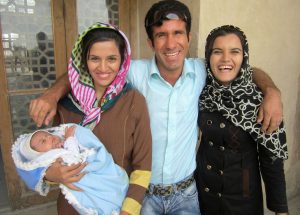
An Iranian family visiting the Ali Qapu Palace in Isfahan, photo by David Stanley via Flickr CC


Most Iranians Couldn’t Care Less About the Palestinians or Israel. Diplomats who served in Tehran frequently claim that Israel and the Palestinians are marginal to Iranian concerns. They are correct about the Iranian public and wrong about the leadership. Maybe this and other formidable gaps between the Iranian public and the leadership could provide the fuel to ignite the opposition to remove them from power.

Three years ago, the then Polish Minister of Foreign Affairs, who had also served as ambassador to Iran, told members of the Begin-Sadat Center for Strategic Studies something they had heard from other foreign diplomats. “You Israelis are obsessed with Iran,” he said. “For Iranians, you and the Palestinians are a marginal concern.”

The Polish minister was right about the average person-in-the-street in Iran, but he was wrong about the leadership. Their divergence of interest regarding Israel and the Palestinians is but one element in the disconnect between the Iranian leadership and the Iranian public – a disconnect that may explain why Iranians took to the streets to protest the ayatollahs.

The Polish minister was correct that Israel and the Palestinian question are of only marginal concern to even educated Iranians. This can be seen by examining internet search terms, which Google Trends plots by country to show relative interest. Terms can be entered in any language including Farsi, which uses Arabic script. (Many of the terms related to Israel and the Palestinians are in fact the same in Farsi and Arabic, though Farsi is an Indo-European language like English and Arabic is a Semitic language.)

This means it is easy to compare the Iranian public’s interest in Israel and the Palestinian problem to its interest in Arab states.

“Filastin” is both the Arabic and the Farsi term for Palestine. One would think, given the increasingly belligerent tenor of Israeli-Iranian relations, that Iranians would show interest in both Israel and the Palestinian problem.

But typing “Filastin” into Google Trends in Arabic script clearly confirms the Polish minister’s observation. In the breakdown by country, Iran did not even appear in the 11 countries listed as searching for the term. In the past five years, Iranians searched the term less than one-hundredth the number of times Palestinians did and less than one twenty-fifth the number of times the Jordanians did, who were second on the list of those who searched the term. (That Jordan is second on the list is hardly surprising as most of its population is Palestinian.)

These differences are even wider than they first appear, as there are at least ten times more Iranians than Palestinians and Jordanians whose levels of internet use is similar to that of the Palestinians.

The lack of interest amongst Iranians is confirmed when other terms are searched.

Probably the most prevalent term regarding the Israeli-Palestinian conflict is the term “occupation”, which the Palestinians have successfully marketed in the world.

The number of Iranians searching the term “ihtilal”, “occupation” in both Arabic and Farsi, again amounts to less than 1% of the searches made by Palestinians and only 4% of searches made by Jordanians. Iran does not even make the list of 19 states where searches amount to one-hundredth of those searched by Palestinians.

Hamas, whose leaders have been warmly embraced in Tehran and many of whose fighters have been trained by Iranian Revolutionary Guards, is also of negligible concern to the average Iranian. Iran ranked last out of 21 states who use Arabic script to search for Hamas, and the relative interest is similar to that of the two previous terms.

Perhaps the more religious evocation of “al-Quds”, which means “holy place” and is both the Farsi and the Arabic word for Jerusalem, has greater resonance among Iranians?

Not at all. Iran does not figure in the top twenty countries searching for
al-Quds, and searches for the term by Iranians account for less than 1% of the number of Palestinian searches. For the more religious symbol, the al-Aqsa mosque (“masjid al-Aqsa”), there were too few searches to record.

Obviously, the Iranian man- and woman-in-the-street does not share the leadership’s enthusiasm for Hamas, Jerusalem, or, for that matter, the Palestinian issue writ large.

And he or she doesn’t think much about Israel either.

While Iran is of much concern to Israelis, the term “Israel” in Farsi/Arabic receives much the same attention in Iran as terms related to Palestinians. Once again, Iran appears last on the list of 21 countries, with searches for Israel by Iranians amounting to one-hundredth the number of Palestinian searches and one-fortieth the number of Jordanian searches.

For Israelis, the search for “Iran” in English (which for most Israelis is only a second language) amounts to 4% of the number of searches of the word in Iran, which understandably tops the list. By comparison, searches of the word “Iran” in the US amount to only 6% the number of Iranian searches for the term. Considering that the population of the US is about 40 times that of Israel, this means Israelis search the term “Iran” hundreds of times more often than the average American. (One can’t compare the term in Hebrew as only in Israel is Hebrew widely read or spoken.)

The Iranian public’s lack of interest in Israel and the Palestinians contrasts sharply with the focus, almost obsession, of the leadership of the Islamic Republic with Israel and, to a lesser extent, the Palestinians.

This is especially true of the hardliners. After all, the elite units of the Iranian Revolutionary Guard are called the al-Quds Force, and one of the biggest annual political events in Iran, al-Quds Day, is devoted to defaming Israel and castigating it for being a “usurper” state that expelled and now occupies the Palestinians.

There is, however, good news. The staggering gap between the Iranian public’s concerns and interests clearly contrast with those of its leadership. It might grow even larger and widen to other areas – which might be sufficient to motivate the Iranian public to get rid of this leadership of woes altogether.

Declining Forex Value the Rial addsfurther challenges to Iran


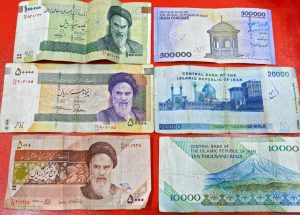
Iranian currency, image by BockoPix via Flickr CC


Iran Faces Economic Challenges as Its Currency Plunges. The sharp decline in the value of the Iranian currency is causing upheaval in the Iranian economy and challenging the government and the banking sector. The local currency’s plunge to a rate of 6,000 tomans to the dollar, despite the high level of oil and gas revenues, reflects a lack of trust between the citizens and the banking system. A consideration of Iran’s economic policy sheds light on the limitations of the “dual economy” practiced by the Islamic Republic since its inception.

At a time when Iran’s moves in the geopolitical sphere are getting the lion’s share of public attention, economic processes are occurring that will bear consequences for the power of the Islamic Republic. The recent sharp decline in the value of the local currency against the dollar reflects the severity of Iran’s economic plight. When the local currency plummeted to below the benchmark of 6,000 tomans to the dollar, currency trading came to a halt. The efforts of Iran’s central bank to stabilize the rate at 4,200 tomans failed, prompting the closure of the currency conversion market.

A look at the local-currency exchange rate in the early days of the Islamic Republic highlights the dire straits of the currency relative to today’s global market. In the wake of the revolution, the Iranian currency’s exchange rate stood at seven tomans to the dollar, while on the free market the dollar was traded for ten tomans. It is no surprise, then, that the recent plunge in the currency’s value and the distrust between the citizens and the banking system have led some members of parliament to demand the immediate dismissal of Valy Allah Seif, president of the central bank.

There is an apparent contradiction between the nadir the local currency has reached and the state’s revenues from oil and gas. The Iranian oil market is fifth in the world, with a production capacity of four million barrels per day. In addition, Iran’s natural gas reserves are estimated at 17.5% of all known gas reserves, second in size globally after Russia. According to the CIA’s The World Factbook, Iran’s GDP is estimated at $1.63 trillion and its GDP per capita at $20,000.

However, these figures do not reflect the reality faced by the Iranian population, which suffers from unemployment, inflation, growing gaps between average family income and the basket of household expenditures, a severe housing shortage, and more. Why the discrepancy?

An analysis of the political-economic equation can shed light on the reasons for the crisis in the Iranian exchange-rate market. Western experts tend to categorize the Iranian economic regime as a “command economy,” wherein the ruling establishment is the decisive and exclusive actor when it comes to the production and consumption of goods and services. This kind of economy is epitomized by that of the Soviet Union before its demise.

It is true that there is a certain similarity between Iran’s economic regime (which has weakened the private sector) and a “command economy,” but this perception is insufficient as it ignores the characteristics of the dual economy practiced in Iran.

The Iranian economy is comprised of two parallel axes: the official economic regime implemented by the government and the “charity foundation economy” (the Bonyads economy). The largest of the foundations is the “Oppressed and Disabled Foundation” – the second-largest economic entity in the country after the national oil company. The work of the charity foundations, which originated in the revolutionary regime’s confiscation of the assets of the Pahlavi Foundation, involves supplying the needs of the lower classes, helping the families of those fallen in battle, rehabilitating prisoners of war, providing assorted forms of welfare, and inculcating Islamic education, culture, and so on.

Over time, the charitable foundations have become a powerful economic axis that is not subject to governmental monitoring, taxation processes, reporting, or registration in the state accounting system. Not surprisingly, the inability to monitor these entities has given rise to corruption, tax evasion, and resource allocation outside the framework of the approved annual budget.

Furthermore, the Iranian constitution explicitly delineates the balance of power between the Supreme Leader and the president, putting the Supreme Leader in charge of agenda-setting and resource allocation. As a result, a large proportion of state revenues are channeled to entities that are directly under Ayatollah Khamenei’s aegis – such as the Revolutionary Guard Corps, which has evolved not only into a formidable security establishment but also into a powerful economic conglomerate.

The dual economic structure has created consequences that are unique to the Iranian economy. For example, the current president of the Foundation of the Oppressed and Disabled, Muhammad Saeed-kia, has no less power (some claim he has even more) than the minister of economic affairs and finance, Masoud Karbasian. The charitable foundations’ power and influence over the Iranian economy are a source of incessant wrangling between governmental power brokers. The foundations’ activity is clearly aimed, among other things, at bolstering the religious establishment in Iran’s political balance of power. For example, the “Ostan-e Quds-e Razvi” Foundation serves as a support base for Ebrahim Raisi, who challenged Rouhani in the presidential elections.

As usual, the Iranian ruling establishment is pinning the blame for the drop in the currency’s value on external factors, notably the West, claiming that the turmoil stems from Washington’s threats to pull out of the nuclear agreement. Various spokespersons say the Trump administration’s policy on renewing sanctions is fostering uncertainty that is deterring European countries from signing trade agreements with Iran. Yet local traders accuse Iran’s central bank of deliberately slowing the flow of foreign currency into the exchange trade in order to create a shortage. Moneychangers also claim that the shortage is aimed at boosting demand for foreign currency and filling budget shortfalls.

Citizens’ desire to convert their money into foreign currency in order to retain its value attests to a lack of popular trust in the banking system. Inflation and rising prices on the basic basket of goods impel a constant search for solutions in the absence of a banking alternative. The fall in the currency’s value is accompanied by an ongoing slump in local market production that stems from the government’s lack of encouragement. High unemployment figures and the preference for imports over local products also contribute to the currency’s distress.

In the view of industrialists and economists, the stagnation stems from both the sense of security fostered by high revenues from natural resources and the regime’s preference for setting the economic agenda. Moreover, the establishment’s flouting of basic principles of a free economy – in which private owners make their own decisions on what to produce, how to price it, and what to invest in in the first place – exacerbates the weakness of the Iranian economy.

The trouble now besetting the Iranian currency cannot be seen in isolation from the social unrest that began at the end of 2017. The protests that swept about 80 towns across Iran stemmed from the growing gaps between massive investments in the military sphere (with the aim of expanding Iran’s regional influence) and the population’s desire for a better standard of living. This movement was driven by the rising cost of living, high poverty and unemployment levels, a housing shortage, and increasing crime. The travails of the currency need to be analyzed in the wider context of developments affecting Iran.

From the moment the Iranian Republic was established in 1979, its leaders called for the rejection of all aspects of Western life, including the use of foreign currency. Iran’s citizens have taken the opposite tack. The Iranian economy’s source of strength – its gas and oil revenues – could turn into a weakness because of the fragility of the economic regime. The leadership’s ignoring of society’s needs and funneling of massive resources into the military sphere, while averting its gaze from the liabilities of the dual structure, could create serious challenges for the revolutionary regime in the future.

Sunday, September 17, 2017

Celebrate or not .....Rosh HaShana is not a Biblical Holiday.....

Image result for ROSH HASHANAH IS NOT A BIBLICAL HOLIDAY


Have you ever wondered why Rosh Hashanah and Yom Kippur are not highlighted in the Torah as pilgrimage holidays, as Passover, Shavuot, and Sukkot are? This is because neither Rosh Hashanah nor Yom Kippur are biblical holidays. Both replaced biblical holidays, and are notably different from the holidays they replaced.[1] The biblical holiday Yom Teruah, which was replaced by Rosh Hashanah, had a totally different purpose than Rosh Hashanah whch focuses on the onset of a new year, repentance, and commitment to live the next year properly. Yom Teruah concentrated on months and the number seven.

The Bible

The only mention of rosh hashanah, new year, in the Bible is in the writing of the sixth century BCE prophet Ezekiel.[2] However, Ezekiel was speaking about the first day of the first month later called Nisan.[3] He was not talking about the first day of the seventh month, later called Tishrei, the date of the current holiday of Rosh Hashanah.[4]

According to the Torah[5] and as recognized by the prophet, the beginning of the year is the month later called Nisan. This is the month in which the Israelites who were freed from Egyptian slavery became a nation. The new year is celebrated by Passover and Hag Hamatzot,[6] and the year begins, as does nature, in the spring. It was only during the Babylonian exile of 586 BCE that the Judeans accepted the Babylonian concept that the year begins in the fall, and the first day of the seventh month begins the new year.

While there is no need to connect the new year with the date of creation, the Judeans began to believe that the world was created on the first day of Tishrei. The Bible does not state the date when the world was created. In fact, if the six day events of creation are taken as six periods of time, we can understand the Bible saying that creation was a long process with distinct events happening at different times, so there is no single day of creation.[7] The Talmudic sages knew that we cannot pinpoint a day of creation; they even argued homiletically about whether the world was created in Nisan or Tishrei.[8]

Yom Teruah


The parent holy day that gave birth to Rosh Hashanah was Yom Teruah, also called Yom Zichron Teruah, the day of blowing a horn and the day of memorial proclaimed with the blowing of a horn.[9] On the first day of the seventh month Ezra the Scribe[10] gathered the people together and read the Torah, or some of it, to them. Then he said to them:[11] “Go your way, eat rich viands, drink the sweet beverages, and send portions to him who has none prepared: for this day is holy to our Lord; do not be sad; for joy in the Lord is your refuge.” Ezra’s joyous description of how the Judeans should celebrate the first day of Tishrei is in no way similar to the way Rosh Hashanah is celebrated today, nor is it similar to the biblical Yom Teruah.

Leviticus 23:25 describes the elements of Yom Teruah. It “shall be a solemn rest to you, a memorial proclaimed with the blowing of horns, a holy convocation. You must do no kind of servile work; and you must bring an offering made by fire to the Lord.” Numbers 29:1–6 supplements this requirement by describing the sacrifices.

Apparently, this day was chosen as a holiday which should be proclaimed to the people by blowing horns because of the number seven. Seven was an important, even magical number, among the pagans. They saw the number everywhere – such as the body parts, two legs, two arms, two parts of the torso, and the head; and they saw seven heavenly bodies among the stars. The Jews also considered seven important because it reminded them of the existence of God, who created the world in six days, rested on the seventh and gave them laws. Among more than a hundred appearances of seven in Judaism are: celebrating the Sabbath on the seventh day and Chag Hamatzot and Sukkot for seven days, counting seven weeks between Chag Hamatzot and Shavuot and celebrating seven years with a Shemitah Year and seven Shemitahs with the Jubilee year. The celebration of the first day of the seventh month as another reminder of the significance of seven.

The invention of Rosh Hashanah and all of its practices, including the idea that this was a day when Jews should repent was instituted after the period of Ezra the Scribe.

Repentance

None of the practices associated today with Rosh Hashanah are biblical. The ten days from Rosh Hashanah to Yom Kippur, New Year and the Day of Atonement, were instituted by rabbis as ten days during which Jews should recall and examine their past deeds and thoughts, think why mistakes were made, decide not to repeat errors, and consider ways to improve. People should, of course, think about their mistakes at all times and remedy them immediately. However, many cultures, like that of the Jews, recognize that most of us fail to do so and therefore remind people to check their behavior at the onset of a new year and resolve to improve. It is well known that many people go on diets and promise themselves to study more during new year holidays. The Jewish practice, stimulated and enhanced by many ceremonies and prayers, is a strong inspiration to “return” to the teachings of Judaism.

The fact that Rosh hashanah is not biblical should not prompt Jews not to observe it.


[1] Yom Kippur replaced Yom Hakippurim, a day when the high priest offered certain sacrifices.

[2] In 40:1.

[3] The names currently assigned to the Jewish months were assigned in the sixth century BCE during the Babylonian exile.

[4] See Olam Hatanach, Divrei Hayamim, Yechezkeil, page 203.

[5] Exodus 12:2.

[6] Two different holidays,

[7] Babylonian Talmud, Ketubot 57b, yamim (days) can mean years.

[8] Babylonian Talmud, Chagigah 12a, Rosh Hashana 8a, 10b-11a, 27a, Avodah Zarah 8a.

[9] Leviticus 23:23-25; Numbers 29:1-6.

[10] We do not know the dates of Ezra’s life. He came to Judea some years after some Judeans returned to Judea after the Babylonian exile. He may have come in the fifth century BCE.

[11] Nehemiah 8:10.

Monday, June 19, 2017

Punctuating Riikkki de Riiiik and Merrry de La Grey by The Bard of Bat Yam, Poet Laureate of Zion

No automatic alt text available.Image may contain: 1 person, cat

Sunrise  dawn breaks ! [apostrophe]
Rikkki de Riiik was a little boy a year ago [comma]
But now entering rip roaring stay out late manhood
Merry de La Grey no longer a little girl arching for womanhood [comma]
Hers was mixed feral tale of tears and hope
Hers, a life upwards Life’s slope [apostrophe]
two stories crossed: one scene, one act [colon, comma]
pretty lass, scrawny lad lacking tact [comma]
him a sapling uprooted, replanted in Steviekins home [comma]
her the grey and white rose everyone wanted
her heart was loud, but lips were mute [comma]
while he was lost in voiceless youth
tho’ Cupid’s bow a shot released [apostrophe]
time wept for two lips creased
a week, a month… wore out Time’s soles [comma, ellipsis, apostrophe]
a glance, a smile, two whispering souls; [comma, comma, semi-colon]
and still no telling word was risked
until away the lad was whisked
Merry grieved for her youth , he mourned (but time heals all) [comma, parenthesis]
… one year plus, the lad stands tall [ellipsis]
once little lass, now jewelled queen: [colon]
Both Best Bubbalehs of Steve serving his every whim and need [apostrophe]
two stories crossed: same scene, same act [colon, comma]
a bejewelled queen fine man with tact [comma]
He an oak deep-rooted. She wanted [emdash, endash, full stop]
but red collar with silver name tag [exclamation]
both symbols of love and responsibility of the Bard of Bat Yam, Poet Laureate of Zion ?! [question mark, exclamation]


LikeShow More ReactionsComment
Shar

Sunday, January 22, 2017

A rose by any other name would smell as sweet... Jewish Surnames Explained

Image result for Jewish Names explained cartoon


Correction, Jan. 29, 2014: Some of the sources used in the reporting of this piece were unreliable and resulted in a number of untruths and inaccuracies. The original post remains below, but a follow-up post outlining the errors, as well as further explanation, can be found here.


Ashkenazic Jews were among the last Europeans to take family names. Some German-speaking Jews took last names as early as the 17th century, but the overwhelming majority of Jews lived in Eastern Europe and did not take last names until compelled to do so. The process began in the Austro-Hungarian Empire in 1787 and ended in Czarist Russia in 1844.


In attempting to build modern nation-states, the authorities insisted that Jews take last names so that they could be taxed, drafted, and educated (in that order of importance). For centuries, Jewish communal leaders were responsible for collecting taxes from the Jewish population on behalf of the government, and in some cases were responsible for filling draft quotas. Education was traditionally an internal Jewish affair.


Until this period, Jewish names generally changed with every generation. For example, if Moses son of Mendel (Moyshe ben Mendel) married Sarah daughter of Rebecca (Sora bas Rifke), and they had a boy and named it Samuel (Shmuel), the child would be called Shmuel ben Moyshe. If they had a girl and named her Feygele, she would be called Feygele bas Sora.


Jews distrusted the authorities and resisted the new requirement. Although they were forced to take last names, at first they were used only for official purposes. Among themselves, they kept their traditional names. Over time, Jews accepted the new last names, which were essential as Jews sought to advance within the broader society and as the shtetles were transformed or Jews left them for big cities.


The easiest way for Jews to assume an official last name was to adapt the name they already had, making it permanent. This explains the use of "patronymics" and "matronymics."


PATRONYMICS (son of ...)


In Yiddish or German, "son" would be denoted by "son" or "sohn" or "er." In most Slavic languages, like Polish or Russian, it would be "wich" or "witz."


For example: The son of Mendel took the last name Mendelsohn; the son of Abraham became Abramson or Avromovitch; the son of Menashe became Manishewitz; the son of Itzhak became Itskowitz; the son of Berl took the name Berliner; the son of Kesl took the name Kessler, etc.


MATRONYMICS (daughter of …)


Reflecting the prominence of Jewish women in business, some families made last names out of women's first names: Chaiken — son of Chaikeh; Edelman — husband of Edel; Gittelman — husband of Gitl; Glick or Gluck — may derive from Glickl, a popular woman's name as in the famous "Glickl of Hameln," whose memoirs, written around 1690, are an early example of Yiddish literature.


Gold/Goldman/Gulden may derived from Golda; Malkov from Malke; Perlman — husband of Perl; Rivken — may derive from Rivke; Soronsohn—son of Sarah.


PLACE NAMES


The next most common source of Jewish last names is probably places. Jews used the town or region where they lived, or where their families came from, as their last name. As a result, the Germanic origins of most East European Jews is reflected in their names.


For example, Asch is an acronym for the towns of Aisenshtadt or Altshul or Amshterdam. Other place-based Jewish names include: Auerbach/Orbach; Bacharach; Berger (generic for townsman); Berg(man), meaning from a hilly place; Bayer — from Bavaria; Bamberger; Berliner, Berlinsky — from Berlin; Bloch (foreigner); Brandeis; Breslau; Brodsky; Brody; Danziger; Deutch/Deutscher — German; Dorf(man), meaning villager; Eisenberg; Epstein; Florsheim; Frankel — from the Franconia region of Germany; Frankfurter; Ginsberg; Gordon — from Grodno, Lithuania or from the Russian word gorodin, for townsman; Greenberg; Halperin—from Helbronn, Germany; Hammerstein; Heller — from Halle, Germany; Hollander — not from Holland, but from a town in Lithuania settled by the Dutch; Horowitz, Hurwich, Gurevitch — from Horovice in Bohemia; Koenigsberg; Krakauer — from Cracow, Poland; Landau; Lipsky — from Leipzig, Germany; Litwak — from Lithuania; Minsky — from Minsk, Belarus; Mintz—from Mainz, Germany; Oppenheimer; Ostreicher — from Austria; Pinsky — from Pinsk, Belarus; Posner — from Posen, Germany; Prager — from Prague; Rappoport — from Porto, Italy; Rothenberg — from the town of the red fortress in Germany; Shapiro — from Speyer, Germany; Schlesinger — from Silesia, Germany; Steinberg; Unger — from Hungary; Vilner — from Vilna, Poland/Lithuania; Wallach—from Bloch, derived from the Polish word for foreigner; Warshauer/Warshavsky — from Warsaw; Wiener — from Vienna; Weinberg.


OCCUPATIONAL NAMES


Craftsmen/Workers


Ackerman — plowman; Baker/Boker — baker; Blecher — tinsmith; Fleisher/Fleishman/Katzoff/Metger — butcher; Cooperman — coppersmith; Drucker — printer; Einstein — mason; Farber — painter/dyer; Feinstein — jeweler; Fisher — fisherman; Forman — driver/teamster; Garber/Gerber — tanner; Glazer/Glass/Sklar — glazier; Goldstein — goldsmith; Graber — engraver; Kastner — cabinetmaker; Kunstler — artist; Kramer — storekeeper; Miller — miller; Nagler — nailmaker; Plotnick — carpenter; Sandler/Shuster — shoemaker; Schmidt/Kovalsky — blacksmith; Shnitzer — carver; Silverstein — jeweler; Spielman — player (musician?); Stein/Steiner/Stone — jeweler; Wasserman — water carrier.


Merchants


Garfinkel/Garfunkel — diamond dealer; Holzman/Holtz/Waldman — timber dealer; Kaufman — merchant; Rokeach — spice merchant; Salzman — salt merchant; Seid/Seidman—silk merchant; Tabachnik — snuff seller; Tuchman — cloth merchant; Wachsman — wax dealer; Wechsler/Halphan — money changer; Wollman — wool merchant; Zucker/Zuckerman — sugar merchant.


Related to tailoring


Kravitz/Portnoy/Schneider/Snyder — tailor; Nadelman/Nudelman — also tailor, but from "needle"; Sher/Sherman — also tailor, but from "scissors" or "shears"; Presser/Pressman — clothing presser; Futterman/Kirshner/Kushner/Peltz — furrier; Weber — weaver.


Medical


Aptheker — druggist; Feldsher — surgeon; Bader/Teller — barber.


Related to liquor trade


Bronfman/Brand/Brandler/Brenner — distiller; Braverman/Meltzer — brewer; Kabakoff/Krieger/Vigoda — tavern keeper; Geffen — wine merchant; Wine/Weinglass — wine merchant; Weiner — wine maker.


Religious/Communal


Altshul/Althshuler — associated with the old synagogue in Prague; Cantor/Kazan/Singer/Spivack — cantor or song leader in shul; Feder/Federman/Schreiber — scribe; Haver — from haver (court official); Klausner — rabbi for small congregation; Klopman — calls people to morning prayers by knocking on their window shutters; Lehrer/Malamud/Malmud — teacher; Rabin — rabbi (Rabinowitz—son of rabbi); London — scholar, from the Hebrew lamden (misunderstood by immigration inspectors); Reznick — ritual slaughterer; Richter — judge; Sandek — godfather; Schechter/Schachter/Shuchter etc. — ritual slaughterer from Hebrew schochet; Shofer/Sofer/Schaeffer — scribe; Shulman/Skolnick — sexton; Spector — inspector or supervisor of schools.


PERSONAL TRAITS


Alter/Alterman — old; Dreyfus—three legged, perhaps referring to someone who walked with a cane; Erlich — honest; Frum — devout ; Gottleib — God lover, perhaps referring to someone very devout; Geller/Gelber — yellow, perhaps referring to someone with blond hair; Gross/Grossman — big; Gruber — coarse or vulgar; Feifer/Pfeifer — whistler; Fried/Friedman—happy; Hoch/Hochman/Langer/Langerman — tall; Klein/Kleinman — small; Koenig — king, perhaps someone who was chosen as a “Purim King,” in reality a poor wretch; Krauss — curly, as in curly hair; Kurtz/Kurtzman — short; Reich/Reichman — rich; Reisser — giant; Roth/Rothman — red head; Roth/Rothbard — red beard; Shein/Schoen/Schoenman — pretty, handsome; Schwartz/Shwartzman/Charney — black hair or dark complexion; Scharf/Scharfman — sharp, i.e intelligent; Stark — strong, from the Yiddish shtark ; Springer — lively person, from the Yiddish springen for jump.


INSULTING NAMES


These were sometimes foisted on Jews who discarded them as soon as possible, but a few may remain:


Billig — cheap; Gans — goose; Indyk — turkey; Grob — rough/crude; Kalb — cow.


ANIMAL NAMES


It is common among all peoples to take last names from the animal kingdom. Baer/Berman/Beerman/Berkowitz/Beronson — bear; Adler — eagle (may derive from reference to an eagle in Psalm 103:5); Einhorn — unicorn; Falk/Sokol/Sokolovksy — falcon; Fink — finch; Fuchs/Liss — fox; Gelfand/Helfand — camel (technically means elephant but was used for camel too); Hecht—pike; Hirschhorn — deer antlers; Karp — carp; Loeb — lion; Ochs— ox; Strauss — ostrich (or bouquet of flowers); Wachtel — quail.


HEBREW NAMES


Some Jews either held on to or adopted traditional Jewish names from the Bible and Talmud. The big two are Cohen (Cohn, Kohn, Kahan, Kahn, Kaplan) and Levi (Levy, Levine, Levinsky, Levitan, Levenson, Levitt, Lewin, Lewinsky, Lewinson). Others include: Aaron — Aronson, Aronoff; Asher; Benjamin; David — Davis, Davies; Ephraim — Fishl; Emanuel — Mendel; Isaac — Isaacs, Isaacson/Eisner; Jacob — Jacobs, Jacobson, Jacoby; Judah — Idelsohn, Udell,Yudelson; Mayer/Meyer; Menachem — Mann, Mendel; Reuben — Rubin; Samuel — Samuels, Zangwill; Simon — Schimmel; Solomon — Zalman.


HEBREW ACRONYMS


Names based on Hebrew acronyms include: Baron — bar aron (son of Aaron); Beck — bene kedoshim (descendant of martyrs); Getz — gabbai tsedek (righteous synagogue official); Katz — kohen tsedek (righteous priest); Metz — moreh tsedek (teacher of righteousness); Sachs, Saks — zera kodesh shemo (his name descends from martyrs); Segal — se gan levia (second-rank Levite).


OTHER HEBREW- and YIDDISH-DERIVED NAMES


Lieb means "lion" in Yiddish. It is the root of many Ashkenazic last names, including Liebowitz, Lefkowitz, Lebush, and Leon. It is the Yiddish translation of the Hebrew word for lion — aryeh. The lion was the symbol of the tribe of Judah.


Hirsch means "deer" or "stag" in Yiddish. It is the root of many Ashkenazic last names, including Hirschfeld, Hirschbein/Hershkowitz (son of Hirsch), Hertz/Herzl, Cerf, Hart, and Hartman. It is the Yiddish translation of the Hebrew word for gazelle: tsvi. The gazelle was the symbol of the tribe of Naphtali.


Taub means "dove" in Yiddish. It is the root of the Ashkenazic last name Tauber. The symbol of the dove is associated with the prophet Jonah.


Wolf is the root of the Ashkenazic last names Wolfson, Wouk, and Volkovich. The wolf was the symbol of the tribe of Benjamin.


Eckstein — Yiddish for cornerstone, derived from Psalm 118:22.


Good(man) — Yiddish translation of the Hebrew word for "good": tuviah.


Margolin — Hebrew for "pearl."


INVENTED ‘FANCY SHMANCY’ NAMES


When Jews in the Austro-Hungarian Empire were required to assume last names, some chose the nicest ones they could think of and may have been charged a registration fee by the authorities. According to the YIVO Encyclopedia, "The resulting names often are associated with nature and beauty. It is very plausible that the choices were influenced by the general romantic tendencies of German culture at that time." These names include: Applebaum — apple tree; Birnbaum — pear tree; Buchsbaum — box tree; Kestenbaum — chestnut tree; Kirschenbaum — cherry tree; Mandelbaum — almond tree; Nussbaum — nut tree; Tannenbaum — fir tree; Teitelbaum — palm tree.


Other names, chosen or purchased, were combinations with these roots: Blumen (flower), Fein (fine), Gold, Green, Lowen (lion), Rosen (rose), Schoen/Schein (pretty) — combined with berg (hill or mountain), thal (valley), bloom (flower), zweig (wreath), blatt (leaf), vald or wald (woods), feld (field).


Miscellaneous other names included Diamond; Glick/Gluck — luck; Hoffman — hopeful; Fried/Friedman — happiness; Lieber/Lieberman — lover.


Jewish family names from non-Jewish languages included: Sender/Saunders — from Alexander; Kagan — descended from the Khazars, a Turkic-speaking people from Central Asia; Kelman/Kalman — from the Greek name Kalonymous, the Greek translation of the Hebrew shem tov (good name), popular among Jews in medieval France and Italy; Marcus/Marx — from Latin, referring to the pagan god Mars.


Jews for the most part weren't allowed to take occupational names because these were generally used by Germans, unless they were specifically Jewish occupations such as money changer. Instead there were certain categories names could mainly be culled from:

Minerals - Gold, Silver, Ruby, Saphire, Diamond, Stone, Amber (Bernstein), etc. and all deriviates

Animals - Lion, Fox, Cat (Katze), Stag, Deer, Eagle, Finch, etc. and all deriviatives

Plants - Trees (Baum), Flowers (Blume), Bushes, Weeds etc. and all deriviaties

Since few Germans had those names, Jewisch names were - and are to this day - instantly recognizable.

Places were generally not used because the German nobility used them based on fiefs or holdings (Otto von Bismark, etc. von = of).

Sometimes insulting names were assigned if the bureaucrat was in a bad mood or didn't like the person; for example, Walter Cronkite's last name was originally "Krankheit" which means sickness.

Lastly, wealthy Jews could bribe officials or purchase favorable names, such as Lieberman (nice man), etc. or even "Deutsch," if they were especially patriotic or felt completely German (like my ancestors). Immigrating in the 30's and 40's many Jews, including my father, changed their last names to avoid association with Hitler's Germany.


Finally, there may have been Jewish names changed or shortened by immigration inspectors (though this is disputed) or by immigrants themselves (or their descendants) to sound more American, which is why "Sean Ferguson" was a Jew.

Monday, January 16, 2017

Jared Kushner the Quiet Fixer : Trump Taps Jewish Son-In-Law to Broker Israeli-Palestinian Peace

Image result for Jared Kushner Donald Trump

Jared Kushner, who is married to US President-elect Donald Trump’s daughter Ivanka, will be the next American peace envoy to the Middle East.

Trump confirmed the appointment in an weekend interview with London’s Sunday Times.

“You know what? Jared is such a good lad, he will secure an Israel deal which no one else has managed to get. You know, he’s a natural talent, he is the top, he is a natural talent. You know what I’m talking about – a natural talent. He has an innate ability to make deals, everyone likes him,” Trump told the newspaper.

Kushner was said to have been one of Trump’s chief advisers on foreign policy during the election campaign.

In the past, Kushner’s family donated large sums of money to Jewish settlement projects in Judea and Samaria.

Jared Kushner
Jared Kushner cropped.jpg
Senior Advisor to the President
Designate
Taking office
January 20, 2017
PresidentDonald Trump (elect)
SucceedingBrian Deese
Valerie Jarrett
Shailagh Murray
Personal details
BornJared Corey Kushner
January 10, 1981 (age 36)
Livingston, New Jersey, U.S.
Political partyRepublican
Democratic (Formerly)
Spouse(s)Ivanka Trump (m. 2009)
RelationsJoshua Kushner (brother)
Murray Kushner (uncle)
Children3
ParentsCharles Kushner
Seryl Stadtmauer
EducationHarvard University (BA)
New York University (MBA), (JD)
ReligionModern Orthodox Judaism
Jared Corey Kushner (born January 10, 1981) is an American real estate investor and developer, publisher, and senior advisor to President-elect Donald Trump. Together with Chief of Staff Reince Preibus and Chief Strategist Steve Bannon, he forms Trump's leadership team. Kushner is said to be Donald Trump's most trusted advisor, showing unwavering loyalty to his father-in-law
He is principal owner of the real estate holding and development company Kushner Companies and of Observer Media, publisher of the weekly, on-line New York Observer. On January 9, 2017, Kushner was named to be a Senior White House Adviser to his father-in-law, President-elect Donald Trump. As a result, Kushner will resign as CEO of his family's real estate company and as publisher of the New York Observer. He will also divest "substantial assets."
Kushner is the son of American real estate developer Charles Kushner and is married to Ivanka Trump, the daughter of President-elect of the United States Donald Trump. He was among the senior advisors of Trump's presidential campaign, and developed Trump's digital media strategy.
In 2007, his father's company, Kushner Companies, made the most expensive single-building property purchase in US history, acquiring 666 Fifth Avenue. In 2011, Kushner brought in Vornado Realty Trust as a 50% equity partner in the ownership of the building.

Early life and education

Kushner is the elder son of Seryl Kushner (née Stadtmauer) and real estate developer Charles Kushner, whose parents were Holocaust survivors who came to America from Poland in 1949.] He has a brother, Joshua (also a businessman), and two sisters, Nicole and Dara. He is also a nephew of Murray Kushner, the owner of Kushner Real Estate Group. Kushner Real Estate Group is separate from Kushner Companies, which Murray Kushner started in 2000.
Kushner was raised in an Orthodox Jewish family in New Jersey. He graduated from the Frisch School, a private, coed yeshiva high school in 1999. According to Risa Heller, a spokeswoman for Kushner Companies, he was an honors student and a member of the debate, hockey, and basketball teams while at Frisch.
In 2003, Kushner graduated cum laude from Harvard College with a B.A. in sociology. According to journalist Daniel Golden, Kushner and his brother Joshua were admitted to Harvard after their father had made a $2.5 million donation to the university.
While a student at Harvard, Kushner was a member of the Fly Club and bought and sold buildings in Somerville, Massachusetts, earning a $20 million profit.
In 2007, Kushner graduated from New York University where he earned a J.D. and M.B.A.; his father had previously made a $3 million donation to NYU in 2001.[ He interned at Manhattan District Attorney Robert Morgenthau's office and Paul, Weiss, Rifkind, Wharton & Garrison LLP.

Business career

Real estate


Kushner Companies purchased 666 Fifth Avenue in 2007 for $1.8 billion, the most expensive single property purchase in US history at the time.[24]

In May 2015, Kushner purchased a majority stake of One Times Square for $295 million.
Kushner is a real estate investor and has increased the Kushner Companies presence in the New York City real estate market as a principal in his family's real estate company. His father, Charles Kushner, was arrested on charges of tax evasion, illegal campaign donations, and witness tampering in 2004 and was eventually convicted on all charges (by the then U.S. Attorney Chris Christie) and sentenced to two years in federal prison.
Kushner Companies purchased the office building at 666 Fifth Avenue in 2007, for a then-record price of $1.8 billion, most of it borrowed. However, following the property crash in 2008, the cash flow generated by the property was insufficient to cover its debt service, and the Kushners were forced to sell the retail portion in the building to Stanley Chera for more than $1 billion and bring in Vornado Realty Trust as a 50% equity partner in the ownership of the building.
He assumed the role of CEO of Kushner Companies in 2008. On August 18, 2014, Kushner acquired a three-building apartment portfolio in Middle River, Maryland, for $37.9 million with Aion Partners. In 2013–14, he and his company acquired more than 11,000 units throughout New York, New Jersey, and the Baltimore area.In May 2015, he purchased 50.1% of the Times Square Building from Africa Israel Investments Ltd. for $295 million.
In 2015, Kushner scored spot No. 25 on Fortune Magazine’s 40 under 40 list ranking the most influential young people in business.

Newspaper publishing

At age 25, Kushner purchased the New York Observer, a weekly New York City newspaper, for $10 million,[32] using money he says he earned during his college years by closing deals on residential buildings in Somerville, Massachusetts, with family members providing the backing for his investments
After purchasing the Observer, Kushner published it in tabloid format. Since then, he has been credited with increasing the Observer's online presence and expanding the Observer Media Group. Very young and with no substantial experience in journalism, Kushner could not establish a good relationship with the newspaper's veteran editor-in-chief, Peter W. Kaplan. “This guy doesn’t know what he doesn’t know,” Kaplan remarked about Kushner, to colleagues, at the time. As a result of his differences with Kushner, Kaplan quit his position. Kaplan was followed by a series of short-lived successors until Kushner hired Elizabeth Spiers in 2011. In December 2011, the New York Post reported that the Observer expected to become profitable for the first time..Spiers left the newspaper in 2012. In January 2013, Kushner hired a new editor-in-chief, Ken Kurson. Kurson had been a consultant to Republican political candidates in New Jersey[ and one-time member of Rudy Giuliani's unsuccessful 2008 presidential primary campaign.
According to Vanity Fair, under Kushner, the "Observer has lost virtually all of its cultural currency among New York’s elite, but the paper is now profitable and reporting traffic growth ... [it] boasts 6 million unique visitors per month, up from 1.3 million in January 2013". In April 2016, the New York Observer became one of only a handful of newspapers to officially endorse United States presidential candidate Donald Trump in the Republican primary, but the paper ended the campaign period by choosing not to back any presidential candidate at all.

Los Angeles Dodgers bid

In February 2012, Kushner put in a bid to acquire the MLB team the Los Angeles Dodgers. He withdrew his bid in March 2012.

Political activity

Donald Trump presidential campaign

From the outset of the presidential campaign of his father-in-law Donald Trump, Kushner was the architect of Trump's digital, online and social media campaigns, enlisting talent from Silicon Valley to run a 100-person social-media team dubbed "Project Alamo".[4] Kushner has also helped as a speechwriter and was tasked with working to establish a plan for Trump's White House transition team should he be elected. He was for a time seen as Trump's de facto campaign manager, succeeding Corey Lewandowski, who was fired in part on Kushner's recommendation in June 2016. He has been intimately involved with campaign strategy, coordinating Trump's visit in late August to Mexico and he was believed to be responsible for the choice of Mike Pence as Trump's running mate. Kushner's "sprawling digital fundraising database and social media campaign" has been described as "the locus of his father-in-law’s presidential bid".
According to Eric Schmidt, "Jared Kushner is the biggest surprise of the 2016 election, Best I can tell, he actually ran the campaign and did it with essentially no resources."Eric Schmidt said, "Jared understood the online world in a way the traditional media folks didn't. He managed to assemble a presidential campaign on a shoestring using new technology and won. That's a big deal. Remember all those articles about how they had no money, no people, organizational structure? Well, they won, and Jared ran it."Peter Thiel said "If Trump was the CEO, Jared was effectively the chief operating officer.”
On July 5, 2016 Kushner wrote an open letter in the New York Observer addressing the controversy around a tweet from the Trump campaign containing allegedly antisemitic imagery. He was responding to his own paper's editorial by Dana Schwartz criticizing Kushner's involvement with the Trump campaign.[50] In the letter, Kushner wrote, "In my opinion, accusations like “racist” and “anti-Semite” are being thrown around with a carelessness that risks rendering these words meaningless."

Donald Trump presidential transition


President-elect Trump and Japanese PM Shinzō Abe, November 17, 2016
During the presidential transition, Kushner was said to be his father-in-law's "confidant" and one of Donald Trump's closest advisors, even more so than Trump's four adult children Trump was reported to have requested the top-secret security clearance for him to attend the Presidential daily intelligence briefings as his staff-level companion, along with General Mike Flynn who already has the clearance.
The Washington PostNew York Times and numerous other national news authorities explain Kushner was an influential factor behind the firing of New Jersey governor Chris Christie as head of the transition team, as well as the dismissal from the Donald Trump transition team of anyone connected to Christie. A source familiar with the Trump campaign explained that “Jared doesn’t like Christie. He’s always held [the prosecution of his father, Charles Kushner] against Christie.”
The New York Times reports that Kushner is an admirer of the story The Count of Monte Cristo, which tells of an innocent man who seeks vengeance against people he thinks have wronged him.] Kushner's and Chris Christie's lives became intertwined in 2005 when Jared Kushner was 24 years old, the New York Times reports. In 2005, Mr. Christie, then the United States attorney for New Jersey, sent Mr. Kushner’s father, Charles, to federal prison for tax evasion, witness tampering and illegal campaign donations.As the Times, CNN] ad The Washington Post reported, the case involved a tawdry family feud: At one point, Charles Kushner sought to blackmail his brother-in-law, who was cooperating with the federal authorities, by hiring a woman to seduce him and videotape the encounter. Charles Kushner was sentenced to two years in prison, but he was released in 2006 after just 14 months in the federal penitentiary in Alabama and spent the remainder of his sentence in a New Jersey halfway house.
Kushner told Forbes that the reports that he was involved in Christie's dismissal were false: “Six months ago Governor Christie and I decided this election was much bigger than any differences we may have had in the past, and we worked very well together. The media has speculated on a lot of different things, and since I don't talk to the press, they go as they go, but I was not behind pushing out him or his people.”

Donald Trump presidential administration

In January 2017, Kushner was named a Senior White House Advisor to President-elect Trump. Kushner's appointment has been questioned on the basis of a 1967 anti-nepotism law, but Kushner's attorney has asserted that the appointment is legal. Kushner plans to step down from his newspaper role in favor of his brother-in-law, Joseph Meyer.[62]

Personal life

Kushner married Ivanka Trump, daughter of businessman and U.S. president-elect Donald Trump, in a Jewish ceremony on October 25, 2009. Ivanka converted to Judaism under the auspices of a modern Orthodox rabbi before marrying Kushner. Kushner and Trump have three children.