Showing posts with label #Cameosfrom Zion. Show all posts
Showing posts with label #Cameosfrom Zion. Show all posts
Sunday, January 22, 2017


Wednesday, January 18, 2017
Moving The US Embassy to Jerusalem and resolution of the Middle East Peace Stalemate
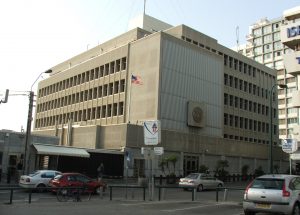
In contrast to the recent "Stop Trump" conference in Paris, a decision by the next US administration to move the US embassy to Jerusalem might be conducive to the cause of peace. It will remove the air of delusional unreality surrounding all aspects of the Jerusalem question, and modify what the Palestinians should legitimately expect to achieve at the negotiating table. It will send a message of credibility and of stern refusal to bow to threats of violence. It would still need to be packaged carefully, above all in terms of policies the key Arab players now hope to see instituted; such as the restoration of US support for traditional allies and the willingness to back them against the Iranian and Islamist threats.
Jerusalem is the capital of Israel, and no amount of UN new-speak can change that. For this reason alone, a decision to move the US Embassy to Jerusalem – as was clearly mandated by Congressional legislation – is long overdue. But it might also turn out to contribute, in the long run, to the prospects of peace.
This claim stands in stark contrast to the dire warnings coming out of the Paris summit (which looks, in hindsight, like a “Stop Trump” gathering; hence the chilly British reaction). John Kerry, for example, spoke carelessly about an "explosion," upon which radical Islamists might feel obliged to deliver. As has been so often the case in the past, however, it is the very attempt to placate Palestinian and Arab demands that makes peace less likely. A hard dose of realism may well set the stage for serious negotiations.
In his rambling speech after the UNSCR 2334 vote, Kerry suggested that Jerusalem can be kept united while serving as the capital of two sovereign states (a somewhat paradoxical proposition). Soft and fuzzy phrases about the future of Jerusalem avoid a simple truth: no Israeli government in the foreseeable future will take the knife to a living city, relinquishing the rights of the Jewish people in the very place that has been the focus of their aspirations for millennia.
Some changes in the line of sovereign control are possible in outlying areas, but that is not what the Palestinians have in mind. What they want is a dramatic outcome that will confirm, retroactively, that the Jews never had a birthright in their own homeland and holy city. This would, they believe, break the moral back of the Zionist endeavor as a whole. This is precisely why it will not happen.
The language of UNSCR 2334, and the atmospherics (if not the relatively harmless results) of the Paris Conference, encourage such unrealistic expectations among the Palestinians. The sooner they are disabused of these notions the better. A proposition that hinges on the dismemberment of Jerusalem or the forcible removal of hundreds of thousands of Jews from their homes is a nonstarter. The Palestinians will need to grasp this premise if the two sides are ever to settle down to the business of negotiating a workable and implementable agreement.
The embassy issue is an opportunity to get back to basics. The promulgators of 2334, Kerry in his speech, and the European foreign ministers (with the exception of Boris Johnson) who participated in the Paris conference proceeded from the assumption that their object was to save the two-state solution. They were, in fact, doing the opposite.
As a majority of Israelis have said again and again, in surveys and through the electoral process: a Palestinian state may be possible, but not on Palestinian terms. When much of the world, including the outgoing US administration, buys into the Amr Musa and Saeb Erekat school of negotiations – which posits that Israel, the aggressor, has no right to an inch beyond the 1949 armistice lines, and a total withdrawal, removal of all Israelis living there, partition of Jerusalem, and the right of return are the "objective requirements of peace" – a dose of cold water is in order.
None of that is what UNSCR 242 requires. Nor is it what any true reading of the events of 1948 and 1967 would warrant. A symbolic act such as the establishment of a US Embassy, or at least the installation of some of its functions, in (West!) Jerusalem should help to undo this unrealistic set of demands and expectations.
It would also send a clear signal to the Palestinians, including key members of Mahmoud Abbas's own Fatah, that their outlandish threats of violence – "we shall open the gates of hell" upon America – will not work, and will no longer be tolerated from an entity that enjoys generous US aid. To validate such threats, as Kerry did, is to succumb to the same mistake that President Clinton made in 2000, when he responded frantically to the Palestinian burst of violence. In effect, Clinton signaled to Arafat that his strategy of violence had worked, and he could now extract better terms than what he had been offered at Camp David a few months earlier. The results were sad but predictable, as they would be if Washington again bows to such coercion.
Having said all this, it would be wise for the incoming administration to build a framework or package of measures that would help Palestinian and Arab pragmatists (there is nothing to hope for from the radicals) explain why it would be better to swallow this bitter pill. After all, this is about moving the US embassy to West Jerusalem, which even the Palestinians acknowledge is part of Israel. The US could increase their material rewards, as Israel just did on the water issue. It could sustain the right of waiver over the suspension of aid, which seems likely to flow from new legislation on PA funding for terrorists and their families. It could – indeed must – give Egypt and Jordan a much firmer level of support than what they came to expect from Obama.
Above all, by forging a new and robust interaction with the key Gulf states based on a much more aggressive stance towards the Iranian regime, the incoming administration would greatly reduce the likelihood of an "explosion" in the Arab world. If done right, and in the right context, moving the US embassy to Jerusalem might bring home to the PA the sheer futility of their strategy of threats and of international gatherings and impositions.
Saturday, December 31, 2016
Ode to Baron Sir Rikkkki De Riiiik , Count and Grand Duke of the Kingdom Of Zion by the Bard of Bat Yam, Poet Laureate of Zion


Hey You Two Legs instead of Four, I am Rikkki de Riiik, the JAP Ginger Cat
Like all Jewish American Princes, , lie on Steve"s book cluttered desk all day long
And yes, I am a cat that is chubby, portly, flabby but not yet fat
I am related to George Windsor, posh,polished and proud to be a Aristocrat
The Lord Mayors, an Earl, pearl and apple in Steve eyes I never can do any wrong
I am The Riiik his snuggable, huggable, lovable cuddly hot water bottle Ginger Cat
I will not wash the dishes , Steve, nor chase those free ranging bugs , slugs or even a rat
Wrapped in fleece blankets , on Steve's sofa and desk all day long is were I belong
And yes,I am Rikkkie de Riiik Grand Duke of Chalet Darori , Palace de Bat Yam a Plutocrat
The Proletarian Wall Refuge Cats can bash the rat with a bat
Butter and barbecue spice him in a crok pot, feed him to Mr. Mordechai Ching Chong
I am a Rukkki de Riiik ( 3 xI 3 x K) Steve's favourite and most favoured Ginger Cat
When other cats see me., bestest buddy of Steve, they do bow to my heritage ,fearand frat
I am The Bard of Bat Yam's top cat and the kittycat muse cof the midnight meouing song
And yes I am Ginger with white strips, a cat with a Coat of Arms not at all a yeechy fruit bat
I am that the Cat who sleeps all day on The Poet Laureate of Zion's couch also his mat
And at night nose to nose with him , yes I can be exceedingly jealous and headstrong
My Name is Baron Sir Rikkkki De Riiik and Count Steve's Most Favoured Ginger Cat
Sunday, December 11, 2016
The Red-Med Railway: New Opportunities for China, Israel, and the Middle East
The Chinese “Belt and Road Initiative” (BRI) is a planned regional network of sea and rail infrastructure intended to strengthen the position of the Middle East as a critical trade route between East and West. One element of the planned BRI is the Red-Med rail project, which would connect the Israeli ports of Eilat and Ashdod. The Red-Med project offers significant potential benefits to Israel as well as the possibility of improved regional opportunities and relationships.
In order to ensure reliable access for Chinese commercial shipping from the Red Sea to the Mediterranean, Beijing is investing in a regional network of sea and rail infrastructure aimed at connecting China with Europe via Asia and the Middle East. The object of this ambitious and expensive project, known as the “Belt and Road Initiative” (BRI), is to create export routes to complement the Suez Canal, on which China now exclusively relies for its shipments to Europe.
One option under consideration is the Red-Med rail project, which would connect the Israeli Red Sea port town of Eilat to the Israeli port of Ashdod on the Mediterranean. The Red-Med railway, a 350-kilometer line, would include 63 bridges spanning a total of some 4.5 kilometers as well as five tunnels totaling 9.5 kilometers. The trains on the Red-Med railway line would travel at 250-300 kph and are expected to accommodate both passengers and cargo.
The project is expected to cost over NIS 25 billion (US$6.5 billion), but this figure could reach NIS 50 billion (US$13 billion). Operations are projected to begin five years from the start of construction. The project has yet to receive either final approval or secure funding.
In addition to serving China’s export interests, the Red-Med railway could be a boon to Israel’s natural gas industry. With a cross-Israel natural gas pipeline between Eilat and Ashdod in place, Israeli natural gas could be pumped from Mediterranean fields currently under development and sent to Asian markets like China and India via the Red Sea.
The Red-Med railway through Israel thus has regional geo-strategic and geo-economic significance. It would provide a safe route, complementary to the Suez Canal, by which raw materials and energy vessels could be transported from Europe to China. It would also serve to move China’s finished products back to Europe through the Gulf of Aden.
Since the Red-Med line is not designed to compete with the Suez Canal for Far East-Europe trade, the land-based trade corridor could strengthen relations between Egypt and Israel. The cargo rail line would facilitate transport between the industrial centers of the north and those of the south, which would be of economic and political benefit to both states. The rail project would increase economic cooperation and strengthen security coordination, thus helping to maintain regional peace and stability. Israel’s relations with Egypt should not be harmed by the railway, and the project should be beneficial for Egypt's economy.
Israel can also leverage the Red-Med project to further its burgeoning economic and political relationship with China. Israel’s location (like that of Djibouti) makes it a feasible overland bridge connecting China’s trade routes from the Far East through Africa up to the Middle East and on to Europe.
Such a development would turn Israel into an essential part of the global trading ecosystem. It would boost its economy and transform its trade, infrastructure, and regional relationships. Israel could become a significant player by providing the technology needed to support the industrialization of the Middle East within the context of China’s BRI.
There is one serious practical constraint, however. The port of Eilat is not currently equipped to permit entry to container vessels of the size that travel on the Asia-Europe loops. The average size of these vessels has grown considerably, and the trend is towards even larger vessels. The Eilat port can handle vessels of a maximum 8,000 TEUs (twenty-foot equivalent units), but almost half of current ship orders are for vessels exceeding 12,000 TEUs.
This in turn means that the Israeli government would have to invest billions of dollars in the Eilat port to prepare it to receive bigger vessels (10,000-plus TEUs) – with no guarantee that the mega-ships will call at their port. The government would also have to invest heavily in port infrastructure, including expanded railroad and highway capacity, to handle cargo from these ships. Such an extensive investment in the port, on top of the high costs of the rail project, makes little commercial sense.
However, if the rail project were extended to Jordan's Aqaba Port, the amount of cargo traveling the line from the Red Sea to the Mediterranean could increase dramatically. Aqaba Port is larger and better developed than Eilat. It consists of a main terminal, a container terminal, and an industrial terminal, suitable for the sorting out of larger vessels.
The Israeli government has acknowledged that Jordan could be involved in the Red-Med project, and there are plans to extend the line to Aqaba after the construction of the cargo rail line. Israel's use of the Aqaba Port facilities, which are among the largest and most modern in the Middle East, could create an alternative to overland transport, which is limited in terms of capacity and availability. Furthermore, involving Jordan in the project would strengthen bilateral relations and encourage Arab countries to use the Eilat port infrastructure.
Peace and stability in the Middle East begin from the bottom up, by creating economic value and boosting geopolitical relations in the region. Although political initiatives might lead to productive negotiations over issues of land, governance, and security, it would be a mistake to assume that they will ensure lasting peace. True peace and stability need regional economic development as well as a political settlement. That vision remains a distant prospect, but the Red-Med project – under certain conditions – could help to make it a reality.
China’s economic involvement in the project has the potential to transform the Middle East's trade, infrastructure, and regional relationships, as well as provide new security, peace, and stability. The convergence of Beijing and its Middle Eastern partners can serve as a powerful transformative force, given its likely future influence on the region. If successfully built and implemented, the BRI could be a major economic engine for China, enabling it to leverage its commercial advantages and improve its geopolitical power with countries across the Middle East.
Chinese foreign policy in the Middle East, generally speaking, is driven by broad national interests: to continue Beijing’s economic growth; preserve its communist political system; defend its sovereignty from foreign threat; inhibit foreign intervention in internal affairs; and expand its global influence as a rising economic and political power. These broader national interests are reflected in China’s main objectives in the region: to achieve energy security; enhance economic ties; foster friendly relations with all Middle Eastern countries; and promote regional stability that supports China’s economic, political, and security interests.
Successful implementation of the Red-Med project as part of China’s BRI would make Beijing a major player and a “responsible stakeholder” with an increasingly significant impact on Middle Eastern peace, stability and security. China can choose to become a stabilizing regional force, a position that would suit the local states as well as safeguard Chinese interests.
It must be recalled that there are risks inherent in the Red-Med railway project, from extensive engineering challenges through high projected costs through questions of economic viability. Moreover, the railway as a land-based passage for Chinese cargo poses similar risks to those of the Suez Canal in Egypt.
Yet China’s exclusive reliance on the Canal for cargo shipments to European markets is itself an increasing risk to the continued growth of its economy. Beijing needs to minimize the danger of shipping disruptions by reducing its dependence on a single route.
A successful implementation of the Red-Med project, a strategic focal point of China’s BRI, would allow the emergence of a major integrated economic trading zone and global transport infrastructure linking China with Europe via Asia and the Middle East. If Beijing fails to leverage this opportunity, it will miss a unique chance not only to upgrade and diversify its trade and energy routes, but to position itself as a critical player in the Middle East.
Tuesday, November 22, 2016

" Déjà vu" As they slam the oven door again, The Danger of the Hypocrisy of Jews Who Line Up Behind Steve Bannon’s Twisted Vision of America.#RIPUSA,#AmericaHangsItsHeadnShame,#KeepTrumpInCheck,#ImpeachTrumpNow
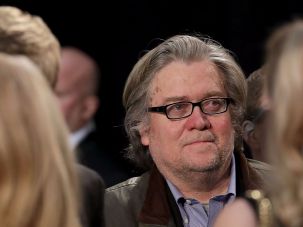
The Breathtaking Hypocrisy of Jews Who Line Up Behind Steve Bannon’s Twisted Vision of America. will american and World Jewry's response when they slam the oven door again be just " Déjà vu"
For many years now, American Jews have been told to worry about anti-Semitism from the left, from those whose criticism of Israel veers into rank de-legitimization of the Jewish state. Well-funded efforts have sprung up to defeat this “new anti-Semitism,” especially on college campuses, and it’s getting to the point where support of the movement to boycott, sanction and divest from Israel is equated with betrayal of the Jewish people.
So obsessed are we with looking for threats from one direction that we have missed the growing danger from another.
Unleashed by Donald Trump’s presidential campaign and cemented by the appointment of Stephen Bannon to a powerful position in the White House, the anti-Semitic sentiments of the far right are closer to the center of political power than they have been in recent memory.
This “new, new anti-Semitism” is largely limited to social media onslaughts and is nowhere near as pervasive as the global efforts to isolate Israel and Israelis. (For now.) But ignoring it, dismissing it, excusing it, hoping it will go away — as some Jewish leaders are doing — is not only perilous, it’s hypocritical and self-defeating.
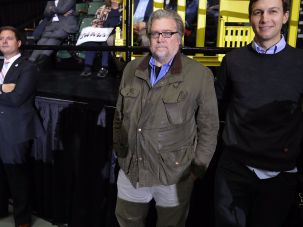
Unless we denounce and work against the hatred coming from the right with the same energy and resources used to combat hatred from the left, we risk losing allies and diminishing our own moral standing.
“We now know that there is a coherent threat from the right as well as from the left,” Yehuda Kurtzer, president of the Shalom Hartman Institute of North America and a wise observer of the American Jewish scene, told me. “I don’t know why there isn’t a coherent response to the right.”
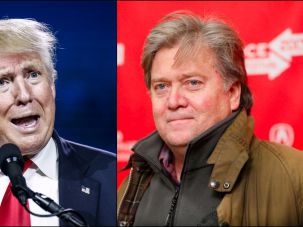
When I spoke to him and others about this development late last week, everyone was waiting to see what role, if any, Bannon might play in a Trump administration before sounding the alarm bell. Now we know: chief strategist and senior counsel to the president.
“We need to do a serious reckoning,” said Deborah Lipstadt, who is writing a book about anti-Semitism and as the preeminent historian on Holocaust denial, knows of what she speaks. “It’s been so convenient for people to beat up on the left, but you can’t ignore what’s coming from the right.”
Bannon is both the poster child for this development, and the reason it will be a complicated reckoning. Some of the Jews who have worked with him at Breitbart News are lining up to vouch for his tolerant character.
“I have Saturdays off, Jewish holidays off and Steve Bannon always wishes me a ‘Shabbat shalom’ on Friday afternoon — just in case you were concerned about that,” Joel Pollack, Breitbart’s senior editor at large, told NPR.
Joel Pollak
Even more, his Israel politics are hawkish enough to make Mort Klein, the very hawkish head of the Zionist Organization of America, boast that Bannon will attend the ZOA’s annual awards gala on Sunday.
Bannon may be, as Klein insisted, “the opposite of an anti-Semite,” but the news organization he oversaw until he joined the Trump campaign unabashedly embraced the white supremacist movement that is anti-immigrant, anti-feminist, anti-Muslim — and at times, anti-Semitic. “We’re the platform for the alt-right,” Bannon proudly told Mother Jones last summer.
Some of those pro-Trump alt-right guys are the ones sending horrific anti-Semitic messages laden with Holocaust imagery to Jewish journalists — and others — around the country.
As our Naomi Zeveloff explained earlier this week, it’s possible to be Zionist and anti-Semitic at the same time. Some, like Bannon, see in Israel a (white) nationalist, anti-Arab country worth supporting — over there. Here, in America, they may accept, even respect, individual Jews, but their ideological aim is to cleanse the country of its multiculturalism and restore privilege to white Christian males.

So, according to this logic, as long as you support certain policies of the current Israeli government, it’s okay to pal around with people who hate Jews.
That is, apparently, much more acceptable than being a proud, devout Jew who doesn’t happen to support the policies of the current Israeli government. That will earn you the title of anti-Semite.
The hypocrisy here is not only breathtaking, it’s self-defeating. The Jews in America who are the target of anti-Semitic threats and harassment — and here I include many of us at the Forward — must make common cause with other minority groups who are experiencing this and worse in today’s toxic political environment. The undocumented worker fearful of deportation. The Muslim subject to hate crimes.
If, instead, Jews excuse the far right’s hateful behavior because
Read also
Steve Bannon Signals Coming Storm for Jews in Age of Donald TrumpChemi Shalev (Haaretz)November 14, 2016
Donald Trump Refuses To Condemn White Supremacist Event With Nazi Salutes
Stop Panicking and Start Inviting Donald Trump Supporters to Your Next Shabbat Dinner
What Does It Mean To Be Jewish in Donald Trump’s America?Jane EisnerNovember 8, 2016
4 Things Breitbart Got Dead Wrong About the Forward Jane Eisner November 16, 2016
Will Steve Bannon Be the Anti-Semitic Firebrand in Donald Trump’s Inner Circle?Forward
Jared and Ivanka, Separate Business From Politics Before You Become Walking Anti-Semitic Tropes
Republished from The Forward . The Forward (Yiddish: פֿאָרווערטס; Forverts), also called The Jewish Daily Forward, is an American newspaper published in New York City for a Jewish-American audience. The organization publishes two newspapers, weekly in English (The Forward) and biweekly in Yiddish (Yiddish Forward or Forverts) and websites updated daily in both languages. Forward has a circulation of 65,000 copies per issue... The article is republished unedited with permission of the Author Jane Eisner and The Forward
.It is one in a series of articles by Jane Eisner on what the election of Donald Trump will mean to Jews and Israel.Jane Eisner, a pioneer in journalism, became editor-in-chief of the Forward in 2008, the first woman to hold the position at the influential Jewish national news organization. Under her leadership, the Forward readership has grown significantly and has won numerous regional and national awards for its original journalism, in print and online.
#RIPUSA Trump Foundation admits to violating ban on ‘self-dealing,’ new filing to IRS shows
Trump Foundation admits to violating ban on ‘self-dealing,’ new filing to IRS shows By David A. Fahrenthold ( Republished with permission of the Author and the Washington Post)

Painter Michael Israel, left, poses with Donald and Melania Trump in 2007 at Trump's Mar-a-Lago Club. Trump spent $20,000 that belonged to the Donald J. Trump Foundation to buy a six-foot-tall portrait of himself painted by Israel. (Michael Israel)
President-elect Donald Trump’s charitable foundation has admitted to the IRS that it violated a legal prohibition against “self-dealing,” which bars nonprofit leaders from using their charity’s money to help themselves, their businesses or their families.
That admission was contained in the Donald J. Trump Foundation’s IRS tax filings for 2015, which were posted online Monday evening at the nonprofit-tracking site Guidestar. A Guidestar spokesman said the forms were uploaded by the Trump Foundation’s law firm, Morgan, Lewis and Bockius.
The Post could not immediately confirm if the same forms had actually been sent to the IRS.
In one section of the form, the IRS asked if the Trump Foundation had transferred “income or assets to a disqualified person.” A disqualified person, in this context, might be Trump — the foundation’s president — or a member of his family, or a Trump-owned business.
The foundation checked “yes.”
The Washington Post's David A. Fahrenthold explains how Donald Trump directed people who owed him money to make their payments to the tax-exempt Donald J. Trump Foundation instead. (Peter Stevenson, Lee Powell/The Washington Post)
Another line on the form asked if the Trump Foundation had engaged in any acts of self-dealing in prior years. The Trump Foundation checked “yes” again.
Such violations can carry penalties including excise taxes, and the charity leaders can be required to repay money that the charity spent on their behalf.
During the presidential campaign, The Washington Post reported on several instances in which Trump appeared to use the Trump Foundation’s money to buy items for himself or to help one of his for-profit businesses.
[Trump boasts about his philanthropy. But his giving falls short of his words.]
But the new Trump Foundation tax filings provided little detail, so it was unclear if these admissions were connected to the instances reported in The Post.
The Trump Foundation tax forms did not, for instance, describe any specific acts of self-dealing. They also did not say whether Trump had paid any penalties already. That kind of detail would be submitted on a separate IRS form, which was not included in the information posted online Monday.
Spokespeople for Trump’s presidential campaign did not respond to a request for comment sent early Tuesday morning.
Inside The Post's investigation of Donald Trump's charitable giving (Peter Stevenson, Julio Negron/The Washington Post)
The New York Attorney General’s office is investigating Trump’s charity, following up on reports in The Post that described apparent instances of self-dealing going back to 2007. A spokesperson for state Attorney General Eric Schneiderman declined to comment, other than to say “our investigation is ongoing.”
The IRS also did not immediately respond. That agency has not said if it is investigating the president-elect’s charity.
The Trump Foundation has existed since 1987. This appeared to be the first time that it had admitted committing such a violation.
Philip Hackney, who formerly worked in the IRS chief counsel’s office and now teaches at Louisiana State University, said he wanted to know why the Trump Foundation was now admitting to self-dealing in prior years — when, in all prior years, it had told the IRS it had done nothing of the kind.
“What transactions led to the self-dealing that they’re admitting to? Why weren’t they able to recognize them in prior years,” Hackney said. He said that, since the prior years’ returns were signed by Trump, that opened the president-elect to questions about what and how he had missed.
Trump Foundation 2015 tax filing
During the presidential campaign, The Post revealed several instances — worth about $300,000 — where Trump seemed to have used the Trump Foundation to help himself.
In two cases, The Post reported, the Trump Foundation appeared to pay legal settlements to end lawsuits that involved his for-profit businesses.
In one case, Trump settled a dispute with the town of Palm Beach, Fla., over a large flagpole he erected at his Mar-a-Lago Club. The town agreed to waive $120,000 in unpaid fines, if Trump’s club donated $100,000 to Fisher House, a charity helping wounded veterans and military personnel. The Trump Foundation paid that donation instead — effectively saving his business $100,000.
In another, Trump’s golf course in Westchester County, N.Y., had been sued by a man who had won a $1 million hole-in-one prize during a tournament at the course. The man had later been denied the money, because Trump’s course had allegedly made the hole too short for the prize to be valid.
The lawsuit was settled, and details on that final settlement have not been made public. But, on the day that the parties told the court that their lawsuit had been settled, the Trump Foundation donated $158,000 to the unhappy golfer’s charity. Trump’s golf course donated nothing.
In three other cases, Trump’s foundation paid for items that Trump or his wife purchased at charity auctions. In 2012, Trump bid $12,000 for a football helmet signed by then-Denver Broncos quarterback Tim Tebow.
In another case, from 2007, Trump’s wife, Melania, bid $20,000 on a six-foot-tall portrait of Trump painted by “speed painter” Michael Israel during a gala at Mar-a-Lago. And in 2014, Trump bid $10,000 to buy a four-foot painting of himself by artist Havi Schanz at another charity gala.
[How a Univision anchor found the missing $10,000 portrait that Trump bought with his charity’s money]
In all three cases, the Trump Foundation paid the bill. Tax experts said that, by law, the items had to be put to charitable use. Trump’s spokespeople have not said what became of the helmet or the $20,000 portrait.
The $10,000 portrait was, however, located by Washington Post readers, following coverage of the Trump Foundation. It was hanging on the wall of the sports bar at Trump’s Doral golf resort, outside Miami.
In September, a Trump campaign spokesman rejected the idea that Trump had done anything wrong, by using his charity’s money to buy art for his bar. Instead, spokesman Boris Epshteyn said, the sports bar was doing the charity a favor by “storing” its art free of charge.
Tax experts said that this argument was unlikely to hold water.
“It’s hard to make an IRS auditor laugh,” Brett Kappel, a lawyer who advises nonprofit groups at the Akerman firm, told The Post then. “But this would do it.”
In the new 2015 tax filing, the Trump Foundation acknowledged for the first time that it owned these items. But it listed market values far below what the foundation had paid: the helmet was valued at $475. The portrait purchased for $20,000 was valued at $700. And the portrait purchased for $10,000 was valued at $500.
The tax filing did not give any details about where these items are or what charitable use Trump has in mind for them.
The Trump Foundation’s tax filing also shows that — for the first time in six years — the foundation received a donation from an entity controlled by Trump himself.
It lists a donation of $566,370 from the Trump Corporation, an entity 100 percent owned by Trump himself. It also lists a $50,000 gift from Trump Productions, a Trump-owned business that produced “The Apprentice.”
Previously, the last donation to the Trump Foundation from Trump or one of his businesses had come in 2008. Trump’s spokespeople did not respond to a question about the reason for these new gifts.
In addition, the Trump Foundation reported a $150,000 gift from the foundation of Viktor Pinchuk, a powerful Ukrainian steel magnate. That was the first such gift from Pinchuk.
Pinchuk, who supports closer ties between Ukraine and western nations, had also pledged large donations to the foundation of Trump’s presidential opponent, Hillary Clinton. Those donations, pledged to the Clinton Foundation while Clinton was secretary of state, raised questions about whether Clinton had conflicts of interest when she met with her family foundation’s donors.
A spokesman for Pinchuk’s foundation said that the gift was made as part of an agreement for Trump to speak — via video link — to a conference Pinchuk organized in September 2015. The conference, called the Yalta European Strategy Annual meeting, was held in Kiev. At the time of his 20-minute speech, titled “How New Ukraine’s Fate Affects Europe and the World,” Trump was already a presidential candidate.
Trump’s spokespeople did not respond to a question about Pinchuk’s gift.
Marc S. Owens, the former head of the IRS nonprofit division, noted that this was a rare contribution to the Trump Foundation from overseas. The only other foreign gifts were small ones from New Zealand and Canada in 2006 and 2008. And it was certainly the first from a foreigner who could seek to influence the foreign-policy agenda of a President Trump.
“The contribution points out a potential way for foreign donors to align themselves with [Trump],” Owens said.
The Post was first alerted to the 2015 tax filing by Citizens for Responsibility and Ethics in Washington, a liberal watchdog group. In a written statement, CREW spokesman Jordan Libowitz said many questions remained to be answered.
“Why were the Trumps unable to provide locations of the Foundation’s assets like paintings and football helmets . . . when they clearly remain in the possession of the Foundation? What assets do [they] admit to transferring to a ‘disqualified person?’” Libowitz wrote. “It’s pretty clear at this point that the IRS needs to investigate.”
In all, the 2015 tax filing shows that the Trump Foundation took in $781,000 and gave away $896,000 in grants during 2015. That left it with $1.1 million at year’s end, slightly down from the year before.
An early look at its outgoing grants showed a familiar pattern: Trump gave to a smattering of New York and Florida charities, plus a few connected to friends and business partners. Also, as he entered the presidential race, he gave to several nonprofits connected with conservative causes.
One of them was Project Veritas, the group run by conservative provocateur James O’Keefe, which has used hidden-camera stings to target liberal groups. Stephen Gordon, of Project Veritas, said that its point of contact had been Corey Lewandowski, Trump’s one-time campaign manager.
He said they had a brief meeting with Trump in 2015, at Trump Tower. Trump gave $10,000 from his foundation to the group, which is an IRS-certified nonprofit.
“We showed him a couple of videos. He thought that was really cool. And we walked out with a check. It was a typical donor meeting,” Gordon recalled.
#RIPUSA Trump Foundation admits to violating ban on ‘self-dealing,’ new filing to IRS shows
Trump Foundation admits to violating ban on ‘self-dealing,’ new filing to IRS shows By David A. Fahrenthold ( Republished with permission of the Author and the Washington Post)
Painter Michael Israel, left, poses with Donald and Melania Trump in 2007 at Trump's Mar-a-Lago Club. Trump spent $20,000 that belonged to the Donald J. Trump Foundation to buy a six-foot-tall portrait of himself painted by Israel. (Michael Israel)
President-elect Donald Trump’s charitable foundation has admitted to the IRS that it violated a legal prohibition against “self-dealing,” which bars nonprofit leaders from using their charity’s money to help themselves, their businesses or their families.
That admission was contained in the Donald J. Trump Foundation’s IRS tax filings for 2015, which were posted online Monday evening at the nonprofit-tracking site Guidestar. A Guidestar spokesman said the forms were uploaded by the Trump Foundation’s law firm, Morgan, Lewis and Bockius.
The Post could not immediately confirm if the same forms had actually been sent to the IRS.
In one section of the form, the IRS asked if the Trump Foundation had transferred “income or assets to a disqualified person.” A disqualified person, in this context, might be Trump — the foundation’s president — or a member of his family, or a Trump-owned business.
The foundation checked “yes.”
The Washington Post's David A. Fahrenthold explains how Donald Trump directed people who owed him money to make their payments to the tax-exempt Donald J. Trump Foundation instead. (Peter Stevenson, Lee Powell/The Washington Post)
Another line on the form asked if the Trump Foundation had engaged in any acts of self-dealing in prior years. The Trump Foundation checked “yes” again.
Such violations can carry penalties including excise taxes, and the charity leaders can be required to repay money that the charity spent on their behalf.
During the presidential campaign, The Washington Post reported on several instances in which Trump appeared to use the Trump Foundation’s money to buy items for himself or to help one of his for-profit businesses.
[Trump boasts about his philanthropy. But his giving falls short of his words.]
But the new Trump Foundation tax filings provided little detail, so it was unclear if these admissions were connected to the instances reported in The Post.
The Trump Foundation tax forms did not, for instance, describe any specific acts of self-dealing. They also did not say whether Trump had paid any penalties already. That kind of detail would be submitted on a separate IRS form, which was not included in the information posted online Monday.
Spokespeople for Trump’s presidential campaign did not respond to a request for comment sent early Tuesday morning.
Inside The Post's investigation of Donald Trump's charitable giving (Peter Stevenson, Julio Negron/The Washington Post)
The New York Attorney General’s office is investigating Trump’s charity, following up on reports in The Post that described apparent instances of self-dealing going back to 2007. A spokesperson for state Attorney General Eric Schneiderman declined to comment, other than to say “our investigation is ongoing.”
The IRS also did not immediately respond. That agency has not said if it is investigating the president-elect’s charity.
The Trump Foundation has existed since 1987. This appeared to be the first time that it had admitted committing such a violation.
Philip Hackney, who formerly worked in the IRS chief counsel’s office and now teaches at Louisiana State University, said he wanted to know why the Trump Foundation was now admitting to self-dealing in prior years — when, in all prior years, it had told the IRS it had done nothing of the kind.
“What transactions led to the self-dealing that they’re admitting to? Why weren’t they able to recognize them in prior years,” Hackney said. He said that, since the prior years’ returns were signed by Trump, that opened the president-elect to questions about what and how he had missed.
Trump Foundation 2015 tax filing
During the presidential campaign, The Post revealed several instances — worth about $300,000 — where Trump seemed to have used the Trump Foundation to help himself.
In two cases, The Post reported, the Trump Foundation appeared to pay legal settlements to end lawsuits that involved his for-profit businesses.
In one case, Trump settled a dispute with the town of Palm Beach, Fla., over a large flagpole he erected at his Mar-a-Lago Club. The town agreed to waive $120,000 in unpaid fines, if Trump’s club donated $100,000 to Fisher House, a charity helping wounded veterans and military personnel. The Trump Foundation paid that donation instead — effectively saving his business $100,000.
In another, Trump’s golf course in Westchester County, N.Y., had been sued by a man who had won a $1 million hole-in-one prize during a tournament at the course. The man had later been denied the money, because Trump’s course had allegedly made the hole too short for the prize to be valid.
The lawsuit was settled, and details on that final settlement have not been made public. But, on the day that the parties told the court that their lawsuit had been settled, the Trump Foundation donated $158,000 to the unhappy golfer’s charity. Trump’s golf course donated nothing.
In three other cases, Trump’s foundation paid for items that Trump or his wife purchased at charity auctions. In 2012, Trump bid $12,000 for a football helmet signed by then-Denver Broncos quarterback Tim Tebow.
In another case, from 2007, Trump’s wife, Melania, bid $20,000 on a six-foot-tall portrait of Trump painted by “speed painter” Michael Israel during a gala at Mar-a-Lago. And in 2014, Trump bid $10,000 to buy a four-foot painting of himself by artist Havi Schanz at another charity gala.
[How a Univision anchor found the missing $10,000 portrait that Trump bought with his charity’s money]
In all three cases, the Trump Foundation paid the bill. Tax experts said that, by law, the items had to be put to charitable use. Trump’s spokespeople have not said what became of the helmet or the $20,000 portrait.
The $10,000 portrait was, however, located by Washington Post readers, following coverage of the Trump Foundation. It was hanging on the wall of the sports bar at Trump’s Doral golf resort, outside Miami.
In September, a Trump campaign spokesman rejected the idea that Trump had done anything wrong, by using his charity’s money to buy art for his bar. Instead, spokesman Boris Epshteyn said, the sports bar was doing the charity a favor by “storing” its art free of charge.
Tax experts said that this argument was unlikely to hold water.
“It’s hard to make an IRS auditor laugh,” Brett Kappel, a lawyer who advises nonprofit groups at the Akerman firm, told The Post then. “But this would do it.”
In the new 2015 tax filing, the Trump Foundation acknowledged for the first time that it owned these items. But it listed market values far below what the foundation had paid: the helmet was valued at $475. The portrait purchased for $20,000 was valued at $700. And the portrait purchased for $10,000 was valued at $500.
The tax filing did not give any details about where these items are or what charitable use Trump has in mind for them.
The Trump Foundation’s tax filing also shows that — for the first time in six years — the foundation received a donation from an entity controlled by Trump himself.
It lists a donation of $566,370 from the Trump Corporation, an entity 100 percent owned by Trump himself. It also lists a $50,000 gift from Trump Productions, a Trump-owned business that produced “The Apprentice.”
Previously, the last donation to the Trump Foundation from Trump or one of his businesses had come in 2008. Trump’s spokespeople did not respond to a question about the reason for these new gifts.
In addition, the Trump Foundation reported a $150,000 gift from the foundation of Viktor Pinchuk, a powerful Ukrainian steel magnate. That was the first such gift from Pinchuk.
Pinchuk, who supports closer ties between Ukraine and western nations, had also pledged large donations to the foundation of Trump’s presidential opponent, Hillary Clinton. Those donations, pledged to the Clinton Foundation while Clinton was secretary of state, raised questions about whether Clinton had conflicts of interest when she met with her family foundation’s donors.
A spokesman for Pinchuk’s foundation said that the gift was made as part of an agreement for Trump to speak — via video link — to a conference Pinchuk organized in September 2015. The conference, called the Yalta European Strategy Annual meeting, was held in Kiev. At the time of his 20-minute speech, titled “How New Ukraine’s Fate Affects Europe and the World,” Trump was already a presidential candidate.
Trump’s spokespeople did not respond to a question about Pinchuk’s gift.
Marc S. Owens, the former head of the IRS nonprofit division, noted that this was a rare contribution to the Trump Foundation from overseas. The only other foreign gifts were small ones from New Zealand and Canada in 2006 and 2008. And it was certainly the first from a foreigner who could seek to influence the foreign-policy agenda of a President Trump.
“The contribution points out a potential way for foreign donors to align themselves with [Trump],” Owens said.
The Post was first alerted to the 2015 tax filing by Citizens for Responsibility and Ethics in Washington, a liberal watchdog group. In a written statement, CREW spokesman Jordan Libowitz said many questions remained to be answered.
“Why were the Trumps unable to provide locations of the Foundation’s assets like paintings and football helmets . . . when they clearly remain in the possession of the Foundation? What assets do [they] admit to transferring to a ‘disqualified person?’” Libowitz wrote. “It’s pretty clear at this point that the IRS needs to investigate.”
In all, the 2015 tax filing shows that the Trump Foundation took in $781,000 and gave away $896,000 in grants during 2015. That left it with $1.1 million at year’s end, slightly down from the year before.
An early look at its outgoing grants showed a familiar pattern: Trump gave to a smattering of New York and Florida charities, plus a few connected to friends and business partners. Also, as he entered the presidential race, he gave to several nonprofits connected with conservative causes.
One of them was Project Veritas, the group run by conservative provocateur James O’Keefe, which has used hidden-camera stings to target liberal groups. Stephen Gordon, of Project Veritas, said that its point of contact had been Corey Lewandowski, Trump’s one-time campaign manager.
He said they had a brief meeting with Trump in 2015, at Trump Tower. Trump gave $10,000 from his foundation to the group, which is an IRS-certified nonprofit.
“We showed him a couple of videos. He thought that was really cool. And we walked out with a check. It was a typical donor meeting,” Gordon recalled.
#RIPUSA Israel should not be shocked by the appointment of racist anti-Semites to senior positions in US President-elect Donald Trump’s administration. There is no wonder there. First of all, it is not in our power to change it. Our complete dependence on the United States forces us to hold our tongue and restrain ourselves.

Israel should not be shocked by anti-Semites in White House
A world view which supports white supremacy matches our government’s interests. If Trump’s people are more disgusted by Arabs than they are by Jews, we have struck quite a good deal.
Israel does not appear shocked by the appointment of racist anti-Semites to senior positions in US President-elect Donald Trump’s administration. There is no wonder there. First of all, it is not in our power to change it. Our complete dependence on the United States forces us to hold our tongue and restrain ourselves.
Second, a world view which supports white supremacy matches our government’s interests. If Trump’s people are more disgusted by Arabs than they are by Jews (the liberals, the Wall Street people, journalists from the East Coast, lovers of black people, Hillary Clinton’s friends), we have struck quite a good deal. Trump and his friends see Israel as a forefront against the barbarians, and they are not exactly very observant.
To do the Netanyahu government justice, let me qualify my statement by saying that all forms of Zionism hold the perception that a certain extent of anti-Semitism benefits the Zionist enterprise. To put it more sharply, anti-Semitism is the generator and ally of Zionism. Masses of Jews leave their place of residence only when their economic situation and physical safety are undermined. Masses of Jews are shoved to this country rather than being attracted to it. The yearning for the land of Zion and Jerusalem is not strong enough to drive millions of Jews to the country they love and make them hold on to its clods.
As the Jews in Israel long for immigrants with a certain affiliation to their people, and as Zionism—like any other ideology—needs constant justification, we have a secret hope in our hearts that a moderate anti-Semitic wave, along with a deterioration in the economic situation in their countries of residence, will make Diaspora Jews realize that they belong with us.
Is proof even necessary? No one will protest the assertion that the rise in anti-Semitism in France gave us some satisfaction, in the sense of “we warned you, didn’t we?” Late Prime Minister Ariel Sharon did not hesitate to make such a declaration, angering the French government and many Jews who see themselves as unconditional French citizens. Thousands of Jews from France who see Israel as a lifeboat, as an insurance policy, purchased apartments here and raised real estate prices in the coastal cities. That’s good. It proves Zionism was right.
Furthermore, no one can deny that the economic crisis in the Soviet empire, coupled with the nesting anti-Semitism there, were the cause of the immigration to Israel of about 1 million Jews and their non-Jewish relatives, most of whom have no affiliation to Jewish culture. Neither can anyone contradict the embarrassing fact that Israel worked to lock the gates to the US, the opening of which may have directed many of these Jews and their relatives there, and perhaps even most of them.
It was not the Jewish immigrants’ welfare that we saw before our eyes, but the state’s reinforcement. While the act of blocking and directing the Jews to Israel is ethically dubious, it was justified by the Zionist ideology which asserts that a normalization of the Jewish situation—in other words, concentrating the Jewish people in its own territory—is the only thing that will save us from another Holocaust and, according to some people, will even speed up the Messiah’s arrival.
The Jews’ comfortable situation in America raises doubts as to whether it was worthwhile to gamble on the establishment of a Jewish state. The normalization did not provide us, the Israelis, with a normal existence and did not lessen the anti-Semitism which is now drawing some of its arguments from the way we are managing the conflict with the Palestinians. There are Israelis whose parents or grandparents immigrated to Israel out a belief that this is where the agonizing historical journey will end, and now their offspring are learning that the promise has not been fulfilled.
In order to remove these malignant doubts, it would be good to have some anti-Semitism in America. Not serious anti-Semitism, not pogroms, not persecutions that will empty America from its Jews, as we need them there, but just a taste of this pungent stuff, so that we can restore our faith in Zionism.
Subscribe to:
Posts (Atom)