Showing posts with label UNSCR 2334. Show all posts

Wednesday, January 18, 2017

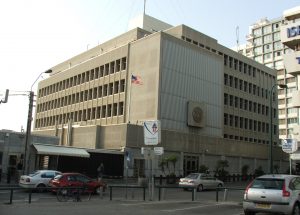
Moving The US Embassy to Jerusalem and resolution of the Middle East Peace Stalemate


 In contrast to the recent "Stop Trump" conference in Paris, a decision by the next US administration to move the US embassy to Jerusalem might be conducive to the cause of peace. It will remove the air of delusional unreality surrounding all aspects of the Jerusalem question, and modify what the Palestinians should legitimately expect to achieve at the negotiating table. It will send a message of credibility and of stern refusal to bow to threats of violence. It would still need to be packaged carefully, above all in terms of policies the key Arab players now hope to see instituted; such as the restoration of US support for traditional allies and the willingness to back them against the Iranian and Islamist threats.
Jerusalem is the capital of Israel, and no amount of UN new-speak can change that. For this reason alone, a decision to move the US Embassy to Jerusalem – as was clearly mandated by Congressional legislation – is long overdue. But it might also turn out to contribute, in the long run, to the prospects of peace.
This claim stands in stark contrast to the dire warnings coming out of the Paris summit (which looks, in hindsight, like a “Stop Trump” gathering; hence the chilly British reaction). John Kerry, for example, spoke carelessly about an "explosion," upon which radical Islamists might feel obliged to deliver. As has been so often the case in the past, however, it is the very attempt to placate Palestinian and Arab demands that makes peace less likely. A hard dose of realism may well set the stage for serious negotiations.
In his rambling speech after the UNSCR 2334 vote, Kerry suggested that Jerusalem can be kept united while serving as the capital of two sovereign states (a somewhat paradoxical proposition). Soft and fuzzy phrases about the future of Jerusalem avoid a simple truth: no Israeli government in the foreseeable future will take the knife to a living city, relinquishing the rights of the Jewish people in the very place that has been the focus of their aspirations for millennia.
Some changes in the line of sovereign control are possible in outlying areas, but that is not what the Palestinians have in mind. What they want is a dramatic outcome that will confirm, retroactively, that the Jews never had a birthright in their own homeland and holy city. This would, they believe, break the moral back of the Zionist endeavor as a whole. This is precisely why it will not happen.
The language of UNSCR 2334, and the atmospherics (if not the relatively harmless results) of the Paris Conference, encourage such unrealistic expectations among the Palestinians. The sooner they are disabused of these notions the better. A proposition that hinges on the dismemberment of Jerusalem or the forcible removal of hundreds of thousands of Jews from their homes is a nonstarter. The Palestinians will need to grasp this premise if the two sides are ever to settle down to the business of negotiating a workable and implementable agreement.
The embassy issue is an opportunity to get back to basics. The promulgators of 2334, Kerry in his speech, and the European foreign ministers (with the exception of Boris Johnson) who participated in the Paris conference proceeded from the assumption that their object was to save the two-state solution. They were, in fact, doing the opposite.
As a majority of Israelis have said again and again, in surveys and through the electoral process: a Palestinian state may be possible, but not on Palestinian terms. When much of the world, including the outgoing US administration, buys into the Amr Musa and Saeb Erekat school of negotiations – which posits that Israel, the aggressor, has no right to an inch beyond the 1949 armistice lines, and a total withdrawal, removal of all Israelis living there, partition of Jerusalem, and the right of return are the "objective requirements of peace" – a dose of cold water is in order.
None of that is what UNSCR 242 requires. Nor is it what any true reading of the events of 1948 and 1967 would warrant. A symbolic act such as the establishment of a US Embassy, or at least the installation of some of its functions, in (West!) Jerusalem should help to undo this unrealistic set of demands and expectations.
It would also send a clear signal to the Palestinians, including key members of Mahmoud Abbas's own Fatah, that their outlandish threats of violence – "we shall open the gates of hell" upon America – will not work, and will no longer be tolerated from an entity that enjoys generous US aid. To validate such threats, as Kerry did, is to succumb to the same mistake that President Clinton made in 2000, when he responded frantically to the Palestinian burst of violence. In effect, Clinton signaled to Arafat that his strategy of violence had worked, and he could now extract better terms than what he had been offered at Camp David a few months earlier. The results were sad but predictable, as they would be if Washington again bows to such coercion.
Having said all this, it would be wise for the incoming administration to build a framework or package of measures that would help Palestinian and Arab pragmatists (there is nothing to hope for from the radicals) explain why it would be better to swallow this bitter pill. After all, this is about moving the US embassy to West Jerusalem, which even the Palestinians acknowledge is part of Israel. The US could increase their material rewards, as Israel just did on the water issue. It could sustain the right of waiver over the suspension of aid, which seems likely to flow from new legislation on PA funding for terrorists and their families. It could – indeed must – give Egypt and Jordan a much firmer level of support than what they came to expect from Obama.
Above all, by forging a new and robust interaction with the key Gulf states based on a much more aggressive stance towards the Iranian regime, the incoming administration would greatly reduce the likelihood of an "explosion" in the Arab world. If done right, and in the right context, moving the US embassy to Jerusalem might bring home to the PA the sheer futility of their strategy of threats and of international gatherings and impositions.

Thursday, December 29, 2016

Cameos From Zion: Zion loses its Virginity ( finally) to backstabbin...

Cameos From Zion: Zion loses its Virginity ( finally) to backstabbin...: 0    In four respects, UNSCR 2334 undermines the prospects of Israeli-Palestinian peace and threatens what little regional stability is...

Zion loses its Virginity ( finally) to backstabbing Uncle Sambama : United Nations Security Council Resolution 2334 a step away for the Cause of Peace.

0
 

 In four respects, UNSCR 2334 undermines the prospects of Israeli-Palestinian peace and threatens what little regional stability is left. First, it could force Israel to fall back on its powerful legal position as the only existing legal inheritor of the British Mandate. Second, it compounds the error made by Obama's transition team even before he came to power of ignoring a written commitment of a US president. Third, it has placed Sisi's government in Egypt – a keystone of regional stability – in an untenable position. Fourth and most painfully, it will make it far more complicated – if not impossible – for the Palestinian leadership, enticed by the prospect of international coercion, to accept a reasonable compromise. The New Zealanders, do-gooders with a very dim understanding of what they have wrought, can be forgiven such folly. The Obama administration has no such excuses.
"Be careful what you wish for; you might get it" says the old adage, and sober elements among the Palestinian leadership may yet rue the day they managed to secure an American abstention leading to the adoption of United Nations Security Council Resolution 2334. The resolution condemns “settlement activity” anywhere, including East Jerusalem, and calls upon all members to distinguish in practice between Jews who live on one side of the Armistice Line of 1949 and those who live beyond it. It presumes to speak in the name of international law and to create the conditions for further progress towards peace in the interests of both Palestinians and "legitimate" Israelis. In fact, this poorly designed and atrociously timed diplomatic tool seems set to harm, if not entirely destroy, the very purposes it was designed to serve.
It is bound to do damage to Israeli interests (and those of Palestinian employees in Jewish-owned businesses) through the encouragement of practices already promoted by the EU (labelling, differential tariffs, etc.) and by giving momentum to the BDS movement, which aims at the ultimate delegitimization of Israel and the entire Zionist project. But these effects can be effectively countered by energetic action by Israel and its friends, not least in the US Congress. As in the (non-comparable) case of terrorism, they must not be allowed to dictate life and death decisions to Israel that need to be taken strictly according to the national interest.
Much greater harm has been done to the prospects for peace and regional stability.  There are several sad aspects to this, all pointing to the short-sighted and perhaps vindictive mindset behind the Obama administration's decision to let it happen when it could easily have been avoided. In line with several of the administration’s past decisions, it speaks the language of high morality but fails to attend to basic facts or possible consequences.
To begin with, the entire disquisition rests upon President Jimmy Carter's costly mistake of allowing a similar text, UNSCR 465, to slip through in March 1980. The passage of that resolution had serious consequences both to Carter’s political standing (Obama, preferring to act in his lame duck period, took no such risks) and to the advancement of the process initiated at Camp David. When Israeli leaders are confronted with a UN and US endorsement of the Arab narrative, which ignores the circumstances of both 1949 and 1967, they are unlikely to feel comfortable enough to work for an equitable compromise, and certainly not when there is no partner for compromise on the other side.
Moreover, by using litigious language (which may lead to trouble at the ICC, if the Prosecutor's office is not careful in the use of criteria such as gravitas and complementarity), UNSCR 2334 may leave Israel no choice but to stand on its own interpretation of international law. That interpretation stands on very firm ground, as suggested by the late Supreme Court Justice Edmond Levy. The so-called "Palestinian Occupied Territories" were never Palestinian at any point for these reasons: first, the Palestinian leadership rejected UNGAR 181 (November 1947) in all its aspects and launched a war of annihilation; and second, the territories were held between 1949 and 1967 by an occupying power that gained the recognition of only two states (Britain and Pakistan) to their annexation to Jordan. They are therefore, as the late Prime Minister Begin was fond of reminding his listeners, res nullius. Israel is thus the only existing inheritor of the League of Nations mandate, which called upon the mandatory power to secure the "close settlement of Jews on the land."
Israel never chose to turn the political effort to reach a compromise into a legal wrangle, but that choice may now have been thrust upon it. The Israeli government has sidestepped even elementary legal arguments, such as the obvious meaning of the phrase in UNSCR 242 calling for withdrawal from "territories," not "the territories." The assumption was that a narrow legal approach would bind Israel’s hands when the day came to offer significant concessions. But now that Israel has been essentially put in the dock by 2334, it has ample legal tools at its disposal with which to counter the assault – at the expense, sadly, of a coherent discussion of practical compromises.
A second unfortunate aspect is that the Obama administration, secure in the presumption that it was "saving Israel from itself," drew no lessons from its own past errors of judgment. This goes all the way back to the decision, taken by Obama’s transition team before the 2009 inauguration, to annul a written commitment by President George W. Bush in an exchange of letters with Prime Minister Ariel Sharon in April 2004 that implied that the terms of reference for negotiations should reflect the demographic realities on the ground. This abandonment, which shook Israeli professionals and politicians, was unprecedented, and did much to undermine the prospect of peace from day one. Indeed, Obama's efforts to create "daylight" between US and Israeli positions led to the one of the longest barren periods in the history of the peace process. Now the mistake has been repeated and worsened. A tragedy replayed as a farce is still a tragedy.
A third and highly damaging, if indirect, result of the vote is the potential discrediting of Egyptian President Sisi as a useful influence in the region. Approached by President-elect Trump, with whom he has established a warm relationship, Sisi was willing to pull the Egyptian draft. Instead of honoring Trump’s wish to let the incoming administration take its own stock of the situation, Obama dismissed the effort as irrelevant. With the proclamation “we are still here,” he went ahead with the resolution, cooperating with the likes of Venezuela and Malaysia, putting Sisi in the untenable position of being less loyal than they are to the Arab cause. Obama’s ill-judged action has reduced Sisi’s vital role as a cornerstone of regional stability, and rapid action will be required to undo the damage.
Finally and most tragically, the resolution greatly reduces the likelihood that the Palestinian leadership will have what it takes to strike a workable compromise at the negotiating table. It is weak and divided (notwithstanding President Abbas’s success at the Seventh Fatah Conference, where he isolated and even criminalized his rival, Muhammad Dahlan), and has not been marked hitherto by the courage necessary to make an implementable outcome possible.
Abbas did offer a conciliatory note after the UN vote, calling for coexistence and implying that he is aware that the future still depends on the Israeli electorate. But he is less able now than ever before to offer a vision that departs from the template of expectations he and his colleagues have generated. A "solution" tailored to satisfy the hopes fostered by the UNSCR text – i.e., the delegitimization and ultimate removal of each and every Jew living beyond the 1949 armistice lines, absurdly including East Jerusalem – simply cannot be implemented. Anyone who encourages the Palestinians to believe that the forced removal of hundreds of thousands is preferable to a convoluted but practical compromise that would involve human dislocation on a much smaller scale – and that leaves Jerusalem a living, united city – is abetting a pipe dream.
Venezuela and Malaysia, virulent anti-Israel players, did this for their own reasons. Senegal tagged along. New Zealand may have failed to comprehend what the initiative entails, and in Europe the settlements have been an obsessive preoccupation for years. But the Obama administration was well positioned to know that this resolution would do little but harm. Its decision to let it happen anyway, when Egypt offered a legitimate and honorable way out, raises troubling questions about Obama’s motives. Still, there is a silver lining. Given the Obama administration’s own practice of annulling its predecessor's position, it is now their position that can legitimately be undone – by practical and symbolic acts – come January 21.