Showing posts with label Jerusalem. Show all posts

Monday, January 23, 2017

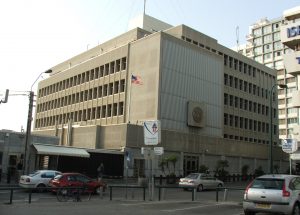
#OyVey Donald Trumps huge bear hug for Zion .....day two of his Presidency discussion on moving the US Embassy to Jerusalem!?!!! Zion holds its breath but hey it is nice getting a that warm hug with the anticipation of many, many more. .


There was something unsettling though, even hypocritical, with the way the Left reacted to Friedman’s appointment.


Image result for Cartoon Donald Trump AIPAC


On September 9, 2003, at about 11:20 p.m., a Palestinian suicide bomber walked into Café Hillel on Emek Refaim Street in Jerusalem and blew himself up.

Seven Israelis were killed, including Dr. David Applebaum, head of the Shaare Zedek emergency room, and his daughter Nava. The two had gone out for one last cup of coffee before Nava’s wedding scheduled for the following day.

David Friedman, the man Donald Trump named last week as the new US ambassador to Israel, was in Jerusalem. Nava, 20 at the time, was supposed to marry a cousin of Friedman’s wife, and they had flown in from New York to join the celebrations.

Instead of a wedding, the guests ended up attending a double funeral for a father and daughter buried side-by-side in Jerusalem’s Har Hamenuhot cemetery.

Later that day, Friedman went for a walk through city.

Crossing the upscale neighborhood of Talbiyeh, he looked up at a skeleton of a building in the initial stages of construction and called the contractor’s number, posted on the sign outside.

The two made up to meet later that day.

They walked through the unfinished building until they got to one of the top floors. Friedman asked how much the floor would cost. The contractor threw out a sum and right there Friedman accepted. For the contractor, it was unreal: 2003 was the height of the second intifada, terrorist attacks were a regular occurrence throughout Israel, and real estate prices were at an all-time low. To find a customer willing to buy an entire floor was a dream come true.

But that is David Friedman. While media attention over the last week focused on the controversial and inappropriate comments he made about J Street, we shouldn’t forget the basics: Friedman is a proud Jew, a huge supporter of Israel, an American patriot, and most importantly when it comes to his new posting, a close confidant of the man who on January 20 will become the leader of the Free World.

This does not mean we should condone everything he says or writes. US ambassadors to Israel should find a way to work with all Jewish-American organizations, even those with whom they might have personal and fundamental disagreements, like J Street.

But we should put this into perspective. What Friedman wrote was in his capacity as a private citizen. Now that he is the ambassador-designate, he likely knows that his personal politics will need to be cast aside. He no longer represents himself. Like all ambassadors, he serves at the pleasure of the president. He represents the president’s views and implements the president’s policies.

There was something unsettling though, even hypocritical, with the way the Left reacted to Friedman’s appointment. For The New York Times, it seemed like the end of days. According to the paper, Friedman’s appointment will “heighten regional tensions and undermine American leadership.”

Seriously? Friedman will undermine American leadership? Has the Times forgotten that President Barack Obama already undermined his own leadership in the Middle East, when he set red lines in Syria which disappeared the moment they were not enforced after being flagrantly violated? Just look at whom the regional Sunni states turn to today when they are in trouble – not to the US, but to Israel. Considering the growing Russian presence in the region and the lack of US involvement, I’m not sure just how much more that leadership can be undermined.

If anything, Friedman, as the representative of a newly- elected president, has the opportunity to rebuild America’s leadership and standing in the region. It won’t be an easy task considering the damage that has been done, and the general suspicion of Trump. But it is doable.

The hypocrisy was not limited to the press – it found its way into Israeli politics as well. Numerous Israeli lawmakers on the Left railed against the appointment. Meretz Chairwoman Zehava Gal-On, for example, said that Friedman “is a catastrophic choice” to serve as ambassador.

Has Gal-On forgotten that Friedman was nominated to his post by the president-elect of the United States? Does she not realize that as a member of the Knesset, her comment undermines Israel’s relationship with America? This is an even bigger hypocrisy considering the same Gal-On slammed Prime Minister Benjamin Netanyahu a year ago for addressing Congress to prevent the Iran deal. The prime minister, she said then, was harming US-Israeli relations. So basically, according to Gal-On, Netanyahu’s speech to Congress harmed ties with the US, but calling the man selected by the incoming president to serve as his official envoy to Israel a “catastrophe” doesn’t? Friedman can take some comfort knowing that this is not the first time the Left in America and Israel have opposed an ambassadorial appointment.

In 2013, when Netanyahu tapped Ron Dermer – his longtime aid – as the Israeli ambassador to the US, some on the Left viewed it as a slap to President Barack Obama’s face due to Dermer’s alleged support of Mitt Romney in the elections the year before. Peter Beinart, for example, wrote that Dermer is an unprofessional diplomat “who behaves in such undiplomatic fashion.”

In the end Washington did not fight the appointment, for the most part since the administration understood that Dermer, as ambassador, came with a valuable asset – a direct line of communication with the prime minister. Dermer was Netanyahu’s close confidant and someone who always had the prime minister’s ear (Dermer, by the way, had planned to return to Israel after the elections if Hillary Clinton had won. He is now staying in Washington with no end to his term in sight).

The same seems to be the case with Friedman. He is not a politician, nor a diplomat, but he comes from Trump’s inner circle. They have been friends for over 15 years. Friedman was one of the two witnesses who signed the ketuba of Ivanka Trump and Jared Kushner, and when Ivanka came to Israel a few years ago to look at investment opportunities, Friedman was by her side.

This closeness is an advantage for an ambassador, but even more so for the country where he or she is stationed. It means that when a message is given to an ambassador, it goes directly to that country’s leadership without intermediaries.

Considering the challenges the US and Israel are facing in the region, this kind of ambassador will likely come in handy.


***Will Donald Trump really move the US Embassy from Tel Aviv to Jerusalem? Based on media attention, this question seems to be at the heart of today’s US-Israeli alliance. It shouldn’t be.

Defense Minister Avigdor Liberman was right when he said earlier this month that it would be a mistake to focus everything on the embassy, especially considering the more pressing issues the two countries need to tackle – Iran, the ongoing war in Syria, deadlock in the peace process with the Palestinians, and regional stability.

The fact that the embassy has not been in Jerusalem until now is a travesty. Jerusalem has been the Jewish people’s capital for millennia, and even considering diplomatic circumstances, there was never a reason the US Embassy couldn’t be in the western side of the city, the part that has been under Israeli control since the state was established in 1948.

Nevertheless, I question the practical gain from having it moved to Jerusalem. It’s true that it would be recognizing Israeli sovereignty over its capital, but not much more. Other countries are unlikely to follow suit – a number of ambassadors from Europe and Asia have told me so in recent weeks - and while it might seem to reflect a significant change in US-Israeli relations, it might mean the opposite.

Here is one scenario: Imagine Jordan’s King Abdullah calls Trump and explains to him that if the embassy is moved to Jerusalem, the streets of Amman will be swept up in riots that will threaten his regime’s survival. Seventy percent of Jordanians are Palestinian, and there are already hundreds of thousands of Syrian refugees in the country. The economic challenges Abdullah faces, combined with the threats from radical extremists, are daunting. He is one of the last American and Israeli allies still standing in the Middle East. Risking his regime needs to be handled delicately.

Here is another scenario: Trump receives a call from King Salman of Saudi Arabia, who reminds the president that to successfully defeat ISIS, it would be a mistake to empower radicals by moving the embassy to Jerusalem. Salman might then call Rex Tillerson, the new secretary of state, who has strong ties in the Gulf from his nearly 40-year career at ExxonMobil.

What will Trump and Tillerson do then? Your guess is as good as mine.

I am not questioning Trump’s position on Israel. All indications are that he strongly supports the country. But when considering realpolitik, moving the embassy should not be the litmus test for whether someone supports the Jewish state or not. There are bigger issues that need to be dealt with and other considerations that need to be taken into account.

There is also a completely different possibility: Trump might be using the embassy and Friedman’s appointment to give Israel a bear hug, before he starts pressuring Netanyahu to make a deal with the Palestinians. He will first shower them with love and then lay on the pressure.

This would be the exact opposite of what happened with Obama. In 2009, Obama gave his famous Cairo speech and made a clear decision to create daylight between Israel and the US. When he then began pressuring Israel, it didn’t take much to turn Israeli and American-Jewish public opinion against him because of the Cairo speech.

The possibility that Trump might be thinking this far ahead is unlikely, even though he has said numerous times since winning the election that he wants to be the president who brokers the “ultimate deal” between Israel and the Palestinians.

Nevertheless, Israelis need to consider all possible scenarios.

One thing is for sure: in the meantime it’s nice to be getting a warm bear hug.

Thursday, January 19, 2017

Jerusalem at the Heart of the Palestinian- Israeli Quagmire Jerusalem carries great symbolic and strategic value for Israel, and Israeli control of the city must be protected.


Jerusalem is the Center of Gravity


 Making strategic choices requires distinguishing which issues are urgent and which are important. Right now, the securing of Jewish control over Jerusalem is both urgent and important. Jerusalem carries great symbolic and strategic value for Israel, and Israeli control of the city must be protected.


Israel’s control of a united Jerusalem is challenged now more than ever. UN Security Council Resolution 2334, adopted on December 23, 2016, declared the Jewish Quarter, the Western Wall, and the Temple Mount occupied territory and any Jewish presence there illegal if it is without Palestinian consent. This followed the October 2016 UNESCO resolution ignoring Jewish links to the Temple Mount. Moreover, US Secretary of State John Kerry announced on December 28, 2016 that for the first time, the US supports the idea that Jerusalem should be the capital of two peoples.

Many Israelis console themselves that President Donald Trump will move the US embassy to Jerusalem, signaling a new era. Even if the move takes place, and even if it goes smoothly with few repercussions, it is not at all clear that the rest of the world will fall in step.

In all probability, most of the world will refuse to come along, despite the fact that West Jerusalem is not disputed territory. It will not help that there should be no legal or political problem moving an embassy to the Western part of the city. There was great reluctance to move embassies to pre-1967 Jerusalem long before the Palestinians issued any demands for parts of the city. No particular sensitivity to the Palestinian issue was displayed during the 1948-67 period.

The truth is that many foreign ministries have not yet put to rest the November 1947 UN resolution for the partition of Palestine, which includes an article to internationalize the city under UN control. They simply do not want the Jews to have full control over the eternal city, and are eager to help the Palestinians prevent such control. In the Christian and Muslim worlds, Jerusalem has great resonance, and we know the attitudes towards Jews in those cultures. These factors, together with diplomatic inertia (which certainly plays a role), explain the persistent international refusal to acknowledge that Jerusalem is the seat of government and the capital of the Jewish state.

Jerusalem carries great symbolic value. There is no Zionism without Jerusalem, and David Ben-Gurion accordingly gave the city first priority during the 1948 War of Independence. The Palestinians understand this, which is one of the central reasons why they insist on claiming Jerusalem: they hope to water down Jewish attachment to the Land of Israel.

They have not been entirely unsuccessful in this. Today, the most assimilated elements in Israel’s society advocate parting with the Temple Mount for the sake of peace. Most Israelis, however, continue to believe that Jerusalem and the Temple Mount are more important than peace. Indeed, they are ready to fight for it. (For the time being, the Palestinian leadership feels the same.)

Jerusalem also carries great strategic value. Control of Jerusalem secures dominance of the only highway from the coast of the Mediterranean to the Jordan Valley, a route along which military forces can move with little interference from Arab communities. If Israel wants to maintain a defensible border in the east, it must secure the east-west axis from the coast to the Jordan Valley via an undivided Jerusalem. The military importance of Jerusalem, and Jerusalem’s central role in Israel’s eastern line of defense, cannot be overestimated – especially given the immense potential for political upheaval east of the Jordan River. The turmoil of the past few years in the Arab world suggests the need for great caution.

Jerusalem is an issue that commands consensus in Israel. Maintaining social cohesion in the protracted conflict with the Palestinians is easier, not harder, if the struggle is for a united Jerusalem. Therefore, educational efforts should be directed towards reinforcing the national love for Jerusalem, in tandem with budgetary preferential treatment for the development of an even more thriving city.

Israel’s government should make this priority clear in its dealings with the new American administration. With that in mind, it should encourage the US to overcome complaints and threats from the international community and move its embassy to Jerusalem. That would be an important step in securing Jerusalem for the Jewish people.

Of course, most of the work remains to be done by the Israelis themselves. Fortunately, Jerusalem is in our hands, and we have a clear advantage in deciding its future.

Battles are often won by taking over the center of gravity. Jerusalem is the center of gravity in the Israeli-Palestinian conflict in both a symbolic and a strategic sense. This insight must be internalized by Israeli society.

Kiryat Hamemshala Approved ...... Billion Shekel Extravagant Playground for future Prime Ministers of Zion


Billion-Shekel Compound for Israeli PM, With Underground Command Center ‘Bunker’ for National Emergencies, Approved by Jerusalem Building, Planning Committee


A view of what the new compound for the Israeli prime minister will look like when built. Photo: Channel 10.

The Jerusalem District Planning and Building Committee has approved a plan to erect a massive compound to house the office and private residence of the prime minister, Israel’s Channel 10 reported on Tuesday.

According to the report, the compound will be built in the “government precinct” — known by Israelis as Kiryat Hamemshala — located in the neighborhood of Givat Ram, where the Supreme Court is situated, and not far from the Knesset and one of the Hebrew University campuses.

The structure is expected to have between five and eight stories, and an area designated for official ceremonies. It will also include a huge underground “bunker,” to be used by the prime minister and representatives of the civil and defense establishment during times of national emergency. The cost of the project is estimated at NIS 1 billion ($262.3 million).

Today, the prime minister’s residence is located in the Jerusalem neighborhood of Rehavia. Its official name is Beit Aghion and was built in the late 1930s.

In 2009, the Israeli government approved the Almog Project to combine the prime minister’s living quarters and office, but its estimated cost at the time — NIS 650 million (approximately $170 million) — sparked criticism for its alleged extravagance, and the plan was canceled.

In 2014, the idea to move the Israeli leader’s home to the area of his office resurfaced and was approved.

The compound in question was given the official green light at a recent Cabinet Meeting.

Wednesday, January 18, 2017

Moving The US Embassy to Jerusalem and resolution of the Middle East Peace Stalemate


 In contrast to the recent "Stop Trump" conference in Paris, a decision by the next US administration to move the US embassy to Jerusalem might be conducive to the cause of peace. It will remove the air of delusional unreality surrounding all aspects of the Jerusalem question, and modify what the Palestinians should legitimately expect to achieve at the negotiating table. It will send a message of credibility and of stern refusal to bow to threats of violence. It would still need to be packaged carefully, above all in terms of policies the key Arab players now hope to see instituted; such as the restoration of US support for traditional allies and the willingness to back them against the Iranian and Islamist threats.
Jerusalem is the capital of Israel, and no amount of UN new-speak can change that. For this reason alone, a decision to move the US Embassy to Jerusalem – as was clearly mandated by Congressional legislation – is long overdue. But it might also turn out to contribute, in the long run, to the prospects of peace.
This claim stands in stark contrast to the dire warnings coming out of the Paris summit (which looks, in hindsight, like a “Stop Trump” gathering; hence the chilly British reaction). John Kerry, for example, spoke carelessly about an "explosion," upon which radical Islamists might feel obliged to deliver. As has been so often the case in the past, however, it is the very attempt to placate Palestinian and Arab demands that makes peace less likely. A hard dose of realism may well set the stage for serious negotiations.
In his rambling speech after the UNSCR 2334 vote, Kerry suggested that Jerusalem can be kept united while serving as the capital of two sovereign states (a somewhat paradoxical proposition). Soft and fuzzy phrases about the future of Jerusalem avoid a simple truth: no Israeli government in the foreseeable future will take the knife to a living city, relinquishing the rights of the Jewish people in the very place that has been the focus of their aspirations for millennia.
Some changes in the line of sovereign control are possible in outlying areas, but that is not what the Palestinians have in mind. What they want is a dramatic outcome that will confirm, retroactively, that the Jews never had a birthright in their own homeland and holy city. This would, they believe, break the moral back of the Zionist endeavor as a whole. This is precisely why it will not happen.
The language of UNSCR 2334, and the atmospherics (if not the relatively harmless results) of the Paris Conference, encourage such unrealistic expectations among the Palestinians. The sooner they are disabused of these notions the better. A proposition that hinges on the dismemberment of Jerusalem or the forcible removal of hundreds of thousands of Jews from their homes is a nonstarter. The Palestinians will need to grasp this premise if the two sides are ever to settle down to the business of negotiating a workable and implementable agreement.
The embassy issue is an opportunity to get back to basics. The promulgators of 2334, Kerry in his speech, and the European foreign ministers (with the exception of Boris Johnson) who participated in the Paris conference proceeded from the assumption that their object was to save the two-state solution. They were, in fact, doing the opposite.
As a majority of Israelis have said again and again, in surveys and through the electoral process: a Palestinian state may be possible, but not on Palestinian terms. When much of the world, including the outgoing US administration, buys into the Amr Musa and Saeb Erekat school of negotiations – which posits that Israel, the aggressor, has no right to an inch beyond the 1949 armistice lines, and a total withdrawal, removal of all Israelis living there, partition of Jerusalem, and the right of return are the "objective requirements of peace" – a dose of cold water is in order.
None of that is what UNSCR 242 requires. Nor is it what any true reading of the events of 1948 and 1967 would warrant. A symbolic act such as the establishment of a US Embassy, or at least the installation of some of its functions, in (West!) Jerusalem should help to undo this unrealistic set of demands and expectations.
It would also send a clear signal to the Palestinians, including key members of Mahmoud Abbas's own Fatah, that their outlandish threats of violence – "we shall open the gates of hell" upon America – will not work, and will no longer be tolerated from an entity that enjoys generous US aid. To validate such threats, as Kerry did, is to succumb to the same mistake that President Clinton made in 2000, when he responded frantically to the Palestinian burst of violence. In effect, Clinton signaled to Arafat that his strategy of violence had worked, and he could now extract better terms than what he had been offered at Camp David a few months earlier. The results were sad but predictable, as they would be if Washington again bows to such coercion.
Having said all this, it would be wise for the incoming administration to build a framework or package of measures that would help Palestinian and Arab pragmatists (there is nothing to hope for from the radicals) explain why it would be better to swallow this bitter pill. After all, this is about moving the US embassy to West Jerusalem, which even the Palestinians acknowledge is part of Israel. The US could increase their material rewards, as Israel just did on the water issue. It could sustain the right of waiver over the suspension of aid, which seems likely to flow from new legislation on PA funding for terrorists and their families. It could – indeed must – give Egypt and Jordan a much firmer level of support than what they came to expect from Obama.
Above all, by forging a new and robust interaction with the key Gulf states based on a much more aggressive stance towards the Iranian regime, the incoming administration would greatly reduce the likelihood of an "explosion" in the Arab world. If done right, and in the right context, moving the US embassy to Jerusalem might bring home to the PA the sheer futility of their strategy of threats and of international gatherings and impositions.

Monday, January 16, 2017

#RIPUSA ??? Donald Trump's AIPAC commitments.s Son-Law Jared Kushner earmarked to broker a Middle East Peace Deal..Good for Zion or will be backtrack out of these commitments as well..


At 22.30 Trump commits to move the US Embassy from Tel Aviv to "israel's eternal Capital Jerusalem. Yet Donald Trump's key appointments are not on the same page . 

Defense Secretary-designate James Mattis testified on Capitol Hill in Washington, Thursday, Jan. 12, 2017, at his confirmation hearing before the Senate Armed Services Committee.

President-elect Donald Trump’s Defense Secretary nominee, James Mattis, was asked on Thursday what the capital of Israel is. And he didn’t say Jerusalem.

Sen. Lindsey Graham (R-SC) asked about Israel during the hearing before the Senate Armed Services Committee, but Mattis refused to give him the answer he wanted.

“The capital of Israel that I go to, sir, is Tel Aviv, because that’s where all their government people are,” Mattis replied.

“Do you agree with me that the capital of Israel is Jerusalem?” asked Graham.

“Sir, right now, I stick with the U.S. policy,” said Mattis.

“Okay, do you support moving the U.S. embassy from Tel Aviv to Jerusalem?”

“I would defer to the nominee for Secretary of State on that, sir.”

You can watch the full exchange here:
https://www.youtube.com/watch?v=heSCwC7_qHQ

Mattis’ refusal to say what Graham wanted him to — that Jerusalem is the capital of Israel—distinguishes him from both the president-elect and many other members of the incoming administration.

The U.S. embassy is currently located in Tel Aviv, as it has long been U.S. policy that the status of Jersualem should be decided in negotiations with Palestinians. Congress did order that the U.S. embassy in Israel be moved to Jerusalem in 1995, but the past three presidents have not done so due to concerns about security. The United Nations originally intended Eastern Jerusalem to be the capital of a Palestinian state, and it still does not view Jerusalem as Israel’s capital.
Trump, however, disagrees. During the campaign, he said that if he became president, he would move the embassy to Jerusalem, which he called the “eternal capital of the Jewish people” in a speech before the American Israeli Public Affairs Comittee (AIPAC).
Since being elected, Trump has reaffirmed that view. His pick for U.S. ambassador to Israel, David Friedman, has also called Jerusalem “Israel’s eternal capital,” said he opposes the two-state solution, and doesn’t believe Israeli settlements on Palestinian land are illegal. On Tuesday, CNN reportedthat the Trump team was considering having the U.S. ambassador to Israel live and work in Jerusalem, even while the embassy itself remains in Tel Aviv.
Trump’s Secretary of State nominee, Rex Tillerson, also recently criticized a speech by Secretary of State John Kerry condemning Israeli settlements in East Jerusalem.
It’s not just Trump and his cabinet nominees who hold such views on Israel, as evidenced by Graham’s questioning. Last week, Republican Sens. Ted Cruz (TX), Marco Rubio (FL), and Dean Heller (NV) introduced a bill that would recognize Jerusalem as Israel’s official capital. The bill also requires the U.S. embassy in Israel to move there from Tel Aviv, or receive only 50 percent of its allotted funding until it does so.
Mattis told Graham on Thursday that he supports maintaining Israel’s military qualitative edge over all potential adversaries, views Hamas as a terrorist organization that would negotiate “only if forced to,” and is a proponent of the two-state solution. “If there’s another solution, I’d be happy to hear what it is,” he added.

Jared Kushner, who is married to US President-elect Donald Trump’s daughter Ivanka, will be the next American peace envoy to the Middle East.

Trump confirmed the appointment in an weekend interview with London’s Sunday Times.

“You know what? Jared is such a good lad, he will secure an Israel deal which no one else has managed to get. You know, he’s a natural talent, he is the top, he is a natural talent. You know what I’m talking about – a natural talent. He has an innate ability to make deals, everyone likes him,” Trump told the newspaper.

Kushner was said to have been one of Trump’s chief advisers on foreign policy during the election campaign.

In the past, Kushner’s family donated large sums of money to Jewish settlement projects in Judea and Samaria.

Jared Kushner
Jared Kushner cropped.jpg
Senior Advisor to the President
Designate
Taking office
January 20, 2017
PresidentDonald Trump (elect)
SucceedingBrian Deese
Valerie Jarrett
Shailagh Murray
Personal details
BornJared Corey Kushner
January 10, 1981 (age 36)
Livingston, New Jersey, U.S.
Political partyRepublican
Democratic (Formerly)
Spouse(s)Ivanka Trump (m. 2009)
RelationsJoshua Kushner (brother)
Murray Kushner (uncle)
Children3
ParentsCharles Kushner
Seryl Stadtmauer
EducationHarvard University (BA)
New York University (MBA), (JD)
ReligionModern Orthodox Judaism
Jared Corey Kushner (born January 10, 1981) is an American real estate investor and developer, publisher, and senior advisor to President-elect Donald Trump. Together with Chief of Staff Reince Preibus and Chief Strategist Steve Bannon, he forms Trump's leadership team. Kushner is said to be Donald Trump's most trusted advisor, showing unwavering loyalty to his father-in-law
He is principal owner of the real estate holding and development company Kushner Companies and of Observer Media, publisher of the weekly, on-line New York Observer. On January 9, 2017, Kushner was named to be a Senior White House Adviser to his father-in-law, President-elect Donald Trump. As a result, Kushner will resign as CEO of his family's real estate company and as publisher of the New York Observer. He will also divest "substantial assets."
Kushner is the son of American real estate developer Charles Kushner and is married to Ivanka Trump, the daughter of President-elect of the United States Donald Trump. He was among the senior advisors of Trump's presidential campaign, and developed Trump's digital media strategy.
In 2007, his father's company, Kushner Companies, made the most expensive single-building property purchase in US history, acquiring 666 Fifth Avenue. In 2011, Kushner brought in Vornado Realty Trust as a 50% equity partner in the ownership of the building.

Early life and education

Kushner is the elder son of Seryl Kushner (née Stadtmauer) and real estate developer Charles Kushner, whose parents were Holocaust survivors who came to America from Poland in 1949.] He has a brother, Joshua (also a businessman), and two sisters, Nicole and Dara. He is also a nephew of Murray Kushner, the owner of Kushner Real Estate Group. Kushner Real Estate Group is separate from Kushner Companies, which Murray Kushner started in 2000.
Kushner was raised in an Orthodox Jewish family in New Jersey. He graduated from the Frisch School, a private, coed yeshiva high school in 1999. According to Risa Heller, a spokeswoman for Kushner Companies, he was an honors student and a member of the debate, hockey, and basketball teams while at Frisch.
In 2003, Kushner graduated cum laude from Harvard College with a B.A. in sociology. According to journalist Daniel Golden, Kushner and his brother Joshua were admitted to Harvard after their father had made a $2.5 million donation to the university.
While a student at Harvard, Kushner was a member of the Fly Club and bought and sold buildings in Somerville, Massachusetts, earning a $20 million profit.
In 2007, Kushner graduated from New York University where he earned a J.D. and M.B.A.; his father had previously made a $3 million donation to NYU in 2001.[ He interned at Manhattan District Attorney Robert Morgenthau's office and Paul, Weiss, Rifkind, Wharton & Garrison LLP.

Business career

Real estate

Kushner Companies purchased 666 Fifth Avenue in 2007 for $1.8 billion, the most expensive single property purchase in US history at the time.[24]
In May 2015, Kushner purchased a majority stake of One Times Square for $295 million.
Kushner is a real estate investor and has increased the Kushner Companies presence in the New York City real estate market as a principal in his family's real estate company. His father, Charles Kushner, was arrested on charges of tax evasion, illegal campaign donations, and witness tampering in 2004 and was eventually convicted on all charges (by the then U.S. Attorney Chris Christie) and sentenced to two years in federal prison.
Kushner Companies purchased the office building at 666 Fifth Avenue in 2007, for a then-record price of $1.8 billion, most of it borrowed. However, following the property crash in 2008, the cash flow generated by the property was insufficient to cover its debt service, and the Kushners were forced to sell the retail portion in the building to Stanley Chera for more than $1 billion and bring in Vornado Realty Trust as a 50% equity partner in the ownership of the building.
He assumed the role of CEO of Kushner Companies in 2008. On August 18, 2014, Kushner acquired a three-building apartment portfolio in Middle River, Maryland, for $37.9 million with Aion Partners. In 2013–14, he and his company acquired more than 11,000 units throughout New York, New Jersey, and the Baltimore area.In May 2015, he purchased 50.1% of the Times Square Building from Africa Israel Investments Ltd. for $295 million.
In 2015, Kushner scored spot No. 25 on Fortune Magazine’s 40 under 40 list ranking the most influential young people in business.

Newspaper publishing

At age 25, Kushner purchased the New York Observer, a weekly New York City newspaper, for $10 million,[32] using money he says he earned during his college years by closing deals on residential buildings in Somerville, Massachusetts, with family members providing the backing for his investments
After purchasing the Observer, Kushner published it in tabloid format. Since then, he has been credited with increasing the Observer's online presence and expanding the Observer Media Group. Very young and with no substantial experience in journalism, Kushner could not establish a good relationship with the newspaper's veteran editor-in-chief, Peter W. Kaplan. “This guy doesn’t know what he doesn’t know,” Kaplan remarked about Kushner, to colleagues, at the time. As a result of his differences with Kushner, Kaplan quit his position. Kaplan was followed by a series of short-lived successors until Kushner hired Elizabeth Spiers in 2011. In December 2011, the New York Post reported that the Observer expected to become profitable for the first time..Spiers left the newspaper in 2012. In January 2013, Kushner hired a new editor-in-chief, Ken Kurson. Kurson had been a consultant to Republican political candidates in New Jersey[ and one-time member of Rudy Giuliani's unsuccessful 2008 presidential primary campaign.
According to Vanity Fair, under Kushner, the "Observer has lost virtually all of its cultural currency among New York’s elite, but the paper is now profitable and reporting traffic growth ... [it] boasts 6 million unique visitors per month, up from 1.3 million in January 2013". In April 2016, the New York Observer became one of only a handful of newspapers to officially endorse United States presidential candidate Donald Trump in the Republican primary, but the paper ended the campaign period by choosing not to back any presidential candidate at all.

Los Angeles Dodgers bid

In February 2012, Kushner put in a bid to acquire the MLB team the Los Angeles Dodgers. He withdrew his bid in March 2012.

Political activity

Donald Trump presidential campaign

From the outset of the presidential campaign of his father-in-law Donald Trump, Kushner was the architect of Trump's digital, online and social media campaigns, enlisting talent from Silicon Valley to run a 100-person social-media team dubbed "Project Alamo".[4] Kushner has also helped as a speechwriter and was tasked with working to establish a plan for Trump's White House transition team should he be elected. He was for a time seen as Trump's de facto campaign manager, succeeding Corey Lewandowski, who was fired in part on Kushner's recommendation in June 2016. He has been intimately involved with campaign strategy, coordinating Trump's visit in late August to Mexico and he was believed to be responsible for the choice of Mike Pence as Trump's running mate. Kushner's "sprawling digital fundraising database and social media campaign" has been described as "the locus of his father-in-law’s presidential bid".
According to Eric Schmidt, "Jared Kushner is the biggest surprise of the 2016 election, Best I can tell, he actually ran the campaign and did it with essentially no resources."Eric Schmidt said, "Jared understood the online world in a way the traditional media folks didn't. He managed to assemble a presidential campaign on a shoestring using new technology and won. That's a big deal. Remember all those articles about how they had no money, no people, organizational structure? Well, they won, and Jared ran it."Peter Thiel said "If Trump was the CEO, Jared was effectively the chief operating officer.”
On July 5, 2016 Kushner wrote an open letter in the New York Observer addressing the controversy around a tweet from the Trump campaign containing allegedly antisemitic imagery. He was responding to his own paper's editorial by Dana Schwartz criticizing Kushner's involvement with the Trump campaign.[50] In the letter, Kushner wrote, "In my opinion, accusations like “racist” and “anti-Semite” are being thrown around with a carelessness that risks rendering these words meaningless."

Donald Trump presidential transition

President-elect Trump and Japanese PM Shinzō Abe, November 17, 2016
During the presidential transition, Kushner was said to be his father-in-law's "confidant" and one of Donald Trump's closest advisors, even more so than Trump's four adult children Trump was reported to have requested the top-secret security clearance for him to attend the Presidential daily intelligence briefings as his staff-level companion, along with General Mike Flynn who already has the clearance.
The Washington PostNew York Times and numerous other national news authorities explain Kushner was an influential factor behind the firing of New Jersey governor Chris Christie as head of the transition team, as well as the dismissal from the Donald Trump transition team of anyone connected to Christie. A source familiar with the Trump campaign explained that “Jared doesn’t like Christie. He’s always held [the prosecution of his father, Charles Kushner] against Christie.”
The New York Times reports that Kushner is an admirer of the story The Count of Monte Cristo, which tells of an innocent man who seeks vengeance against people he thinks have wronged him.] Kushner's and Chris Christie's lives became intertwined in 2005 when Jared Kushner was 24 years old, the New York Times reports. In 2005, Mr. Christie, then the United States attorney for New Jersey, sent Mr. Kushner’s father, Charles, to federal prison for tax evasion, witness tampering and illegal campaign donations.As the Times, CNN] ad The Washington Post reported, the case involved a tawdry family feud: At one point, Charles Kushner sought to blackmail his brother-in-law, who was cooperating with the federal authorities, by hiring a woman to seduce him and videotape the encounter. Charles Kushner was sentenced to two years in prison, but he was released in 2006 after just 14 months in the federal penitentiary in Alabama and spent the remainder of his sentence in a New Jersey halfway house.
Kushner told Forbes that the reports that he was involved in Christie's dismissal were false: “Six months ago Governor Christie and I decided this election was much bigger than any differences we may have had in the past, and we worked very well together. The media has speculated on a lot of different things, and since I don't talk to the press, they go as they go, but I was not behind pushing out him or his people.”

Donald Trump presidential administration

In January 2017, Kushner was named a Senior White House Advisor to President-elect Trump. Kushner's appointment has been questioned on the basis of a 1967 anti-nepotism law, but Kushner's attorney has asserted that the appointment is legal. Kushner plans to step down from his newspaper role in favor of his brother-in-law, Joseph Meyer.[62]

Personal life

Kushner married Ivanka Trump, daughter of businessman and U.S. president-elect Donald Trump, in a Jewish ceremony on October 25, 2009. Ivanka converted to Judaism under the auspices of a modern Orthodox rabbi before marrying Kushner. Kushner and Trump have three children.