Showing posts with label US Embassy. Show all posts

Tuesday, February 14, 2017

#OYVeyDonaldTrump at AIPAC 2016 he acquired the 82nd Airbourne Division of Fans in Israel. High expectations .... but will he deliver on all his promises in his AIPAC Speech.


Israel is a very pro-American country, possibly more so than any other country in the world. As in the past, Israelis followed the US presidential election with great interest, amazed that the American political system had not produced more palatable presidential candidates. After eight years of a frosty relationship with the US Commander in Chief, many Israelis cautiously welcome the advent of Donald Trump.
In a poll taken following Donald Trump’s victory, 83% of Israelis said they consider Trump a pro-Israel leader; by contrast, another poll showed that 63% view Barack Obama as the “worst” US president with regard to Israel in the last 30 years. Indeed, after eight years of tense relations with the Obama administration, most Israelis are relieved to see a friend in the White House. Moreover, on issues that are important to Israel – Iran and the Palestinians – there seems to be a greater convergence of views than before.
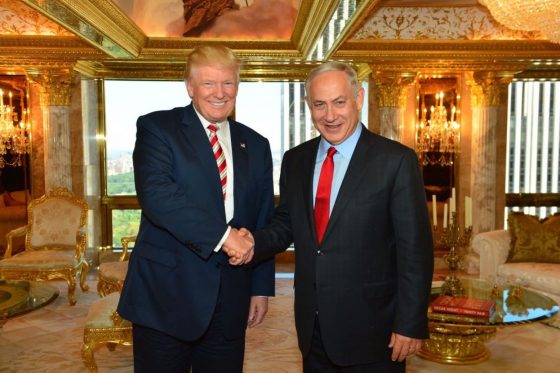
Trump’s stance on Iran is particularly important now, as Iran recently held a military exercise to test its missile and radar systems after the Trump administration imposed sanctions on Tehran for a ballistic missile test. When Israeli Prime Minister Benjamin Netanyahu visits Trump in Washington DC this week, it will be worth noting what the leaders say about the Iran nuclear deal and what kind of role the US will play in Israel.
Netanyahu fought tooth and nail against the nuclear agreement negotiated by the Obama administration with Iran. Trump slammed it as “one of the dumbest deals ever.” Senior members of his administration share this view and are apprehensive about Iranian intentions.
Obama gave a high priority to negotiating the Israeli-Palestinian conflict and was obsessed with Jewish settlements in the West Bank. He estranged Israelis by not distinguishing between Israeli building in Jerusalem and in the West Bank. He often dished out “tough love” to Israel, as he called it when addressing a synagogue in Washington, DC.
Trump and his advisors, by contrast, seem more relaxed about the Israeli-Palestinian issue, correctly understanding that it is by no means the most important problem in the chaotic Middle East. Even the White House criticism of new settlement building plans – it called them unhelpful to the peace process, but added that they are not impediments to peace – represents a positive change to many Israelis.
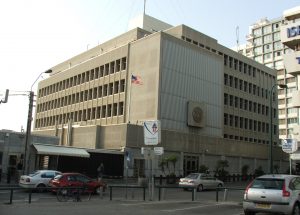
Furthermore, Trump’s promise to move the American embassy in Israel from Tel Aviv to Jerusalem seems more sincere than similar promises made by previous presidential candidates. Throughout his campaign and into the early days of his presidency, Trump has shown that he follows through, and is more concerned with fulfilling his promises than flattering the electorate. Israelis cannot understand why other countries refuse to accept Jerusalem as their capital and to place their embassies in western Jerusalem, which is not, after all, disputed territory. Picking David Friedman – an Orthodox, pro-settlement, Jewish American who owns an apartment in Jerusalem – as ambassador to Israel lends credence to Trump’s promise.
Several of Trump’s positions that draw tremendous criticism at home and abroad are less problematic for Israelis. For example, the idea of building a wall along the US-Mexico border to stop illegal immigration is viewed in Israel as the expression of the sovereign right of any nation to prevent undesirable elements from entering its territory. Israel has built walls and fences to stop the infiltration of terrorists and illegal immigrants from Palestinian territory.
Trump’s diatribes against Muslims are unseemly, but Israelis can understand where he is coming from, since they have been subjected to Muslim terrorism and Arab state aggression for 100 years. The political correctness of the Obama years – when the president refused to acknowledge radical Islam as the source of most of the terrorism in the world – frustrated Israelis.
Thus, Trump’s willingness to speak his mind is appreciated in Israel, even if some of his statements border on the vulgar. It is refreshing to the Israeli ear to hear an American president decline to beat around the bush, but rather to address issues directly, without the constraints of liberal political correctness. This quality has earned Trump some popularity in Israel.
Israelis well know that a portion of the Washington bureaucracy, especially at the Department of State, and some of the media and academic elites are unfriendly to Israel. They welcome a president who dislikes that bureaucracy and is critical of those elites.
We should not forget that since the late 1960s, Israelis have largely preferred Republican presidents. Yitzhak Rabin, who served as Israel’s ambassador to Washington from 1968 to 1973, openly supported the Republican presidential candidate, Richard Nixon. Similarly, Prime Minister Netanyahu made his preference for Mitt Romney over Obama abundantly clear. Unlike many European politicians and American Democrats, Israelis are substantially nationalist and conservative. The conservative Israeli Likud party has won more elections than any other party since 1977.
Israelis followed the decline of American international fortunes during the Obama years with alarm. It frightens them to see America so weakened. Thus, a Trump who wants to make his country great again by increasing defense spending and standing tall against America’s enemies abroad (especially Iran) strikes a responsive chord among Israelis.
Finally, Trump’s family biography endears him to Israelis. His daughter converted to Judaism and belongs to an Orthodox community. Trump has Jewish grandchildren of whom he is proud. His Jewish son-in-law, Jared Kushner, is an important advisor. Living in New York may have sensitized him to the sensibilities of the Jewish community. Moreover, he has always expressed strong support for the Jewish state.
After eight years of the distant President Obama in the White House – a president who used his last days in office to lash out at Israel at the UN – it should not be surprising that Israelis are looking forward, with some trepidation but even more hope, to working with the new American president. While the euphoria displayed by some right-wing circles in Israel is not warranted, an improvement in bilateral relations is a realistic expectation.

Monday, January 23, 2017

#OyVey Donald Trumps huge bear hug for Zion .....day two of his Presidency discussion on moving the US Embassy to Jerusalem!?!!! Zion holds its breath but hey it is nice getting a that warm hug with the anticipation of many, many more. .


There was something unsettling though, even hypocritical, with the way the Left reacted to Friedman’s appointment.


Image result for Cartoon Donald Trump AIPAC


On September 9, 2003, at about 11:20 p.m., a Palestinian suicide bomber walked into Café Hillel on Emek Refaim Street in Jerusalem and blew himself up.

Seven Israelis were killed, including Dr. David Applebaum, head of the Shaare Zedek emergency room, and his daughter Nava. The two had gone out for one last cup of coffee before Nava’s wedding scheduled for the following day.

David Friedman, the man Donald Trump named last week as the new US ambassador to Israel, was in Jerusalem. Nava, 20 at the time, was supposed to marry a cousin of Friedman’s wife, and they had flown in from New York to join the celebrations.

Instead of a wedding, the guests ended up attending a double funeral for a father and daughter buried side-by-side in Jerusalem’s Har Hamenuhot cemetery.

Later that day, Friedman went for a walk through city.

Crossing the upscale neighborhood of Talbiyeh, he looked up at a skeleton of a building in the initial stages of construction and called the contractor’s number, posted on the sign outside.

The two made up to meet later that day.

They walked through the unfinished building until they got to one of the top floors. Friedman asked how much the floor would cost. The contractor threw out a sum and right there Friedman accepted. For the contractor, it was unreal: 2003 was the height of the second intifada, terrorist attacks were a regular occurrence throughout Israel, and real estate prices were at an all-time low. To find a customer willing to buy an entire floor was a dream come true.

But that is David Friedman. While media attention over the last week focused on the controversial and inappropriate comments he made about J Street, we shouldn’t forget the basics: Friedman is a proud Jew, a huge supporter of Israel, an American patriot, and most importantly when it comes to his new posting, a close confidant of the man who on January 20 will become the leader of the Free World.

This does not mean we should condone everything he says or writes. US ambassadors to Israel should find a way to work with all Jewish-American organizations, even those with whom they might have personal and fundamental disagreements, like J Street.

But we should put this into perspective. What Friedman wrote was in his capacity as a private citizen. Now that he is the ambassador-designate, he likely knows that his personal politics will need to be cast aside. He no longer represents himself. Like all ambassadors, he serves at the pleasure of the president. He represents the president’s views and implements the president’s policies.

There was something unsettling though, even hypocritical, with the way the Left reacted to Friedman’s appointment. For The New York Times, it seemed like the end of days. According to the paper, Friedman’s appointment will “heighten regional tensions and undermine American leadership.”

Seriously? Friedman will undermine American leadership? Has the Times forgotten that President Barack Obama already undermined his own leadership in the Middle East, when he set red lines in Syria which disappeared the moment they were not enforced after being flagrantly violated? Just look at whom the regional Sunni states turn to today when they are in trouble – not to the US, but to Israel. Considering the growing Russian presence in the region and the lack of US involvement, I’m not sure just how much more that leadership can be undermined.

If anything, Friedman, as the representative of a newly- elected president, has the opportunity to rebuild America’s leadership and standing in the region. It won’t be an easy task considering the damage that has been done, and the general suspicion of Trump. But it is doable.

The hypocrisy was not limited to the press – it found its way into Israeli politics as well. Numerous Israeli lawmakers on the Left railed against the appointment. Meretz Chairwoman Zehava Gal-On, for example, said that Friedman “is a catastrophic choice” to serve as ambassador.

Has Gal-On forgotten that Friedman was nominated to his post by the president-elect of the United States? Does she not realize that as a member of the Knesset, her comment undermines Israel’s relationship with America? This is an even bigger hypocrisy considering the same Gal-On slammed Prime Minister Benjamin Netanyahu a year ago for addressing Congress to prevent the Iran deal. The prime minister, she said then, was harming US-Israeli relations. So basically, according to Gal-On, Netanyahu’s speech to Congress harmed ties with the US, but calling the man selected by the incoming president to serve as his official envoy to Israel a “catastrophe” doesn’t? Friedman can take some comfort knowing that this is not the first time the Left in America and Israel have opposed an ambassadorial appointment.

In 2013, when Netanyahu tapped Ron Dermer – his longtime aid – as the Israeli ambassador to the US, some on the Left viewed it as a slap to President Barack Obama’s face due to Dermer’s alleged support of Mitt Romney in the elections the year before. Peter Beinart, for example, wrote that Dermer is an unprofessional diplomat “who behaves in such undiplomatic fashion.”

In the end Washington did not fight the appointment, for the most part since the administration understood that Dermer, as ambassador, came with a valuable asset – a direct line of communication with the prime minister. Dermer was Netanyahu’s close confidant and someone who always had the prime minister’s ear (Dermer, by the way, had planned to return to Israel after the elections if Hillary Clinton had won. He is now staying in Washington with no end to his term in sight).

The same seems to be the case with Friedman. He is not a politician, nor a diplomat, but he comes from Trump’s inner circle. They have been friends for over 15 years. Friedman was one of the two witnesses who signed the ketuba of Ivanka Trump and Jared Kushner, and when Ivanka came to Israel a few years ago to look at investment opportunities, Friedman was by her side.

This closeness is an advantage for an ambassador, but even more so for the country where he or she is stationed. It means that when a message is given to an ambassador, it goes directly to that country’s leadership without intermediaries.

Considering the challenges the US and Israel are facing in the region, this kind of ambassador will likely come in handy.


***Will Donald Trump really move the US Embassy from Tel Aviv to Jerusalem? Based on media attention, this question seems to be at the heart of today’s US-Israeli alliance. It shouldn’t be.

Defense Minister Avigdor Liberman was right when he said earlier this month that it would be a mistake to focus everything on the embassy, especially considering the more pressing issues the two countries need to tackle – Iran, the ongoing war in Syria, deadlock in the peace process with the Palestinians, and regional stability.

The fact that the embassy has not been in Jerusalem until now is a travesty. Jerusalem has been the Jewish people’s capital for millennia, and even considering diplomatic circumstances, there was never a reason the US Embassy couldn’t be in the western side of the city, the part that has been under Israeli control since the state was established in 1948.

Nevertheless, I question the practical gain from having it moved to Jerusalem. It’s true that it would be recognizing Israeli sovereignty over its capital, but not much more. Other countries are unlikely to follow suit – a number of ambassadors from Europe and Asia have told me so in recent weeks - and while it might seem to reflect a significant change in US-Israeli relations, it might mean the opposite.

Here is one scenario: Imagine Jordan’s King Abdullah calls Trump and explains to him that if the embassy is moved to Jerusalem, the streets of Amman will be swept up in riots that will threaten his regime’s survival. Seventy percent of Jordanians are Palestinian, and there are already hundreds of thousands of Syrian refugees in the country. The economic challenges Abdullah faces, combined with the threats from radical extremists, are daunting. He is one of the last American and Israeli allies still standing in the Middle East. Risking his regime needs to be handled delicately.

Here is another scenario: Trump receives a call from King Salman of Saudi Arabia, who reminds the president that to successfully defeat ISIS, it would be a mistake to empower radicals by moving the embassy to Jerusalem. Salman might then call Rex Tillerson, the new secretary of state, who has strong ties in the Gulf from his nearly 40-year career at ExxonMobil.

What will Trump and Tillerson do then? Your guess is as good as mine.

I am not questioning Trump’s position on Israel. All indications are that he strongly supports the country. But when considering realpolitik, moving the embassy should not be the litmus test for whether someone supports the Jewish state or not. There are bigger issues that need to be dealt with and other considerations that need to be taken into account.

There is also a completely different possibility: Trump might be using the embassy and Friedman’s appointment to give Israel a bear hug, before he starts pressuring Netanyahu to make a deal with the Palestinians. He will first shower them with love and then lay on the pressure.

This would be the exact opposite of what happened with Obama. In 2009, Obama gave his famous Cairo speech and made a clear decision to create daylight between Israel and the US. When he then began pressuring Israel, it didn’t take much to turn Israeli and American-Jewish public opinion against him because of the Cairo speech.

The possibility that Trump might be thinking this far ahead is unlikely, even though he has said numerous times since winning the election that he wants to be the president who brokers the “ultimate deal” between Israel and the Palestinians.

Nevertheless, Israelis need to consider all possible scenarios.

One thing is for sure: in the meantime it’s nice to be getting a warm bear hug.

Wednesday, January 18, 2017

Moving The US Embassy to Jerusalem and resolution of the Middle East Peace Stalemate


 In contrast to the recent "Stop Trump" conference in Paris, a decision by the next US administration to move the US embassy to Jerusalem might be conducive to the cause of peace. It will remove the air of delusional unreality surrounding all aspects of the Jerusalem question, and modify what the Palestinians should legitimately expect to achieve at the negotiating table. It will send a message of credibility and of stern refusal to bow to threats of violence. It would still need to be packaged carefully, above all in terms of policies the key Arab players now hope to see instituted; such as the restoration of US support for traditional allies and the willingness to back them against the Iranian and Islamist threats.
Jerusalem is the capital of Israel, and no amount of UN new-speak can change that. For this reason alone, a decision to move the US Embassy to Jerusalem – as was clearly mandated by Congressional legislation – is long overdue. But it might also turn out to contribute, in the long run, to the prospects of peace.
This claim stands in stark contrast to the dire warnings coming out of the Paris summit (which looks, in hindsight, like a “Stop Trump” gathering; hence the chilly British reaction). John Kerry, for example, spoke carelessly about an "explosion," upon which radical Islamists might feel obliged to deliver. As has been so often the case in the past, however, it is the very attempt to placate Palestinian and Arab demands that makes peace less likely. A hard dose of realism may well set the stage for serious negotiations.
In his rambling speech after the UNSCR 2334 vote, Kerry suggested that Jerusalem can be kept united while serving as the capital of two sovereign states (a somewhat paradoxical proposition). Soft and fuzzy phrases about the future of Jerusalem avoid a simple truth: no Israeli government in the foreseeable future will take the knife to a living city, relinquishing the rights of the Jewish people in the very place that has been the focus of their aspirations for millennia.
Some changes in the line of sovereign control are possible in outlying areas, but that is not what the Palestinians have in mind. What they want is a dramatic outcome that will confirm, retroactively, that the Jews never had a birthright in their own homeland and holy city. This would, they believe, break the moral back of the Zionist endeavor as a whole. This is precisely why it will not happen.
The language of UNSCR 2334, and the atmospherics (if not the relatively harmless results) of the Paris Conference, encourage such unrealistic expectations among the Palestinians. The sooner they are disabused of these notions the better. A proposition that hinges on the dismemberment of Jerusalem or the forcible removal of hundreds of thousands of Jews from their homes is a nonstarter. The Palestinians will need to grasp this premise if the two sides are ever to settle down to the business of negotiating a workable and implementable agreement.
The embassy issue is an opportunity to get back to basics. The promulgators of 2334, Kerry in his speech, and the European foreign ministers (with the exception of Boris Johnson) who participated in the Paris conference proceeded from the assumption that their object was to save the two-state solution. They were, in fact, doing the opposite.
As a majority of Israelis have said again and again, in surveys and through the electoral process: a Palestinian state may be possible, but not on Palestinian terms. When much of the world, including the outgoing US administration, buys into the Amr Musa and Saeb Erekat school of negotiations – which posits that Israel, the aggressor, has no right to an inch beyond the 1949 armistice lines, and a total withdrawal, removal of all Israelis living there, partition of Jerusalem, and the right of return are the "objective requirements of peace" – a dose of cold water is in order.
None of that is what UNSCR 242 requires. Nor is it what any true reading of the events of 1948 and 1967 would warrant. A symbolic act such as the establishment of a US Embassy, or at least the installation of some of its functions, in (West!) Jerusalem should help to undo this unrealistic set of demands and expectations.
It would also send a clear signal to the Palestinians, including key members of Mahmoud Abbas's own Fatah, that their outlandish threats of violence – "we shall open the gates of hell" upon America – will not work, and will no longer be tolerated from an entity that enjoys generous US aid. To validate such threats, as Kerry did, is to succumb to the same mistake that President Clinton made in 2000, when he responded frantically to the Palestinian burst of violence. In effect, Clinton signaled to Arafat that his strategy of violence had worked, and he could now extract better terms than what he had been offered at Camp David a few months earlier. The results were sad but predictable, as they would be if Washington again bows to such coercion.
Having said all this, it would be wise for the incoming administration to build a framework or package of measures that would help Palestinian and Arab pragmatists (there is nothing to hope for from the radicals) explain why it would be better to swallow this bitter pill. After all, this is about moving the US embassy to West Jerusalem, which even the Palestinians acknowledge is part of Israel. The US could increase their material rewards, as Israel just did on the water issue. It could sustain the right of waiver over the suspension of aid, which seems likely to flow from new legislation on PA funding for terrorists and their families. It could – indeed must – give Egypt and Jordan a much firmer level of support than what they came to expect from Obama.
Above all, by forging a new and robust interaction with the key Gulf states based on a much more aggressive stance towards the Iranian regime, the incoming administration would greatly reduce the likelihood of an "explosion" in the Arab world. If done right, and in the right context, moving the US embassy to Jerusalem might bring home to the PA the sheer futility of their strategy of threats and of international gatherings and impositions.