Showing posts with label . Stephen Drus.. Show all posts

Saturday, July 28, 2018

Israel's new Nation State Law reminiscent of Aprtheid Laws ( Section 10 of the Urban Areas Act) sets legal parameters for Judification of Zion ( Israel , the Shomron and Yehuda) often refered to as " Historic Palestine" (if Palestine existed ever or not)


Before being allowed to immigrate to Israel in 1986, I was repeatedly detained with out trial ( and never charged) for anti Apartheid activities in  South Africa. As soon as I step off the plane at Ben Gurion on a miserable wet morning on January 21st after been chained naked to a chair for much of the previous 3 months in a dimly lit damp cockroach invested BOSS (Bureau of State Security cel)l , I resolved my conflict " Human Right" versus " State Security" and have always placed Israel's State Security first and formost . I have always voted for the Likud and even served as a Likud Central Committee Member for  10 years..... and now Israel's New State Law throws me into a huge quandry. .... however way you look at it and especially section 7b it is too reminenced of Section 10 of the Urban Areas Act ( The Native Laws Amendment Act of South Africa. The Native Laws Amendment Act, 1952 (Act No. 54 of 1952, subsequently renamed the Bantu Laws Amendment Act, 1952 and the Black Laws Amendment Act, 1952 and commonly referred to as the Urban Areas Act), formed part of the very apartheid system of racial segregation in South Africa. It amended section 10 of the Group Areas Act. It limited the category of blacks who had the right to permanent residence in urban areas. While Section 10 had granted permanent residence to blacks who had been born in a town and had lived there continuously for more than 15 years, or who had been employed there continuously for at least 15 years, or who had worked continuously for the same employer for more than 10 years. Non-whites living in urban areas who did not meet these criteria faced forcible removal.

Israel's Basic Law reserves national self-determination exclusively for Jewish people and makes discriminatory immigration and housing national values. Yet, what is omitted – especially the lack of geographic boundaries – is at least as relevant as what is admitted: when situating the newly adopted Basic Law within existing and proposed Israeli legislation, practice and policy, what emerges is the consecration of a vision for an exclusively Jewish state in all of historic Palestine.
From the very beginning, as negotiations were taking place between white, European elites to give away Palestine, the benefactors of the to-be stolen land were adamantly opposed to a discussion of borders. Even after Zionist colonizers declared victory following the initial conquest of the majority of Palestinian land in 1948, their leadership refused to acknowledge the boundaries of their new State of Israel. Pinhas Rosen, who would become Israel’s first Minister of Justice, was overruled when he suggested to David Ben-Gurion that the state demarcate its borders in its 1948 Declaration of Independence:
Rosen: “There’s the question of the borders, and it cannot be ignored.”
Ben-Gurion: “Anything is possible. If we decide here that there’s to be no mention of borders, then we won’t mention them. Nothing is a priori.”
Rosen: “It’s not a priori, but it is a legal issue.”
Ben-Gurion: “The law is whatever people determine it to be.”[1]
Indeed, the law is not an instrument of justice, but rather a tool used by the powerful to serve their interests. Ben-Gurion was, as colonizers have often been, refreshingly honest. And while the intervening years of Israeli politics have been marked by brilliantly executed window dressing, the Israeli Knesset just pulled back the curtain and returned Israel to its roots. The text of the law is explicit, and what is unsaid is also revealing: No mention of Palestine, Palestinian history, Palestinians, or Arabs; no mention of equality, democracy, or human rights for all; and significantly, no mention of borders.
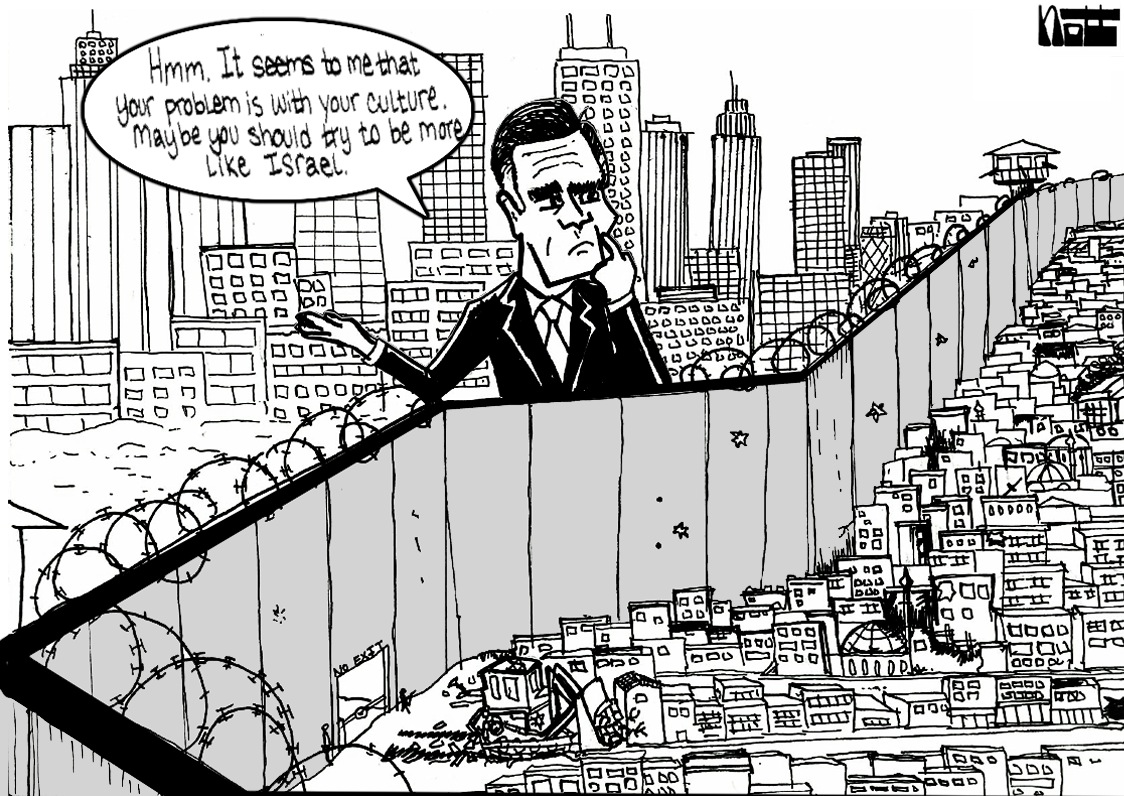
While the absence of borders might seem to suggest that the expansionist ambition of the early Zionists is still unrealized, the demarcation is actually omitted because there is no longer a need to articulate where the sovereign State of Israel ends. The facts on the ground and supporting legislation speak for themselves. The opening article of the Basic Law does nod to the imaginary two-state solution by purporting to make a distinction between Eretz Israel (the Land of Israel or historic Palestine) and the State of Israel (presumably land within the 1967 “Green Line” and any already-annexed Palestinian land such as East Jerusalem). However, the law itself blurs the line. For instance, Article 3 declares “a greater, united Jerusalem” to be the capital of Israel, reaffirming the illegal annexation of East Jerusalem. And Article 7 casually endorses “Judaization” or the promotion of Jewish-only settlement. Supporters of the law have rushed to interpret Article 7 as applying only to areas within the Green Line, though nothing within the law itself or in the policy of any Israeli government would suggest any such limitation. And reading the new Basic Law together with the over twenty “Annexation Laws” proposed in the Knesset over the last three years uncovers the legal scaffolding for the complete colonization of historic Palestine already in place.
Image result for Cartoon Israel And Apartheid
These Annexation Laws are at various stages of the legislative process but all create the conditions for the de facto confiscation of private Palestinian land in the occupied West Bank through the application of Israeli domestic law to areas in and around the illegal Israeli settlements. The same method was used to illegally annex East Jerusalem and the Syrian Golan Heights to Israel in 1967. In its response to a Supreme Court petition by Adalah regarding the “Settlements Regularization Law” – the most egregious of these Annexation Laws – the Israeli government stated plainly: Jewish settlement in the West Bank fulfills the values of Zionism; and the Israeli Knesset, which is not subject to international law, is the source of authority in the occupied Palestinian territory. Before its Supreme Court, the Israeli government defined itself as the sovereign in the West Bank settlements, meaning there is only one legal regime operating on both sides of the Green Line – throughout Eretz Israel. And last week, the Knesset enshrined Jewish supremacy as the absolute constitutional value of this legal regime, while also definitively eliminating the possibility of Palestinian self-determination anywhere in that entire geographic space, from the Jordan River to the Mediterranean Sea.
The new Basic Law therefore signals the end of any prospective Palestinian national project, as long as this new era of bald-faced, legalized racism lasts. This law thus has severe consequences for Palestinians and other non-Jewish citizens or residents currently under Israeli control. With Judaization as a national value, the Israeli government could justify the forcible transfer of populations, and with discrimination enshrined, non-Jewish people have limited ways of challenging unequal access to land, housing, or state resources.
Related image
Codifying the myth of human hierarchy is deadly – when states elevate one group of people as more valuable, others are dehumanized and their very lives are threatened. At the same time, by explicitly (re)stating and constitutionalizing this myth, the Israeli Knesset has also clarified the root of the problem. And when the root of the problem is understood, so too is the solution. The alternative to this colonial, supremacist present is a decolonized future of equal rights for all. While settler-colonialism is a zero-sum game, decolonization is not. Supremacy insists that only one group of people deserve freedom; equality means we all do.
[1] Tom Segev. 1949, The First Israelis. Picador: 1988. p. xviii

Wednesday, July 18, 2018

#OyVeyDonaldTrump ..The return of the Bioviator by the Bard of Bat Yam, Poet Laureate Of Zion Stephen Darori

Image result for Donald Trump pompous  delux cartoons
Bloviator
1. A public figure, such as a politician or an actor, who makes outlandish, strident statements on issues, thinking that the average man will care about their opinions.
2. Someone who pontificates about issues of which they are uninformed, yet pretend to be expert.
3. Pompous blowhard, using their celebrity to speak about topics on which they are totally unqualified.

As Donald Trump surges, so does "bloviate." "The bloviating billionaire" — it's clearly an alliteration whose time has come. But there's hardly a candidate or commentator who hasn't been labeled with the word. Thirty years ago it was dated slang; now it's seen as the prevailing vice of our public discourse.

"Bloviate" has risen and fallen in American life. It was coined in the 1840s from "blow," a facetious pseudo-Latinism mocking the inflated oratory of an era when, as Tocqueville observed, Americans couldn't take to the stump without "venting their pomposity from one end of a harangue to the other."

That bloated style had its last champion in the 1920s in the affable person of Warren Gamaliel Harding. Harding was blessed with strong pipes and a fine head of white hair. He prided himself on his gift for bloviating, which he defined as "speaking as long as the occasion warrants and saying nothing." His sonorous platitudes aroused the contempt of H.L. Mencken, who wrote that Harding's English was a "loud burble of words" fit only for morons and small-town yokels: "It reminds me of stale bean soup, of college yells, of dogs barking idiotically through endless nights. It is so bad that a sort of grandeur creeps into it."

Those stump-speech declamations soon fell victim to radio and the modern fashion for naturalness and informality, taking "bloviate" along with it. By the 1970s, the word was moribund. It was arguably saved from extinction only by the timely interventions of language columnist William Safire, who offered it as a replacement for phrases such as "empty rhetoric."

Then, in the late 1990s, "bloviate" began a dramatic comeback, most likely in response to the sheer pervasiveness of political yammer. Between 24/7 talk radio, cable news, social media, blogs and websites, we're exposed to more raucous voices in a single week than anyone in the age of Harding could experience in an entire lifetime.

So "bloviate" was summoned back to life, but in a new guise. Its jocular origins are forgotten; you sometimes see Safire credited with inventing it. And it no longer implies pomposity or even long-windedness — people complain about all the bloviating on Twitter. (Harding couldn't even have said "Ahem!" in 140 characters.) Sometimes it's just a way of dismissing whole networks and sectors as not worth listening to.

There's no "correct" way to use "bloviate" — it was never a real word to begin with. But I like to reserve it for the fondness for bombast that runs deep in the American spirit. The classic bloviator is someone so besotted with the majesty of the language that comes out of his or her mouth that it takes on a life of its own. In that sense, bloviating is a kind of backhanded tribute to language.

It's an occupational hazard that many people who live by words are susceptible to. Think of Norman Mailer and Allen Ginsberg, or of William F. Buckley and Gore Vidal, whose sesquipedalian 1968 debate confrontations are on exhibit in the new documentary "Best of Enemies." Or David Foster Wallace or Christopher Hitchens — the woods are full of fine writers whose need to say things grandly sometimes comes at the cost of saying them well.

The most artful bloviators are self-aware enough to own it. Buckley tossed off esoteric words like "albescent" and "catechize" with pointed nonchalance, as if to suggest that that's how he'd talk if you woke him in the middle of the night. Bill O'Reilly wants you to draw the opposite conclusion. He calls himself a bloviator, as Harding did, but rarely uses an SAT word without disavowing it at the same time. "You're casting aspersions," he tells Jon Stewart, then adds "big word." He over-enunciates fancy words like "opine" and "bloviate" itself, with the implication that there would be something genuinely pretentious about saying them straight.

O'Reilly is typical of the modern political bloviators so carried away with their words that they imagine others must be too. Their ranks are thinner than people make them out to be: O'Reilly but not Sean Hannity, Chris Matthews but not Rachel Maddow, Ted Cruz but not Chris Christie, Michael Moore but not Bernie Sanders, "Colbert" but not Colbert.

That's not to let the others off the hook. The American lexicon is rich with names for hooey and its purveyors: There are "blowhards" and "windbags," there is "ballyhoo," "bluster" and "bunkum," not to mention a less decorous word for nonsense that also begins with a B.

That leaves no shortage of alliterative epithets for Trump: the blustering billionaire, the gassy gazillionaire, the preening plutocrat. (Safire might have said Trump calls for a revival of Mark Twain's favorite, "blatherskite," for a "blustering noisy talkative fellow.")

But if Trump is a bloviator, he's one who regards words with something between indifference and disdain. He'd never overreach for a fancy word and come up with something like George W. Bush's "Grecians" or Sarah Palin's "refudiate." He's utterly unself-conscious about his language, and if he has any self-awareness about it, he does a good job of hiding it. The broken sentences, repetitions, false starts and digressions, the banal superlatives and insults —Tremendous! Fabulous! Moron! Loser! — Trump may be sui generis as a candidate, but his language is the culmination of a fixation with the "natural" that has shaped public discourse over the last century. It's not really public speaking, just a simulation of street-corner schmoozing, which is one reason so many people find Trump "real," "authentic" and even "just like us."

And yet. The bloviator's first object is to dazzle himself with his own words, and Trump's are exactly the simple ones that he wants to hear, particularly when the conversation turns to his favorite subject: "I'm really rich." "I'm a really smart guy."

I think of what the psychologist B.F. Skinner said: The reason we boast is to hear someone saying nice things about us.

Wednesday, May 2, 2018

The Palestinian Agenda is not on the Agenda of the Iranian , person on the Street


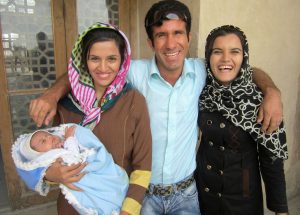
An Iranian family visiting the Ali Qapu Palace in Isfahan, photo by David Stanley via Flickr CC


Most Iranians Couldn’t Care Less About the Palestinians or Israel. Diplomats who served in Tehran frequently claim that Israel and the Palestinians are marginal to Iranian concerns. They are correct about the Iranian public and wrong about the leadership. Maybe this and other formidable gaps between the Iranian public and the leadership could provide the fuel to ignite the opposition to remove them from power.

Three years ago, the then Polish Minister of Foreign Affairs, who had also served as ambassador to Iran, told members of the Begin-Sadat Center for Strategic Studies something they had heard from other foreign diplomats. “You Israelis are obsessed with Iran,” he said. “For Iranians, you and the Palestinians are a marginal concern.”

The Polish minister was right about the average person-in-the-street in Iran, but he was wrong about the leadership. Their divergence of interest regarding Israel and the Palestinians is but one element in the disconnect between the Iranian leadership and the Iranian public – a disconnect that may explain why Iranians took to the streets to protest the ayatollahs.

The Polish minister was correct that Israel and the Palestinian question are of only marginal concern to even educated Iranians. This can be seen by examining internet search terms, which Google Trends plots by country to show relative interest. Terms can be entered in any language including Farsi, which uses Arabic script. (Many of the terms related to Israel and the Palestinians are in fact the same in Farsi and Arabic, though Farsi is an Indo-European language like English and Arabic is a Semitic language.)

This means it is easy to compare the Iranian public’s interest in Israel and the Palestinian problem to its interest in Arab states.

“Filastin” is both the Arabic and the Farsi term for Palestine. One would think, given the increasingly belligerent tenor of Israeli-Iranian relations, that Iranians would show interest in both Israel and the Palestinian problem.

But typing “Filastin” into Google Trends in Arabic script clearly confirms the Polish minister’s observation. In the breakdown by country, Iran did not even appear in the 11 countries listed as searching for the term. In the past five years, Iranians searched the term less than one-hundredth the number of times Palestinians did and less than one twenty-fifth the number of times the Jordanians did, who were second on the list of those who searched the term. (That Jordan is second on the list is hardly surprising as most of its population is Palestinian.)

These differences are even wider than they first appear, as there are at least ten times more Iranians than Palestinians and Jordanians whose levels of internet use is similar to that of the Palestinians.

The lack of interest amongst Iranians is confirmed when other terms are searched.

Probably the most prevalent term regarding the Israeli-Palestinian conflict is the term “occupation”, which the Palestinians have successfully marketed in the world.

The number of Iranians searching the term “ihtilal”, “occupation” in both Arabic and Farsi, again amounts to less than 1% of the searches made by Palestinians and only 4% of searches made by Jordanians. Iran does not even make the list of 19 states where searches amount to one-hundredth of those searched by Palestinians.

Hamas, whose leaders have been warmly embraced in Tehran and many of whose fighters have been trained by Iranian Revolutionary Guards, is also of negligible concern to the average Iranian. Iran ranked last out of 21 states who use Arabic script to search for Hamas, and the relative interest is similar to that of the two previous terms.

Perhaps the more religious evocation of “al-Quds”, which means “holy place” and is both the Farsi and the Arabic word for Jerusalem, has greater resonance among Iranians?

Not at all. Iran does not figure in the top twenty countries searching for
al-Quds, and searches for the term by Iranians account for less than 1% of the number of Palestinian searches. For the more religious symbol, the al-Aqsa mosque (“masjid al-Aqsa”), there were too few searches to record.

Obviously, the Iranian man- and woman-in-the-street does not share the leadership’s enthusiasm for Hamas, Jerusalem, or, for that matter, the Palestinian issue writ large.

And he or she doesn’t think much about Israel either.

While Iran is of much concern to Israelis, the term “Israel” in Farsi/Arabic receives much the same attention in Iran as terms related to Palestinians. Once again, Iran appears last on the list of 21 countries, with searches for Israel by Iranians amounting to one-hundredth the number of Palestinian searches and one-fortieth the number of Jordanian searches.

For Israelis, the search for “Iran” in English (which for most Israelis is only a second language) amounts to 4% of the number of searches of the word in Iran, which understandably tops the list. By comparison, searches of the word “Iran” in the US amount to only 6% the number of Iranian searches for the term. Considering that the population of the US is about 40 times that of Israel, this means Israelis search the term “Iran” hundreds of times more often than the average American. (One can’t compare the term in Hebrew as only in Israel is Hebrew widely read or spoken.)

The Iranian public’s lack of interest in Israel and the Palestinians contrasts sharply with the focus, almost obsession, of the leadership of the Islamic Republic with Israel and, to a lesser extent, the Palestinians.

This is especially true of the hardliners. After all, the elite units of the Iranian Revolutionary Guard are called the al-Quds Force, and one of the biggest annual political events in Iran, al-Quds Day, is devoted to defaming Israel and castigating it for being a “usurper” state that expelled and now occupies the Palestinians.

There is, however, good news. The staggering gap between the Iranian public’s concerns and interests clearly contrast with those of its leadership. It might grow even larger and widen to other areas – which might be sufficient to motivate the Iranian public to get rid of this leadership of woes altogether.

Saturday, June 3, 2017

Zions Dawn Arises Again by the Bard of Bat Yam , Poet Laureate of Zion

Image may contain: ocean, sky, beach, outdoor, nature and waterImage may contain: ocean, sky, outdoor, water and natureImage may contain: people sitting, sky and outdoorImage may contain: ocean, sky, beach, cloud, outdoor, nature and waterImage may contain: sky and outdoorImage may contain: sky, cloud and outdoor

Zion's Dawn Arises Again
Light peaks through the sky cracks.
Dawn along the Mediterranean paradise once more,
I lift my head, light rays softly caressing me.
Pleased that for a new day has begun,
but the soft graze of light on my cheeks nudge me forward.
Along southwards the desolate white umbrelled Bat Yam Beach