Showing posts with label Hamas. Show all posts

Monday, February 6, 2017

#RIPPaxAmericana ?? #OyVeyDonaldTrump in Bed ?or Against? the Russian -Iranian Alliance in the Syria , Lebanon and the rest of Middle East


Can Trump Break Up the Russian-Iranian Alliance?


One of the president's biggest early foreign policy tests will be navigating the aftermath of the nuclear deal, which brought the Islamic Republic even further into Russia's orbit.

Russia and Iran are currently engaged in unprecedented cooperation. Never in 500 years has the leadership of the two countries been so close. Despite deeply rooted mistrust and a long history as rivals, a number of common interests have brought Russia and Iran together. First among them is the mutual geostrategic goal of zero-sum opposition to the West, especially the United States.

Russian-Iranian cooperation may be short-lived. But in the meantime it can inflict lasting damage to U.S. interests. It is going to be difficult to drive a wedge between Russia and Iran in the short-term, but there are certain things the new Trump administration could do to that end.

To understand the close ties between Russia and Iran, it's important to understand the complicated history between the two countries.

The Grand Duchy of Muscovy, the precursor of the modern Russian state, and Iran, then called Persia, opened official relations in 1521. Trade was the main reason for the relationship; both countries looked down on each other as inferior, and thus gave little thought to expanding ties. Tsarist Russia, which succeeded the Muscovy in 1547, and then the Russian Empire that Peter the Great proclaimed in 1721, soon began to expand south and southeast into Central Asia and the Caucasus. This is when Russian and Persian interests first clashed. In 1796, Catherine the Great sent troops into the Iranian North Caucasus, and only her death that year may have prevented a full-scale Russian invasion.

In the 19th century, Russia and Iran fought two wars, in 1804-1813 and 1826-1828. Iran lost both and ceded to Russia parts of what are now Azerbaijan, Georgia, Armenia, and Turkmenistan. The wars took a serious financial toll on Iran and anti-Russian sentiment rose on both religious grounds and resentment of the high cost of the war effort. In February 1829, a mob murdered Russian ambassador Alexander Griboyedov with his staff in Tehran. Griboyedov had helped negotiate the Treaty of Turkmenchay, which ended the war in 1828 on what the Iranians saw as humiliating terms. A Russian envoy would not be murdered by foreign nationals in a foreign country again until 2016.

Despite these tensions, commercial and political interests brought Russia and Iran together in the early 1900s. The Kremlin wanted to pull Iran into its sphere of influence and the Iranian shah needed money, which he began borrowing from Russia either at exorbitant rates or with political strings attached. The Iranian public, of course, bore the cost. This opened a rift between the Iranian government's attitude toward Russia and that of its people -- one that remains to this day.

After the 1917 Bolshevik Revolution, Soviet forces sponsored separatist movements in Iranian territory, first in the northern Iranian province of Gilan on the Caspian Sea and later in both Iranian Azerbaijan and Kurdistan. In 1946, Soviet leader Josef Stalin sparked the first real crisis of the Cold War when he briefly refused to withdraw the Red Army from Iran in 1946. To this day, Iranians speak resentfully of the Soviet occupation. Iranian revolutionary leader Ayatollah Ruhollah Khomeini disdained both the U.S. and the Soviet Union. His defining slogan was "Neither East nor West but Islamic Republic."

While the Iranian public remained distrustful of Russia, with the end of the Iran-Iraq War in 1988, as well as Khomeini's death and the Soviet withdrawal from Afghanistan in 1989, some Iranian officials sought to improve ties with Moscow on pragmatic grounds. Ayatollah Ali Akbar Hashemi Rafsanjani even traveled to Moscow. But the Kremlin worried that Iran might export its radical ideology to Russia's large Muslim population or foment unrest in the Caucasus and Central Asia in order to influence Moscow -- after all, this is the traditional Kremlin approach. Yet Tehran sided with Moscow during Chechnya's separatist struggles in the early 1990s. Iran also helped Moscow end Tajikistan's 1992-1997 civil war. By the end of the '90s, despite remaining differences, Russia had emerged as Iran's main conventional arms supplier and began assisting in its nuclear program.

When Vladimir Putin rose to power in Russia in 2000, he began the process of returning to the Middle East. To do so, he worked with everyone in the region, friend and foe alike. Russia's relationship with Iran was part of this effort.

The strategy grew out of Putin's antagonism toward the West and its democratic values. He viewed Russia's foreign policy as a zero-sum game against the West and acted accordingly. He had several reasons to pursue improved ties with Iran, but his desire to reduce Western influence and pull Iran closer to Russia overrode all others. As Prof. Mark Katz of George Mason University wrote, Putin worried that then-Iranian President Mohammad Khatami's "dialogue of civilizations" would bring Iran closer to the U.S. -- and thus out of Russia's sphere of influence.

In October 2000, soon after taking office, Putin publicly repealed the 1995 Gore-Chernomyrdin pact, which limited Russia's sale of conventional arms to Iran. Press reports indicated that in practice the agreement gave Russia "a free pass to sell conventional weapons to Iran" until 1999, but the public cancellation of the deal sent a message that Putin wanted closer cooperation with the Islamic Republic.

Putin also sought to improve ties with Iran for economic reasons. Iran was a lucrative market for Russia's military and the arms trade and nuclear cooperation continued to expand. In addition, the two countries shared a strong opposition to Sunni Islamism. A tough stance against terrorism helped propel Putin into power in March 2000 after a series of apartment bombings shook Moscow and several other cities in September 1999. Putin immediately blamed the Chechens and declared a second war on Chechnya, though much evidence suggests Putin and his main intelligence service, the FSB, may have orchestrated the attacks. In any case, Moscow's human rights abuses in the first Chechen war had already transformed the secular Chechen separatist cause into a radical Islamist one.

The majority of Russia's Muslims are Sunni and countering Sunni extremism was among Putin's official policies from the very beginning. Shia Iran shared this concern. Indeed, Russian experts and officials claim that Iran is a potentially "secular" force that can help counter Sunni Islamism. This has led to a double standard on Sunni versus Shia terrorism. In February 2003, for example, Russia's Supreme Court declared the Sunni Muslim Brotherhood a terrorist organization, while Shia Hezbollah received no such designation. Though in practice Putin was just as willing to work with Sunni Islamists as anyone else, he took a different stance domestically.

Of course, difficulties remained in the Russia-Iran relationship. Since 2006, Moscow has sought to dilute sanctions against Iran. For its part, Iran would have preferred Russia did not support sanctions at all. Tehran also felt snubbed when, under pressure from the U.S. and Israel, Moscow froze the sale of S-300 air defense missiles to Iran in 2010.

In 2013, however, Russian-Iranian cooperation rose to an entirely new level as the two countries' political interests converged more than ever before.

In 2012, Putin began a third presidential term amidst massive protests against him and his United Russia party. Putin launched a domestic crackdown and blamed the U.S. State Department for "giving a signal" to protestors to take to the streets. He could not even fathom the possibility that people could protest independently. Fear that domestic protest can break out anywhere, anytime now guides much of his domestic policy, which goes hand-in-hand with his foreign policy. In Russia the line between the two is blurred to a degree that is hard to imagine in the West.

Putin believes that the West is behind all protests in the post-Soviet sphere and the Middle East, and that he is next. This is one of the main reasons why he has supported the Assad regime in Syria at all costs. This in turn brought Moscow especially close to Tehran. Putin believes he is in a stronger position to confront the West in the Middle East if he is allied with Iran.

Russia also emerged as a strong voice in the P5+1 group that negotiated the nuclear deal with Iran, especially in the context of Western retreat from the Middle East. Putin pursued his own self-interest in regard to the talks: A deal with Iran would open more possibilities for cooperation. On the one hand, Russia would prefer a non-nuclear Iran; it hardly needed convincing to participate in talks to curb Tehran's nuclear program. On the other hand, Moscow felt less threatened by the program than the West, and ultimately puts its desire to counter the West above all. It may make little sense from a Western perspective, but Moscow often ignores real threats and elevates imaginary ones -- hence its obsession with a perceived threat from NATO.

Russia and Iran also shared a concern about the resurgence of the Taliban in Afghanistan following President Obama's plans to draw down U.S. troops by 2014. Ironically, Putin wanted the U.S. to remain in Afghanistan more than the U.S. wanted to -- albeit on Putin's terms. Russia and Iran were impacted by narcotrafficking coming out of Afghanistan and viewed the Taliban, which is traditionally both anti-Shia and anti-Russian, as a potential enemy.

In spring 2013, according to Russian sources, Russian and Iranian officials discussed the idea of Tehran joining the Moscow-led Eurasian Customs Union at a seminar in Tehran titled "Iran and Regional Cooperation in Eurasia." Iranian Foreign Minister Ali Akbar Salehi attended the event and reportedly spoke of Iran's usefulness to the development and expansion of Eurasianism -- Putin's alternative vision to Western liberalism. The Customs Union in particular, and the Eurasian Economic Union that followed it in 2014, are part of Putin's effort to counterbalance the European Union. This may have been just talk, but that the conversation took place at all is significant. Putin never offered to allow any Arab country to join the Customs Union, and Iran was never part of the Soviet Union, as were the other member countries.

In March 2014, Moscow annexed Crimea and began destabilizing activities in Eastern Ukraine. The U.S. and Europe imposed sanctions on Russia in response. U.S.-Russian relations plunged to the lowest levels since the Cold War, intensifying Putin's need for anti-Western allies. Iran fit that role perfectly. That America's allies are traditionally Sunni only adds to Iran's appeal.

Russian Defense Minister Sergei Shoigu visited Iran in January 2015 and Putin visited in November -- the first such visits in at least a decade. After they met, Supreme Leader Ali Khamenei praised Putin for "neutralizing Washington's plots." Putin again brought up the issue of Iranian cooperation with the Customs Union, offered a $5 billion line of credit, and discussed expansion of bilateral trade. He also highlighted Iran's positive role as a "trustworthy and reliable ally," demonstrating once again his true priority of pulling Iran into his sphere of influence. Indeed, Russian Middle East expert Georgiy Mirsky wrote in his blog on the liberal website Echo Moskvy, "Several years ago, I heard from the lips of one MIA [Ministry of Internal Affairs] employee such reasoning: 'For us, a pro-American Iran is worse than a nuclear Iran.'" Putin and Iranian President Hassan Rouhani have met several times since 2015, as have their ministers and aides. Subsequent high-level meetings followed and are now almost routine.

As negotiations on the nuclear deal gained traction, the Kremlin highlighted Russia's indispensable role in them. When the agreement was signed in July 2015, Putin praised the deal and emphasized Russia's participation in the process, while the Russian Ministry of Foreign Affairs tweeted that the accord was "based on the approach articulated by President Vladimir Putin." The ink had barely dried on the accord when Putin lifted the freeze on the S-300 sale and deliveries began in April 2015, despite Israel's concerns. In June 2016, Putin called for Iran's admission to the Shanghai Cooperation Organization, something -- just as with the Customs Union -- he had never done for any Arab state.

In August 2016, Moscow took the world -- and many in Iran -- by surprise when it reportedly used Iran's Hamadan airbase to bomb targets in Syria. The last time a foreign power had based itself in Iran was during World War II. Russian media was awash with praise for Russia-Iran anti-terrorism cooperation. In the context of public outrage in Iran, Iranian Defense Minister Hossein Dehghan accused Moscow of "ungentlemanly" behavior for publicizing its use of the base. Nonetheless, Iranian Parliament Speaker Ali Larijani said only days afterwards that "The flights [of Russian warplanes] haven't been suspended. Iran and Russia are allies in the fight against terrorism," though the Hamedan air base, he claimed, was only "used for refueling."

The following month, Putin said that it would be "just" if Iran reached pre-sanctions level of oil production. In November, he began discussing a $10 billion arms deal. In late December, discussions on Iranian admission to the Customs Union continued. A number of Russian sources reported that Iran hopes to move closer to the Union and benefit from free trade with its members. In the same month, Rouhani travelled to Armenia -- a Customs Union member -- ostensibly to improve ties, and signed a number of agreements. It was Rouhani's first visit to Armenia as president. The traditionally more liberal-oriented press outlet Nezavisimaya Gazeta suggested that Armenia might tie Iran to the Customs Union. While it remains unclear whether this will happen, it is significant that the issue remains on the table.

When it comes to the Iranian view of Russia, sources report that the two countries agree on terrorism-related issues and Iran sees Russia's policies in Syria as "wise." Recently, Russian press outlet Izvestiya wrote that, reflecting on the past year, it was Russia that always spoke out for lifting sanctions and maintained dialogue with Tehran. Iranian cinema made its way into Europe, the article claims, because it was widely shown at Russian film festivals. The article concludes, "Dialogue between the two countries has not been interrupted even for a minute. And it is this fact that gives reason for optimism -- whatever the complexities may be, Russia and Iran will find a reason for friendship."

At the moment, it is going to be difficult to drive a wedge between Russia and Iran. Too many interests hold them together and they are likely to continue to put historical mistrust aside even as Tehran's persistent and historically-justified fears that Moscow will throw Iran under the bus continue to undermine the relationship.

From Moscow's perspective, the U.S. has been and will continue to be an enemy, no matter how hard any U.S. president tries to improve relations. Putin needs the U.S. as an enemy to justify domestic problems at home and he sees the current geopolitical order, anchored by the U.S., as disadvantaging him. Nothing short of a rearrangement of that order will satisfy Putin. Nobel Prize-winning author and journalist Svetlana Alexievich observed in October 2015 that Russians "are people of war. We don't have any other history. Either we were preparing for war or we were fighting one. And so all of this militarism has pushed all of our psychological buttons at once." Putin needs allies who share this worldview.

President Trump expressed two contradictory policies during his campaign: being tough on Iran and improving relations with Russia. These two goals are incompatible because Putin wants a partnership with Trump in Syria, but Syria is where Putin is most closely allied with Iran. In order to push Iran and Russia apart, Trump needs to resolve this contradiction. The recent Syria peace talks in Kazakhstan only brought Russia and Iran closer together, if anything, given their pledge to fight "jointly" against ISIS and al-Qaeda-affiliated Jabhat Fateh al-Sham. This development will also make it even more difficult for Trump to ally with Russia on Syria.

So far, Putin has succeeded in balancing Israeli and Sunni interests with its growing relationship with Iran. But it is unclear how long Putin can sustain this policy. Certainly, Putin did not hesitate to discount Israel's interests when it came to selling S-300 weapons to Iran. Indeed, it is not in Israel's interest for Putin to continue supporting Bashar al-Assad and thereby expand Iran's influence in the Middle East. The Trump administration could encourage and support U.S. allies like Israel in order to make it more difficult for Putin to maintain his balance of good relations with all sides. It should also step up security cooperation with its allies to demonstrate that it is still committed to the region.

In the long term, Russia and Iran diverge somewhat on Syria. Iran perceives Syria as within its sphere of influence, which is not very different from how Putin views the former Soviet Union countries that he does not consider real states. Iran is interested in exacerbating sectarian divisions in Syria so that the Assad regime becomes an Iranian client-state with no independent decision-making. Iran is also closer to Assad himself than Putin, who simply wants Assad or someone else like him to ensure his interests in Syria. He cares more about how he can leverage Syria in his relations with the West than Syria itself. At the same time, Putin also increasingly perceives the Middle East as falling within the Russian sphere of influence, albeit differently than Iran. Historically, Moscow always looked for buffer zones out of its sense of insecurity, and this is precisely how it feels now.

The Trump administration could emphasize to Putin that Russian and Iranian interests in Syria are bound to clash in the future, and therefore an alliance with Iran can only go so far. But most of all, the U.S. needs to be present in the region and regain its leadership position. Putin preys on weakness and has perceived the U.S. as weak for years. He stepped into a vacuum in the Middle East, especially in Syria, that was created by America's absence. By taking an active role in the region, the U.S. would limit Putin's influence, including his alliance with Iran.

Sunday, August 21, 2016

The IDF changes its doctrine with regard to responses to rocket fire into Israeli Towns

August 22nd ,Sunday IDF continues pounding Hamas targets into night .As tensions mount in wake of rocket fired from Gaza into Israel, IDF continued a combined artillery and air assault on Hamas targets into the night; IDF: 'Hamas is the sovereign power in the Gaza Strip and it is therefore responsible.'step

The IDF is reported to have continued a combined air and artillery assualt on Hamas targets in Gaza Sunday night in retaliation for rockets fired from the Strip into Sderot earlier on Sunday afternoon.

According to the Palestinian report, the strikes were carried out by the Israel Air Force and Israeli artillery units on a Hamas military wing position in Beit Hanoun in the north Gaza Strip, from which the rocket was launched earlier on Sunday afternoon. The report indicates that one of the targets was a military outpost belonging to Hamas’s security apparatus.

Moreover, the report claimed that a 17-year-old Palestinian boy was lightly wounded during the retaliatory attacks, along with three other children suffering from shock.


IDF continues to retaliate in Gaza for rocket fire into Israel

The response of the IDF signals a departure from the norm as it usually retaliates once during the hours immediately following the rocket fire or the night after. While the reports were not originally officially verified by the IDF late Sunday night, explosions were heard by residents of Israeli towns bordering the Gaza Strip. Guy, a resident of Sderot said, "There is a feeling of pressure and fear. We hope everything is going to be ok."


Strikes in southern Gaza

Later, the IDF released a statement accounting for the continued attacks: "The IDF attacks are in response to the rocket fire into Israeli territory. The rocket fire constitutes a threat to the security of Israel and a strike against the State of Israel's sovereignty," the statemen read. "The Hamas terror organization is the sovereign power in the Gaza Strip and it is therefore responsible for all terror activities emanating from it."

Tensions mounted after a Code Red rocket alert was sounded in Sderot and Sha'ar Hanegev just before 2:30pm on Sunday


Rocket which fell in Sderot (Photo: Avi Rokeah)

Shortly afterwards, an explosion was heard, and a rocket was found between two residential houses in Sderot. There were no injuries or damage, though forces were immediately dispatched to the area.

Friday, July 1, 2016

No One-Shot Solution to the Hamas Challenge
By Prof. Efraim Inbar, June 30, 2016

 
tank-gaza
BESA Center Perspectives Paper No. 345, June 30, 2016
EXECUTIVE SUMMARY: The recent statement from a senior Defense Ministry official that “the next round must be the last one for the Hamas government” reveals a deep misunderstanding of the Hamas-Israel confrontation. The use of massive force in a “once-and-for-all” military operation cannot purge Hamas from Gaza because it has deep roots in Palestinian society. Even if the Hamas military machine were demolished, the organization’s civilian infrastructure would continue to exist. Israel’s only sensible option is to continue to employ a militarily modest and politically calibrated “mowing the grass” strategy, which is designed to occasionally knock back Hamas military capabilities and enhance deterrence for an admittedly limited period.
A senior Defense Ministry source in Israel said recently that a confrontation with Hamas is inevitable, and the Israel Defense Forces (IDF) must be prepared for it. The source added, significantly, that “the next round must be the last one for the Hamas government.”
Such a statement reveals a deep misunderstanding of both Israel’s opponent and Israel’s predicament. Hamas is indeed an implacable enemy of Israel. Its ideological commitment to the destruction of the Jewish state is enshrined in its covenant and is propagated in all Hamas-sponsored educational organs. Hamas has acted on its hatred by organizing numerous suicide bomber attacks, by digging tunnels to facilitate the perpetration of terrorist attacks, and by launching thousands of rockets toward Israel’s towns and cities. It deserves to be the target of Israeli military action.
However, it is a mistake to believe that it is possible to root Hamas out of Gaza and destroy its capabilities once and for all. There is no one-shot solution to the Hamas military/terrorist challenge.
Despite assertions to the contrary by the Israeli right, the end of Hamas rule is not an easily attainable military objective. The roots of Hamas are deep in Palestinian society, particularly in Gaza. Polls consistently show that 35 percent of Palestinians look with favor upon Hamas; and in Gaza, the level of support is always higher. A recent poll indicates that if new presidential elections were to be held right now in the West Bank and Gaza, Hamas’s candidate Ismail Haniyeh would do better than Mahmoud Abbas.
Hamas simply cannot be eradicated by outsiders conquering Gaza and then politically reengineering Palestinian society. One cannot import a leadership of choice. Even if Hamas rule could be terminated, its civilian infrastructure would continue to exist.
The calls from the Israeli left for a “political solution” are similarly unrealistic. Hamas, Islamic Jihad and the Salafist groups see Israel as a theological aberration. They might reluctantly accept temporary cease-fires, but they continue to categorically reject any diplomatic course of action intended to fully solve the Israeli-Palestinian conflict. The fanatical commitment of these militias to a radical ideology and to a patient strategy of violent resistance (muqawama) means the conflict will continue for some time.
Israel must be realistic about what can be achieved by military means. Force should be applied not to attain impossible political goals, but in the service of a long-term strategy of attrition designed to debilitate enemy capabilities and exact a cost with the object of enhancing temporary deterrence.
A pounding from the air and an Israeli ground advance, for example, can demolish part of the Hamas military infrastructure and kill Hamas fighters. A ground offensive can create unrest within the Hamas organization, causing its military leadership to make mistakes that could result in better intelligence and more successful targeted airstrikes. The destruction of the terror tunnels – which are themselves an exaggerated threat – is also an attainable military goal. Moreover, occasional large-scale operations have a temporary deterrent effect that creates periods of quiet along Israel’s borders.
As the rounds of violence with Hamas continue and the prospects for a peaceful resolution grow ever more remote, an understandable frustration arises at the lack of a clear military endgame. But military force can be useful in limited wars, even without a conflict-ending objective. Hamas needs to be punished for its aggression and reminded of the cost it must pay for continuing its violence against Israel. And on a practical level, a period of calm can be achieved by destroying capabilities that are both difficult and expensive to rebuild. Buying time is a legitimate military goal.
The greater goal is the establishment of a reality in which Israeli residents can go about their lives without the continuing threat of indiscriminate terror, and in which a significant blow has been struck to Hamas's terror infrastructure. So far, the Israeli government has wisely adopted these limited political and military goals, a strategy dubbed “mowing the grass”.
This strategy has a positive effect both within and beyond the borders of the conflict. Other actors in the Middle East are watching, and they too need vivid reminders that aggression against Israel can be costly. In this tough neighborhood, inaction is perceived as weakness, harming deterrence and inviting aggression.
In the last round of the conflict with Hamas, Israel showed its neighbors that Israel’s missile defense can parry missile threats while maintaining relative normalcy on the home front. Israel also signaled its determination to fight back through its readiness to engage in ground operations despite the potential for casualties.
The question “When will this end?" is inherently flawed. There is, unfortunately, no end in sight. As long as the basic motivations of Hamas remain, the violent struggle will continue. But this does not mean that significant periods of quiet cannot be achieved by military action.
Israeli strategic thinking is substantively different from current Western strategic thinking on the question of how to deal with non-state military challenges. Westerners are more solution-oriented, which partially explains why so many of them misunderstand Israel’s approach.
Against an implacable, well-entrenched, non-state foe like Hamas, Israel has to “mow the grass” once in a while to degrade enemy capabilities. Israel will probably be engaged in a war of attrition against Hamas for a long time. Keeping the enemy off balance and reducing its capabilities will require Israeli military readiness and a willingness to use force intermittently, while maintaining a healthy and resilient Israeli home front despite the protracted conflict.

Saturday, May 7, 2016

Hamas Nursery Rhyme- Fasten your bomb belt versus Golda Meir -We will only have peace with the Arabs when they love their children more than they hate us


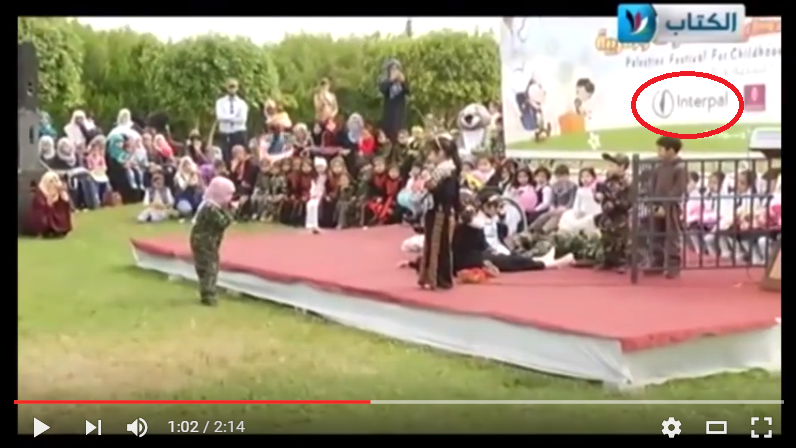
A month ago the annual ‘Palestine Festival for Childhood and Education’ was held in the Gaza Strip. As the Meir Amit Intelligence and Terrorism Information Center reported, the five-day festival’s opening event was attended by a representative from the Gaza office of a British charity.
“On April 3, 2016, a ceremony was held at the University College of Applied Sciences in Gaza to announce the beginning of the Annual Palestine Festival for Childhood and Education. The opening ceremony was attended by college’s rector, Dr. Refaat Rustom, members of the faculty, Ahmed Hawajri, director of guidance and special education in the department of education in the Gaza Strip, Imad al-Ghalayini, representing the Bank of Palestine, Mahmoud Lubbad, Interpal representative in Gaza, and representatives of children’s organizations throughout the Gaza Strip. The festival began on April 3 and ran until April 7, 2016, and organized various activities for children throughout the Gaza Strip.” [emphasis added]
Lubbad’s participation is explained by the fact that the British charity Interpal co-sponsored the festival.
“The high point of the festival during Palestinian Children’s Day on April 5. One of the events was held in Khan Yunis, and was attended by many children and their teachers. Children came on stage in groups and put on shows they had prepared for the audience. There were dances and songs as well as displays with themes of hatred and violence against Israel, evidence of the indoctrination received by the younger Palestinian generation. The displays were accompanied by songs with themes of hatred and violence.
Three of the plays put on by the children were the following:
  1. A play in which a very young, veiled girl stabs an “IDF soldier” with a knife – In response the “soldiers” shoot her and she falls motionless to the ground. The play was related to the release of Palestinian prisoners (see below), and glorified the stabbing attacks which are a prominent form of attack in the current Palestinian terrorist campaign.
  2. A play showing a “Palestinian prisoner” incarcerated by “IDF soldiers.” A masked child wearing a uniform “shoots and kills the IDF soldiers” and releases the “prisoner”. The play reflects the Hamas’ efforts to abduct Israelis as bargaining chips for the release of Palestinian terrorists imprisoned in Israel.
  3. A display put on by another group of children showing an “IDF soldier” holding an Israeli flag. A little girl knocks him over, steps on him and picks up a Palestinian flag. Then she “releases” a Palestinian prisoner.”
As can clearly be seen in this video of clips from those shows, the stage backdrop displayed the Israel-erasing Interpal logo.
Interpal logo Gaza childrens festival
When approached by the Daily Mail, an Interpal representative stated that:
“…it did not support the play but instead ‘hosted some activities in Gaza City, as part of the larger event’, adding that it does not condone violence.”
And:
“Our logo was used in various materials for the festival, as we held our own activities as part of the larger umbrella of the festival in Gaza City,’ a spokesperson said. ‘We did not support this particular play and did not have any involvement with it.”
Ten years ago the BBC’s ‘Panorama’ made a very good programme about Interpal titled ‘Faith, Hate and Charity’ which opened with footage of Palestinian children performing similar ‘amateur dramatics’. Following that programme an investigation into Interpal was carried out (not for the first time) by the Charity Commission.
“Included in a wealth of material which Panorama passed to the Commission was video evidence of young girls at an event organised by one of Interpal’s partner charities being encouraged to sing: “We all sacrifice ourselves for our country” and “… we answer your call and make of our skulls a ladder to your glory, a ladder.”
Another clip shows girls dancing to a tune with the lyrics: “Fasten your bomb belt oh would-be martyr and fill the square with blood so that we get back our homeland.”
A woman, who was organizing another event was seen taking the microphone and telling the children: “To martyrs in every time and place… To the rich blood and to the wounds which have drawn the identity of Islamic land.”
In paragraph 60 of its report, the Commission acknowledged that the material presented to it “seemed to indicate that certain local partners funded by the Charity promoted terrorist ideology or activities amongst their beneficiaries.”
Despite that Panorama report, Interpal continued to function and apparently very little has changed in the last decade – apart the BBC’s level of interest in the story, which it has not covered to date.

Another Good Week in Zion-- Bad, Bad , Bad for Hamas ... Thank Ms God ( why shouldn't she be a Woman)


The Israeli authorities announced this week ( Thursady)  the discovery of a another Hamas attack-tunnel running from the Gazan side of the border into Israel, the second such attack-tunnel to have been exposed in a month. The earlier one was considered
the first to be detected since the end of the last war in Gaza in 2014. The tunnel – about 30-40 metres deep, lined with concrete slabs and equipped with communication lines, air supply and rails for further excavation – was uncovered last week although its existence was confirmed only on Monday. The tunnel reportedly entered Israel in an area some distance from Israeli military bases and civilian homes. Speaking at a media briefing, Lt Col Peter Lerner said the tunnel extended several hundred metres under Israel and was large enough for a man to stand in. ["Israeli military uncovers first Hamas tunnel into Israel since 2014 war", The Guardian, April 18, 2016]
This week's came accompanied with some interesting side stories:
  • Israel's Shin Bet revealed just a few hours before Thursday's announcement of the second tunnel that it had captured Mohammad Atuna, 29, a terrorist from Gaza in the service of Hamas and possessing "large amounts of information about the tunnel network". He had been taken into custody in early April, before the report of the first tunnel discovery, though at the time, a Haaretz report, referring to him as Sami al-Atawna, implied that Hamas was denying that he was in Israeli hands.
  • There were and are heavy hints in the Israeli media about the extent to which this Atuna has been helpful to their inquiries. He has detailed "the existence of a warren of Hamas tunnels within Gaza itself to be used to ferry fighters and equipment around the Gaza Strip, including rooms for relaxation equipped with showers and mess halls in order to improve the lives of the fighters." 
  • It's reported that Atuna has also given up detailed tunnel locations and routes, as well as related information about the techniques used in tunnel construction and other logistical aspects of Hamas’ tunnel strategy. This includes disclosure of the workings of the so-called "Nakba" terrorist unit which is trained "for fighting within Israeli territory".
  • Ynet says he gave up details of Hamas's use of private homes and other buildings to hide tunnel construction activity, and pointed out where digging projects were occurring, and the locations of tunnel shafts to be used in the planned attacks. In addition, he handed over the names of many Hamas operatives and their positions within the organization, detailed locations of weapons storage facilities, many of them inside civilian homes. 
  • Ynet: "Atuna admitted to having massive amounts of arms at his house, including IEDs, rifles, and suicide vests. He was supposed to give these items out to fighters in the event of another round of fighting."
  • He described two classes of tunnel; those within Gaza via which its terrorists can maneuver to hide and to outflank IDF forces; and cross-border tunnels for carrying out attacks on Israeli forces and civilians. "Hamas has invested millions of dollars to enable their Special Forces operatives to stay underground for weeks at a time, lying in wait until the order is given to attack Israel."
Tunnel #2 is said to start some 100 feet, roughly 30 meters, inside the southern part of the Hamas-controlled Gaza Strip, and to stretch from there some as-yet-unspecified distance into Israel. It is constructed about 30 meters below the surface of the ground.

The jihadists have much to lose now that the offensive apparatus is revealed and being dismantled. So on Tuesday, Hamas
directed cross-border gun fire at an IDF engineering vehicle near southern Gaza [Jerusalem Post, May 5, 2016]
And then during, and since, yesterday's uncovering, Israeli communities in the Gaza envelope area have continued to come under fire from the Gazan side for what Haaretz, quoting the IDF, calls
the first time since the end of the 2014 war that Hamas had opened fire on Israeli operations on the ground. Both Hamas and Islamic Jihad released statements warning Israel against any escalation. Hamas’s armed wing, the Izz ad-Din al-Qassam Brigades, said it was ready to respond to Israeli strikes. “We will not permit this aggression to continue and the enemy should not invoke any reason, and should leave the Strip immediately”... [Haaretz, May 5, 2016]
Vehicles have been damaged on the Israeli side but we're pleased to say there have been no injuries to Israelis up until this point.

An IDF spokesperson said yesterday that the shooting is "a result of Hamas identifying that the Israel Defence Forces were closing in on those assets" i,e, the attack-tunnels. That fire, mortars so far, has continued this morning. A Times of Israel report says a mortar attack on Israeli soldiers this morning working on Gaza's southern-most flank was the twelfth such assault in the past four days.

The Arab media carry reports this morning [like this one] of both Hamas and Palestinian Islamic Jihad where they have boasted of their tunneling strategy, warning Israel to back off lest the IDF's "violence... pushes the resistance to reciprocate" and issuing a reminder that "Israeli crimes will not break the spirit" of the Gazan Palestinian Arabs. Hamas' arch-terrorist Ismail Haniyeh says today that the Israelis have penetrated "150 to 199 meters on the pretext of searching for tunnels" [source] and that his murderous group "will not under any circumstance accept these incursions".

Putting Haniyeh's absurd use of "pretext" into a factual context, it has only been a few weeks - certainly long enough for most reporters to forget - that he said Hamas
will never stop digging tunnels and upgrading rockets in preparation for any possible confrontation with Israel [Jerusalem Post]
Hamas is seriously committed to tunnels. It's estimated they have more than 1,000 of its loyalists working to build and extend them at an overall cost of hundreds of thousands of dollars each month. Workers are paid US $300 to 400 per month. It's not such a great deal for them, though they probably have little option. Arab media reports quoted by Israel National News in mid-April said the death toll from a series of "mysterious" Gazan tunnel collapses since January 2016 had reached 20, most of them actual terrorists - and not merely laborers - from its Izz ad-Din al-Qassam Brigades.

Wednesday, May 4, 2016

Zion's Catch 22 - Conflict Management versus Conflict Resolution


Israel has gradually come to realize that the Palestinians are neither a partner for peace nor capable of establishing a viable state. Therefore, Israel's recent governments have adopted a de facto conflict-management approach, rather than a conflict-resolution strategy. This prompts several questions. Should Israel continue to speak explicitly about the prospects of a two-state solution, or play along with the illusory preferences and pretensions of the international community? Should Israel apply more “stick” than “carrot” to the hostile Palestinian Authority? Would the collapse of the Palestinian Authority serve Israel's interests? And how diplomatically active should Israel be on the Palestinian issue?

Ever since the Palestinian terrorist wave began in September 2000, the Israeli body politic increasingly has resigned itself to the probability that there is no partner on the Palestinian side with which to reach a historic compromise with the Jewish national (Zionist) movement. The hopes for peace that were generated by the Oslo process in 1993 have been replaced by the stark realization that violent conflict will not end soon.

Moreover, the hostile messages about Israel purveyed in the Palestinian Authority (PA) educational system and official media leave little doubt about the rabid anti-Semitism prevalent in Palestinian society, which ensures that conflict with the Jews will continue. And thus, the central premise of the Oslo process seems exceedingly improbable. The premise was that partition of the Land of Israel and the establishment of a Palestinian political entity (what is known as the two-state paradigm) would bring peace and stability. Alas, this paradigm has been deeply discredited.

Aside from and beyond the assessment that the PA has no intention of accepting a Jewish state in any borders, the fact remains that the two sides remain far apart on most of the concrete issues to be resolved. Palestinian demands for control of the Temple Mount and the so-called “right of return,” for example, are insurmountable obstacles. Any pragmatic impulse that might otherwise have emerged in Palestinian politics is consistently countered by Hamas, whose growing influence reflects the Islamist tide that is surging across the wider region.

To make matters worse, the assumption that the Palestinians are capable of establishing a state within the parameters of a two-state paradigm has not been validated. The PA was unable to get rid of multiple militias and lost Gaza to Hamas, mirroring the inability of other Arab societies in the region to sustain statist structures.

Finally, protracted ethno-religious conflicts end only when at least one of the sides becomes war-weary, and runs out of energy for sustaining the conflict. That is not true of either Israeli or Palestinian society.

As a result of these trends, Israel essentially, if not formally, has given up on conflict resolution in the short run, and instead effectively has adopted a strategy of patient conflict management. But such a strategy brings policy dilemmas of its own.

The first dilemma is whether or not to admit that Israel no longer believes that negotiations can lead to a durable agreement in the near term.

Truth has its virtues, but much of the world does not want to hear this particular truth and is still committed to an unworkable formula. There is, in any case, something to be said for acceding to the wishes of the international community by continuing to participate in negotiations. Doing so signals that Israel is ready to make concessions, which maintains the domestic social cohesion necessary for protracted conflict (management) while projecting a positive image abroad.

On the other hand, negotiations toward the doubtful “two-state solution” keep a fictitious formula alive and prevent fresh thinking about alternative solutions from emerging. Moreover, the “peace process” requires moderation, which entails swallowing Palestinian provocations and restraining punitive action.

A second dilemma is related to the “carrot and stick” approach toward the Palestinians. In the absence of meaningful negotiations, Israel, particularly Prime Minister Benjamin Netanyahu, has advocated the promotion of “economic peace” as a part of conflict management, on the assumption that Israel has nothing to gain from hungry neighbors. This is why Israel does not oppose international financial support for the PA, despite the corruption and inefficiency of the latter. Jerusalem also provides water and electricity to the PA, and to Hamas-ruled Gaza, so that Israel’s Palestinian neighbors do not dive into total desperation.

But the carrot mitigates the impact of the stick. The Palestinians, it must be recalled, wage war on Israel. Exacting pain from opposing societies is what war is all about, and pain can have a moderating effect on collective behavior. Egypt, for example, decided to change course with regard to Israel because it grew reluctant to pay the costs of maintaining the conflict.

Since the Palestinians have chosen to pursue their goals by causing Israel continued pain – rather than by accepting generous peace deals offered by Ehud Barak (2000) and Ehud Olmert (2007) – Israel has every right to punish them, in the hope that a bit of pain might influence their future choices in a productive direction. But by adopting an “economic peace” approach, Israel creates disincentives to Palestinian moderation, and signals its desperation at the prospect of changing Palestinian behavior.

A third dilemma implicit in the conflict management approach is what to do about the hostile PA, which survives largely because of Israel’s security measures and economic backing. The collapse of the PA is one possible outcome of a succession struggle after Mahmoud Abbas leaves the political arena.


Whether or not the collapse of the PA is desirable is debatable. On the one hand, the PA propagates vicious hatred toward Israel in its educational system, conducts an ongoing campaign of international delegitimization against Israel, and denies Jewish links to the Land of Israel and to Jerusalem in particular. It glorifies terrorists and allows them to be role models in its schools. It deliberately reinforces the hostility that fuels the conflict, preventing the emergence of a more pragmatic Palestinian leadership.

On the other hand, the PA conveniently relieves Israel of the burden of responsibility for more than one million Palestinians living in the West Bank. PA security forces help combat Hamas influence in the West Bank (although far less than the PA is given credit for). The functioning of the PA, however imperfect, also keeps the Palestinian issue off the top of the international agenda – something that is very much in Israel’s interests. A descent into chaos resulting from the total collapse of the PA would invite international intervention.

An additional question for Israel to consider relates to the appropriate level of diplomatic activism on the Palestinian issue. Many advocate Israeli diplomatic initiatives in order to prevent unfavorable plans from being placed on the agenda by global actors. The nature of such initiatives is usually unclear, but activism is part of the Israeli Zionist ethos and “taking initiative” appeals to the impatient Israeli temperament.

On the other hand, a patient wait-and-see approach allows others to make mistakes and gives Israel the latitude to wait on a more favorable environment. In fact, this was the approach favored by David Ben-Gurion. He believed in buying time to build a stronger state and in hanging on until opponents yield their radical goals.

Each of these dilemmas leads to a policy gamble. The short-term existential security imperatives of a small state further complicate Israel’s choices. Even if Israel’s leaders are correct in opting for a conflict management approach for the moment, they are in an unenviable position.

Saturday, April 2, 2016

Let the Soldier Go .Bullets are cheap lives are irreplaceable in Zion

If your first shot only wounds him..... tough... the Geneva conventions kick and everything possible must then be done to ensure he lives to be a number in a godforsaken future disproportionate  prisoner swap  or simply because the pressure of the next John Kerry or US President demands the releasing murders , attempted  murders or wanna be Islamic terrorist martyrs . Hey don't try trick shots  go for that spot between the eyes and plural ...shots  not shot. Bullets are cheap .....lives are irreplaceable in Zion.In the meantime . LET THE SOLDIER GO.

The outpouring of public support for the IDF soldier who shot an immobilized terrorist in Hebron last week may very well indicate the imminent end of the IDF's status as the heart of the Israeli consensus. We are waging a battle for our future.
The controversy surrounding the soldier who shot an immobilized terrorist in Hebron last week represents a breaking point, a watershed moment, in the relations between Israeli society and the Israeli military. After this, nothing will ever be the same. If we adopt an optimistic outlook (and it is not easy to be optimistic right now), then we can surmise that the shock waves currently rocking the Israel Defense Forces will eventually settle and the IDF's untouchable status will ultimately be restored. If we're being realistic, however, we can see that the military is no longer at the center of the Israeli consensus. From now on, it will be like the rest of the public sectors: divided and torn apart both politically and ideologically.