Showing posts with label IDF. Show all posts

Saturday, January 28, 2017

The 1955 Israel i Defense Budget was partly funded by internal donation.... would it work in 2017 .... hell no . Today 59% of the Defense Budget of Israel goes to pay the excessively high salaries of career offices and pensions of many who retired 25 years before the official age of retirement 67. These Pensions are covered by the defense Buget rather than Pension Schemes .

Today 59% of the Defense Budget of Israel goes to pay the excessively high salaries of career offices and pensions of many who retired 25 years before the official age of retirement 67. These Pensions are covered by the defense Buget rather than Pension Schemes . Career Offices receive pensions of 100% their last salary..... however just be for they retire they automatically receive a promotion resulting in their first monthly pension payment been higher than their last salary check. Career offices in the fast track receive promotions every two years ( after completing an undergraduate degree at the IDF expense) .... slow track every three year...... to the rank of a full Colonel ( Aluf Mishheh).After that rank ....elements of nepotism and politics click in and ....those who aren't promoted .... leave Zahal with a huff and puff  still in their 40's to start a second career. The system needs an urgent overall  to extend career officers career to at least 60 before they may retire and stop automatic promotions ever 2-3 years.


Poster urging Netanya residents to donate money for the purchase of a fighter aircraft
Photo courtesy of the National Library of Israel

When the State of Israel asked the people to help purchase weapons
In 1955, the Israeli leadership launched a fundraising campaign as part of its arms race with its Arab neighbors. The economic situation and austerity period did not stop the public from donating in great numbers in a bid to reach 25 million Israeli pounds. Would a similar campaign work today?

It’s 1955. Young Israel is still licking its wounds from the War of Independence and restarting its arms race, at the same time as its Arab neighbors. The young and poor state, which was born seven years earlier, turns to the public in a campaign calling on for donations to the Defense Fund for purchasing weapons and military equipment. The economic situation and the austerity period did not really stop the Israeli public from donating in great numbers in an attempt to reach the imaginary sum at the time of 25 million Israeli pounds.

Dozens of posters and documents revealing one of the biggest campaigns that ever took place in Israel are displayed to the public at the National Library’s archive. “Dear citizen, 25 million pounds is the minimum sum for obtaining necessary weapons as additional force for the IDF,” says a postcard which was distributed in 300,000 copies and sent to almost every household in Israel through a committee appointed for that purpose.
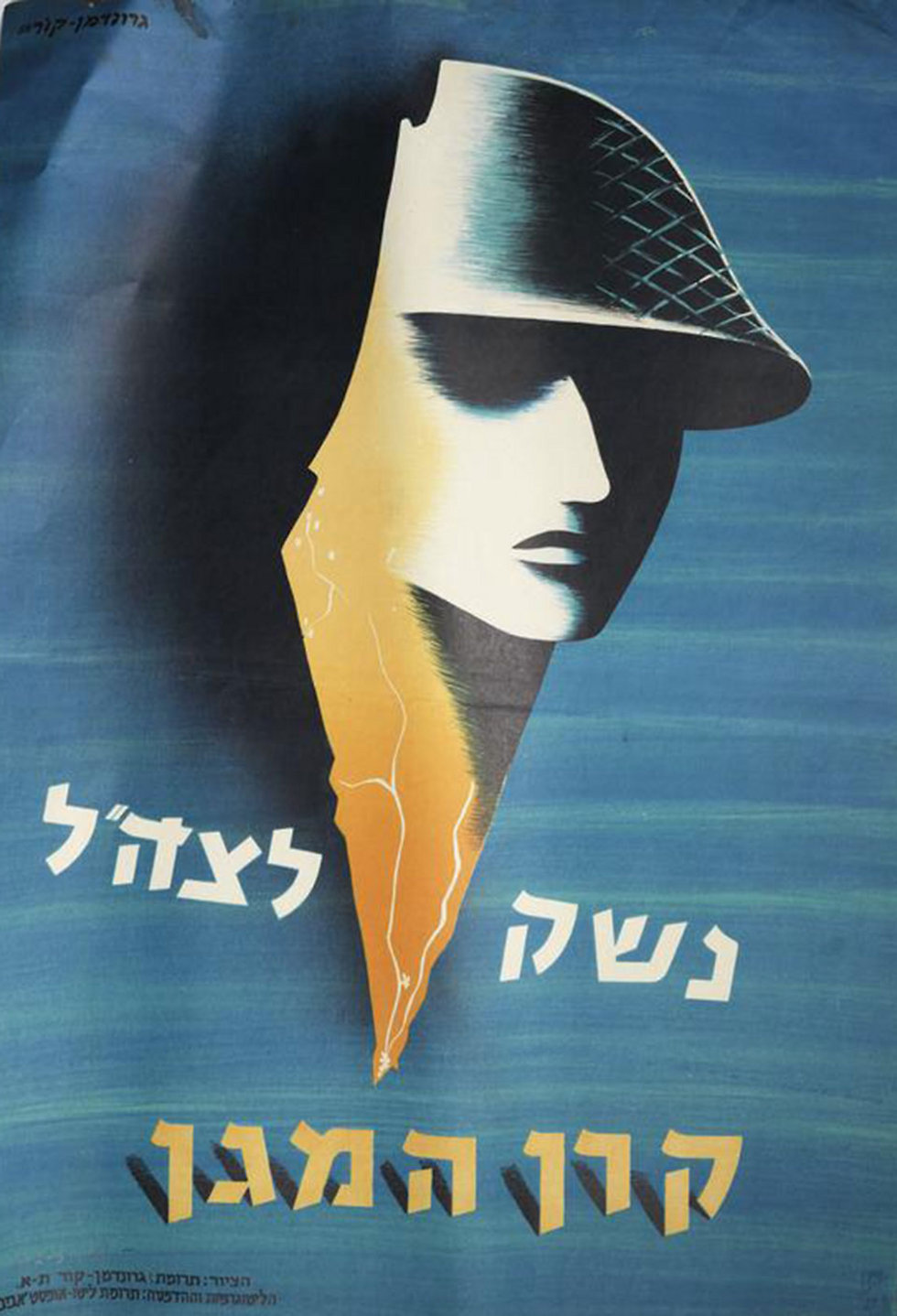

Defense Fund poster: ‘Weapons for the IDF’ (photo courtesy of the National Library of Israel)

The media began publishing ads of people who had donated their money. For example, the Bar-Tal family: “Our son Yoram has reached the age of bar mitzvah. Instead of a party—a donation to the Defense Fund.” Today, Bar-Tal is a professor. He explains that he was influenced by his studies at the elementary school in Kiryat Haim, a northern city which was populated by quite a few Holocaust survivors and new immigrants. The fact that it had the highest number of casualties in the War of Independence shaped its citizens’ consciousness.
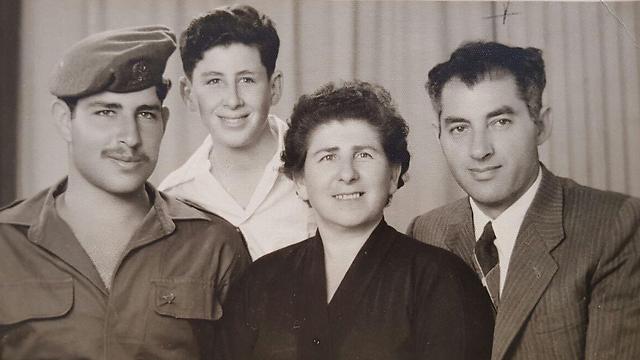

The young Bar-Tal family (Yoram is second from the left)

“I grew up in a home, society and community of workers, where giving was a norm,” he says. “I would walk around with third or fourth-hand clothing and we would sometimes eat bread with margarine. Once a week, we would get a bar of chocolate, but we donated because we felt it was a mission we had all been recruited to. The state didn’t have money and there was a need to volunteer. I was very proud of it. I think I was among the few people I know who gave up their bar mitzvah party, and it was so natural. We didn’t feel like we were giving up something. On the contrary, we felt we were contributing.”
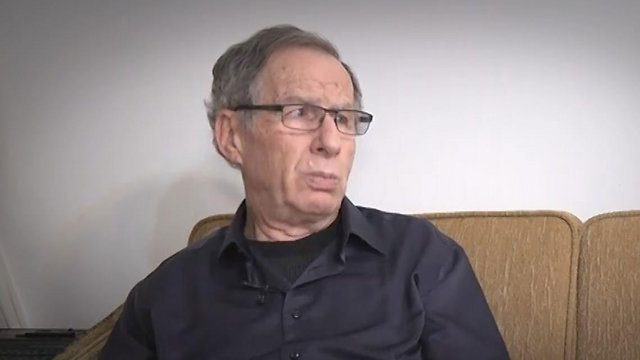

Prof. Bar-Tal today. Believes the current generation would not have acted the same way (Photo: Ido Erez)

Yoram’s wife, Bruria, celebrated her sixth birthday those days, and she donated to the Defense Fund as well. “I won’t forget the joy when I received a thank you letter for the donation,” she says. “I remember my father showing it to me. There was an excitement of being part of it.”



Bruria Bar-Tal. Still excited (Photo: Ido Erez)


An Israel Radio recording from that year features an interview with the Yefet family members—the parents and their four children, who immigrated from Yemen and lived in a one-room apartment. They donated all their savings to the Defense Fund. A member of the family donated his monthly salary as well, “in order to be a patriot.”

Social pressure in a young state

The mass recruitment was not incidental and definitely not spontaneous, as it may have seemed from the headlines of the posters on the bulletin boards. The National Library kept the documents of Emanuel Harusi, who was a writer, poet and publicist and coordinated the Defense Fund’s PR efforts, and the papers point to a well-planned operation.
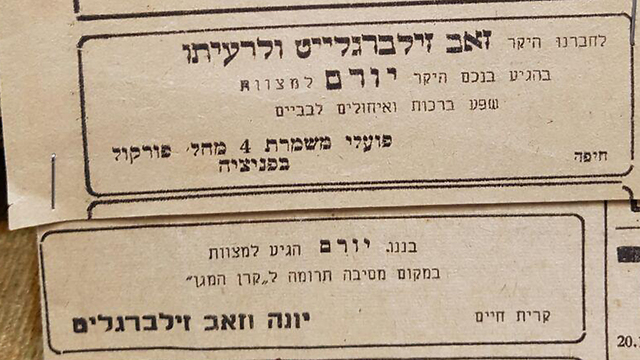


Advertisements of Yoram Bar-Tal’s donation in the press

One of the letters details the activity in the press, which included editorials, news editions in cinemas and production of short films, tanks and cannons on street intersections, posters and parades, and advertisements on buses and trains. The “commercial firms” also dedicated some of the product advertising to the Defense Funds, special stamps and postcards were issued, lesson plans were introduced in schools and the radio conducted interviews with the heads of the state and with donors.

“Everything seemed spontaneous, but there was a public atmosphere and public pressure by the government on the citizens,” explains Dr. Hezi Amior, the Israel Collection's curator at the National Library. “At the end of the day, society has a coercion power and each society has norms which its members obey. In the young State of Israel, society was the state, and the state was an octopus that reaches every corner.”
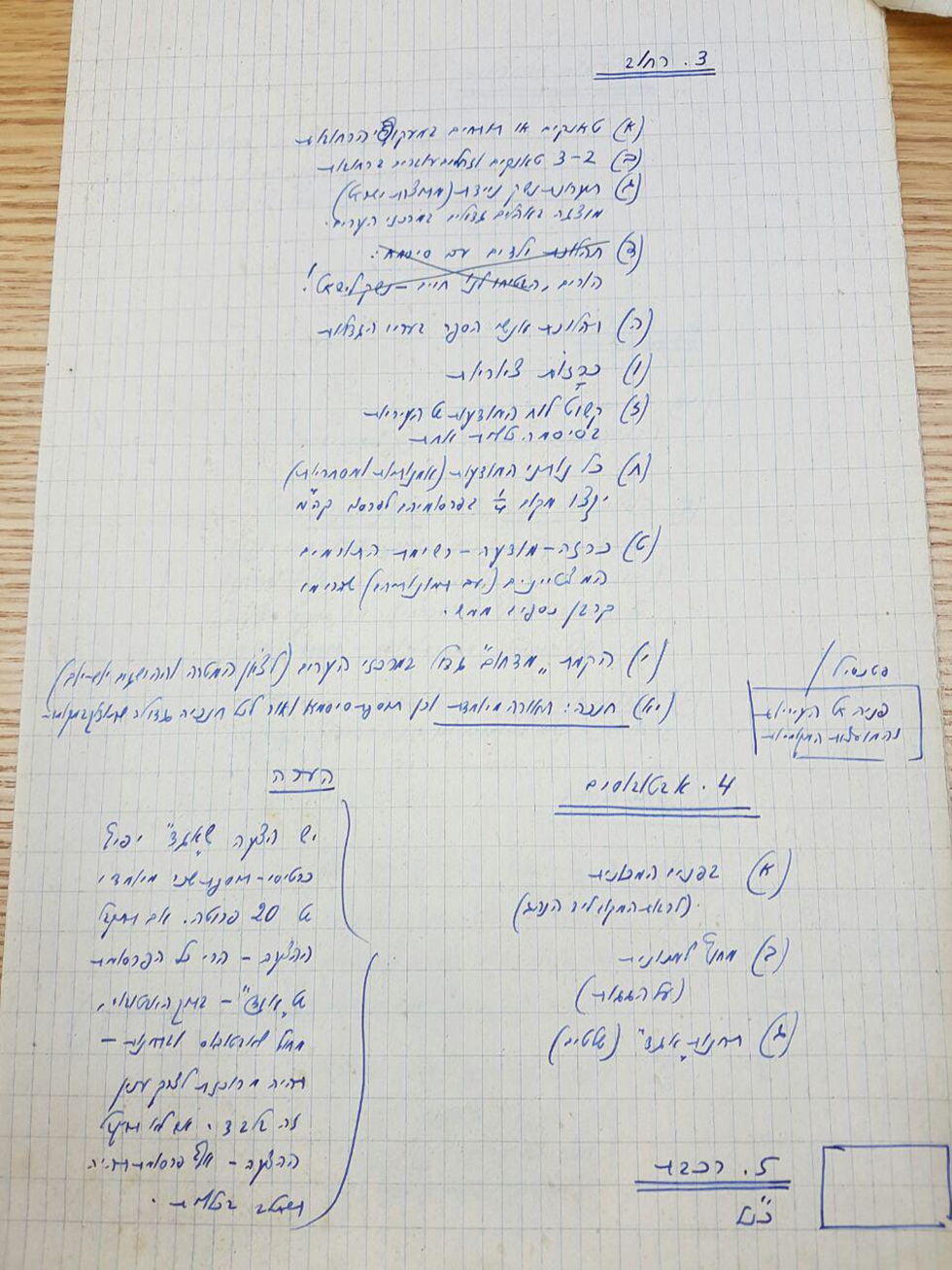

An organized spontaneous donation. The campaign notes

Private citizens were not the only ones who took part in the fundraising efforts. So did organizations, municipalities, employees’ committees, theaters and the young Nahal troops’ entertainment group, which sang the song “Cannons Instead of Socks,” written by Haim Hefer.

“We needed socks, but we were willing to give them up for cannons and planes in order to support Israel. That was the meaning of this wonderful song,” says veteran actor Gabi Amrani, who was a key figure in the entertainment group’s skits. “We were a military band and we had to lend a hand. We liked the song very much, and those were beautiful times because everyone saw it as an obvious thing. There was pride in giving to the army. Everyone volunteered, we performed in all kinds of remote places, and it was our only pleasure.”

As part of the donation campaign, there was no room for refusal. “The PR or coercion power was so great that even people who did not want to donate ended up donating. In extreme cases, they even published the names of those who did not cooperate with the Defense Fund,” explains Dr. Amior.

“I am sure there were people who did not agree to donate,” says Yoram Bar-Tal. “I am unfamiliar with that from my surroundings, because such people would have been denounced by our homogenous community. If someone had failed to donate, Heaven forbid, everyone would have talked about him and he would have been boycotted by society.”

Nevertheless, Bar-Tal says we should put our cynicism aside. “I don’t know if Ben-Gurion or Levi Eshkol intentionally scared the people. I may be naïve, but I don’t think they were that sophisticated. I do believe that due to the fact that they claimed there was not enough money, and there were no more taxes to spend, it was simply that appeal that did the job and made us want to do it. We heard about the tough situation from our parents, from the news—retaliation acts and an atmosphere of war and that there was no money, so it worked.”

Donating wedding rings

The ambitious target of the fundraising activities, 25 million pounds, was not fully achieved. According to the public committee’s summary report, 18.42 million pounds were raised and added to the defend budget. The donations were put down as weapons.



A parade for public donations (Photo: Israel State Archives)

Davar newspaper, for example, reported that the city of Ramla had purchased the Ramla-1 tank for 80,000 pounds, the standing army soldiers had purchased two fighter aircraft for 350,000 pounds, and the lawyers’ committee had bought a Sherman tank for 50,000 pounds. The city of Netanya raised funds as well for purchasing the Netanya-1 fighter aircraft. The budget books, however, include no evidence of the quantity and type of the equipment.

In additional to the raised funds, many other donations were also collected. The president’s wife approached bereaved parents and asked them to make a donation in memory of their sons, and she herself donated 200 pounds in memory of her son Eli. Rivka Guber, who lost both her sons in the War of Independence, donated the family farm in Moshav Kfar Warburg together with her husband. Workers of a Tel Aviv factory donated their wedding rings, the Amidar company’s employees donated 10 percent of their salary, while the association of butchers for non-kosher meat donated 10,000 pounds.
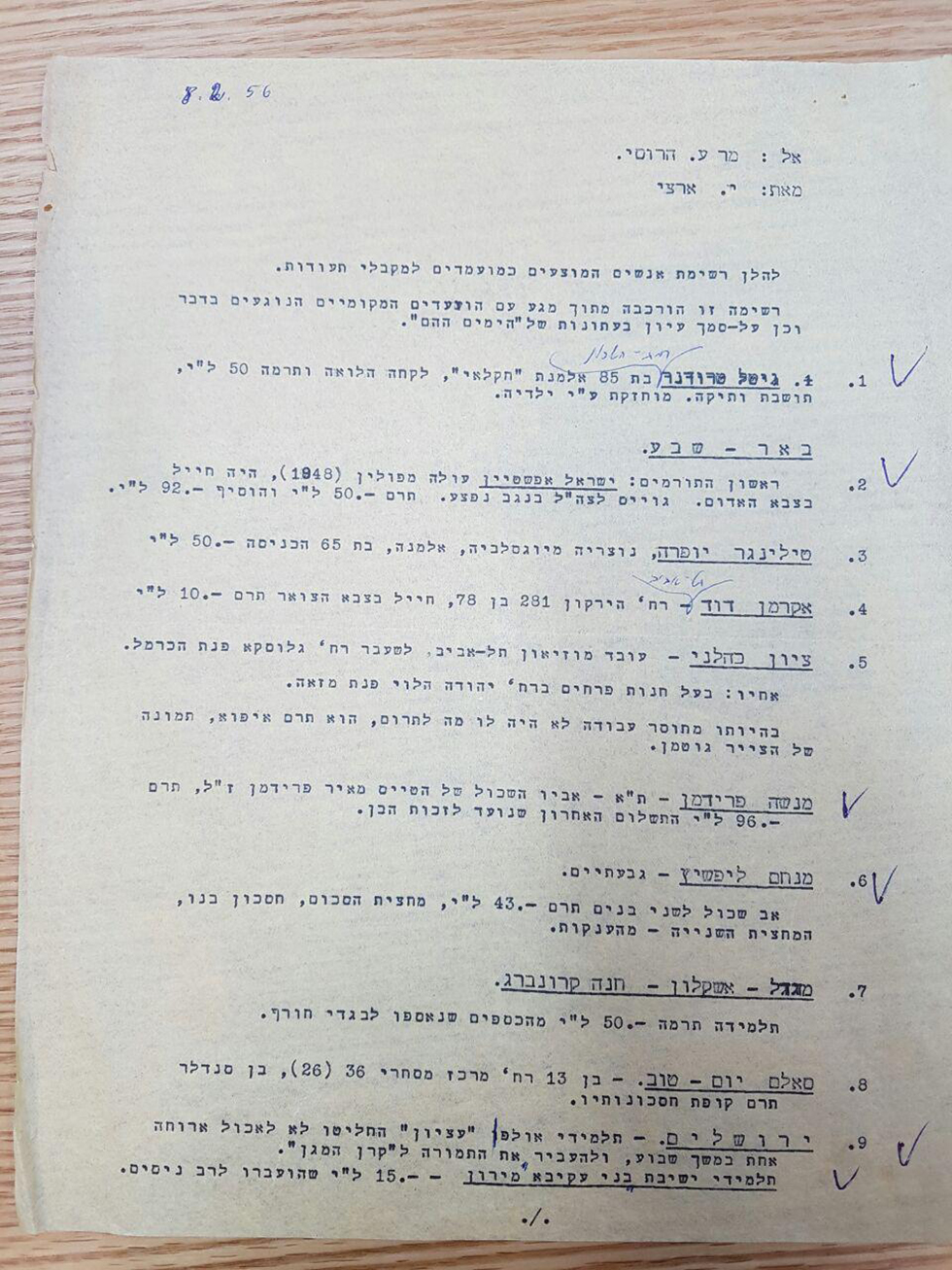

Donors’ list. Everyone gave something, even those who didn’t have much


During a Knesset session discussing the 1956 budget, then-Chairman of the Knesset’s Finance Committee Yisrael Guri noted that “there  are times when the state demands that its citizens sacrifice their lives, so it can definitely collect citizens' property. The more we offer this, the more we will save on precious life sacrifices. The state’s citizens should adopt this truth to their hearts. This is directed particularly at those who have so far avoided fulfilling their duty to the Defense Fund operation, which aims to strengthen the state’s security. We should also address the fact that the state will not be able to allow those who are evading their duty to find shelter in the evasion much longer. Time is pressing and we must defend ourselves from the evasion through all legal means at the state’s disposal.”

And so, the Defense Fund’s activities were converted into a compulsory loan law, which imposed a tax on the public to fund security needs and was aimed at tripling the defense budget.

Would such a campaign work today?

“Today, fear is imposed on everything that needs to be done,” says Amrani, “but at the time we didn’t have to do it, we wanted to. It was a duty for our revival and our ability to exist here. I don’t know if the naivety that existed them could exist today, because today people’s innocence and love have been replaced by cynicism and brutality and all kinds of other things.”

“I think that people would have burst out laughing,” says Dr. Amior. “Today we would say, ‘Why are you coming to us? You collect taxes from us, so fund it yourselves?’”

“It’s a completely different system of values,” says Prof. Bar-Tal. “Today, individualism is at the center of our existence as a Western society as well. I am quite convinced that our children would not give as much as our parents did and as much as we did. It’s simply a completely different chapter in the social and personal history.”

“I think they would,” says his wife Bruria. “If someone said that we had to volunteer and donate now—everyone would give.”

Saturday, October 8, 2016

New IDF Sheriff : Avigdoe Lieberman continues his Game Change .... Disproportional Immediate Response to every Rocket and Mortar that lands in Zion


The game with Hamas has changed


When the IDF hit high value targets in the Gaza Strip following a rocket attack on Sderot Wednesday, Israel was continuing its strategic policy as laid out by new Defense Minister Avigdor Lieberman—hit Hamas targets along the border with tanks as quickly as possible after a rocket attack (sometimes less than a minute later), while managing to bomb quality Hamas targets from the air within hours.

This is different than the former policy, where by the IDF would wait until nightfall to carry out its retaliatory attack, causing little damage. Even then, most of the attacks were on missile launch sites, sites which were dismantled anyway by the time the jets came to hit them.

By contrast, on Wednesday the Israeli Air Force hit Hamas targets with heavy bombs all throughout the afternoon. The airstrikes were exact, surgical, massive, and destroyed Hamas offensive strategic capabilities—capabilities that Hamas has been preparing since the end of the last war in preparation for the next one.


The IDF is currently evaluating the results of Wednesday’s attacks on Gaza. The air force hit targets including warehouses used for storing weapons equipment stores used by Hamas naval commandos.

These targets were identified months ago through the joint efforts of the Shin Bet and Israeli Military Intelligence. Destruction of these targets was enabled as a result of the “window of opportunity” provided by the rocket launch from Gaza, and due to the IDF’s newer, harsher policies regarding keeping Hamas from building up its offensive attack capabilities.


According to Israeli security assessments, Hamas is not interested in an escalation of violence, as it is fighting against the Salafi Jihadist organizations in the Strip, which are trying to undermine Hamas’s power.

Israel is also uninterested in an escalation, despite the large scale of recent attacks. In fact, Israel wants to mitigate any chance of an escalation, especially in light of the High Holy Days, during which huge numbers of Israelis travel to the south of the country.

As such, it seems that the IDF isn’t focusing its military efforts on small terror cells that launch rockets of their own accord, thereby leaving these terror cells more or less intact. This despite the fact that Sderot has been hit four times since the end of Operation Protective Edge.


However, according to IDF Chief of Staff Gadi Eisenkot, the IDF’s number one target is uncovering and destroying the Hamas “terror tunnels” that cross into Israel. Hamas allocates the majority of its budget to the construction of these tunnels. IDF efforts to mitigate the threat posed by them can be seen with new technology currently being developed and used to locate these tunnels, along with the continuing efforts of Israeli intelligence to locate and destroy these underground threats.

All this notwithstanding, though, the IDF’s new method of hitting high quality Hamas targets in real time may bring about a new threat: namely, that the Hamas military wing might start a new war sooner rather than later.

Sunday, August 21, 2016

The IDF changes its doctrine with regard to responses to rocket fire into Israeli Towns

August 22nd ,Sunday IDF continues pounding Hamas targets into night .As tensions mount in wake of rocket fired from Gaza into Israel, IDF continued a combined artillery and air assault on Hamas targets into the night; IDF: 'Hamas is the sovereign power in the Gaza Strip and it is therefore responsible.'step

The IDF is reported to have continued a combined air and artillery assualt on Hamas targets in Gaza Sunday night in retaliation for rockets fired from the Strip into Sderot earlier on Sunday afternoon.

According to the Palestinian report, the strikes were carried out by the Israel Air Force and Israeli artillery units on a Hamas military wing position in Beit Hanoun in the north Gaza Strip, from which the rocket was launched earlier on Sunday afternoon. The report indicates that one of the targets was a military outpost belonging to Hamas’s security apparatus.

Moreover, the report claimed that a 17-year-old Palestinian boy was lightly wounded during the retaliatory attacks, along with three other children suffering from shock.


IDF continues to retaliate in Gaza for rocket fire into Israel

The response of the IDF signals a departure from the norm as it usually retaliates once during the hours immediately following the rocket fire or the night after. While the reports were not originally officially verified by the IDF late Sunday night, explosions were heard by residents of Israeli towns bordering the Gaza Strip. Guy, a resident of Sderot said, "There is a feeling of pressure and fear. We hope everything is going to be ok."


Strikes in southern Gaza

Later, the IDF released a statement accounting for the continued attacks: "The IDF attacks are in response to the rocket fire into Israeli territory. The rocket fire constitutes a threat to the security of Israel and a strike against the State of Israel's sovereignty," the statemen read. "The Hamas terror organization is the sovereign power in the Gaza Strip and it is therefore responsible for all terror activities emanating from it."

Tensions mounted after a Code Red rocket alert was sounded in Sderot and Sha'ar Hanegev just before 2:30pm on Sunday


Rocket which fell in Sderot (Photo: Avi Rokeah)

Shortly afterwards, an explosion was heard, and a rocket was found between two residential houses in Sderot. There were no injuries or damage, though forces were immediately dispatched to the area.

Wednesday, June 1, 2016

Our Paratroopers of Zion: Inauguration Ceremony at the Kotel


This blog is written by guest blogger  Ari Fuld
Yesterday, I witnessed a miracle and I want to share it with you.
Before I tell you about yesterday's miracle, I want to give you a little background. 23 years ago, I enlisted into the IDF as a Lone soldier. I still remember the chills I felt the first time I put on my IDF uniform. Those chills were caused by 1% excitement and 99% was due to some kind of subconscious flash of 2000 years of history and me, the Jew, in Israel, in an IDF uniform. WOW!
I remember thinking about my grandparents on my father's side who jumped every time a glass broke because they were scarred for life from Christalnacht or my grandma from Ima's side who survived Auschwitz 70 years ago with no certainty about the future and then thinking, here I am, their grandson, in a Jewish country that has been miraculously revived after 2,000 years, in an IDF uniform ready to protect the Jewish people in the Jewish homeland Israel. Can you feel the chills?
Tonight my family was at the Western Wall in Jerusalem along with tens of thousands of mothers, fathers, brothers, sisters and friends. We stood at a wall that for two millennia stood empty waiting for us to come home. A wall that stood as a memorial to a golden age of a Jewish Jerusalem that was burned to the ground. A wall that stood silent as we were expelled from one country to another, burned, gassed, shot and beaten as we cried for 2,000 years from homesickness. A wall that has known many bitter tears for way too many years. Tonight as I witnessed my extended family (tens of thousands of them) crying as their sons stood proudly dressed in IDF uniforms at the Western Wall in Jerusalem. I realized, the tears are no longer tears of pain and suffering, these tears are tears of pride and joy.
Considering there was a time, not so long ago, that Jerusalem was limited to a word in our daily prayers and the idea of the Jewish nation returning to the Land of Israel was considered biblical fantasy, tonight's sight was miraculous.
To think that not so long ago, we were the subjects of a final solution where our extinction was the goal and our nation was almost systematically destroyed. It's hard to believe on a national, historical and religious level that I am here watching my nephew, who is standing proud wearing the IDF uniform, with a gun in one hand and our Tanach in the other and swearing that he will do his best to make sure NEVER AGAIN!.
As I looked around and witnessed the tens of thousands of Jews, who gathered from all 4 corners of the Earth and are here, now, standing in Jerusalem, at the Western Wall, across from the Temple Mount, watching their sons being sworn in as IDF Paratroopers to defend the Jewish State of Israel, I realized I was witnessing a modern day miracle!
שהחיינו וקיימנו והגיענו לזמן הזה!


2,148 Views

Thursday, April 14, 2016

Haaretz Newspaper the Enemy within Zion, Haaretz Shelanu .


Yesh Atid Chairman lambasted  left-wing anti Zionist Israeli paper after it publishes 'monstrous' article against IDF soldiers.

Yesh Atid Chairman Yair Lapid had some choice words for the newspaper Ha’aretz after the left-wing daily ran a ferociously anti-Israel article by left-wing extremist Gideon Levy. During the last campaign in Gaza an article written  Levy in  Haaretz criticized the Israel Airforce pinpoint bombing campaign and the IDF's use of excessive force to minimize casualties and the duration of the action.

The piece, entitled “After me, for murder” – a mocking satire of the IDF slogan “after me” – offers the same sort of anti-Israel, anti-IDF screed that Levy has become famous – or infamous – for. Other recent pieces by Levy include “Israel is reborn into a monster”, in which the writer accused Israel of being “a nation so corrupt” that it cannot “be brought back to the straight and narrow.”

In his latest article, Levy launches into yet another rant targeting the Israeli army.

“Kill, soldiers, kill. Nothing bad at all will happen to you if you blow away a young Palestinian with three bullets fired at short range – your officers and Yair Lapid will cheer you on.”

“Shoot stone throwers without any worry, shoot at everyone suspicious – so long as they are Palestinian. And let’s be clear: [that means] shoot to kill. Not to stop, not to wound, but to kill. The legendary [IDF] slogan of “after me [into battle]” has now become “after me, to kill children; after me, to murder”.
Image result for Lapid
Lapid, who found himself the target of Levy’s slings and arrows, responded on Thursday, blasting Ha’aretz, the article, and its author.

“This is a monstrous text, [published by] a newspaper that long ago went completely off the rails. He even accuses me of killing in the article, but I’m willing to forgo my own honor. But I’m absolutely unwilling to forgo the IDF’s honor.”

“Anyone who portrays our soldiers as indiscriminate murderers is both knowingly lying and legitimizing violence against them. In all of military history there has never been an army that did more to maintain a high ethical standard in combat and purity of arms [than Israel], but Ha’aretzdoesn’t care. We’re talking about a paper filled with the self-hatred of the radical left, and this article - like many others – is the paper’s way of legitimizing terrorism.


Haaretz (Hebrew: הארץ‎) (lit. "The Land [of Israel]", originally Ḥadashot Ha'aretz – Hebrew: חדשות הארץ‎, IPA: [χadaˈʃot haˈʔaʁets] – "News [of] the Land [of Israel]"[3]) is Israel's oldest daily newspaper. It was founded in 1918 and is now published in both Hebrew and English in Berliner format. The English edition is published and sold together with the International New York Times. Both Hebrew and English editions can be read on the Internet. In North America, it comes out as a weekly newspaper, combining articles from the Friday edition with a roundup from the rest of the week. It is known for its strongly left-wing and liberal stances on domestic and foreign issues.

History and ownership

Haaretz was first published in 1918 as a newspaper sponsored by the British military government in Palestine. In 1919, it was taken over by a group of socialist-oriented Zionists, mainly from Russia.[5] The newspaper was established on 18 June 1919 by a group of businessmen including prominent philanthropist Isaac Leib Goldberg, and initially, it was called Hadashot Ha'aretz ("News of the Land"). Later, the name was shortened to Haaretz. The literary section of the paper attracted leading Hebrew writers of the time.

The newspaper was initially published in Jerusalem. From 1919 to 1922, the paper was headed by a succession of editors, among them Leib Yaffe. It was shut down briefly due to a budgetary shortfall and reopened in Tel Aviv at the beginning of 1923 under the editorship of Moshe Glickson, who held the post for 15 years. The Tel Aviv municipality granted the paper financial support by paying in advance for future advertisements.

Salman Schocken, a wealthy German Jewish Zionist who owned a chain of department stores in Germany, bought the paper in 1937. His son, Gershom Schocken, became the chief editor in 1939 and held that position until his death in 1990.

Until August 2006, the Schocken family owned 100% of the Haaretz Group, but then the German publisher M. DuMont Schauberg acquired 25 percent of the shares The deal was negotiated with the help of former Israeli ambassador to Germany, Avi Primor. This deal was seen as controversial in Israel as DuMont Schauberg's father, Kurt Neven DuMont, was member of the German Nazi party, while his publishing house promoted Nazi ideology.

On 12 June 2011, it was announced that Russian-Israeli businessman Leonid Nevzlin had purchased a 20% stake in the Haaretz Group, buying 15% from the family and 5% from M. DuMont Schauberg. This means that the Schocken family now owns 60% and M. DuMont Schauberg and Leonid Nevzlin have 20% each.

In October 2012, a union strike mobilized to protest planned layoffs by the Haaretz management. As a consequence, both the Haaretz newspaper and its TheMarkerbusiness supplement were not printed for one day. According to Israel Radio, it was the first time since 1965 that a newspaper did not go to press on account of a strike.


Haaretz
Haaretz logo.svg
TypeDaily Newspaper
FormatBerliner
Owner(s)Schocken Family (60%)
M. DuMont Schauberg(20%)
Leonid Nevzlin (20%)
PublisherAmos Schocken
EditorAluf Benn[1]
Founded1919
Political alignmentliberalpolitical left
LanguageHebrew and English editions
HeadquartersTel Aviv, Israel
Circulation72,000
(Weekends: 100,000)[2]
Websitehttp://www.haaretz.co.il
http://www.haaretz.com