Showing posts with label @realDonaldTrump. Show all posts

Wednesday, March 29, 2017

#OYVEYDonaldTrump's Campaign Aides Had Repeated Contacts With Russian Intelligence

Reprinted from The New York Times with permission of the newspaper and authors Michael Schmidt, Mark Mazzetti and Matt Apuzzo


Paul Manafort, Mr. Trump’s former campaign chairman, at the Republican National Convention in Cleveland in July. CreditSam Hodgson for The New York Times

WASHINGTON — Phone records and intercepted calls show that members of Donald J. Trump’s 2016 presidential campaign and other Trump associates had repeated contacts with senior Russian intelligence officials in the year before the election, according to four current and former American officials.

American law enforcement and intelligence agencies intercepted the communications around the same time they were discovering evidence that Russia was trying to disrupt the presidential election by hacking into the Democratic National Committee, three of the officials said. The intelligence agencies then sought to learn whether the Trump campaign was colluding with the Russians on the hacking or other efforts to influence the election.

The officials interviewed in recent weeks said that, so far, they had seen no evidence of such cooperation.

But the intercepts alarmed American intelligence and law enforcement agencies, in part because of the amount of contact that was occurring while Mr. Trump was speaking glowingly about the Russian president, Vladimir V. Putin. At one point last summer, Mr. Trump said at a campaign event that he hoped Russian intelligence services had stolen Hillary Clinton’s emails and would make them public.
The dimension of the political apocalypse that is happening right in front of our faces is hard to comprehend because we are smack in the...
Michael Hoffman February 16, 2017

Your sources are anonymous. This paragraph reveals how flimsy and scurrilous your charges are:"The officials would not disclose many...
Jim February 16, 2017

Lots of Trump supporters are clinging to the apparent fact that there is no evidence of collusion yet. This may be because of US laws that...

The officials said the intercepted communications were not limited to Trump campaign officials, and included other associates of Mr. Trump. On the Russian side, the contacts also included members of the government outside of the intelligence services, they said. All of the current and former officials spoke on the condition of anonymity because the continuing investigation is classified.

The officials said that one of the advisers picked up on the calls was Paul Manafort, who was Mr. Trump’s campaign chairman for several months last year and had worked as a political consultant in Ukraine. The officials declined to identify the other Trump associates on the calls.

The call logs and intercepted communications are part of a larger trove of information that the F.B.I. is sifting through as it investigates the links between Mr. Trump’s associates and the Russian government, as well as the hacking of the D.N.C., according to federal law enforcement officials. As part of its inquiry, the F.B.I. has obtained banking and travel records and conducted interviews, the officials said.

Mr. Manafort, who has not been charged with any crimes, dismissed the officials’ accounts in a telephone interview on Tuesday. “This is absurd,” he said. “I have no idea what this is referring to. I have never knowingly spoken to Russian intelligence officers, and I have never been involved with anything to do with the Russian government or the Putin administration or any other issues under investigation today.”

He added, “It’s not like these people wear badges that say, ‘I’m a Russian intelligence officer.’”

Several of Mr. Trump’s associates, like Mr. Manafort, have done business in Russia. And it is not unusual for American businessmen to come in contact with foreign intelligence officials, sometimes unwittingly, in countries like Russia and Ukraine, where the spy services are deeply embedded in society. Law enforcement officials did not say to what extent the contacts might have been about business.

The officials would not disclose many details, including what was discussed on the calls, the identity of the Russian intelligence officials who participated, and how many of Mr. Trump’s advisers were talking to the Russians. It is also unclear whether the conversations had anything to do with Mr. Trump himself.

A report from American intelligence agencies that was made public in January concluded that the Russian government had intervened in the election in part to help Mr. Trump, but did not address whether any members of the Trump campaign had participated in the effort.

The intercepted calls are different from the wiretapped conversations last year between Michael T. Flynn, Mr. Trump’s former national security adviser, and Sergey I. Kislyak, Russia’s ambassador to the United States. In those calls, which led to Mr. Flynn’s resignation on Monday night, the two men discussed sanctions that the Obama administration imposed on Russia in December.

But the cases are part of American intelligence and law enforcement agencies’ routine electronic surveillance of the communications of foreign officials.

The F.B.I. declined to comment. The White House also declined to comment Tuesday night, but earlier in the day, the press secretary, Sean Spicer, stood by Mr. Trump’s previous comments that nobody from his campaign had contact with Russian officials before the election.

“There’s nothing that would conclude me that anything different has changed with respect to that time period,” Mr. Spicer said in response to a question.

Two days after the election in November, Sergei A. Ryabkov, the deputy Russian foreign minister, said “there were contacts” during the campaign between Russian officials and Mr. Trump’s team.

“Obviously, we know most of the people from his entourage,” Mr. Ryabkov told Russia’s Interfax news agency.

The Trump transition team denied Mr. Ryabkov’s statement. “This is not accurate,” Hope Hicks, a spokeswoman for Mr. Trump, said at the time.

The National Security Agency, which monitors the communications of foreign intelligence services, initially captured the calls between Mr. Trump’s associates and the Russians as part of routine foreign surveillance. After that, the F.B.I. asked the N.S.A. to collect as much information as possible about the Russian operatives on the phone calls, and to search through troves of previous intercepted communications that had not been analyzed.

The F.B.I. has closely examined at least three other people close to Mr. Trump, although it is unclear if their calls were intercepted. They are Carter Page, a businessman and former foreign policy adviser to the campaign; Roger Stone, a longtime Republican operative; and Mr. Flynn.

All of the men have strongly denied that they had any improper contacts with Russian officials.

As part of the inquiry, the F.B.I. is also trying to assess the credibility of the information contained in a dossier that was given to the bureau last year by a former British intelligence operative. The dossier contained a raft of allegations of a broad conspiracy between Mr. Trump, his associates and the Russian government. It also included unsubstantiated claims that the Russians had embarrassing videos that could be used to blackmail Mr. Trump.

The F.B.I. has spent several months investigating the leads in the dossier, but has yet to confirm any of its most explosive claims.

Senior F.B.I. officials believe that the former British intelligence officer who compiled the dossier, Christopher Steele, has a credible track record, and he briefed investigators last year about how he obtained the information. One American law enforcement official said that F.B.I. agents had made contact with some of Mr. Steele’s sources.

The agency’s investigation of Mr. Manafort began last spring as an outgrowth of a criminal investigation into his work for a pro-Russian political party in Ukraine and for the country’s former president, Viktor F. Yanukovych. It has focused on why he was in such close contact with Russian and Ukrainian intelligence officials.

The bureau did not have enough evidence to obtain a warrant for a wiretap of Mr. Manafort’s communications, but it had the N.S.A. scrutinize the communications of Ukrainian officials he had met.

The F.B.I. investigation is proceeding at the same time that separate investigations into Russian interference in the election are gaining momentum on Capitol Hill. Those investigations, by the House and Senate Intelligence Committees, are examining not only the Russian hacking but also any contacts that Mr. Trump’s team had with Russian officials during the campaign.

On Tuesday, top Republican lawmakers said that Mr. Flynn should be one focus of the investigation, and that he should be called to testify before Congress. Senator Mark Warner of Virginia, the top Democrat on the Intelligence Committee, said the news about Mr. Flynn underscored “how many questions still remain unanswered to the American people more than three months after Election Day, including who was aware of what, and when.”

Monday, March 27, 2017

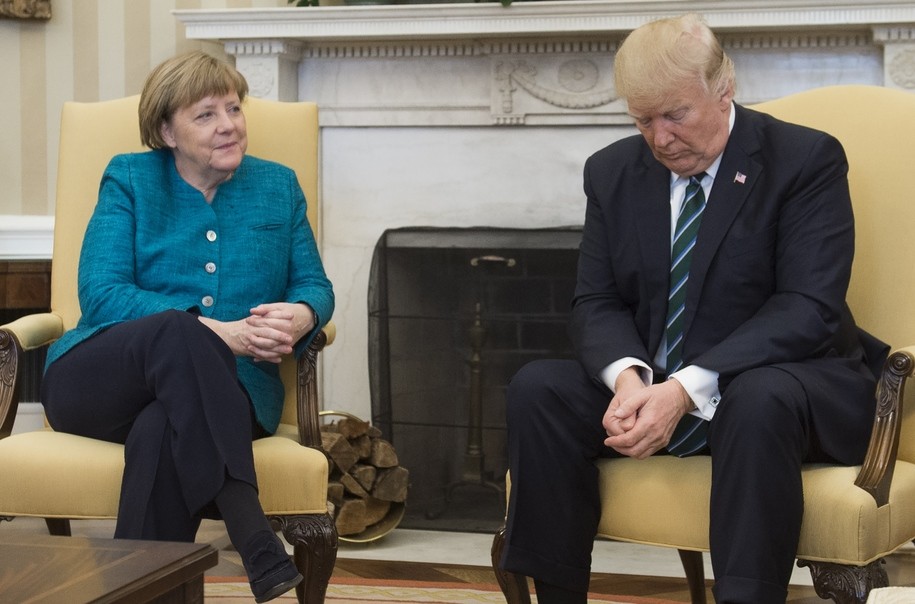
#OyVeyDonaldTrump presented German leader Angela Merkel a printed 'invoice' for what he thinks they owe Nato


The US President is said to have had an “invoice” printed out outlining the sum estimated by his aides as covering Germany’s unpaid contributions for defence. [...]
The current sitting president is an idiot manchild. On a related note: During last weekend's meeting between Idiot Manchild and German leader Angela Merkel, the idiot manchild allegedly handed Merkel a printed "bill" for roughly 370 billion Euros, the amount Donald Trump thinks Germany "owes" Nato.

But the bill has been backdated even further to 2002, the year Mrs Merkel’s predecessor, Gerhard Schröder, pledged to spend more on defence.

Mr Trump reportedly instructed aides to calculate how much German spending fell below two per cent over the past 12 years, then added interest.

That this stunt did not create an immediate international incident is evidence of Merkel's own professionalism and/or evidence that even our international allies do not take Idiot Manchild seriously. Instead, she "ignored the provocation."

Trump's staff—and by this I think we can safely presume Steve Bannon's staff, because there's no way any other members of even this White House could come up with a concept simultaneously so idiot-manchild stupid and so pointlessly insulting—apparently has similar "bills" drawn up for the other Nato members, for presentation when he meets with them as well. This particular bout of idiocy, in other words, is going to continue.

As to what Idiot Manchild and his confederacy of morons expects to accomplish with the move, that's not clear. It is never clear. As with the recent healthcare fiasco of Steve Bannon meeting with Republican lawmakers to demand they just do whatever Steve Bannon wants them to, the strategy seems to be to angrily demand things and then be surprised when the other side, your own allies, tell you to sod off. It may have worked for a crooked New York real estate developer trying to scam subcontractors out of promised wages, but it's not likely to work with The Freaking Chancellor of Germany.

For what it is worth, the White House is now denying that this incident took place. But this White House notoriously lies about everything, all the time, even when it's patently obvious they are lying, so that is worth nothing.

Monday, March 20, 2017

Trump to spend 7th consecutive weekend at Trump-branded property, at enormous cost to taxpayers Austerity for us, regular Florida vacations for the president.


President Donald Trump and first lady Melania Trump stop to pose for a photo with Japanese Prime Minister Shinzo Abe and his wife Akie Abe before they have dinner at Mar-a-Lago on February 11. CREDIT: AP Photo/Susan Walsh

President Trump doesn’t want to spend federal dollars on after-school programs, meals for poor people, or heating assistance that helps keep folks alive.

But he has no problem wasting more than $3 million a pop to spend weekends at his private Mar-a-Lago club in Florida. Trump has already made four trips there since becoming president on January 20, and on Friday he confirmed he’s headed there this weekend for the fifth time.

Despite vowing during his campaign that he “would rarely leave the White House because there’s so much work to be done” and “would not be a president who took vacations” because “you don’t have time to take time off,” Trump has visited Trump-branded properties each of the past six weekends. That streak will hit seven when Trump lands at Mar-a-Lago later Friday.

In fact, Trump has spent time at Trump-branded property every weekend of his presidency other than the very first, when he created chaos throughout the country by signing a Muslim ban executive order that was later stayed by a federal court.

Let’s run through them.

February 4–5: Trump heads to Mar-a-Lago for the first time as president. There, he and Melania attend a “Vienna to Versailles” black tie Red Cross Ball that was closed to the media (Commerce Secretary Wilbur Ross was in attendance, however).

President Trump’s inaugural appearance at Mar-a-Lago comes just days after the Trump Organization announces the club’s initiation fees are doubling to $200,000 (taxes and $14,000 annual dues not included).
(See Trump’s effort to profit off the presidency gets underway in earnest
Mar-a-Lago dues are doubling, and Trump-branded hotels look to expand across the country.thinkprogress.org
 )

February 11–12: Trump travels to Mar-a-Lago for the second consecutive weekend. His guest is Japanese Prime Minster Shinzo Abe. On Saturday night, Trump and Abe deal with a North Korea missile crisis in full view of diners on one of the club’s terraces, with national security documents illuminated by aides’ cell phones.
( See Trump handled North Korea crisis in full view of diners and waiters at his private club
Remember “lock her up?”thinkprogress.org
 )

February 18–19: The president heads to Mar-a-Lago yet again. While there, Trump, who repeatedly criticized Obama for playing golf while president, enjoys his sixth golf outing during his first month in office. In a sign that he might feel a bit guilty, the White House is later forced to admit that officials initially misled reporters about the amount of golf Trump played during his 18-hole excursion with pro golfer Rory McIlroy.

The roughly $10 million Trump has already spent on unnecessary travel approaches the $12 million President Obama spent each year.
( see Trump’s first month of travel expenses cost taxpayers just less than what Obama spent in a year
Meanwhile, his budget proposal cuts programs for poor people.thinkprogress.org
 )

February 25–26: Trump doesn’t travel to Florida, but he does stop by his swanky hotel in downtown DC for dinner on Saturday night. The president’s outing to the Trump International is documented by Benny Johnson of IJR, a conservative media outlet founded by Republican operatives.

Johnson, who writes a fawning first-person account about dining next to Trump’s table, says that he “received a tip from a well informed source that Trump would be dining at the BLT Steakhouse inside his Trump hotel at approximately 6 PM that evening.” Lo and behold, the tipster was correct.

Also hanging out at the Trump International that night were Brexit leader Nigel Farage, Secretary of State Rex Tillerson, and Trump’s daughter Ivanka.

March 4–5: Trump heads to Mar-a-Lago. The Palm Beach Post publishes pictures of Attorney General Jeff Sessions mingling with members.

Politico reports that in response to the negative publicity resulting from photos of Trump and Abe dealing with the missile crisis in the dining area, Trump’s “private club issued new rules prohibiting pictures or videos of the president when he’s on the premises so that the world can’t follow along on Twitter if it ever happens again.” Meanwhile, a helipad is under construction on site to make it easier for Marine One to land right outside the club.

March 11–12: On Saturday, Trump visits the Trump National Golf Club in Virginia in suburban DC.

It’s his ninth trip to a golf course in the seven weeks he’s been president.

Trump’s repeated trips to Trump-branded properties aren’t just problematic because they embody how he’s profiting off the presidency and breaking campaign promises. They also represent Trump’s selective austerity when it comes to spending taxpayer dollars.

As Quartz reported on Friday, after this weekend, Trump will have already spent about $16.5 million on trips to Mar-a-Lago. For that amount, Meals on Wheels could feed 5,967 seniors for a year and after school programs could feed 114,583 children for a year.

On Thursday, Office of Management and Budget director Mick Mulvaney defended the draconian cuts included in the Trump administration’s proposed budget by arguing that the federal government can’t ask “a coal miner in West Virginia or a single mom in Detroit to pay for” programs like the Corporation for Public Broadcasting. But one wonders whether those struggling Americans would rather have public radio or dole out their share of the $3.3 million a self-proclaimed billionaire is spending each weekend to mingle with his ludicrously wealthy club members down in Florida.

Sunday, March 19, 2017

How much is Donald Trump’s travel and protection costing, anyway?


President Trump boards Marine One at the White House with his grandchildren Joseph and Arabella Kushner before departing to Joint Base Andrews for a trip to Florida on March 3. (Ricky Carioti/The Washington Post)

President Trump’s 2018 budget proposal is unabashed in its goal: slashing or eradicating a number of social and research programs to offset new spending on defense and homeland security. That emphasis quickly met with broad criticism, including from some who pointed out an apparent contradiction. Trump places a heavy emphasis on cutting waste and targets for elimination programs that, in some cases, cost the government only a few million dollars a year. That is a lot of money in the context of the amount of money you or I spend in a year, but in the context of the government, spending a million dollars is like someone with a $50,000-a-year salary spending one penny.

What really jumped out at some people, though, was that Trump was proposing cuts to some relatively low-cost programs shortly before he prepared to fly to his Mar-a-Lago resort in Florida. According to an analysis from Politico, that’s a trip that costs about $3 million each time — and it’s a trip that he’s made four times this year.


If that $3 million estimate is true, he could have funded the U.S. Interagency Council on Homelessness — budgeted at $4 million in 2016 — for nearly four years if he’d just stayed in the White House.

Others noted the cost of protecting first lady Melania Trump and the Trumps’ young son, Barron, at Trump Tower. Shortly after the election, a CNN Money report indicated that protecting Trump’s family in New York cost $1 million a day. If they instead joined him at the White House, of course, that cost would essentially be eliminated.

Combined, these costs could make Trump’s presidency awfully expensive, particularly in light of that proposed budget.


Follow
Bruce Bartlett @BruceBartlett


Trump is on track to spend $1 billion in 4 years housing his wife in NYC and vacationing in Mar-a-Lago virtually every week.
5:08 PM - 17 Mar 2017

4,2974,297 Retweets
3,5933,593 likes

But that’s only if those estimates are correct.

We can start with the Trump Tower number. The million-dollars-a-day figure was sourced to three city officials, reflecting the city’s costs.

In February, the city of New York detailed precisely how much it had been spending to provide additional security at Trump’s home. Between the election and the inauguration, when Trump was living there as president-elect, the city spent about $308,000 a day. Once Trump moved to Washington, the city expects that the cost will be up to $145,000 a day when Trump isn’t visiting. (He hasn’t since being inaugurated.) That’s sharply lower than $1 million a day.

[Trump family’s elaborate lifestyle is a ‘logistical nightmare’ — at taxpayer expense]

It’s also only the city’s costs. There are additional costs at the federal level, like Secret Service protection. In 2008, the former head of that agency estimated that protecting a candidate costs about $38,000 a day. Presumably protecting a spouse and young child would cost less. There were also reports about the Secret Service and the military seeking to rent space in Trump Tower to aid in supporting the president. It’s not clear whether that’s happened or how much space has been rented. (The Secret Service denied that it was planning to rent space.)

CNN estimated that one of the floors of space reportedly under consideration could cost $1.5 million a year — or about $4,100 a day. If those numbers are all correct, and if the military rents that floor, the total for protecting Trump’s family in New York is a bit under $200,000 a day, including New York City’s costs.

Then there are those Mar-a-Lago trips.

Politico’s $3 million-plus estimate was based on an October 2016 Government Accountability Office report on a trip President Barack Obama took in 2013 — a report that The Post has also cited. That 2013 trip, which included a stop in Palm Beach, Fla., cost $3.6 million, $3.2 million of which was the cost of aircraft.

Mar-a-Lago isn't just Trump's vacation spot; it's his second White House
Play Video2:57

The Washington Post's Jenna Johnson and Aaron Blake explain why President Trump spends so much time at his Mar-a-Lago resort in Florida, and how he uses it as a second White House.(Peter Stevenson/The Washington Post)

Air Force One costs $206,337 an hour to operate, and the D.C. to Palm Beach flight takes about two hours. That’s $824,000 right there, round-trip. So where did the other $2.8 million come in?

In part, it’s the cost of support aircraft. That 2013 trip included five other planes and four helicopters as part of Obama’s overall team, serving defense and short-distance transport roles. (The president goes to and from Andrews Air Force Base by helicopter, for example.) But that trip also included an unrelated trip to Illinois, meaning a much more complicated ballet of movement than Trump’s Mar-a-Lago trips would require.

(Government Accountability Office)

Secret Service staffing on the 2013 trip ran about $180,000, according to the GAO. Most of the cost was eaten up by those support aircraft. The 89th Airlift Wing ran up a tab of $1.3 million, including the costs of operating Air Force One. Additional aircraft were used to “provide global passenger airlift, logistics, and aerial support and communications to the President,” which they would presumably also do for Trump’s trips down to Florida. But again, that trip included a flight to and from Chicago, which is slightly closer than Palm Beach from Washington.

If we assume, just for the sake of an estimate, that the full cost of the 2013 trip can be allocated by hour of overall flight time — since the trips themselves were about the same length, one weekend, and since air support costs ate up most of the bill — we get an estimate of about $514,000 an hour. ($3.6 million divided by 3½ hours to and from Chicago and four hours to and from Palm Beach).

A five-hour trip to Palm Beach, then, would be about $2 million — $514,000 times four hours. This is a very loose estimate, mind you, but it seems more fair than $3.6 million.

These figures put Trump’s costs in a slightly different light. Sure, two trips to Mar-a-Lago still eats up the same amount as that year of funding for the Interagency Council on Homelessness, but at a slightly disproportionate level.

If Melania and Barron never move to Washington and if Trump heads to Mar-a-Lago for four out of every nine weekends, our estimates put the total cost at something like $526 million over the course of Trump’s presidency. Melania Trump is apparently planning to join her husband in Washington at the end of the school year, though, and Trump calls Mar-a-Lago the “winter White House,” implying that he won’t be there in the summer. In which case the overall spending plummets further.

To only, say, $130 million or so. Only enough to fund the homelessness agency until 10-year-old Barron Trump is 42.

Monday, March 13, 2017

Liar LIar your pants are in fire. Despite 2001 Promise, #OyVey DonaldTrump Made No 9/11 Donations in Year After Attack, Audit Finds

Image result for Cartoon Donald Trump liar pinocchio

The New York City Comptroller’s Office has found no evidence that Donald Trump donated to 9/11 charities in the months after the attacks, the agency said.

Trump had promised weeks after the 2001 attack to donate $10,000 to the Twin Towers Fund as part of a charity effort by “The Howard Stern Show.”

“My office has reviewed the donations made in the nearly 12 months following the attacks – and we didn’t find evidence that he contributed a single cent to the victims, our first responders, and to our city through the Twin Towers Fund,” New York City Comptroller Scott Stringer, a Democrat, said in a statement to ABC News today.

“In the wake of 9/11, New Yorkers came together, healed, and rebuilt. If Donald Trump claimed to donate and didn’t, if he claimed to support New Yorkers in a time of crisis and refused, then that would be just plain wrong.”

It’s possible that the Republican presidential nominee donated after the two audit periods reviewed by Stringer’s office. The Trump campaign did not immediately respond to ABC News’ request for comment.

At the request of multiple news organizations, including the New York Daily News, which first reported the story, Stringer's office conducted a review of previously sealed records of the Twin Towers Fund and the New York City Public/Private Initiatives Inc., doing business as the Twin Towers Fund, which were set up in the aftermath of the 9/11 attacks to raise money to support victims’ families, first responders and first responders’ families.

The New York City Comptroller's Office confirmed to ABC News that it had manually reviewed about 1,500 pages of donor records, containing the names of more than 110,000 individuals and entities that were collected as part of the audits. The audit of the Twin Towers Fund covered the period from Sept. 12, 2001 to Aug. 31, 2002, while the audit of the New York City Public/Private Initiatives Inc., doing business as the Twin Towers Fund, covered the period Sept. 12, 2001 to June 30, 2002.

Stringer’s office found no record of a donation made by Trump or a Trump entity in the year after the tragedy, contrary to the real estate developer’s claims.

The Elephant in the Room : The Mental Health of #OyVeyDonadl Trump republished from Psychology Today


The Elephant in the Room

It’s time we talked openly about Donald Trump’s mental health.

This post is in response to Shrinks Battle Over Diagnosing Donald Trump by Psychology Today Editorial Staff

In late 2015, we commenced what would become an ongoing conversation about then-presidential candidate Donald Trump’s mental health.

We were concerned that, given his “straightforward” or "outsider" presentation and charisma, he would appeal to people who were unaware of the dangers of his obvious narcissistic personality type, and the offensive behaviors that can accompany it. These behaviors include but are not limited to condescension, gross exaggeration (lying), bullying, jealousy, fragile self-esteem, lack of compassion, and viewing the world as Us-vs.-Them. Having observed the schoolyard-bully tactics Trump employed during public debates, as well as his boasting presentation during interviews, we felt it was important to raise awareness about his behaviors. So in January 2016, we posted Bullies: An Exploration Into Different Types of Bullies.

As Trump’s campaign, and his narcissism, gained momentum, so did our efforts. In March 2016, we posted The Narcissistic Personality: How to Spot a Narcissist, in which we shared clinically documented narcissistic behaviors and hoped it would be easy for readers to see that Trump fit every example.

And then on January 31 of this year, Psychology Today’s editors posted Shrinks Battle Over Diagnosing Donald Trump: Chaos in the White House Fuels Discord Amongst the Experts. The article reported on a petition by author and psychologist John Gartner, Ph.D., declaring that Trump has “a serious mental illness that renders him psychologically incapable of competently discharging the duties of President of the United States.” Gartner, a former professor of psychiatry at Johns Hopkins, is currently in private practice in New York and Baltimore. To date, more than 26,000 psychologists, psychiatrists, and other mental-health professionals have signed his petition, which has no legal power but drives home the point that these professionals are gravely concerned about the mental health of our president. The point of the editors' post was to highlight the conflict within the mental-health field: While some believe it is possible to diagnose through observation, some feel it is unethical and inappropriate to do so, while still others question whether or not psychology should be used to address issues of governance at all.

Duty to Warn

Journalist Lawrence O’Donnell has taken it upon himself to champion Gartner’s effort to help educate the public. On his MSBC program, The Last Word, he recently spoke with Gartner and Lance Dodes, M.D., a retired professor of psychiatry at Harvard Medical School, in a segment titled "Mental-Health Experts Say Donald Trump Is Unfit to Serve." Gartner contended that mental-health professionals have a duty to warn the public of dangerous individuals in their midst. According to Gartner, mental-health professionals can observe a person's behavior and words, from afar, and diagnose that person. He claimed that the idea of the psychiatric interview as the gold standard for assessment is not true, and added that we have thousands of hours of Trump’s behavior in front of us. He continued:

“As far as ethics go, I would argue with my colleagues that those who don’t speak out are being unethical. If we have knowledge and understanding about the unique danger that Donald Trump presents through our psychiatric training and we don’t say something about it, history is not going to judge us kindly.”


Dodes was asked by O’Donnell to watch and comment on a much-played clip of Trump claiming during a debate that he had lost "hundreds" of friends on 9-11. Dodes’ said there were two pieces to Trump’s lying: First, he lies because of his sociopathic tendencies — “He lies in the way a person scams people; he’s trying to sell an idea or a product by telling you something that’s not true.” The other aspect of his lying was more serious — his loose grip on reality. For example, when he lies and has been told that what he said is not true, he still carries on with the lie. Dodes said that this indicates Trump cannot accept an aspect of reality and therefore rejects it, making his grasp on reality, and his attention to it, loose. "This is an extremely dangerous trait in a president,” Dodes continued. "And that makes him unqualified.”

Both Gartner and Dodes agreed that as far as the depth of mental illness, this is the "worst case" scenario. Gartner added, "He’s just sane enough to ‘pass’ but is detached from reality." Gartner argued that what is real for the president is fluid, meaning that it’s malleable. Combine this non-reality with paranoia, and being at a hand’s reach of the nuclear codes is troubling. "He actually imagines he is under attack by people who are not actually attacking him,” Gartner said, creating "a very dangerous combination of someone who can act on his paranoid fantasies in a way that can have catastrophic consequences.”

The Elephant in the Room

On his next broadcast, O’Donnell interviewed author Lee Siegel, who recently wrote an article for the Columbia Journalism Review titled, "Avoiding Questions About Donald Trump’s Mental Health Is a Betrayal to Public Trust." (Dodes appeared again as well, and both enlightening segments can be viewed here.)

It’s important to note that Siegel wrote:

“Mental illness does not need to be professionally diagnosed. We don’t need to be told by a doctor that the guy coughing and sneezing at the other end of the train car is probably sick...When someone is compulsively lying, continuously contradicting himself, imploring the approval of people even as he is attacking them, exalting people one day and abusing and vilifying them the next, then the question of his mental state is moot. The safe thing to do is not just to stay away from him, but to keep him away from situations where he can do harm.”

In "Time Perspective Therapy" Terms
Through our observations, we can see Trump as embodying an unconstrained present hedonist—living only in the present moment and saying whatever it takes to pump up his ego and assuage his inherent low self-esteem, without thought of past reality or potentially devastating future consequences. He is the poster boy for a time perspective that is totally unbalanced. Unfortunately, given his personality type, there is little hope of reversal or any meaningful improvement.
Our Future

What can we do? Be observant. Be vigilant. Share this article to spread awareness. Write or call your elected government officials and state your concerns about Donald Trump’s mental health. And hope that with the backing of 26,000 mental-health therapists (a number that continues to grow — last month the number was 18,000) in agreement that he is mentally unfit to be President of the United States, we will have a new, mentally fit president as soon as possible through some judicially appropriate political action.

No matter whom you voted for in the election, or if you didn’t vote, we the people did this — at least those of us representing an Electoral Colleges majority. We need to correct this threat to our ecology, our society, and our international relations soon—before it's too late.

Friday, March 10, 2017

Why It’s Just Fine to ‘Frum Shame’ Ivanka Trump and Jared Kushner


Jared Kushner and Ivanka Trump

As we all know by now, Jared Kushner and Ivanka Trump got special rabbinic dispensation to ride in a car on Shabbat for daddy Donald’s inauguration. This led to a collective Jewish (and general!) eye-roll, but also to demands that we respect the young couple’s religiosity and let them be. Jessica Levine Kupferberg and Andrew Silow-Carroll both made versions of the case that the self-appointed guardians of Shabbat observance should mind their own beeswax Shabbat candles, as it were.

The ‘don’t frum-shame Jared and Ivanka’ take is… well, it’s like ‘don’t kink-shame Donald Trump’ (re: pee-gate) or the ongoing take that it’s mean-spirited and unfair to looks-shame the now-president. Yes, under normal circumstances, you should be respectful of private bedroom activities, and, heck, of the choice to sport orange foundation and an elaborate combover. But just as religious restrictions (such as those about driving on Shabbat) can be broken under special circumstances, so too can etiquette rules along these lines.

Why? Because it’s clear that the Trump looks-shame isn’t about, say, making everyone with small hands feel bad about this, but to get at what would annoy him. So, too, in a way, with the frum-shaming of Jared and Ivanka. It’s not that I’d expect them to be touchy about it, like Donald about his hands. Rather, it’s that the Trumps have invested a lot politically in the image of the couple as a good Jewish family. This fact is used to rebuff the rather heavily substantiated claim that Trump’s rise brought with it a new, right-wing American anti-Semitism. It’s also used, more generically, to suggest that the Trump brand stands for good family values, and not, say, trading a string of wives in for younger models.

So consider this your dispensation: You are totally allowed to frum-shame Jared and Ivanka. You get to do so even if you yourself aren’t pious (am I? is TMZ?), and you can rest easy that you are not, in frum-shaming that particular couple, in some way invading the religious privacy of all observant Jews, or of all converts to Judaism.

Shabbat at Home with Jared Kushner and Ivanka Trump Every Friday night.


Inthe cold, dark days of winter, the sun sets early on a Friday night. Depending on the week, the sun might set as early as approximately 5:15 p.m. Jared Kushner and Ivanka Trump have spent the whole day preparing for this: The eve of the Sabbath. Their phones are off. Their computers are locked in a safe and the safe’s combination is written down and kept in yet another safe, only accessible by Jared, Ivanka, and their housekeeper, who does not even know of the safe’s actual contents. Their windows are closed and blocked by a second set of walls that come down before sunset and stay there until sunset the following evening, once the Sabbath is over. There are only four people on this planet that have access to them for these 24 hours: Their three children, Arabella, Joseph, and Theodore, and their housekeeper.

The Sabbath is a time for mindfulness and reflection on the week gone by. To shut yourself off from the outside world and spend time with your loved ones. It’s also the only reprieve Ivanka and Jared have from the POTUS’s alarming policies, divisive cabinet picks, and his tweets. It is important that the world knows that when Trump makes his worst, most hateful decisions, the Kushners had nothing to do with it. Certainly this is not a coincidence. Six days a week it’s, “Nordstrom is dropping your line this, you played a role in bringing about the apocalypse that.” But not today. Not on Shabbat.

Ivanka and Jared begin Shabbat the way any other family would: By saying the prayers over the traditional Shabbat candles, wine, and challah. “Baruch, atah, Oh God, what have I done?” Ivanka starts the blessing, thanking God for what he’s provided and then apologizing profusely for her role in destroying his creation. The family eats the festive Shabbat dinner. It is always an impeccably prepared, delicious meal, for they know that without Jared’s small influence over his father-in-law for the evening, it could be their last. “Do we have enough rations in the event of a nuclear war?” Ivanka asks her husband. He nods solemnly. When they say the blessing over the children, Ivanka whispers, “May God make you like Sarah, Rebecca, Rachel, and Leah,” and “may you outlive the nuclear holocaust your family will have helped to create.”

Jared and Ivanka do not make love on the Sabbath. In fact, they rarely make love at all anymore. They lie awake at night, eyes towards the ceiling. The next day, they’ll play with their children, and for a brief, shining moment, they’ll feel like a normal family again. But all Shabbats must come to an end, and with their end, comes the onslaught of the real world. And for Jared and Ivanka, that means reentering the inner circle of Donald Trump.

Wednesday, March 8, 2017

After #OyVeyDonaldTrump's bad weekend, online betting site says he probably won't last the year

Image result for Cartoon online betting donald trump


You’ve probably heard about Trump’s terrible, horrible, no good, very bad weekend. Reports say he spent a good chunk of it pretty angry as he raged over falling short in comparisons to Obama and then accusing him of wiretapping Trump Tower (lol). Turns out everyone else has noticed, too, and started shifting their bets on how long Mr. 45 will remain in office. From Salon:
British betting behemoth, Ladbrokes is speculating that Trump may not even finish out the year in office, offering 2 to 1 odds that Trump is replaced before the end of this year. To put it in perspective, those are the same odds that he’ll be replaced in 2021 (meaning Jan. 20, 2021). There’s even money that he’ll serve his full term — meaning no President Mike Pence — and 4 to 5 odds that he’ll leave office before the end of his term. As an added bit of trolling, Ladbrokes give 6 to 4 odds that he’ll visit Russia before the end of the year.

What do you think? Are they being too optimistic? Or perhaps they’re being too pessimistic? Weigh in below!

Tuesday, March 7, 2017

Wiretapping and ‘Don’t Worry, I’ll Pull Out’ And Other #OyVeyDonaldTrump Lie


KEVIN LAMARQUE / REUTERS

Donald Trump is ushering in the Golden Age of Lying.

When we were little, “it wasn’t me” was a good lie. Even as kids, we instinctively understood that you can’t prove a negative. In the absence of an eyewitness, “it wasn’t me” might instill at least the shadow of a doubt in our parents. Even if it didn’t get you totally off the hook, maybe it could reduce the punishment.

As we grew older, we had to make our lies more specific to the occasion. “I’m going to the library” was a staple during our high school years. (Note to millennials, a “library” is a building with a lot of books in it. “Books” are. . . ah, never mind. Just take it on faith that “the library” was a place where your parents used to tell their parents they were going when they were really going out looking for booze, drugs, and sex).

Our parents knew we were lying when we said we were going to the library, and we knew that they knew, but most of the time we could count on them being too lazy to check it out. So long as our friends didn’t rat on us, we didn’t stagger home drunk in the middle of the night, and we didn’t wreck the car, the library story was good enough.

The old lies still work, but they are no longer state of the art. Trump is re-writing the book. Given its variety, creativity and complexity, Trump’s mendacity deserves serious study. It could, to paraphrase James Joyce, keep professors busy for hundreds of years.

And it is not only academics who stand to benefit from a better understanding of Trump’s lies. It has practical applications. Generations of law students, for instance, will hone their courtroom skills by studying the Trump Method of lying.

For now, we have enough material to start the process of naming, defining and cataloging the various forms of Trump’s lies. Here are my favorite examples.

The “Don’t Worry, I’ll Pull Out”

The DWIPO is a promise made in the heat of the moment, knowing that you won’t be able to keep it when the time comes.

The DWIPO is often repealed and replaced by a lesser promise that is easier to keep. For instance, “Don’t worry, I’ll pull out” may be replaced by “Don’t worry, I’ll drive you to the hospital.” Big difference.

Trump mastered the DWIPO during the campaign. Don’t worry, Trump assured us, he’ll pull out of (“dismantle”) the Iran Nuclear Deal. Later, that became don’t worry, I’ll renegotiate it. When it finally dawned on Trump that none of the other parties to the Iran deal were going to renegotiate, his promise morphed into don’t worry, I’ll enforce it strictly. Forget that strict enforcement of the Iran Nuclear Deal is exactly the opposite of pulling out of it. That’s just nit-picking.

Trump also rolled out the DWIPO for Obamacare. Don’t worry, he told us on the campaign trail, he’ll pull out of (“repeal”) Obamacare immediately upon taking office and replace it with “great health care for a fraction of the price.”

Oops. Somewhere along the way, Trump made the startling discovery that repealing and replacing Obamacare was “very complicated,” and would “take some time into next year.” Well, what he really meant to say is that he might do “something” on “the rudiments” of repeal and replace by the end of the year, or maybe “the following year.” Stay tuned for, “we’ll hopefully do something on healthcare during my first term.” Or maybe the second.

Trump even pulled a DWIPO on Israel. Don’t worry, Trump promised during the campaign, we’ll pull out of Tel Aviv and relocate our embassy in Jerusalem. Now that it has dawned on him that pulling out of Tel Aviv would inflame the Middle East, kill any hope of a peace process, and that behind the scenes even the Israelis don’t want him to do it, he’s retreated to promising a “process.” “There’s [sic] no decisions. We’re at the very early stages of that decision process,” says Trump mouthpiece Sean Spicer.

Excellent! Process is progress! Thinking about stuff is good!

The “Pee-wee”

Pee-wee Herman had the perfect response to any insult, “I know you are, but what am I?”

Here’s how it works. Whenever somebody exposes something horribly twisted about you, you turn it back on them. You pretend that they were actually saying is about themselves, not about you. It doesn’t matter if it makes no sense going the other way. Just do it. You will be rewarded.

The Pee-wee is perhaps the signature Trump lie, and the most effective. Time and again during the campaign, and now into his presidency, Trump has changed the narrative by accusing his accusers of his own transgressions.

During the campaign, when it became clear that Trump was barking mad, Hillary Clinton began to describe him with words like “unfit,” “erratic” and “unhinged.” Trump turned it right back on her, branding Hillary as “totally unhinged.” Never mind that, whatever reason you may have for hating Hillary, being “unhinged” isn’t one of them. She is, in fact, quite hinged. Perhaps excessively so.

But Trump was still rewarded for this clever bit of dishonesty. As noted by Cokey Roberts, calling Hillary “totally unhinged” was code for, “Don’t elect a woman.” Since Hillary was also “very shrill,” a “nasty woman,” and “low energy,” she was not only afflicted with the disease of being female, but also suffering from the heartbreak of menopause. Very dangerous! That I can tell you!

Trump Pee-weed on Hillary again, brilliantly, when he was caught on the Access Hollywood tape bragging about how he used his celebrity status to sexually assault women. “I don’t even wait. And when you’re a star, they let you do it, you can do anything . . .”

Unable to deny his own sexual deviancy, and unable to claim that Hillary had sexually assaulted anybody, Trump nevertheless found a way turn it back on her. He accused Hillary of abusing and bullying women who had allegedly been mistreated by her husband decades ago. By accusing Hillary of “enabling” her husband’s alleged misconduct, he created a narrative that she was complicit in it.

Now here’s the beauty part. By turning the revelation of his own predatory sexual conduct into an attack on Hillary, Trump re-shaped the entire story. No longer was everybody talking exclusively about Trump’s deviant behavior. Rather, they were now comparing his sexual transgressions with Bill Clinton’s. Trump had turned a seemingly devastating story about his own sexual misconduct into a race to the bottom. And that’s one race Trump will always win.

Another signature example of Trump using the Pee-wee to his advantage is the “fake news” dustup. Say Donald found some preposterous piece of garbage on one of the fringe websites he cruises in the dark of night. He would simply pick up that garbage and place it right on America’s dinner table. All he had to do was retweet it, or blurt it out at a rally.

When the press accurately accused Donald of trafficking in “fake news,” Trump Pee-weed all over them. It wasn’t his malicious rumor mongering that was fake news. The real fake news was the meticulously reported, impeccably sourced, and carefully edited stories published by CNN, the New York Times, and the Washington Post. What kind of loser worries about corroboration or other archaic standards of journalistic integrity? Failing! Sad!

Once again, Trump had successfully manipulated the press. Rather than reporting something like, “Trump Spreads False Internet Rumors,” the headlines started to read more like, “Trump and Media Trade Accusations of Fake News.”

Not only that, but supposedly serious writers started churning out think pieces with titles like “What Does Fake News Really Mean?” As if this were a philosophical enigma as deeply mysterious as “What is the meaning of life?”

You don’t need a think piece to define “fake news.” It means using the media to spread lies.

The “meaning of life” is slightly more complicated. Defining it probably requires the full 140 characters. I’ll tweet it out during my first term as a blogger. Or maybe my second.

The “Kellyanne”

If there’s one image of the Trump era that we all wish we could un-see, it’s Kellyanne Conway, her face frozen in a hideous fixed grin, literally lying through her teeth.

Kellyanne is a jack-of-all-lies, also known as “alt-facts,” but she is also a master of one. The technique that bears her name starts with denying, or at least ignoring, something Trump actually said, and pretending that he really said something else. Then you defend the “something else,” all the while taking great offense that the questioner had missed the point by focusing obsessively on Trump’s words.

Trump and his defenders employed the Kellyanne right out of the gate. On the very day he declared his candidacy, Trump accused Mexico of sending its “bad ones” to the United States. “They’re bringing drugs. They’re bringing crime. They’re rapists.”

Trump and his surrogates then defended his statements about Mexico, drugs, crime and rape by ignoring the part about Mexico, drugs, crime and rape. What Trump was really doing was “calling our attention to the important issue of illegal immigration,” or something like that. Surrogates then praised Trump for having the “courage” to introduce this issue into the national conversation. How dare the press criticize Trump for this brave stance!

Never mind that Trump was making offensive, racist remarks about Mexicans, not making a high-minded appeal for a national policy debate. And never mind that, even if Trump had been simply raising a policy issue, doing so would have been neither novel nor courageous. The issue of immigration, of course, has been the subject of heated and prolonged national debate for as long as anybody can remember.

Trump did not invent the immigration issue, he exploited it. His naked appeal to bigotry was anything but a profile in courage.

No matter. Just flash a big fake grin when you praise Trump for making racist and xenophobic statements. Who knows, a Trump supporter may believe you.

The “Whopper”


A “whopper” is generally understood to be a lie. Or an oversized hamburger. But whether a hamburger or a lie, a Whopper has to be really big. Size matters. Especially, it seems, to Trump.

Trump’s hang-up about size (“I guarantee you there’s no problem!”) has shaped some of his best lies. That I can tell you.

He won the largest electoral vote victory since Ronald Reagan! Oh, wait a minute. Except for Bill Clinton. Twice. And George H. W. Bush. And Barack Obama. Twice.

Well, anyway, his electoral victory was really, really huge! A historic landslide! So what if it ranks 46th out of 58 presidential elections in the United States. He did squeeze in somewhere between the lowest one-fourth and the lowest one-fifth. So there’s that.

He won the popular vote too, at least if you count it right. Don’t try to muddy the waters by pointing out that Hillary Clinton received almost three million more votes than Trump. That doesn’t count because there were untold millions of fraudulent votes cast in the election, all of them for Hillary. Do the math, stupid!

He got the biggest crowd ever at his inauguration! Don’t believe the photographs on the Fake News networks showing that Trump’s crowd was a fraction of the size of the crowd at Obama’s inauguration in 2009. Believe Trump, not your lying eyes.

And what about Obama’s fake birth certificate? And the Sweden massacre (not to be confused with the Bowling Green massacre)? And the thousands of Muslims who were cheering in the streets of New Jersey as the towers fell on 9/11? And Hillary’s secret conspiracy to undermine America’s sovereignty? And Ted Cruz’s father palling around with Lee Harvey Oswald before the Kennedy assassination? And the money the crooked Clinton Foundation slid under the table right into Bill and Hillary’s pockets? And the media’s phony claim that Michael Flynn had discussed sanctions with the Russians? And “Civil Rights Champion” Jeff Sessions? And the open borders allowing masses of refugees into the United States without any screening at all?

The beauty of the Whopper is that it takes the truth off the table entirely. There is no truth. It’s all in the eye of the beholder. It doesn’t need an objective basis in fact. It is revealed by a purely subjective test. Whatever “many people believe” to be true is, by definition, true.


And Trump can make many people (his people, at least) believe almost anything just by saying it.


Slick.

South African Version of @OyVeyDonaldTrump 's Executive Order of Immigrants and Visas

No automatic alt text available.

Sunday, March 5, 2017

Why Mexico Is @realDonaldTrump’s First Line of Defense on Immigration


Putting an end to undocumented immigration has been a top priority for President Donald Trump in his first month in office. He’s taken a hard line against Mexico, insisting the country pay for his proposed wall along America’s southern border—a demand that the nation has repeatedly rejected. That strategy carries risks for Trump, because he’ll probably need Mexico’s help if he wants to achieve his border security goal.

U.S. Border Patrol apprehensions at Mexico border


Red Mexican Black Non Mexicans
Source: U.S. Customs and Border Protection


Despite Trump’s assertion that Mexico is sending “bad hombres” to the U.S., most of the people crossing the southern border came from other countries. That’s a significant change from 2000, when the U.S. Border Patrol apprehended a record 1.6 million people, and most came from Mexico. While Mexico’s border with its own southern neighbors is only about one-third the length of the almost 2,000 mile frontier between Mexico and the U.S., it’s often the entry point for refugees from the “northern triangle” of Guatemala, Honduras and El Salvador seeking asylum in the U.S.

“Really, the Central American flow has been the story,” said Doris Meissner, commissioner for the U.S. Immigration and Naturalization Service under President Bill Clinton.

This is where Mexican cooperation could be key for Trump. Mexico and the U.S. have coordinated on immigration policy in the past. At times that led to a surge in the number of people deported by Mexico—though there are lots of reasons why deportation numbers fluctuate. In any case, Mexico deported more than 140,000 people in 2016, with 96 percent coming from the “northern triangle.” Those are people who, absent Mexico’s own efforts, could have reached the U.S. border.


Monthly deportations by Mexico


Mexico has no border barrier comparable to that of the U.S.; immigrants can cross into Mexico from the south largely by trekking through jungle brush or crossing rivers on rafts. Apprehension efforts are chiefly focused on highways farther north, forcing migrants into rougher, off-road routes often controlled by human trafficking gangs.

Mexican deportations by state in 2016


In 2007, the U.S. and Mexico partnered on the Mérida Initiative, which sought to strengthen security along Mexico’s southern border, address humanitarian issues and combat the flow of drugs and organized crime. Congress has allocated more than $2.6 billion to help fund the plan. Implementation of the Mérida Initiative coincided with the global financial crisis, which likely contributed to fewer people migrating to the U.S. as economic opportunities diminished.

In 2014, the Texas border saw a surge in the number of families and unaccompanied children trying to enter the U.S. from Central America. The flow slowed in 2015 after U.S. Vice President Joe Biden visited the region to address the humanitarian crisis and Mexico launched the Southern Border Plan to secure its border with Guatemala and started an unprecedented crackdown on the migrants.

The crackdown caused deportations by Mexico to spike in 2015, but migration to the U.S. picked up again last year, fueled by a worsening security situation in the “northern triangle.”

“We need cooperation with Mexico to address the flow of people from further south, [and] cooperation is not guaranteed,” said Eric Farnsworth, vice president of the Council of the Americas, an American business organization promoting free trade and open markets throughout the Americas.

Mexican deportations in 2016 by country of origin

Mexico has made it clear that talks with the U.S. must be comprehensive and that the nations can’t have a good relationship in some areas, such as anti-drug efforts, and a bad one in other areas, such as immigration and trade.

U.S. Secretary of State Rex Tillerson and Homeland Security Secretary John Kelly met with President Enrique Peña Nieto on Thursday to discuss U.S. immigration policies, among other things. Peña Nieto canceled a visit to Washington to meet with Trump last month over Trump’s insistence that Mexico pay for the border wall.

Trump’s anti-Mexico and anti-immigrant rhetoric is also helping boost anti-American sentiment in Mexico, fueling the electoral prospects of populist candidate Andrés Manuel López Obrador, who calls for Mexico to address aggression from abroad with domestic strength.

“You could have a leader that just wants to put Mexico first and make Mexico great again, and really just say to the U.S. ‘You’re on your own,’” Farnsworth said. “That would be a real setback.”

"....the best protection is not to elect one.".... @realDonaldTrump isn't the most stable GI Joe ( understatement) : How Likely Is an Irrational US Presidential Order to Use Nuclear Weapons?


Image result for donald trump nuclear weapons cartoon


There is no scientifically valid way to predict US presidential irrationality. Nor is there any analytically acceptable way for an American president to foretell the nuclear outcomes of any considered policy decision. There is another, less frequently considered possibility that is just as impossible to predict: that President Trump could refuse to follow through on deterrent threats, thereby allowing assorted Russian aggressions – including those that might involve Israel.

Back in 1976, I was a young professor of political science researching a new book on nuclear strategy and nuclear war. Because I was especially interested in the distant but still conceivable prospect of an irrational American president with nuclear decisional authority, I wrote to General Maxwell Taylor, a former Chairman of the Joint Chiefs of Staff, for some informed clarification. On 14 March 1976, in a handwritten letter to me, General Taylor advised: "....the best protection is not to elect one."

This was not a disingenuous response. On the contrary: it revealed, generically, that the so-called "two-man rule" of redundant nuclear safeguards simply does not apply at the highest level of American political decision-making. However odd or ironic, this utterly unrestricted or ultimate form of presidential authority still obtains today. While it is increasingly under discussion among concerned persons in the just-beginning Trump era, salient apprehensions have generally been expressed surreptitiously, in more-or-less decorous whispers.

It is unlikely that such core apprehensions will remain suppressed, even in the near term. Over the next several months, President Trump could, for example, be severely tested by Pyongyang, and may have to make time-urgent decisions concerning North Korea's expanding nuclearization. How is he likely to respond to such tests?

From a purely analytic or scientific standpoint, there is no reliable way to answer such a vital question. More precisely, to credibly assess whether Mr. Trump can be expected to react rationally or irrationally, we would first have to assume the existence of pertinent and recoverable past experience. This is because all scientifically meaningful assessments of probability need to be based upon a determinable frequency of past events.

This is a requirement for all excursions into probabilistic outcomes, whether in areas of international relations, or in actuarial judgments of individual client life expectancies.

Is it true that there have been no pertinent past events regarding national nuclear decision-making? The only conceivable case, it seems, would be the 1962 Cuban missile crisis. During that uniquely uncertain episode, President John F. Kennedy ordered his "quarantine" of Cuba (a euphemism for "blockade," always a possible casus bellum) with an apparent awareness of the corresponding risks.

According to Theodore Sorensen, his biographer, JFK seemingly believed that even his intentionally softened escalatory response would carry heavy odds of an ensuing nuclear war with the USSR: more precisely, with an expected probability of "between one out of three and even." Although we now know, based upon what we have learned about ascertaining probabilities and the discernible frequency of past events, that any such estimate was necessarily without any scientific foundation, what matters is that at the time, JFK believed in those ominously high odds. Was JFK's "quarantine" a genuine instance of nuclear decisional irrationality, one that turned out well only by happenstance? Could it have ended, as then Secretary of Defense Robert McNamara had feared, in some sort of "Armageddon"? Or was it rather an example of what might today be most aptly termed the "rationality of pretended irrationality?"

The answer is important. If the latter, JFK was playing a more or less carefully calculated strategic game, much like the game of Chicken once played in cars by teenagers. In Chicken, the objective of each player is twofold: not to be a chicken, but also not to be dead. JFK plausibly sought similar objectives, although, of course, at a far wider collective level, and for immeasurably higher stakes.

President Trump's upcoming nuclear-related policy judgments can never be based upon scientifically garnered probabilities, an incapacity that has nothing whatever to do with his own personal strengths or weaknesses. We must further inquire about a related but still discrete presidential decisional problem. This issue references the corollary matter of President Trump being unable to calculate the probable outcomes of any particular nuclear decision that he himself should ultimately make. Again, this expected inability has nothing to do with any personal intellectual deficit on his part; to be sure, the very same analytic problem would confront any American president. It has to do rather with the indisputable absence of any pertinent past events.

Let's assume, for example, that President Trump should seek out an "expert" probability assessment or prediction concerning North Korean escalation to nuclear weapons (in the near term, such an escalation could more or less plausibly affect Japan, US forces in the region, and/or certain targets in Alaska or Hawaii). There would be no relevant history to evaluate. In any such scenario, there would be, by definition, no available opportunity to render a scientifically meaningful assessment of applicable probabilities, or "odds."

On the core issue of prospective presidential irrationality regarding nuclear weapons, it is at least conceivable that such consequential missteps could become less likely over time, on the "common sense" assumption that experience would correlate favorably with prudential caution. But that conclusion would merely offer a "man-in-the-street" explanation. At best, it would represent a naively contrived extrapolation from earlier historical eras – one, moreover, wherein the main argument could only have made sense in the pre-nuclear past.

In any event, during a nuclear crisis involving the US, President Trump would somehow have to strike an optimal balance between the unavoidably competitive search for "escalation dominance," and the corresponding need to avoid being locked into any increasingly desperate sequence of move and countermove. In any such sequence, the inherently self-limiting pattern could lead inexorably to a nuclear exchange or even full-blown war.

Fortuitously, perhaps, President Kennedy revealed in 1962 that strategic risk-taking can be advantageous up to a point – but figuring out exactly where that point should be is by no means an easy task. Indeed, various well-documented histories of the Cuban Missile Crisis all seem to agree that the superpowers came close to a very different, and genuinely calamitous, conclusion. An important lesson to be learned is that a great deal rests on chance when there is a lack of pertinent historical examples.

Nuclear strategy is a game that sane national leaders must learn to play, but never with any reassuringly plausible guarantees of probable outcomes. The only way this can change is if, in the years ahead, examples should begin to accumulate of nuclear escalations and outcomes. Naturally, this is not something one ought to wish for. Instead, it would be better to continue to have to concede our incapacity to reliably "figure the odds" in any nuclear crisis engagement, and also to augment this "concession" with a renewed dedication to stable nuclear deterrence.

We can't yet determine how likely it is that America's new president would ever give an irrational order to use American nuclear weapons, but we can still advise Mr. Trump that unimaginable nuclear dangers lurk not only in sudden "bolt from the blue" enemy attacks, but also in unanticipated and uncontrolled forms of nuclear escalation. As far as pretending irrationality is concerned – a tactic that may or may not have figured in the Cuban Missile Crisis, depending upon one's own interpretation of JFK's 1962 strategic calculations – it could rapidly become a double-edged sword.

One final observation. Expressed worries about an irrational US presidential order to use nuclear weapons notwithstanding, it is increasingly plausible that Mr. Trump could do precisely the opposite. He might steadfastly refuse to make good on a variety of America's core deterrent threats, and/or give the impression of such an intended refusal to one or more prospective aggressors. If, for example, Moscow should believe it can undertake further aggression in Ukraine and Syria with impunity – that is, without any fear of consequential reprisals from Washington – Putin might well decide to proceed.

The consequences of any such Russian calculations in Syria could even impact the safety and security of Israel.

The Author of this blog is Louis René Beres is Emeritus Professor of International Law at Purdue and the author of twelve books and several hundred articles on nuclear strategy and nuclear war. He is a frequent contributor to Harvard National Security Journal (Harvard Law School), The Bulletin of the Atomic Scientists, The Atlantic, The Jerusalem Post, US News & World Report, and Israel Defense. His newest book is Surviving Amid Chaos: Israel's Nuclear Strategy (Rowman & Littlefield, 2016).

Republished with permission of BESA. NESA  Center Perspectives Papers are published through the generosity of the Greg Rosshandler Family

Saturday, March 4, 2017

Ivanka Trump ... our Lord , Our Saviour from Trumpism on the Environment


Top Trump Advisers Are Split on Paris Agreement on Climate Change


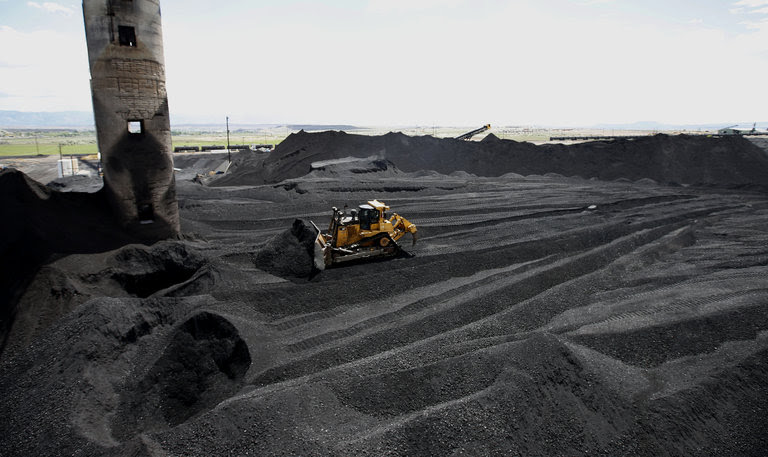
A bulldozer moving coal at a processing facility in Price, Utah. President Trump campaigned with a promise to “cancel” the Paris agreement, which binds countries to combat global warming. CreditGeorge Frey/Bloomberg

WASHINGTON — The White House is fiercely divided over President Trump’s campaign promise to “cancel” the Paris agreement, the 2015 accord that binds nearly every country to curb global warming, with more moderate voices maintaining that he should stick with the agreement despite his campaign pledge.

Stephen K. Bannon, Mr. Trump’s senior adviser, is pressing the president to officially pull the United States from the landmark accord, according to energy and government officials with knowledge of the debate. But, they say, he is clashing with Secretary of State Rex Tillerson and the president’s daughter Ivanka Trump, who fear the move could have broad and damaging diplomatic ramifications.

Mr. Trump vowed on the campaign trail to tear up President Barack Obama’s global warming policies, and on the home front he is moving aggressively to meet those pledges with deep cuts to the Environmental Protection Agency and a new E.P.A. administrator, Scott Pruitt, who is a skeptic of climate science.

Next week, Mr. Trump plans to sign an executive order directing Mr. Pruitt to start the lengthy legal process of unwinding Mr. Obama’s E.P.A. regulations for cutting greenhouse pollution from coal-fired power plants. Those regulations are the linchpin of the last administration’s program to meet the nation’s obligations to reduce climate emissions under the Paris agreement.Continue reading the main story

While the president cannot, as Mr. Trump suggested, unilaterally undo a 194-nation accord that has already been legally ratified, he could initiate the four-year process to withdraw the world’s largest economy and second-largest climate polluter from the first worldwide deal to tackle global warming. Such a move would rend a global deal that has been hailed as historic, throwing into question the fate of global climate policy and, diplomats say, the credibility of the United States.

But it would also demonstrate to his supporters that Mr. Trump is a man of his word, putting American coal interests ahead of a global deal forged by Mr. Obama.

On one side of that debate is Mr. Bannon, who as a former chief executive of Breitbart News published countless articles denouncing climate change as a hoax, and who has vowed to push Mr. Trump to transform all his major campaign promises into policy actions.Photo

Secretary of State Rex Tillerson, center, is worried about the fallout if the United States withdraws from the accord. CreditAl Drago/The New York Times

On the other side are Ms. Trump, Mr. Tillerson, and a slew of foreign policy advisers and career diplomats who argue that the fallout of withdrawing from the accord could be severe, undercutting the United States’ credibility on other foreign policy issues and damaging relations with key allies.

Although Ms. Trump has not spoken out publicly for action to combat climate change, proponents and opponents of such action see her as an ally. Former Vice President Al Gore met with her during the Trump transition, and was ushered in by the “first daughter” to see the president-elect. The actor and activist Leonardo DiCaprio even slipped her a DVD copy of his climate-change documentary.

“President Trump Must Not Wobble on Climate Change — No Matter What Ivanka Says …,” blared a Breitbart post on Monday written by James Delingpole, who is close to Mr. Bannon and who leads the website’s coverage of climate-change policy.

Mr. Trump wants to make a decision by next week, say people familiar with the White House’s debate on the climate pact, in order to announce his executive order to undo Mr. Obama’s climate regulations in conjunction with his plans for the Paris deal.

According to leaked budget documents, the president will also propose killing off nearly two dozen E.P.A. programs, including the Obama-era Clean Power Program, climate partnership programs with local governments, Energy Star grants to encourage efficiency research in consumer products and climate-change research. Those would be part of a broader budget submission that would cut the E.P.A.’s funding by 25 percent, to around $6.1 billion from $8.2 billion, and its staff by 20 percent.

“If the goal is to fulfill the president’s campaign promises and implement his agenda, there is no value in staying in Paris,” said Thomas J. Pyle, an adviser to the Trump transition and the president of the Institute for Energy Research, an organization partly funded by the billionaire brothers Charles G. and David H. Koch, who have worked for years to undermine climate-change policies.

Mr. Trump has cited Mr. Pyle’s group as being influential in shaping his energy and climate proposals, including his campaign pledge to withdraw from the Paris deal.

Get the Morning Briefing by Email

What you need to know to start your day, delivered to your inbox Monday through Friday.

Sign Up

Receive occasional updates and special offers for The New York Times's products and services.


SEE SAMPLE
PRIVACY POLICY

“The two greatest obstacles to a Clexit (climate exit from U.N. Paris agreement) are probably Ivanka and Tillerson,” wrote Marc Morano, a former Republican Senate staff member who now runs Climate Depot, a fossil-fuel-industry-funded website that promotes the denial of climate science, in an email. “Tillerson with his ‘seat at the table’ views could be biggest proponent of not withdrawing the U.S. from the agreement.”

Mr. Tillerson is a former chief executive of Exxon Mobil, which, like many major global corporations, endorsed the Paris agreement. While his former company once denied human-caused climate change, it has more recently publicly acknowledged the threat posed by burning oil and supported proposals to tax carbon dioxide pollution.

Asked during his Senate confirmation hearing about the Paris accord, Mr. Tillerson said, “It’s important that the U.S. maintains its seat at the table about how to address the threat of climate change, which does require a global response.”

Under the Paris agreement, every nation has formally submitted plans detailing how it expects to lower its planet-warming pollution. The Obama administration pledged that the United States would reduce its carbon pollution about 26 percent from 2005 levels by 2025. However, that pledge depends on enactment of Mr. Obama’s E.P.A. regulations on coal-fired power plants, which Mr. Trump and Mr. Pruitt intend to substantially weaken or eliminate.

But under the Paris deal, those numerical targets are not legally binding, and there are no sanctions for failing to meet them. The only legal requirements of the deal are that countries publicly put forth their emissions reductions targets, and later put forth reports verifying how they are meeting the targets. It would be possible for the Trump administration to stay in the deal and submit a less ambitious target.

Even senior Republican voices in the foreign policy debate have said it may be wiser to stay in but keep a low profile.

“There’s really no obligation,” Senator Bob Corker, Republican of Tennessee and chairman of the Foreign Relations Committee, said in an interview. “It doesn’t require us to do anything. I think they may take a little time to assess whether pulling out makes sense now.”Photo

Scott Pruitt, the new E.P.A. administrator, made a career on suing the agency he now leads to eliminate regulations. CreditStephen Crowley/The New York Times

Foreign policy experts say withdrawing from Paris would have far greater diplomatic consequences than President George W. Bush’s withdrawal from the world’s first global climate-change accord, the 1997 Kyoto Protocol.

“I think it would be a major mistake, even a historic mistake, to disavow the Paris deal,” said R. Nicholas Burns, a retired career diplomat and under secretary of state under Mr. Bush.

“In international politics, trust, reliability and keeping your commitments — that’s a big part of how other countries view our country,” Mr. Burns said. “I can’t think of an issue, except perhaps NATO, where if the U.S. simply walks away, it would have such a major negative impact on how we are seen.”

The Paris deal is more consequential than Kyoto. Unlike that pact, which required action only from developed economies, the Paris agreement includes commitments from every nation, rich and poor, to cut emissions, including China and India, the world’s largest and third-largest polluters. Also, the science of climate change has become far more certain and the impact more visible in the 20 years since Kyoto. Each of the last three years has surpassed the previous one as the hottest on record.

Some of the United States’ closest allies are urging the Trump administration not to pull out. In a letter to Mr. Trump after he won the election, Chancellor Angela Merkel of Germany wrote, “Partnership with the United States is and will remain a keystone of German foreign policy, especially so that we can tackle the great challenges of our time.” They include, she wrote, “working to develop farsighted climate policy.”

As Mr. Trump and his advisers weigh their Paris options, one proposal is gaining traction, according to participants in the debate: Mr. Trump could declare that the Paris agreement is a treaty that requires ratification by the Senate. The pact was designed not to have the legal force of a treaty specifically so that it would not have to go before the United States Senate, which would have assuredly failed to ratify it.

“If there are camps forming in the White House, then let the people decide, the elected representatives,” Mr. Pyle said. “Let’s put the question to them.”

Proponents of that idea say it could shift some of the weight of the decision from Mr. Trump to Senator Mitch McConnell of Kentucky, the majority leader, at least in the eyes of some foreign diplomats, and of the president’s daughter.

Thursday, March 2, 2017

@realDonaldTrump Versus the European Union #RIPPAxAmericana ? or revived #PaxAmericana like never seen before without the $ cost

Image result for Donald Trump RIP Pax Americana cartoon

Members of the European political and media establishment seemed to be sure that the 45th president of the United States would be Hillary Clinton, or at least they were desperately hoping so. The days after the election one could hear clamor of indignation from top journalists and politicians alike. It almost felt as if the European project had lost shoulder to shoulder with Clinton, now that America, Europe’s most powerful ally, would be ruled by an “inhuman right-wing populist,” an outspoken critic of the European Union, and a sympathizer of the UK Independence Party. And after all he says “America first.” For the European establishment, this is an outrageous position to hold for an American president.
General secretary of the ruling Socialist Party in France, Jean-Christophe Cambadélis, has compared Trump to the Front National’s top candidate Marine Le Pen and noted that the French Left knew full well about the challenges ahead. French prime minister Manuel Valls emphasized that Europe needs to close its ranks, take responsibility and respond to the events on the other side of the Atlantic Ocean, adding that he does not believe in “the triumph of simplicity and demagoguery.”
German minister of foreign affairs Frank-Walter Steinmeier who called Trump a “preacher of hate” during the election campaign stated shortly after the outcome was certain that “American foreign policy will now become less predictable,” but that Germany “should not sit mesmerized like the rabbits before the snake.” Germany “should remain self-confident and needs to preserve its culture of public and political discourse.” But who knows to what kind of cultivated discourse he was actually referring?
Indeed, Donald Trump was compared to Adolf Hitler in German television news at one point in his campaign when he had already far exceeded the expectations of most pundits. But, hardly anyone could imagine him becoming the next US president. On the very evening of November 9 when the unthinkable was taking shape, the consortium of public broadcasters in Germany (ARD) presented a survey according to which only 4 percent of the German electorate would have voted for Trump. One wonders whether this representative survey was conducted exclusively among the employees of the consortium.
When the Austrian presidential candidate and populist Norbert Hofer lost to Alexander Van der Bellen in early December, the EU establishment had its first moment of relief since the Brexit vote in the United Kingdom last June. “Hofer has hoped for the Trump effect in vain” ARD’s news anchor declared somewhat triumphantly at the evening of the election.
However, at the same time the Italian people voted against President Matteo Renzi’s proposal to change the Italian constitution, which led to his resignation and potentially a chance for the Eurosceptic Five Star Movement around comedian Beppe Grillo to form the new national government after early elections. This means that the three largest countries of the Eurozone and the EU (UK excluded), Germany, France and Italy, will hold national elections within the next year. The Italian daily La Stampa wrote that the referendum “tells the same story as Brexit and Trump.”
Hence, it is pretty obvious that almost all political events and ongoing developments in Europe are now interpreted in light of Trump’s victory. There is no question that Trump already has had an impact on European politics regarding strategy and rhetoric.
Looming Economic Realities in Europe
The most important issues, after the currency and debt crisis has mysteriously vanished from the scene for a time, is immigration, the stabilization of the Middle East, and how to react to millions of people coming into Europe.
Trump has such a significance for the political regime of the EU, among other things, because he was elected while openly advocating positions not expected to be capable of winning a majority, either in the US, and most certainly not in Europe. It runs completely against the position that the US government under Bush and Obama has taken, that Clinton sought to continue, and that the political leadership of the EU still wholeheartedly advocates and that is embedded in a broader political program. It is a program that mainstream media is vigorously promoting by emphasizing the benefits of open borders, diversity and multiculturalism, the importance of humanitarian assistance, as well as an official responsibility of the West to improve living conditions in the developing nations of Africa and Asia. That the latter so regularly turns into the very opposite in the form of aggressive military interventions is deliberately hushed up. Trump’s anti-interventionist positions in foreign policy have, against all odds, successfully challenged the globalist line of approach.
After an initial period in which Trump and his supporters were arrogantly ridiculed, a good dose of European superiority complex, vis-à-vis the US, was breaking through, and the general tenor has changed. In an act of self-defense, European political and media elites have desperately tried to make a bogeyman out of Trump and the movement behind him as they saw the broader implications it might have.
Trump was admittedly courting some of the slogans used against him, but most of them are just hysterical exaggerations or allegations. And, while the European establishment claims a position on the moral high-ground, even the most promising aspect of Trump’s advocated isolationism from a humanitarian viewpoint — withdrawal from foreign military interventions — is turned against him. It is argued that Trump will abandon Europe and that European countries will have to substantially increase their own military budgets in the future.
The fact that the aggressive foreign policy of the West under the leadership of the US over the past decades has triggered the destabilization of the Middle East and Northern Africa in the first place, and hence reinforced the immigration crisis that Europe is facing right now, is not critically highlighted at all.
Trump Will Be an Excuse for More Centralization
The EU establishment has obviously itself contributed to the problems it now tries to exploit in order to further centralize the political power structure of Europe. Trump will serve as a scapegoat that left Europe alone in the midst of an international conflict and humanitarian crisis. This narrative was spread before Trump had been in office for a single day, and it will be used as a justification for more intrusive EU policies if the peoples of Europe let it happen. However, chances are that the national governments all over Europe will face ever stronger opposition in the near future, if they are not directly replaced. Unfortunately, these opposition movements are not pushing in the right direction in every respect. But, all our problems will not be solved with next round of national elections anyway. They are much more fundamental and ideological. They are of a long-term nature.