Showing posts with label US Elections. Show all posts

Tuesday, January 24, 2017

#OyVeyDonaldTrump reapeats Repeats Lie About Popular Vote in Meeting With Lawmakers

Image result for Cartoon Trump  Popular Vote


President Trump met with leaders of Congress from both parties on Monday at the White House.CreditDoug Mills/The New York Times

President Trump used his first official meeting with congressional leaders on Monday to falsely claim that millions of unauthorized immigrants had robbed him of a popular vote majority, a return to his obsession with the election’s results even as he seeks support for his legislative agenda.

The claim, which he has made before on Twitter, has been judged untrue by numerous fact-checkers. The new president’s willingness to bring it up at a White House reception in the State Dining Room is an indication that he continues to dwell on the implications of his popular vote loss even after assuming power.

Mr. Trump appears to remain concerned that the public will view his victory — and his entire presidency — as illegitimate if he does not repeatedly challenge the idea that Americans were deeply divided about sending him to the White House to succeed President Barack Obama.

Mr. Trump received 304 electoral votes to capture the White House, but he fell almost three million votes short of Hillary Clinton in the popular vote. That reality appears to have bothered him since Election Day, prompting him to repeatedly complain that adversaries were trying to undermine him.


Moving into the White House appears not to have tempered that anxiety. Several people familiar with the closed-door meeting Monday night, who asked to remain anonymous in discussing a private conversation, said Mr. Trump used the opportunity to brag about his victory.

As part of that conversation, Mr. Trump asserted that between three million and five million unauthorized immigrants voted for Mrs. Clinton. That is similar to a Twitter message he posted in late November that said he would have won the popular vote “if you deduct the millions of people who voted illegally.”

Voting officials across the country have said there is virtually no evidence of people voting illegally, and certainly not millions of them. White House officials did not respond to requests for a comment on Mr. Trump’s discussion of the issue.

Representative Steny H. Hoyer, Democrat of Maryland, who attended the meeting, said that Mr. Trump also talked about the size of the crowd for his Inaugural Address.

“It was a huge crowd, a magnificent crowd. I haven’t seen such a crowd as big as this,” Mr. Hoyer told CNN, quoting Mr. Trump. He added that Mr. Trump did not “spend a lot of time on that, but it was clear that it was still on his mind.”

The president’s comments about the election results and his inauguration came as he gathered the bipartisan leadership of Congress for a White House reception. He also sought to build support for an ambitious legislative agenda, despite days earlier castigating the very institution he needs to approve it.

Mr. Trump has said he intends to press Congress to move quickly to repeal and replace Mr. Obama’s health care law, pass a large investment in the nation’s infrastructure, make changes to the country’s immigration laws and overhaul the tax system.

Senator John Cornyn, Republican of Texas, called the meeting a “good sort of get-to-know-you session” and noted that “relationships count for a lot in this business.”

Mr. Cornyn said he thought such sessions would be more frequent while Mr. Trump is in office than they were during Mr. Obama’s tenure. Mr. Obama famously disliked socializing with members of Congress.

Referring to Democrats, Mr. Cornyn said, “They said they’d never been over to the White House for anything like this before.”

Representative Nancy Pelosi of California, the Democratic leader, said it was an “interesting” meeting. Along with health care and infrastructure, she said they discussed China and currency manipulation, as well as issues involving intellectual property rights, which she said were a point of agreement.

“We talked about the Affordable Care Act and said what the Affordable Care Act has been successful in doing is improving quality, expanding access and lowering costs,” she told reporters. “And any proposal that they might have that does that, we’d be interested in hearing about.”

Even with Republicans in control of Congress, Mr. Trump will have to build relationships in a city that he spent more time mocking than praising during his campaign.

In his Inaugural Address, the president criticized the political establishment, saying the people assembled behind him — including the leaders he met with on Monday — had “reaped the rewards of government while the people have borne the cost.”

White House officials said the meeting was designed to press the lawmakers on the need to move quickly.

The reception included, among others, House Speaker Paul D. Ryan of Wisconsin and Senator Mitch McConnell of Kentucky, the majority leader, as well as Ms. Pelosi and Senator Chuck Schumer of New York.

“The American people are frustrated with the lack of progress here in Washington, and the president wants no delay in addressing our most pressing issues,” said Sean Spicer, the White House press secretary. “He’s taking every opportunity to forge strong bonds with congressional leaders on both sides of the aisle.”

As the group sat around a dining room table for photographs, Mr. Trump described his interactions with lawmakers.

A “beautiful, beautiful relationship,” Mr. Trump told reporters.

That has not always been the case. Before Mr. Trump secured the Republican nomination, Mr. Ryan pointedly declined to endorse him. At one point, Mr. Ryan said he was “not ready” to back Mr. Trump after his remarks about women and Hispanics and because of his divergence from Republican orthodoxy.

That relationship slowly improved after Mr. Trump became the party’s nominee and later won the election to become the 45th president. Monday’s reception, officials said, was another step in that process.


Saturday, November 19, 2016

#RIPUSA Every Vote Will Not Be Counted


The naïve view of democracy has long held that "every vote counts," and that close elections can be decided by "counting every vote" and by inferring the "will of the people" from an election result where the winner's vote tally beats the loser's vote tally by as few as a single vote.
In practice, however, no large-scale election has ever involved counting every vote. In real life, there are numerous obstacles to counting every vote including spoiled ballots, questionable ballots, human error, provisional ballots, and a myriad of other votes that exist in a gray area. 
The US presidential election of 2000 offers an instructional example in how votes are really counted. 

The 2000 Election: Not All Ballots Are Created Equal 

On election night 2000, the presidential election came down to close elections in three states: Oregon, New Mexico, and Florida. But, by the next day, it became clear that whoever won Florida would win the presidency. 
The close margin of votes in Florida (the initial spread amounted to fewer than 1,800 votes out of nearly six million votes cast in Florida). By November 12, officials in several Florida counties were hand counting hundreds of thousands of ballots. By November 13, both campaigns are involved in a variety of legal actions seeking to bar recounts or allow recounts, or challenge the legal claims of the opposing campaign. 
In late November, the Florida election had largely become a matter of obtaining legal rulings determining which votes would be counted, and from where. Legal disputes over what votes to count involved a wide variety of minuscule details including the question of whether or not to count overseas ballots that lacked a postmark as required by Florida law. A judge rules they can be counted. 
Over time, the Bush campaign concluded it wanted to prevent a manual recount in Florida and entered into a legal battle to stop the recount. After a number of conflicting court rulings, the US Supreme Court overturned the pro-recount position of the Florida Supreme Court and effectively declared Bush the winner. 
Although a winner was indeed eventually chosen, the election was, for all intents and purposes, a tie. 
Both Bush and Gore received approximately 48 percent of the votes cast, and — since many recounts never occurred — there has never been any clear resolution to the question of who really won the most votes in Florida. 
The fact that a winner was chosen to the satisfaction of the legal and political authorities is not in dispute. But, the Supreme Court's arbitrary selection of some votes over others reminds us that in terms of the supposed moral authority of majoritarian rule that undergirds American democracy, no actual winner was ever demonstrated, and elections to do not come down to a simple matter of counting votes.   
Fortunately for the United States government, US residents at the time were willing to peacefully accept this outcome, and were willing to have the president chosen by the federal courts. This blasé attitude toward the election was no doubt helped along by the unusually strong economy enjoyed by many Americans in the late 1990s. Whether or not Americans would so willingly accept a similar situation today remains unclear. 

Wednesday, November 16, 2016

#RIPUSAThe forces that drove this election’s media failure are likely to get worse.#AmericaHangsItsHeadInShame,#ImpeachHimNow


Image result for Fake News reports


Segregated social universes, an industry moving from red states to the coasts, and mass media’s revenue decline: The disconnect between two realities shows no sign of abating.

One way to think of the job journalism does is telling a community about itself, and on those terms the American media failed spectacularly this election cycle. That Donald Trump’s victory came as such a surprise — a systemic shock, really — to both journalists and so many who read or watch them is a marker of just how bad a job we did. American political discourse in 2016 seemed to be running on two self-contained, never-overlapping sets of information. It took the Venn diagram finally meeting at the ballot box to make it clear how separate the two solitudes really are.

The troubling morning-after realization is that the structures of today’s media ecosystem encourage that separation, and do so a little bit more each day. The decline of the mass media’s business models; the continued rise of personalized social feeds and the content that spreads easily within them; the hollowing-out of reporting jobs away from the coasts: These are, like the expansion of the universe, pushing us farther apart in all directions.

There’s plenty of blame to go around, but the list of actors has to start with Facebook. And for all its wonders — reaching nearly 2 billion people each month, driving more traffic and attention to news than anything else on earth — it’s also become a single point of failure for civic information. Our democracy has a lot of problems, but there are few things that could impact it for the better more than Facebook starting to care — really care — about the truthfulness of the news that its users share and take in.

As BuzzFeed’s Craig Silverman has documented repeatedly — and as anyone who has spent much time on their relatives’ profile pages can probably attest — Facebook has become a sewer of misinformation. Some of it is driven by ideology, but a lot is driven purely by the economic incentive structure Facebook has created: The fake stuff, when it connects with a Facebook user’s preconceived notions or sense of identity, spreads like wildfire. (And it’s a lot cheaper to make than real news.)

One example: I’m from a small town in south Louisiana. The day before the election, I looked at the Facebook page of the current mayor. Among the items he posted there in the final 48 hours of the campaign: Hillary Clinton Calling for Civil War If Trump Is Elected. Pope Francis Shocks World, Endorses Donald Trump for President. Barack Obama Admits He Was Born in Kenya. FBI Agent Who Was Suspected Of Leaking Hillary’s Corruption Is Dead.

These are not legit anti-Hillary stories. (There were plenty of those, to be sure, both on his page and in this election cycle.) These are imaginary, made up, frauds. And yet Facebook has built a platform for the active dispersal of these lies — in part because these lies travel really, really well. (The pope’s “endorsement” has over 868,000 Facebook shares. The Snopes piece noting the story is fake has but 33,000.)

In a column just before the election, The New York Times’ Jim Rutenberg argued that “the cure for fake journalism is an overwhelming dose of good journalism.” I wish that were true, but I think the evidence shows that it’s not. There was an enormous amount of good journalism done on Trump and this entire election cycle, from both old-line giants like the Times and The Washington Post and digital natives like BuzzFeed and The Daily Beast. (There were plenty of good broadcast reporters on the beat as well, though what appeared on air left a lot to be desired.) For anyone who wanted to take it in, the pickings were rich.

The problem is that not enough people sought it out. And of those who did, not enough of them trusted it to inform their political decisions. And even for many of those, the good journalism was crowded out by the fragmentary glimpses of nonsense.

I used to be something of a skeptic when it came to claims of “filter bubbles” — the sort of epistemic closure that comes from only seeing material you agree with on social platforms. People tend to click links that align with their existing opinions, sure — but isn’t that just an online analog to the fact that our friends and family tend to share our opinions in the real world too? I ate up studies(from Facebook and others) that argued the site actually encouraged a certain kind of information diversity, because your Facebook friends are likely drawn from a wider group of people (the guy you went to middle school with, your mom’s neighbor, that rando you met that weekend at the beach) than the people you discuss news with in real life.

But I’ve come to think that the rise of fake news — and of the cheap-to-run, ideologically driven aggregator sites that are only a few steps up from fake — has weaponized those filter bubbles. There were just too many people voting in this election because they were infuriated by made-up things they read online.

(Speaking of filter bubbles: Even now, right after the election, my Facebook News Feed is filled with sad posts from my liberal friends from college or media. There are also happy posts from my relatives and friends in the South — but I have to hunt those out because Facebook’s algorithm isn’t putting them in my feed.)

What can Facebook do to fix this problem? There are ideas out there, many of them problematic in their own ways. One simple one would be to hire editors to manage what shows up in its Trending section — one major way misinformation gets spread. Facebook canned its Trending editors after it got pushback from conservatives; that was an act of cowardice, and since then, fake news stories have been algorithmically pushed out to millions with alarming frequency.

Another idea would be to hire a team of journalists and charge them with separating at least the worst of the fake news from the stream. Not the polemics (from either side) that sometimes twist facts like balloon animals — I’m talking about the outright fakery. Stories known to be false could be downweighted in Facebook’s algorithm, and users trying to share them could get a notice telling them that the story is fake. Sites that publish too much fraudulent material could be downweighted further or kicked out entirely.

Would this or other ideas raise freedom of speech or other thorny issues? Sure. This would be easy to screw up — which is I’m sure why Facebook threw up its hands at the pushback to a human-edited Trending section and why it positions itself a neutral connector of its users to content it thinks they will find pleasing. I don’t know what the right solution would be — but I know that getting Mark Zuckerberg to care about the problem is absolutely key to the health of our information ecosystem.

Here are a few other questions about the American media’s future that this election cycle raised for me.

One thread running through the countless profiles of Trump voters this cycle was the loss of community institutions. The factories shut down; the church pews were emptier than they used to be; the braided fabric of their towns had unraveled. Don’t forget that, particularly in smaller communities, the local newspaper was one of those key institutions — the daily or weekly package of stories that connected you to your neighbors.

Everyone knows that the business struggles of newspapers have stripped those institutions bare. But those struggles have not been evenly dispersed. As I’ve written about before, the shift from print to digital has concentrated the news business more than ever in New York, Washington, and a few other cities with oceanfront views. Of all the messages embedded in Trump’s rise, few are clearer than his voters’ belief that coastal elites are not serving their interests

The rate of newspapers’ decline seems to be accelerating, not slowing, and the news potential of a Trump presidency will no doubt continue the shift in interest from local to national news. What sort of news organizations can become a new kind of community backbone? There are some local news sites that play that role, but they’re also unevenly distributed — more common in college towns and well-off suburbs than in Trump country — and still small. Will the surviving national outlets think it worth their while to disperse their journalists over a larger geographic area? Will someone like Jeff Bezos — with a solid anchor at the Post, business relationships with hundreds of newspapersthrough subscription swaps, and a keen interest in local retail and delivery from his day job at Amazon — see an opportunity to build locally?

A split country, a split media

Will a Trump presidency push some top news organizations in the direction of a more Guardian-style openness about a liberal perspective? Just as 20th-century norms around newspaper objectivity were in part a response to business conditions — the desire to create mass local audiences — will the increased clarity about the divides in this country encourage a more targeted product for affluent, coastal, progressive audiences? And will reporters and editors at these outlets — who, it is fair to assume, did not vote for Trump in large numbers — begin to see themselves are more explicitly oppositional?

Times executive editor Dean Baquet said last month that a Trump candidacy had given the paper “courage, if you will. I think he made us — forced us, because he does it so often, to get comfortable with saying something is false.” Will a Trump presidency push that further?

A related question: What happens to the millennial-driven sites (BuzzFeed, Mic, Fusion, et al.) who have built their content strategies, to varying degrees, around embracing what they see as the progressive views of their target audience? Do they double-down on identity-driven stories embracing the values of diversity and multiculturalism? Or — at a time when many are under their own revenue strains and chasing scale — do any of them see a market opportunity in the Trump voter?

How does the market for explanatory and data journalism respond to the fact that a year and a half of explanations have been shown to be wrong? On election morning, The Huffington Post told its readers Clinton had a 98 percent chance of being elected; the Times put it at 85 percent. And let’s not forget all the Here’s-why-Trump-can’t-possibly-win explainers.

Before poll-aggregation models, social media, and podcasts, a reporter’s confidence about an election outcome was probably known mostly to the people he had a beer with after work. This time, though, the confidence (or arrogance) was visible for all to see. As MSNBC’s Steve Kornacki pointed out, Media Twitter seemed to reflexively view every Trump move as dumb on its face: “There was almost a social pressure to go with the ‘Oh my god, this makes no sense!’ interpretation instead of trying to understand what the logic might be…overwhelmingly, the media reaction was: snark.”

Any journalist critical of the Facebook filter bubble they saw Trump voters caught in needs to look closely at the Twitter filter bubble where they spend a lot of their work day.

It’s been said that we get the media we deserve: that the journalism we see is a reflection of business structures and audience decisions, not the result of an elite’s decisions to shape public opinion. There’s a lot of truth to that. But the information we produce and consume is generated by human beings, not systems, and those human beings have just gotten the shock of their professional lives. If we’re going to build a better environment for news, we need to think about these issues in a much bigger context than one election night. And it’ll take everyone — journalists, readers, tech companies, and more — to make it happen.

Wednesday, November 9, 2016

#RIPUSA #AmericaHangsItsHeadInShame Donald Trump Suckered America and the World He defied the odds to become the 45th President of the United States

Image result for American Flags at half mast over white house

The polls said it wouldn’t happen this way. The forecasts said it wouldn’t happen this way. Even the betting markets said it wouldn’t happen this way.

But on Tuesday, Nov. 8, 2016, Americans elected Donald Trump the 45th President of the United States.

Sure, there was always a chance. The British voted to leave the European Union when so few expected them to do so. Why couldn’t the same thing happen in America? That thought lingered in the back of many a mind as Election Day neared and polls tightened. Every previous prediction of Trump’s political demise had proven premature. But he had insulted so many people—blacks, Hispanics, women, the disabled, his own party’s leaders, just to name a few. He had broken so many political norms—not releasing his tax returns, threatening to jail his opponent, lying at a rate never seen in modern politics. So no one, Republican, Democrat or any other stripe, saw a tsunami of this size coming. Only hours before Trump officially vanquished Democratic rival Hillary Clinton, one prominent Republican commentator was writing a political obituary for his party’s nominee.

Establishment consensus, meet thy antidote: President-elect Donald Trump.

“Now it’s time for America to bind the wounds of division,” Trump, sounding quite a different tone than the man who had opened so many of those wounds over the last 18 months, told ecstatic supporters in his victory speech. “It is time for us to come together as one united people. It’s time.”

It will take days, weeks and perhaps years for Americans and their leaders to fully understand what happened on Election Day 2016. It will take longer for the country and the world to grapple with whatever happens next. Financial markets were tanking even as the prospects of a Trump victory increased, and even as world leaders tersely congratulated him, they were surely bracing themselves to deal with a man who has pledged to reconsider decades-old international alliances and trade pacts.

But one thing should be immediately clear: Donald Trump’s triumph on the Electoral College map was overwhelming. He won perennial swing states like Florida and Ohio. He won Pennsylvania, a state that has attracted the attention of so many Republican presidential candidates over the course of decades only to inevitably vote for their Democratic opponents. He won Wisconsin, a left-leaning state that was supposedly a safe piece of Clinton’s firewall.

Even the whizzes who elected Barack Obama as President conceded they had it all wrong. “Never been as wrong on anything [in] my life,” David Plouffe, the architect of Obama’s 2008 campaign, said on Twitter as the reality began to set in.

If exit polls are to be believed, Clinton lost because her campaign made a fatal miscalculation: That the American electorate was growing so much more diverse, so fast, that it couldn’t possibly fare worse with working-class white voters than the country’s first black president had in 2012. The electoral coalition was easy to imagine.

But it proved imaginary precisely because those working-class whites—who for decades have been slowly but surely drifting away from a coastal Democratic Party elite they view as economically and culturally out of touch with their needs—found his populist, protectionist rhetoric spoke directly to them.

Vast areas of the country that had previously voted for Obama, from northeast Pennsylvania to eastern Ohio, from rural Iowa to Wisconsin and Michigan, swung solidly into Donald Trump’s column. Hispanic turnout measurably increased. But neither that nor Clinton’s wide advantage with women was enough to offset polling models that The New York Times estimates undercounted older working-class voters in the electorate by about 10 million.

Trump’s margin in the popular vote was far smaller than his Electoral College romp. As dawn broke on the East Coast, he only led by a couple hundred thousand votes, and votes from West Coast states still uncounted held open the prospect that Clinton might actually win the popular vote — surely a painful dose of déjà vu for Democrats after the 2000 election.

Whether the country can realistically heal its deep political divisions now remains to be seen. Republicans maintained control of the Senate and limited their losses in the House, giving Trump at least a nominally friendly Congress when he takes the oath of office on Jan. 20. The first order of business? Undoing the major achievements of the Obama administration — or so he has promised.

He struck a conciliatory note toward a rival who only weeks earlier he had threatened, to her face, to imprison if he were elected. “Hillary has worked very long and very hard over a long period of time,” Trump said, “and we owe her a major debt of gratitude for her service to our country.”

Clinton, for her part, conceded to Trump in a phone call but did not address her supporters. Her campaign chairman sent them home before the race was called.

Tuesday, November 8, 2016

Trump’s White House Would Be Filled With Crooks Who’ve Done All the Stuff He Claims to Be Against


Steve Bannon, Newt Gingrich, Chris Christie, Rudy Giuliani, and Melania Trump.
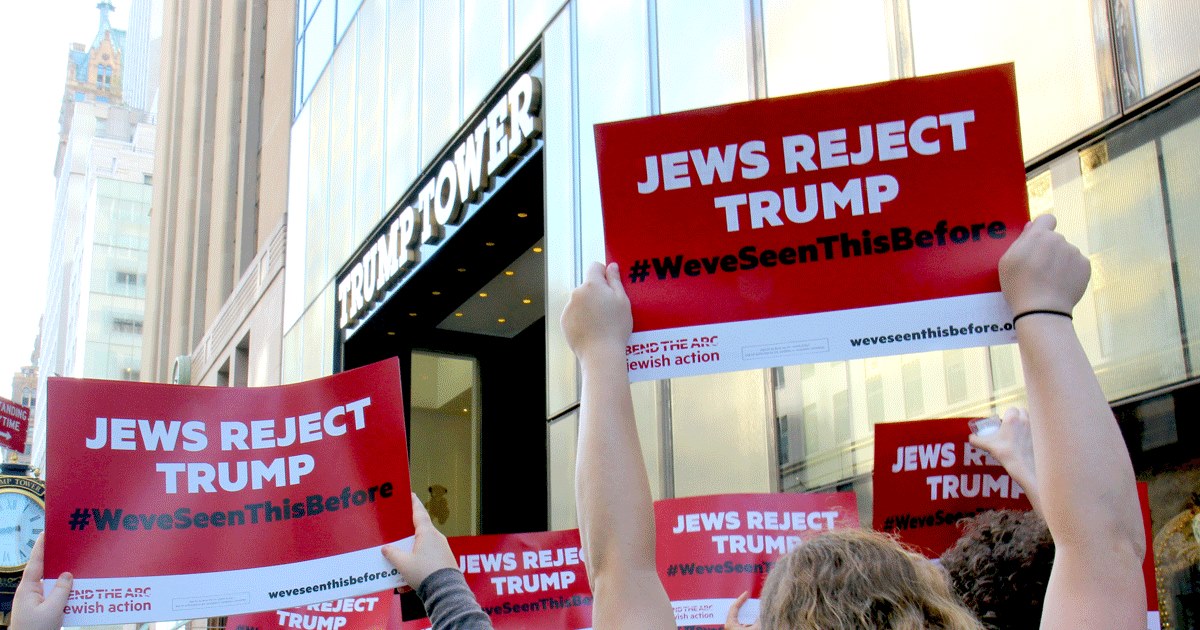
Photo illustration by Slate. Photos by Getty Images, Thinkstock.

Those of us who Remember the '90s™ all had a good laugh this morning when NBC reported some potential Trump Cabinet picks:

Trump transition eyeing Rudy as AG, Newt as Sec of State, Reince as possible chief of staff 
http://www.nbcnews.com/storyline/2016-election-day/gingrich-giuliani-priebus-eyed-top-jobs-trump-white-house-sources-n678881 …
2:19 PM - 7 Nov 2016


Gingrich and Giuliani could get top jobs in a Trump White House: sources

Donald Trump's cabinet-in-waiting is taking shape. However, campaign insiders said no decisions have been made or positions finalized.nbcnews.com


Newt Gingrich as secretary of state! It's a highly ironic choice that's emblematic of Trump's entire campaign, which has basically been an 18-month-long complaint about the kinds of political and business sleaze that Trump and his closest associates have been engaging in for years.

Let's review some of the major themes of Trump's campaign rhetoric:

Immigration fraud is a big problem, he says.

Voter fraud is a big problem, he says.

"Global elites" who make money at the expense of American workers are a big problem, he says.

Corruption is a big problem, he says—particularly the corruption that Hillary Clinton allegedly engaged in while secretary of state.

And let's review the connections that various potential members of a Trump White House/Trump administration, including Gingrich, have to those issues.

Immigration fraud. Trump's potential first lady, Melania, appears to have committed immigration fraud by working without a visa in 1996.

Voter fraud. Trump's campaign chairman Steve Bannon appears to have committed voter fraud by registering to vote at an unoccupied house in Florida.

Global elites. Trump's daughter and top adviser Ivanka Trump runs a lifestyle brand whose products are mostly made overseas. (FWIW, the Trumps have given conflicting statements about whether Ivanka would be involved in her father's administration.) Trump himself, of course, is an outsourcing-happy crony capitalist who's made various windfalls throughout his life by ripping off American taxpayers, small businesses, and working-class customers.

Corruption. Newt Gingrich was the first speaker of the House in the history of the U.S. to be reprimanded for ethical violations. (Namely misusing tax-exempt funds for political purposes and lying to investigators.) According to both prosecution and defense attorneys involved in a recent trial, Chris Christie—who is in charge of Trump's White House transition team—was complicit in a New Jersey public-corruption scheme for which two of his former aides were just convicted of felonies. And Rudy Giuliani, Trump's potential attorney general, has bragged publicly in recent months about getting details of internal FBI deliberations from active agents—which would be a violation of those agents' code of conduct.

As it happens, Giuliani has a long association with Bernard Kerik, the former NYPD commissioner and would-be secretary of homeland security who went to jail in 2010 for a variety of public-corruption crimes. Kerik, who is no longer in the slammer, complained Sunday night on Twitter that James Comey was too quick to clear Hillary Clinton in her email case. Bernard Kerik for FBI director?

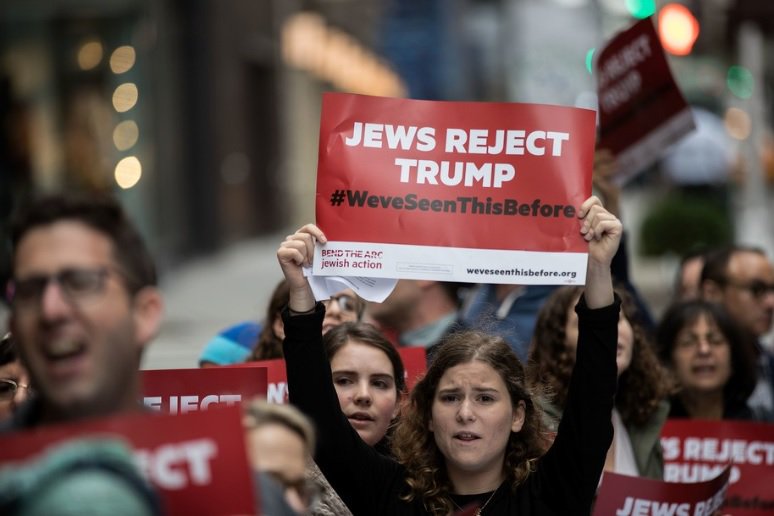
Anti-Semitism Unleashed by Trump Followers Chills Jewish Voters Even for a community grown used to the political fray, the 2016 campaign has been different. Pieties? Out. Passports? In. Paranoia? On its way.


Anti-Semitism Unleashed by Trump Followers Chills Jewish Voters
Even for a community grown used to the political fray, the 2016 campaign has been different. Pieties? Out. Passports? In. Paranoia? On its way.

Jewish Americans have never been ones to sit out an election, whether it comes to voting, political fundraising or dinner table punditry. But even for a community grown used to the political fray, the 2016 campaign was different.

The stakes are so high, the differences so stark, the language so overwrought that Trump vs. Clinton seems to overwhelm everything else.


But there is also a specific Jewish component to this election that some voters are sensing, one that has them reassessing their view of what it is to be Jewish in America.

Rabbi Daniel Bogard, 33, of Cincinnati, said he had never personally encountered anti-Semitism until this election cycle. He has now been called a Christ killer twice on social media – once each from the right and the left, when he was defending Israel.

“There’s been permission that’s been given to say these things we didn’t used to say,” said Bogard, who with his wife, Rabbi Karen Kriger Bogard, was installed recently as an associate rabbi at Adath Israel, a Conservative synagogue.

That has led him to radically alter a view he once held that the established Jewish community was too quick to charge others with anti-Semitism.

“As a rabbi, until a year ago, I would have told you anti-Semitism was absent, it’s been a bludgeon used by institutional Jewish world, we’re too quick to cry wolf, too quick to use it to form identity in our youth,” he said. “I would have said all those things. And now that I have come up against it, it has shaken my understanding.”

Donald Trump, the Republican nominee who has made broadsides against Muslims, Hispanics and other minorities a part of his campaign — recklessly, say his critics; unintentionally, say his defenders — has drawn into the light racists and anti-Semites who once occupied the margins of American life.

In turn, that has coaxed out of the closet an otherness that some Jews, especially millennials, had never sensed or thought they would experience.Image result for #weveseenthisbefore
The Anti-Defamation League has warned about anti-Semitic imagery among Trump’s followers throughout the campaign, and implored the candidate to renounce the purveyors, with occasional success. Over the last couple of days, the Trump campaign released a closing television ad about an “international global power structure” that the ADL and other Jewish groups said trafficked in classic anti-Semitic themes.

Jordana Merran, 28, a foreign policy consultant in Washington, D.C., said she had been blithe about warnings from her parents’ generation that Jews could again face the privations of what seemed a distant past.

Merran is a constant presence on social media. Once she reflexively “liked” profile photos of Jewish friends because they conveyed warmth and happiness. Now, some of the same photos have been photoshopped into gas chambers and ovens — a recurring internet meme among far right anti-Semites who declare themselves supporters of Trump — and she is sickened.

“We are still a minority in this country, and that position of comfort and being at home can’t be taken for granted,” she said. “Seeing that vitriol against Jews is so shocking and disheartening. It makes you wonder, ‘Are we lucky today? What does the future hold?’”

What the future holds is not a theoretical question to some voters raised on stories of their parents or grandparents fleeing persecution.

“My sister and her son didn’t have passports, but I pushed her to get them this summer,” said Suzanne Reisman, 40, a New York City-based writer who has been harassed by anti-Semites on Twitter. “My grandparents were Holocaust survivors. I hope it won’t come to it, but if we have to flee, we are ready.”

To be sure, there are plenty of Jews who say this election is not unlike others. Maxim Smyrnyi, responding to a call put out on social media by a JTA reporter asking for comment on how the election had changed people, compared the rise of Trump to the Rev. Jeremiah Wright, the Chicago preacher who once counted President Barack Obama as a congregant. Wright was a fierce critic of Israel who once blamed “them Jews” for driving wedge between him and Obama.

“If Jews survived an actual president whose pastor of 20 years was an anti-Semite, Jeremiah Wright, they can soldier through whoever gets elected this time,” Smyrnyi said on Facebook.

Obama renounced Wright after his anti-Israel statements emerged; Wright’s anti-Semitism was manifested in comments he made after Obama snubbed him.

But there are also Jewish pundits on the political right who are worrying about the darker forces being unleashed by Trump’s intentional or collateral appeal to anti-Semites.

Jews should not “ignore the rekindling of right-wing anti-Semitism simply because its next-of-kin — left-wing anti-Zionism — remains so potent on college campuses and in progressive political circles,” wrote Bret Stephens, the Pulitzer Prize-winning columnist for The Wall Street Journal and a critic of Trump. “The GOP’s conversion to being a powerfully pro-Israel and philo-Semitic party is a relatively recent development. No law dictates that it is destined to be a lasting one.”

For its part, the Trump campaign insists that the campaign is neither anti-Semitic nor trying to appeal to the racist far right, as a top aide said Sunday in response to ADL’s criticism of the “global power structure” ad.

“Mr. Trump’s message and all of the behavior that I have witnessed over the two decades that I have known him have consistently been pro-Jewish and pro-Israel and accusations otherwise are completely off-base,” Jason Greenblatt, the top attorney for the Trump Organization and the co-chair of the campaign’s Israel advisory committee said in a statement Sunday to CBS News. “The suggestion that the ad is anything else is completely false and uncalled for.”

Others note that Trump’s daughter Ivanka and her husband, the real estate developer and key Trump adviser Jared Kushner, are Orthodox Jews.

“My father-in-law is not an anti-Semite,” Kushner wrote earlier this year. “[T]he worst that his detractors can fairly say about him is that he has been careless in retweeting imagery that can be interpreted as offensive.”

Reached for comment by JTA, some rabbis said things were same old, same old.

“I’ve had no surprising or unsettling conversations,” said Rabbi David Kaiman of Congregation B’nai Israel in Gainesville, Florida.

But for others, the election has radically transformed how they see themselves in the American landscape.

“I previously did not think of my Jewishness as a race,” said a 39-year-old woman from the Washington metropolitan area who asked not to be identified because her employer requires her not to be political.

“I didn’t like the ‘race’ characterization for two reasons: one, it smacked of the sort of caliper measuring and feature evaluation that Hitler and the Nazis favored during WWII, and two, I generally feel like race is a social construct that we humans have devised to make it easier to put people into categories and thus order our world,” she said. “But this election has changed that for me. I feel more ‘other’ than I have in the past. I have lain awake at night and considered the fate that befell my grandmother’s brothers and others of my relatives who died in the Holocaust, wondering what it felt like, how soon they realized they were doomed.”

Now this woman is trying to persuade her spouse to move to Israel with their 5-year-old daughter if Trump is elected – an option she had never seriously contemplated.

“I’m not under the impression that we’d get carted off to a camp on Jan. 21,” Inauguration Day, she said. “I think it would be a slow process; we don’t have to make a decision on Nov. 9 lest we be unable to make one later.”

Israel factors into the post-Trump calculus in different ways. Merran, the foreign policy adviser, says that Jewish acquaintances who insist on supporting Trump because he will be “better for Israel” have brought into question her allegiance to the pro-Israel community.

“When I see people in my community say we need to vote a certain way because the interests of the Jewish state are on the line, it makes me question whether we have our priorities in order,” she said.

Some older Jews said they recognized the patterns from events they had seen fresh in their youths.

The tell for Norman Gelman, 87, a retired consultant on public policy who lives in Potomac, Maryland, was that “white supremacists and neo-Nazis quickly recognized [Trump] as their champion. His demeanor and his narcissism quickly reminded me of Mussolini.”

William Berkson, 72, a writer who lives in Reston, Virginia, said that if anything, Trump posed a greater danger than earlier demagogues because he had as a tool the instant delivery guaranteed by social media.

“Today, leaders can have even more of a catalytic effect on followers because of the magnifying power of social approval,” Berkson said. “When a leader says something is OK, millions of followers can reinforce one another with the same message on social media.”

Micah Nathan, 43, a writer who lives in Newton, Massachusetts, said Trump was shocking only because he was saying plainly what Republicans had been insinuating through code for years on topics like immigration, the Muslim community and the threat from globalization.

“Trump didn’t create his base. He gave them a unified voice, minus the softening rules of public discourse,” Nathan said.

In the swing state of Ohio, where both nominees have campaigned in recent days, Bogard said the buzz starts as soon as services end.

“Everything you say in a sermon, whether it’s intended to be political or not, it’s taken to be political,” the rabbi said.

Like the mother in Washington who lays awake at night, Bogard finds his eyes shooting open in the middle of the night, “in a cold sweat because of the election.”


“I talk to a lot of people who have the 4 a.m. election fears,” he said.

Tuesday, November 1, 2016

7 Days to November 8th Election: :RealClearPolitics Poll Wrap-up 1st November 2016 .RCP Is Tracking 187 Different Polls

Image result for clinton trump  head to head

Click on the hyperlinks for Graphics and Data
RealClearPolitics is tracking 187 different Polls ( Presidential, Senate, House,Governor, State, Local, Propositions) 

11/01/2016

RCP Daily Poll Wrap-Up
Details can be found at realclearpolitics.com
Hillary Clinton is leading Donald Trump in the RCP average for the 94th consecutive day since the general election started. 

 General Election  
According to an ABC/Washington Post Tracking poll:
  • Clinton leads Trump, 48 percent-47 percent. 
  • Trump leads Clinton, 46 percent-45 percent. Libertarian Gary Johnson and Green Party candidate Jill Stein trail both at 3 percent and 2 percent, respectively. 
According to an LA Times/USC Tracking poll:
  • Trump leads Clinton, 47 percent-43 percent. 
According to an IBD/TIPP Tracking poll:
  • Clinton leads Trump, 45 percent-44 percent. 
  • Clinton leads Trump, 45 percent-44 percent. Johnson and Stein trail both at 4 percent and 2 percent, respectively. 
According to Rasmussen Reports: 
  • Clinton and Trump are tied, 44 percent-44 percent. Johnson and Stein trail both at 5 percent and 2 percent, respectively. 
According to an NBC News/SM poll:
  • Clinton leads Trump, 51 percent-44 percent. 
  • Clinton leads Trump, 47 percent-41 percent. Johnson and Stein trail both at 6 percent and 3 percent, respectively. 
 General Election: North Carolina  
According to an Elon poll:
  • Clinton and Trump are tied, 44 percent-44 percent. Johnson trails both at 4 percent. 
 General Election: Virginia  
According to an Emerson poll:
  • Clinton leads Trump, 49 percent-45 percent. Johnson and Stein trail both at 3 percent and 1 percent, respectively. 
According to a Washington Post poll:
  • Clinton leads Trump, 48 percent-42 percent. Johnson and Stein trail both at 6 percent and 2 percent, respectively. 
 General Election: Missouri 
According to a Monmouth poll:
  • Trump leads Clinton, 52 percent-38 percent. Johnson and Stein trail both at 4 percent and 2 percent, respectively. 
 General Election: Pennsylvania 
According to a Franklin & Marshall poll:
  • Clinton leads Trump, 49 percent-38 percent. Johnson and Stein trail both at 4 percent and 2 percent, respectively. 
According to a Gravis poll:
  • Clinton leads Trump, 47 percent-44 percent. Johnson and Stein trail both at 3 percent and 2 percent, respectively. 
 General Election: Texas 
According to a CBS 11/Dixie Strategies poll:
  • Trump leads Clinton, 52 percent-39 percent. Johnson and Stein trail both at 3 percent and 0 percent, respectively. 
 General Election: Maine 
According to an Emerson poll:
  • Clinton leads Trump, 46 percent-42 percent. Johnson and Stein trail both at 5 percent and 1 percent, respectively. 
According to an MPRC (D) poll:
  • Clinton leads Trump, 42 percent-37 percent. Johnson and Stein trail both at 9 percent and 4 percent, respectively. 
 General Election: Illinois 
According to an Emerson poll:
  • Clinton leads Trump, 53 percent-41 percent. Johnson and Stein trail both at 2 percent and 1 percent, respectively. 
According to a Loras poll:
  • Clinton leads Trump, 45 percent-34 percent. Johnson and Stein trail both at 6 percent and 2 percent, respectively. 
 General Election: Maine Second Congressional District 
According to an Emerson poll:
  • Clinton leads Trump, 44 percent-42 percent. Johnson and Stein trail both at 6 percent and 2 percent, respectively. 
According to an MPRC (D) poll:
  • Trump leads Clinton, 41 percent-38 percent. Johnson and Stein trail both at 8 percent and 3 percent, respectively. 
 General Election: Maine First Congressional District 
According to an Emerson poll:
  • Clinton leads Trump, 49 percent-43 percent. Johnson trails both at 4 percent. 
According to an MPRC (D) poll:
  • Clinton leads Trump, 45 percent-33 percent. Johnson and Stein trail both at 9 percent and 4 percent, respectively. 
 General Election: Michigan 
According to a FOX 2 Detroit/Mitchell poll:
  • Clinton leads Trump, 47 percent-41 percent. Johnson and Stein trail both at 6 percent and 2 percent, respectively. 
 General Election: New Hampshire 
According to a WMUR/UNH poll:
  • Clinton leads Trump, 46 percent-39 percent. Johnson and Stein trail both at 6 percent and 1 percent, respectively. 
 North Carolina Senate Race 
According to an Elon poll:
  • Republican Sen. Richard Burr leads Democrat Deborah Ross, 45 percent-42 percent. 
 Pennsylvania Senate Race 
According to a Franklin & Marshall poll:
  • Democrat Katie McGinty leads Republican Sen. Pat Toomey, 47 percent-35 percent. 
According to a Gravis poll:
  • McGinty leads Toomey, 45 percent-41 percent. 
 Missouri Senate Race 
According to a Monmouth poll:
  • Republican Sen. Roy Blunt leads Democrat Jason Kander, 47 percent-46 percent. 
 Illinois Senate Race 
According to an Emerson poll:
  • Democratic Rep. Tammy Duckworth leads Republican Sen. Mark Kirk, 54 percent-36 percent. 
 New Hampshire Senate Race 
According to a WMUR/UNH poll:
  • Democratic Gov. Maggie Hassan leads Republican Sen. Kelly Ayotte, 46 percent-44 percent. 
 North Carolina Gubernatorial Race 
According to an Elon poll:
  • Republican Gov. Pat McCrory and Democrat Roy Cooper are tied, 46 percent-46 percent. 
 Missouri Gubernatorial Race 
According to a Monmouth poll:
  • Republican Eric Greitens and Democrat Chris Koster are tied, 46 percent-46 percent. 
 New Hampshire First Congressional District House Race 
According to a WMUR/UNH poll:
  • Democrat Carol Shea-Porter leads Republican Rep. Frank Guinta, 37 percent-32 percent. 
 New Hampshire Second Congressional District House Race 
According to a WMUR/UNH poll:
  • Democratic Rep. Annie Kuster leads Republican Jim Lawrence, 37 percent-32 percent. 
 Presidential Approval  
According to Gallup:
  • 53% of Americans approve of President Obama's job performance, while
  • 44% disapprove.
According to Rasmussen Reports:
  • 53% of Americans approve of President Obama's job performance, while
  • 45% disapprove.
Copyright © 2016 RealClearHoldings, All rights reserved.