Tuesday, February 21, 2017

#OyVeyDonaldTrump may thrive in total chaos but the White House cannot


TRUMP MAY THRIVE IN CHAOS, BUT THE PRESIDENCY CANNOT


Steve Sack, The Minneapolis Star Tribune

by Michael Gerson
Washington Post Writers Group

WASHINGTON — In early January, Speaker Paul Ryan met on the issue of tax reform with a delegation from the president-elect. Attending were future chief strategist and senior counselor Stephen Bannon, future Chief of Staff Reince Priebus, future senior adviser Jared Kushner, future counselor Kellyanne Conway and future senior policy adviser Stephen Miller. As the meeting began, Ryan pointedly asked, “Who’s in charge?”

Silence.

It is still the right question. Former officials with deep knowledge of the presidency describe Donald Trump’s White House staff as top-heavy, with five or six power centers and little vertical structure. “The desire to be a big shot is overrunning any sense of team,” says one experienced Republican. “This will cause terrible dysfunction, distraction, disloyalty and leaks.”

Trump has run a family business, but never a large organization. Nor has he seen such an organization as an employee. “Trump,” says another former official, “is ill-suited to appreciate the importance of a coherent chain of command and decision-making process. On the contrary, his instincts run instead toward multiple mini power centers, which rewards competing aggressively for Trump’s favor.”

This seems to be the dynamic unfolding on the weekend political talk shows. These have traditionally been venues for an administration to communicate with media and political elites (whose religion dedicates Sunday morning to the gods of policy, scandal and pith). But Trump surrogates are clearly appealing to a different audience: An audience of one, who may well tweet them a nice pat on the back. The goal — as Miller demonstrated last weekend — is not to persuade or even explain. It is to confidently repeat Trump’s most absurd or unsubstantiated claims from the previous week. This time it was electorally decisive voter fraud in New Hampshire (for which there is no evidence). Next weekend it could be the harm done by vaccination, or the possible murder of Justice Scalia (both of which Trump has raised in the past). It is the main function of Trump surrogates to restate Trump’s “alternative facts” in a steady voice.

It is hard for me (or anyone outside the White House) to know exactly what is going on in the West Wing. Leaks may provide a distorted picture. But, in this case, there have been an awful lot of them, clearly from the highest levels. And they uniformly reveal a management structure and culture in which the highest goal is not to display competence or to display creativity but to display loyalty, defined as sucking up. The philosophy of competing power centers has, indeed, produced terrible dysfunction, distraction, disloyalty and leaks. Trump’s failed and frightening executive order on immigration is exhibit A. But now the National Security Council (NSC) seems to be in a full-scale crisis of purpose, thoroughly demoralized and trying to discern American policy from presidential tweets. With the real NSC badly weakened by the travails of the national security adviser, it seems that Bannon is developing a shadow NSC to serve his well-developed nationalist agenda.

The president may thrive in chaos, but the presidency does not. A president needs aides who will give him honest information and analysis, not compete for his favor. This may even involve checking a president’s mistaken instincts. There will always be competing power centers in the West Wing. But the White House runs best when there is, according to a former White House official, “a strong chief of staff, empowered by the president to exercise absolute control over all logistics, decision-making processes, and execution. He can have as many advisers as he wants, but until one person has full control over the process, chaos will persist.”

What does it mean to have a president who seems so hungry for affirmation and so influenced by slights? I recall (from working in George W. Bush’s White House) the briefing material that senior staff received before international visits. It always included detailed personality profiles of foreign leaders. Surely other intelligence services prepare the same way. Might Trump’s impulsive (and perhaps compulsive) reactions be manipulated by enemies and allies, either to allay or enrage?

For whatever reason, Trump sees benefits in surrounding himself with a swarm of disorder and disruption. So far, that has helped produce relatively small, self-made crises. But what about the big ones caused by the relentless flow of events? The president will face challenges of amazing complexity that must be addressed in real time, without do-overs. Will the president be able to act swiftly, on the best information and the best advice?

Silence.

Who's Acting

How #OyVeyYDonaldTrump ongoing flogging of the media is firming its resolute and role The response to Trump, who referred to the press as 'the enemy of the American people,' will affect the media's influence and how it is seen by the public. But already, subscription numbers are surging.


Daryl Cagle, CagleCartoons.com
In a month’s worth of tweets from President Trump, perhaps none has packed more punch than his assertion that the “FAKE NEWS media ... is the enemy of the American People!”

The expression “enemy of the people” carries dark echoes of history, dating back to Roman times. The most brutal regimes of the 20th century invoked the phrase in sending millions to die.

For Mr. Trump, the use of such inflammatory language is clearly metaphorical. But in upping the rhetorical ante in his longstanding attacks on the Fourth Estate – specifically, as he said in his Friday tweet, the “failing” New York Times, NBC, ABC, CBS, and CNN – Trump is playing a game with potentially far-reaching consequences.

Public trust in media is at an all-time low, according to Gallup; reporters face a level of hostility from an administration not seen since President Nixon.

How the media work through this challenge will affect not only how this insurgent presidency is portrayed, but also how the American public sees the role of the press – as a biased meddler or an essential pillar of American democracy.

But it’s not all bad news for the media.

“In fact, contrary to the prevailing orthodoxy, Donald Trump is not the man who will kill the mainstream media. He is the man who could save it,” writes Amol Rajan, media editor at the BBC.

Paid subscriptions to news outlets have jumped during the Trump presidency. The New York Times reports a surge in digital subscriptions – 276,000 in the fourth quarter of 2016, the single best quarter since 2011, when its pay model launched.

Donations have spiked to the nonprofit investigative outfit ProPublica and to liberal standard-bearer Mother Jones. Online-only outlets have seen a surge in Web traffic, boosting ad revenue. CNN, perhaps the cable channel most reviled by Trump, reports 2016 was its best year for viewership.

How Trump has caused the media to overheat

Trump, the one-time reality TV star, clearly relishes performing for the cameras – including when sparring with reporters. He said as much in his pugilistic tour de force of a press conference last week.

“I sort of enjoy this back and forth, and I guess I have all my life,” Trump mused, before tossing in another dig at the press. “But I’ve never seen more dishonest media than, frankly, the political media.”

Before becoming president, Trump was famous for answering his own phone; back in the 1970s, ‘80s and ‘90s, he even posed at times as his own publicist.

As president, he has in some ways been more available to the media than his predecessor, frequently coming to the back of Air Force One to talk to the reporters traveling with him. At other times, he flouts convention by attending a public event without bringing the press “pool" – a rotating group of journalists who cover the president's daily activities.

Some of Trump’s media habits might be amusing if they didn’t involve the serious business of the presidency. Add to the mix his un-joking expressions of hatred toward the press, beginning early in his campaign, that raised the possibility of violence against reporters.

But even as he toys with journalists, his ultimate intent is clear: to use them as a foil by setting them up as “the opposition party.”

His declaration last Friday that certain major media outlets are “the enemy of the American people” was the logical conclusion of a long rhetorical escalation. Some media watchers have urged the press to focus on his actions, not his words. But with Trump, who recognizes the power of language, that’s not necessarily the best approach.

“Don't over-react or rage at every Tweet: good advice,” Jay Rosen, a journalism professor at New York University, tweeted Monday. “Pay attention to what he does, not what he says: dumb advice. Often, words are deeds.”
Standing up for media's role in a free society

For some in public life, Trump’s “enemy” tweet was a bridge too far. Sen. John McCain (R) of Arizona, who has emerged as one of Trump’s most vocal critics within the Republican Party, said on NBC’s “Meet the Press” that such talk is “how dictators get started.”

“In other words, a consolidation of power,” McCain elaborated. “When you look at history, the first thing that dictators do is shut down the press. And I'm not saying that President Trump is trying to be a dictator. I'm just saying we need to learn the lessons of history.”

Such a cautionary note may seem over the top. But across the media landscape, Trump’s attacks are being treated with dead seriousness. Conservative columnist Bret Stephens of The Wall Street Journal calls Trump’s approach to the media and to facts “darkly brilliant” – by effectively asserting that facts don’t matter.

How media can better tackle Trump's hostility

Reporters, too, are tackling Trump’s hostility head on. Some are trying to soften him up. “Just for the record, we don't hate you. I don't hate you,” CNN’s Jim Acosta, embroiled in a longstanding feud with Trump, told him at last Thursday’s press conference.

Others are standing by their journalistic brethren with the hashtag #NotTheEnemy, highlighting the important work reporters do in holding officials accountable, bringing injustice to light, and covering wars, at times losing their life.

Linguist George Lakoff appreciates journalists’ effort to defend themselves, but says they’re going about it in the wrong way. By putting the word “enemy” in the hashtag, they’re reinforcing the very concept that Trump is promoting – and thus, they are unwittingly helping Trump make his point.

It’s all about the “frame” – the way a subject is characterized, writes Professor Lakoffof the University of California, Berkeley, on his blog. “Avoid the language of the attacker,” he writes, “because it evokes their frame and helps make their case.”

One month of #OyVeyTrump: What voters think – and why that matters Approval of Trump is historically low for a new president. But the other side of the coin is that his own voters remain supportive. Given a GOP Congress, that's significant.

Related image
After 30 days in office President Trump has done one thing for sure: He’s polarized American voters more than any US chief executive of the last 30 years.

Democrats and Democratic-leaning independents loathe his performance, per approval polls. But Republicans and Republican leaners remain as happy with Mr. Trump as ever. They’re not swayed by what critics see as chaos in the executive branch.

This is a reminder that most of the people who put Trump in office are content to wait and see how his policies develop. He promised to fix border security, beat ISIS, stamp out crime, drain the D.C. swamp, and give people great health care. Trump supporters want to see if those things happen – or not.


“A whole bunch of people voted for this president, not because they liked him, not because they condoned his behavior, but because they thought that he was going to be able to make a difference. You’re not going to know that in 30 days,” said analyst Amy Walter of the Cook Political Report, making this point on NBC’s “Meet the Press” on Sunday.

Overall, Trump’s job approval numbers aren’t positive. As of Monday, 44.6 percent of voters approve of what he’s doing as president, according to the RealClearPolitics average of major surveys. His disapproval is 50.5. That nets out to a negative 5.9 percent, an unprecedentedly low rating for someone who’s only been in office a few weeks.

But behind this number is a wide split. Look at the sub-findings of a recent, large Pew Research survey: only eight percent of Democrats and Democratic-leaning independents approve of Trump’s current job performance. That single digit is the lowest such figure in over 30 years, Pew notes.

But Pew’s findings also show that 84 percent of Republicans and Republican-tending independents do approve of the job Trump’s doing. That’s pretty close to the percentage of Republicans who voted for the GOP candidate last November.

The partisan difference there is so large it is almost as if they are looking at two different candidates. And many on both sides say they are set in their views. Fully 75 percent of those polled said they approved or disapproved of Trump “strongly.” That’s a measure that Barack Obama, as president, never matched.

“The intensity of the public’s early views of Trump is striking,” concludes Pew.


What could change such entrenched feelings? In a word, Russia. Upward of seven congressional committees are now investigating some aspect of Russia’s alleged involvement in US politics. Any findings that link Trump or his campaign closer to Moscow, or cast doubt on Trump’s past statements on the matter, could crack his solid GOP support.

Or, on the positive side for Trump, action could make a difference. Conservative radio host Rush Limbaugh and Washington Post blogger/pundit Chris Cillizza don’t agree on a lot. But last week Mr. Limbaugh said on his show that Trump could fix a lot of his current problems by just buckling down and moving ahead full speed on his domestic agenda. Focus on repealing and replacing Obamacare, then passing tax reform, fixing the nation’s infrastructure, etc.

Mr. Cillizza then said that this advice is smart. Since his first week, Trump’s been beset by sideshows and missteps of largely his own making, to mix a couple of metaphors. He’s slowed down. Revving up the legislative gears could keep his base happy and quiet the critics.

Follow Stories Like This

Get the Monitor stories you care about delivered to your inbox.

SIGN UP

“If history is any judge (and with Trump it’s always possible that it’s not), Trump’s presidency will be judged by the state of the economy and how well he is perceived to have achieved the goals he laid out in the course of the 2016 campaign,” Cillizza wrote last week.

And remember that at least for now, Trump needs little if any Democratic cooperation to govern. That’s because Republicans hold majorities in both chambers of Congress. Sure, the congressional GOP could turn against him, and it is entirely possible that Trump might light off an intramural feud with a firecracker tweet. But, as noted above, actual Republican voters remain highly supportive of the president. That’s a big reason why House Speaker Paul Ryan and Senate Majority Leader Mitch McConnell have responded in only a muted way to President Trump’s controversial behavior, from his wild press conference of last week to his branding of the media as “enemies of the people.”

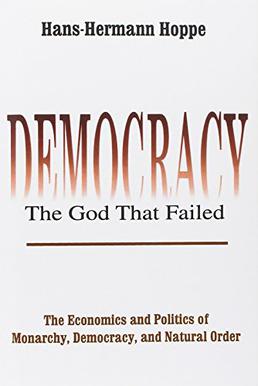
The Failing God .... Democracy and #OyVeyDonaldTrump election isn't helping resuscitate it.

Democracy, the God that Failed.jpg


When Professor Hans-Hermann Hoppe made his famous 
argument against democracy back in 2001, the notion that voting was a lousy way to organize society was still radical even among many libertarians. Virtually everyone raised in a western country over the past century grew up hearing “democracy” used as a synonym for wonderful, good, just, and valid. It takes a great deal of unlearning to overcome this as an adult, and to question the wisdom of representative government installed via democratic mechanisms.   
Fast forward to 2017, however, and the case against democracy is being made right in front of our eyes. Witness Hillary Clinton, who not long ago gushed about our “sacred” right to vote — that is until her stupendous loss to Trump. Today she clings to the specious nonsense that the Russians somehow influenced our election by planting stories and using social media, which if true would be an excellent argument against voting rights. If the natives are so easily duped by a few silly posts in their Facebook feeds, why on earth is their vote meaningful or sacred?
Other progressives like Michael Moore demand that Trump be arrested, presumably for treason. Left-leaning cable news pundits openly call for Trump to resign or be impeached. Mainstream newspapers wonder whether he’ll even finish his four-year term. The overwhelming message from the media is that Trump is a disaster, an existential threat that must be stopped.
But it’s not just progressives questioning democratic outcomes. Neoconservative Bill Kristol tweets that he’d rather be governed by an unaccountable deep state than Trump. Mild-mannered conservative moralist Dennis Prager, a reasonable and likeable right winger in my view, argues quite seriously that we are in the midst of a second civil war with those who simply reject their electoral defeat. And the libertarianish jurist Richard Epstein, writing for the somnambulant Hoover Institution, unloads a litany of grievances against Trump that would make Bill Maher blush.
We should recall that as democratic elections go, Trump’s victory was perfectly legitimate. Nobody seriously challenges his margins in the key states of Ohio, Pennsylvania, Wisconsin, and Florida. Lamentations about Clinton winning the so-called popular vote are irrelevant and blatantly partisan — the Electoral College is as much a part of the “rules” as having two senators per state.
Meanwhile in the UK, former Prime Minister Tony Blair employs the language of revolution in urging Remain forces to “rise up” against Brexit and overturn the referendum in Parliament. Never mind that Blair is no longer an elected official and holds no government office, never mind that both the referendum process and the Brexit vote were perfectly valid: he just doesn’t like the results. His argument that Leave voters had “imperfect knowledge” is both hilarious and disingenuous: voters always have imperfect knowledge about candidates and policies prior to elections; pertinent new information always comes to light after elections. If Blair thinks we can start overturning elections based on any degree of voter ignorance, then I must suggest he begin with the vote in the House of Commons that made him PM. And why does he, a democrat, imagine some right to overturn election results at all?
It’s time to call a spade a spade. All of this angst hardly comports with our supposed reverence for democracy. Again, Trump handily and fairly won a democratic election just three months ago. If he’s the devil, a wrecking ball that cannot be stopped by the other branches of government, then our entire constitutional system and its democratic mechanisms are defective. Why doesn’t the #neverTrump movement take its arguments to their logical conclusion, and insist an electorate that would install Donald Trump never be allowed to vote again or have any say in organizing society?
The reality is becoming clear, even as it remains uncomfortable for many: democracy is a sham that should be opposed by all liberty-loving people. Voting and elections confer no legitimacy whatsoever on any government, and to the extent a democratic political process replaces outright war it should be seen as only slightly less horrific.
As I stated before the election last year:
… no matter who wins, millions of people — maybe 40 percent of the country — are going to view the winner as illegitimate and irredeemable.
In fact a recent Gallup poll cites that fully one-third of Americans won’t trust the election results anyway — which is to say they don’t trust government to hold an honest election.
Trump vs. Hillary represents something much bigger: what we might call the end of politics, or at least the limits of politics. Americans, and Europeans too, are witnessing the end of the myth of democratic consensus. Democratic voting, so called, doesn’t yield some noble compromise between Left and Right, but only an entrenched political class and its system of patronage.
Great libertarians like Thomas Jefferson have long warned against democracy, even as they uneasily accepted it as a necessary evil. Both Ludwig von Mises and Friedrich Hayek were democrats, men who championed both the virtues of an intellectual elite and the necessity of having that elite gain legitimacy for its ideas through public acceptance. Mises termed democracy a “method for the peaceful adjustment of government to the will of the majority.” Hayek viewed democracy as potentially wise if tempered by built-in safeguards to protect individual liberty.
But these men lived in very different times, coming as they did from pre-war Old Europe. We can’t know what they would think of modern social democratic welfare states, or Trump, or Brexit. I suspect they would find democracy quite wanting, in terms of producing what either would consider a liberal society. Both were utilitarians (of a sort) in their economic thinking, and it’s not hard to imagine they would take a consequentialist view of a society gone awry via democracy.
Things are getting strange in America when Michael Moore and Dennis Prager start to sound the same, and that’s arguably a very good development. We are close to a time when the democracy illusion will be shattered, for good and all. Democracy was always a bad idea, one that encourages mindless majoritarianism, political pandering, theft, redistribution, war, and an entitlement mentality among supposedly noble voters. It’s an idea whose time has passed, both on a national and international scale. The future of liberty is decentralized, and will be led by smaller breakaway nations and regions where real self-determination and real consensus is not an illusion. Jefferson and Hoppe were right about democracy, but it took Trump and Brexit to show the world how quickly elites abandon it when they don’t prevail.

Stanley Fischer's Eureka Moment

Image result for Stanley Fischer's Eureka Moment cartoon


Fed Vice Chairman Stanley Fischer's February 11th speech at Warwick Economics Summit was built around a story from his youth:

Eureka moments are rare in all fields, not least in economics. One such moment came to me when I was an undergraduate at the London School of Economics in the 1960s. I was talking to a friend who was telling me about econometric models. He explained that it would soon be possible to build a mathematical model that would accurately predict the future course of the economy. It was but a step from there to realize that the problems of policymaking would soon be over. All it would take was a bit of algebra to solve for the policies that would produce the desired values of the target variables.
Unfortunately, he expresses in his conclusion, this Central Planner's Dream is proving more difficult than he once thought:

... the eureka moment I thought I had 50-plus years ago was a chimera. Why is that? First, the economy is very complex, and models that attempt to approximate that complexity can sometimes let us down.
"Sometimes let us down." Call him Stanley "Understatement" Fischer.

The entire lesson of monetary central planning since the gold window was closed in 1971 (and arguably since the founding of the Fed) is that central bank bureaucrats and their various models are a systematic let down writ large.

Fischer wants to take a jab at the rising "rules-based" monetary policy trend that is seeking to threaten the "discretionary policy" nature of the Bernanke-Yellen regime. His point is that models (and therefore rules produced by models) aren't perfectly adaptable to the changing nature of economic conditions. Thus, Fischer defends the alleged need for policymaker discretion.

The problem, of course, is that the "changing economic conditions" are actually simply the various and ever-shifting actions of human agents throughout the economy. And thus not only is the model itself unsuitable for predicting their behavior, but no amount of "discretion" no matter how well educated, can make a beneficial one size fits all decision regarding money supply and interest rates.

The time preferences and supply and demand relationships as communicated through the price system are not up to the discretion of the monetary bureaucrats. And thus, the actions of the Stanley Fischers of the world, rather than supporting "economic man" undermines and frustrates the plans of the individual.

The lesson that Fischer should draw from the failure of econometrics to predict the path of the economy is not that the models need adaption and tinkering. No! What the central planners and their academic lapdogs need to understand is that no amount of modeling and centralized (political) decisionmaking can aid the economy. The economy is merely an analogy for human interaction, it's not a machine to be tinkered.

Fischer finishes with the following:

What Samuelson said was this, "I'd rather have Bob Solow than an econometric model, but I'd rather have Bob Solow with an econometric model than without one." And Samuelson, who was a shameless eclectic, would almost certainly have said essentially the same thing about policy rules.
Better idea: End the Fed and do away with the government economists, econometric models, and policy rules once and for all.

Many presidents have first year troubles. Trump is the same – and different. Historians look at President Trump's first weeks and see a rough start. That can be overcome, they say. But Mr. Trump might judge success differently from any president in modern history.

Image result for Trump first 30 days cartoon
The top national security official was a problem from the beginning of the administration. The vice president didn’t trust him. He harangued the cabinet. Subordinates found him hard to work with. “Overbearing” seemed his middle name.

The upshot: He got ousted. Quickly. It was a key job and the White House needed someone more attuned to the president’s instincts and operating style.

Michael Flynn, the ex-general just dismissed as President Trump’s national security adviser? Nope. Al Haig, the ex-general who served as President Reagan’s secretary of State for a little more than a year.

“He just shouted too much,” remembered former Arms Control and Disarmament Agency Director Ken Adelman in a 2003 oral history of the Reagan team.

Many United States presidential administrations have early crises. Top appointments don’t work out and people need to be fired. Novice presidents stumble into policy decisions that turn out to be unforced errors. Disputes that should be handled internally play out in the press.


 Trump's biggest executive actions, explained
True, the Trump administration’s current dysfunctions seem particularly pronounced. It’s unprecedented that someone as high up as Mr. Flynn only lasted a few weeks. The first choice to replace him, retired Navy Vice Adm. Robert Harward, turned down the job Friday. Hundreds of second- and third-tier executive branch jobs are still unfilled. Supporters may have liked Trump’s Thursday press conference but critics thought it wildly disjointed and combative.

But other administrations didn’t always hum like well-oiled machines in their first year, either. Even politicians as skilled and experienced as Bill Clinton found the transition to the awesome responsibility of the presidency more difficult than they expected. It’s hard to occupy the position that used to be called “leader of the free world.”

When it takes office, each new administration must grapple with five aspects of presidential power, says William Antholis, director of the Miller Center for Public Affairs at the University of Virginia. He calls them the “five Ps”: personnel, process, priorities, politics, and personal behavior.

“Almost every administration fails in each of these five at some point in its first year,” Professor Antholis says.

That means initial months can be filled with missteps.

Bungled first years: Carter to Clinton

President Jimmy Carter, for instance, took office with large majorities of his party in the House and Senate, as has President Trump. But Mr. Carter’s inability to connect with congressional leaders, in part due to staffers who expressed disdain for legislative leaders, stymied his agenda from his first months. Congress refused to go along with his proposed cuts to “pork barrel” spending projects. They rejected a Carter consumer protection bill and labor reform package.

The Reagan administration suffered from intense infighting in its top ranks during its first months. Secretary of State Haig – who famously and wrongly insisted that “I am in charge” following the assassination attempt on Reagan by John Hinckley – was not the only casualty. National Security Adviser Richard V. Allan was eased out after only 11 months, in part because he could not referee stronger personalities in Reagan’s security circle.

“While 1981 was not a wasted year, it was far less productive than Reagan probably hoped,” writes Duke University associate professor of public policy and history Hal Brands in a summary for the Miller Center’s “First Year” presidency project.

Mr. Clinton’s first months were chaotic. His first two nominees for attorney general, Zoe Baird and Kimba Wood, both eventually withdrew due to revelations that they had employed undocumented immigrants as nannies. He became embroiled in controversy over his attempt to allow gays to serve in the military, ending in the “don’t ask, don’t tell” compromise policy. His secretary of Defense, Les Aspin, proved to be too disorganized and not decisive enough to run the enormous business of the Pentagon. Mr. Aspin, a former member of Congress from Wisconsin and chair of the House Armed Services Committee, barely lasted a year in the job.

Other Clinton officials judged Central Intelligence Agency Director James Woolsey stiff and difficult to work with. Eventually, Clinton tuned him out. When a light plane crashed on the White House grounds in 1994, some insiders joked that it was Mr. Woolsey trying to see the president.

“There just wasn’t a good personality fit between Woolsey and Clinton,” said Clinton National Security Adviser Samuel Berger in a 2005 oral history.

In addition to these problems, almost every recent administration has had some sort of outside crisis within its first year, adding to transition troubles. These range from a coup attempt in Panama during President George H. W. Bush’s first months in office, leading to the dispatch of thousands of US troops, to the 9/11 terror attacks on American in the September of President George W. Bush’s initial year.

For Trump, what is success?

What does all this mean for the new Trump administration?

Going back to the five P’s of presidential power, it might mean getting personnel that work together as a team, instead of functioning as rival power centers. It could be ensuring there is a process where those people know what each other is doing.

Trump has laid out priorities in the past, but it is not clear he is hewing to them. That leads to the final P of personal action. Here is where Trump is unique: He’s fighting the press and the Washington establishment like no modern president before him, says Antholis.

If his goal in the presidency is simply to win symbolic battles against the establishment, it’s possible he can achieve something that he might judge victory. While insiders in Washington are aghast at what they see as Trump’s loose relation with truth and his rambling rhetoric, his supporters remain happy. Trump retains the approval of 84 percent of Republican and Republican-leaning voters, according to a just-released Pew poll. The GOP core is still solid Trump, despite steep declines among Democrats and independents.

However, if his goal is to tick off the boxes of his stated agenda, from repealing and replacing the Affordable Care Act to tax reform and an infrastructure program, he’d better get going. The window for moving big things through Congress closes rapidly for all new presidents.

“As LBJ said, you get one year before Congress stops thinking about you and starts thinking about its own reelection,” says Antholis.